
Translated material
"I think that saved people"


"I think that saved people"
Interview with one of the first arsonists of the military enlistment offices in Russia
On January 25, 2024, Doxa was recognized as an “unwanted organization”.
If you are in Russia or plan to return to it, you can not replace our materials on social networks, refer to them and publish quotes.
Read more about what is possible and impossible, read in the cards .
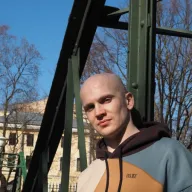
Alexey Rozhkov answered the decision of the Russian authorities about the beginning of a full -scale invasion of Ukraine with Molotov cocktails. On March 11, he set up the military registration and enlistment office in the suburbs of Yekaterinburg. On the same day, Rozhkov was detained. The case was opened under the article “Entertainment for Murder”: supposedly in the building there was a watchman. The young man threatened to be 15 years old.
For six months, Alexei was in a pre -trial detention center. Then the article was unexpectedly re -qualified for the more easy - “damage to property”, and the insurgent was released on a recognizance not to leave. After some time, thanks to the support of human rights organization, Alexei Rozhkov left Russia, and we talked with him.
Editor
Editor
Peter tIllustrator
Illustrator
Lizon ZhikhrePublication
December 27, 2022
Tell me what you did until February 24. Was there any work, any hobbies? Was he interested in politics?
Rozhkov: I lived in the city of Berezovsky - this is a suburb of Yekaterinburg with a population of about 100 thousand. You can get to Yekaterinburg by bus in 20-30 minutes. I worked as a sales consultant in the DNS store.
I was fond of music - I am a guitarist, a bassist. About six years ago, I had a Tell me the Reason group. [Until February 24] began to record a solo album, which is still not ready because of this whole situation with the war, with crossings, with a prison.
I love dynamic, energetic music: it adds tone to me, helps to get out of depression, somehow warm up, stir up.
I have been interested in politics from the age of 14 Now Alexei is 25 years old. . The views changed over time. Previously, it was somehow democratic, or more, more legal. Now I can call myself left anarchist. I always campaigned to open my eyes, see what is happening with the country, for example, with the standard of living. He talked with his family and acquaintances, friends and even strangers. He painted leaflets, painted a spray can. You know, there are such large banners, advertising signs? At night, they climbed onto them and painted the graffiti “Putin - thief”. At that time he was just a thief. And now he, of course, is not just a thief, but also a killer. I painted on such billboards at night so that people also began to ask questions and come to the same opinion.

Tell me, why did you decide to set fire to the military registration and enlistment office and what did you want to achieve this?
Rozhkov: From February 22, I carefully monitored independent media, groups on social networks, channels. I expected that in the 20s the war would begin because Russian troops were concentrated in Belgorod, in Belarus and other border areas. It was obvious that some kind of movement of the troops would begin. And it began on February 24th. I began to go depressed. Constantly leafed through the channels, read the news. Every day I got worse. I just understood that you could not remain indifferent. What is happening now is illegitimate, it is illegal. Any war is death for ordinary, ordinary citizens. The war in the XXI century seems to me generally some kind of alien. Moreover, such ridiculous reasons [invented]. We annexed Crimea in 2014, and I already said that all this was done in vain. Crimea is not ours either. There will be consequences. And so it happened.

We talk about Russia's military invasion of Ukraine, protests and repression. We believe that now, when dozens of media have closed or ceased to cover the war, access to independent information is more important than ever.
It is very unpleasant for me to realize that people die - peaceful people die, those who do not want to fight, but were called up, also die. I wanted to make some kind of call so that people began to fight this war, I wanted to influence the situation, to do something in order to stop it all or at least weaken [Russian troops]. Therefore, I set up the military registration and enlistment office of the city of Berezovsky. I did not try to burn him to the ground. He threw three bottles of Molotov into glass doors, they crashed. I did not even expect them to break. In fact, I thought: "I’ll set fire to the door, the entrance group." I was not lucky: at that moment, traffic cops were passing nearby, who noticed all this. [They] stewed the fire, and then went after me. I could not go far. I ran about a kilometer, and I was blinded with high light. I tried to leave, run away, but they threatened me that they would shoot me and had to give up.
Tell me how you were preparing for this. How much was it a spontaneous action?
Rozhkov: This happened quite spontaneously. I did not even develop a departure plan and acted in an unfamiliar territory. It seemed to me some kind of self-sacrifice. I perfectly imagined that I would bear the responsibility for this, but I had no fear.
I understood that, even if I was in prison, still my actions will affect the course of events
And after my action was held, Putin recognized the “first channel” that military service soldiers were deployed in the military special operation zone, and [informed,] that they would be withdrawn from there. And those who sent them there will be punished. It was after my arson was told by him. I set up the military registration and enlistment office in Russia, and here [the example of how] several people influenced to save the children - people like us, of the same age. [Contrients] did not die in the war, did not kill anyone, they were simply transferred back to Russia, leaving [in the zone of military operations] only contractors.
That is, do you think that the arson of the military enlistment offices also influenced this decision of the authorities?
Rozhkov: Yes, I think so. I'm sure of that.
How did you feel in captivity? Was there any pressure from the investigating authorities? What happened after the detention?
Rozhkov: I was detained, shook me into handcuffs, searched, threw me into a car gut, took me to the station. In the site they treated me poorly enough. The chief of police of the city of Berezovsky personally threatened me that he would indulge in me and scorch me with a stick. It was literally that was his words. But there were also adequate people [among employees] who did not threaten me and spoke calmly with me, supported me that I would not be in shock.
In the pre-trial detention center-1 of Yekaterinburg, I first got into quarantine. They didn’t give me bedding, they didn’t give a pillow, they didn’t give the blankets - they only gave the mattress pissed. Glory to the Lord, I did not spend much time there. On the fourth day, I was called by the chief physician of the psychiatric department. Since I have some diseases, it entered my position and I was transferred to the hospital building, into a psycho-khata. There, in principle, I liked it. Despite the fact that some people in the cell were inadequate, I had almost no conflicts. The cellmates were not the first time, I was the only first place, that is, I went to prison for the first time.
[In jail] I was given very strong drugs, from which I felt very badly. One of these drugs is risperidone, it is prescribed to schizophrenics. They gave me in a triple dose. I was ill with restlessness Restlessness, or acathizia is a clinical syndrome in which an unpleasant feeling of internal motor anxiety occurs, the need to move or change the pose. , I had panic attacks, I suffocated and was tormented by insomnia. That is, treatment for me was inappropriate. But, nevertheless, I am glad that I got there, and not to other prisoners.

I was a road worker The road worker is a person who is responsible in the camera for the road - an illegal message system between cameras. - I was respected, listened to my opinion. In general, everything was in order while sitting. The Fsinovites were mostly quite loyal, they could talk with them a little during the checks or when they distributed the Balanda.
During the conclusion, I was taken out for an inpatient examination for adequacy to a psychiatric hospital on the Siberian tract Sverdlovsk Regional Clinical Psychiatric Hospital. . I sat there for 21 days. And there the FSINISTS behaved aggressively and provoked many people, including me, to conflict.
Those who succumbed to provocations were beaten with a shocker and locked alone. The worst, inadequate FSINOVS, I think, were in the 10th department of the psychiatric regional hospital on the Siberian tract
Did someone support you in prison? Relatives, friends, or maybe some human rights initiatives?
Rozhkov: When I was in a pre -trial detention center, a lawyer came to me from anarchist Black Cross Anarchist Black Cross (ACHK) is a network of groups that organize assistance to the persecuted anarchist_kam. Achk cells exist all over the world and are interconnected. In Russia today there are three groups: ACHK-Moscow, ACHK-SPB and ACHK-Irkutsk. - I was offered help. They also asked some questions: do I want to receive letters, help, transfers and betray the case to public? I refused to support and publicly, but decided that it would be nice to receive letters from people who remained indifferent, who help like us in captivity. Letters really helped me a lot. I was helped by my parents, caring people from Yekaterinburg. I will not call the names, but they help me and help me so far.
Why did you decide to abandon the support of anarchist Black Cross?
Rozhkov: Because I succumbed to the persuasion of my parents and lawyer. They were opposed to my case [widely] known that allegedly not to eat on my investigator. They were afraid that he would tighten the punishment if I would attract public attention. Therefore, due to the pressure of [parents and lawyer], I had to abandon this help.
At the same time, when you were in a pre -trial detention center, as far as I remember, you just had a rather cruel accusation of assassination to murder, right?
Rozhkov: Yes, I had article 105, part two, after 30 Article 30 of the Criminal Code of the Russian Federation “Unfinished Crime”. “A attempt on murder with special cruelty from hooligan motives in a generally hazardous way.” From 8 years to life Here, Rozhkov is mistaken: a lifelong opinion cannot be assigned for an unfinished crime - on the indicated charges he was threatened up to 15 years. .
What do you think was the threat of someone's life as a result of your action?
Rozhkov: I think no, I am completely sure of this. In general, I doubt that in the building of the military registration and enlistment office there really was some kind of woman [-through]. In the testimony of the police who detained me who helped to extinguish the fire, it is indicated that they did not burn anywhere in the premises and they did not see this woman either. Therefore, I doubt that she was there. In addition, in other cases - I monitored similar things - they did not give anyone the same article as me. There were no watchmen there.
I was the only one [among the arsonists of the military enlistment offices] who was charged with an “assassination attempt to kill”
When you were released under a recognizance not to leave, you did not leave right away. What kept you?
Rozhkov: They promised me that I will have an easy article-the 167th after the 30th, which means “attempt to destroy property”, with a period of up to 5 years. But, having looked at other cases, I realized that sooner or later they would all roll out the 205th-“terrorist act”.
I also wanted to stay as long as possible with my family, with relatives and friends, in order to at least somehow restore relations, thank them. But in the end he left, evacuated from the country.
How did the relatives react to your act and persecution?
Rozhkov: They said that I acted stupid, that you could not go against the system and that I brought everyone else. I was charged with guilt. But I believe that saved people and my life is a small sacrifice in comparison with the number of people who remained alive thanks to my act. Even if I were shot during the detention, I would still achieve more than any other.
How do you feel now?
Rozhkov: I feel dreary and lonely. I am not in my native country. But I have a friend - I was lucky that he also ended up here for the same political reasons - he helps me, supports me. I am also supported by evacuation organizations. I feel bad enough. But now I bought medicines prescribed by a psychotherapist, and now in my head it becomes easier and easier every day. But it happens that very strong sadness rolls. Longing due to the fact that I am lonely and I had to leave the country.

When we agreed on the interview, you said that after leaving, I got a sign of anarchy on the back of the palm. Can you tell you about this for an interview?
Rozhkov: This sign is close to me: I myself am an anarchist, left, I share this political position. And although a society without power authorities and hierarchy seems to be a utopia, but we could come to this. Power should belong to the people, and not a bunch of corrupt bastards who commit terrible crimes. My sign also means that I adhere to the views of the people who helped me when I was in prison. He says that I am close to these people. And I, in turn, will also help the political prisoner at the first opportunity.
Maybe you would like to convey something to Ukrainians, Ukrainians?
Rozhkov: Yes, I would like to. I want these people to know that there are disagreements, there are people [in Russia] who do not want war with Ukraine or at all any war. I hope that soon no one will suffer anymore because of this shit that Putin arranged. The Ukrainians are well able to return their territories, destroy Russian troops. And I think everything will be fine. Sooner or later. Ukrainians are very strong motivated people and will protect their territory to the end. And I respect them for this. I would have acted in their place the same way.
Other materials
Aitvo movement
As an IT specialist_ki donate time and effort to charity and why do they need it


"My means of struggle - paint and camera"

Interview with Bogdan Ziza from jail

"Kill me, if you want, - I do not care"
Interview with Sh. - Gay, saved from Afghanistan


For 30 years of my life in Crimea, my people never resorted to violence

The last word of Osman Arithmememov, the Crimean Tatar activist, sentenced to 14 years in a colony for "terrorism"
Destroying the ways of the war

As partisan_s in Russia and Belarus for the sixth month inhibit the advance of the Russian army