
Translated material
Destroying the ways of the war
As partisan_s in Russia and Belarus for the sixth month inhibit the advance of the Russian army
On January 25, 2024, Doxa was recognized as an “unwanted organization”.
If you are in Russia or plan to return to it, you can not replace our materials on social networks, refer to them and publish quotes.
Read more about what is possible and impossible, read in the cards .
On August 3, during the Second World War, the Operation “Rail War” began in Russia, Belarus and Ukraine. Then the partisan_ki successfully opposed the invaders in the occupied territories. Unfortunately, after 79 years, the rail war began again, but this time the Russian Federation became the invader.
Even among those who oppose Russian aggression in Ukraine, many are asking questions: how does the “railway vandalism” help stop the war in Ukraine? Are there no injured people among the civilians among the civilians?
To answer these questions, we figured out the history of railway resistance and depending on the provision of the Russian army from railway transport. Talking about modern partisans, we studied the experience of the Belarusian partisans_ok and talked with the combat organization of anarcho-communists who dismantled the rails leading to military facilities to the Moscow region.

Editor
Editor
Richard KropotkinIllustrator
Illustrator
Lizon ZhikhreIllustrator
Illustrator
FAFPublication
August 2, 2022
How do railways help the Russian army?
In early February, it was difficult to believe that Russia would begin a full -scale war with Ukraine. Someone tried to question the intelligence, and someone watched what was happening in Russia and on the border. A resident of the border regions with Belarus and Ukraine, even before the start of the war, became evidence of the movements of railway trains with Russian military equipment. A resident of_nitsa recorded what was happening and published certificates on social networks.
A group of investigators of military conflicts CIT analyzed the published photos and videos and confirmed their authenticity, comparing with the designations on the technique and graphs of train movements. The first evidence of the transfer of paratroopers, the forces of the Russian Guard and the Tank Army to the borders with Ukraine and Belarus were published in late January ( 1 , 2 , 3 ). At the same time, Russian troops and their relatives talked about the fact that they were sent to exercises in Belarus.
It is ironic that the preparation of the Russian army for the war with Ukraine was opened at the stage of moving the troops, and most people at that time still doubted whether Russia would begin a war. This happened because the railways pass through settlements and it is impossible to hide them, and it is too expensive to move through the territory of the Russian Federation in other ways for the military. One train transports from 30 wagons, each of which houses one or more military trains with equipment. Railways have already been laid to many military facilities, which allows the use of trains as the main mode of transport for freight transportation.
The length of the territory of the Russian Federation is approximately 10 thousand kilometers - these are very long distances for displacements. The task of everyone who is engaged in logistics is to come up with a way of transportation for the minimum cost and in the shortest possible time. Russia is permeated with railways, which most often pass through the regions that are inaccessible to cars and other types of transport. In addition, the cost of transportation by rail is one of the lowest. Therefore, the vast majority of civilian and military cargoes are transported in Russia on train.
The armed forces are responsible for transporting military cargo and preparing ways for transportation. For the construction and restoration of railway tracks, railway troops were created. According to the annual report of the International Institute for Strategic Research ( IISS ), their number reaches 29 thousand military personnel (900 thousand in the Russian army in total). The number of military personnel in these troops indicates the special importance of railway infrastructure for the Russian army.
On February 24, the troops of the Russian Federation from the territory of Belarus, Russia and the annexed Crimea invaded Ukraine. The Russian military had the task of capturing the cities as soon as possible and establish the provision between them. Most likely, none of the invaders was ready for the fact that the war would last more than 3-4 days, because on the first day the military managed to capture the Chernobyl nuclear power plant, 25 kilometers from Kyiv and advance into the country into 25-30 kilometers.
But the Ukrainian military repelled the captured territories and gradually replaced the invaders. The Russian army was not ready for battles and faced the problem of providing troops with fuel and food. The Ukrainian military published photos and videos, where they showed dryers with a shelf life until 2015, as well as columns of cars that are without fuel. The columns of abandoned equipment were destroyed, and the Russian military continued to retreat. For full supply, a capture of Ukrainian transport infrastructure was needed.
The capture of railway units was fundamental to organize a future supply also because the width of the ruts of Russian railways coincides with the ruts of Ukrainian railways Most of the railways were laid in the Soviet Union, so the rut width standard coincides in Ukraine, Russia, the CIS countries and others. , that is, Russian trains could easily move over them. Therefore, such fierce battles were fought for Kherson, Melitopol and Mariupol, after which the Russian army gained access to transport infrastructure.
Even if the military has full access to the railway infrastructure, disassembled and/or destroyed ways significantly inhibit the process of transporting Russian military equipment. The detection of breakdowns and the restoration of railway tracks require time and repair teams. While the railroad track is restored, the invaders are deprived of the opportunity to move through the captured territories. In addition, the length of the railway tracks does not allow us to establish control over the rail canvas throughout its entire length - this was already understood by the Belarusian partisans, who during the Second World War dismantled several kilometers of the rails used by German troops to move in seized territories.

We talk about Russia's military invasion of Ukraine, protests and repression. We believe that now, when dozens of media have closed or ceased to cover the war, access to independent information is more important than ever.
The first rail war
One of the first references to the destruction of railway tracks during the Second World War is connected with Belarus Semen Korotkin, the commander of the partisan brigade. The Korotkina brigade operated in the Vitebsk area and from 20 people to 2 thousand grew in a year. The commander was the first to think of disassembling the rails, thereby destroying them without the use of explosives.
On August 29, 1942, on the site of the Polotsk -Vitabsk railway, the brigade Korotkina dismantled 5.5 kilometers of the rails, destroyed telephone and telegraph poles and dug up the embankment. This action of resistance suspended the movement of enemy trains for a week. For the invention of a new method of resistance, Korotkin was awarded the Order of the Red Star.
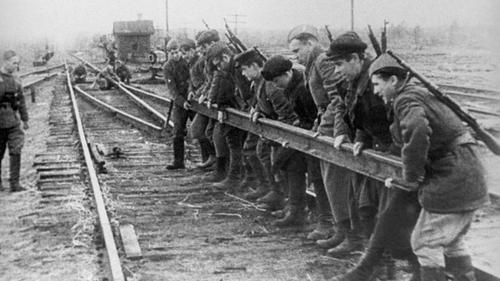
On October 6, 1942, Korotkin died during the flight across the front line - the Germans shot down the plane. And already in 1943, the Central Headquarters of the Partisan Movement announced the operation “Rail War”, which became a continuation of the case of Semyon Korotkin. 167 partisan brigades participated in the operation, on the first day of the operation (August 3) they blew up 42 thousand rails. The partisans were provided with explosives and subversive equipment, which allowed to paralyze the movement of train for 15-30 days in different areas of the operation. Belarusian partisans achieved special successes. They personally destroyed 836 echelons and 3 armored trains of the enemy.
The continuation of the Operation War Operation was the Operation “Concert”, which lasted from September 19 to the end of October 1943 and was so large that it had to be stopped due to the fact that the explosives were spent.
Anatoly Kachugin invented a special form of explosives to combat trains. Kachugin is a doctor who was repressed in the 30s, but subsequently rehabilitated for the invention of a self-flammable mixture for Molotov cocktail and a special type of tola Explosive, TNT. that had the form of laundry soap. This "laundry soap" could be attached under the bottom of the railway car or steam locomotive, and it lit up under the influence of the oncoming air flow. It was impossible to extinguish the explosives, just like determining why a fire occurred. "Partisan soap" could not find a single mine detector.
After 80 years, Semyon Korotkina was already continued by modern Belarusian partisans, opposing Russia's invasion of Ukraine.
Railway resistance in Belarus: analysis of rails, encryption of servers, resistance at workplaces
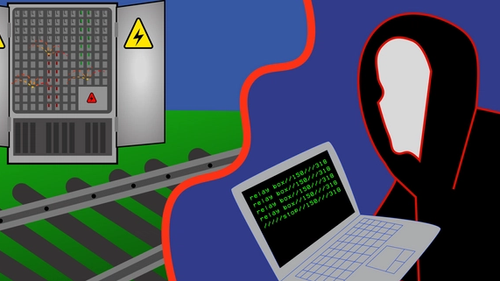
Already on January 24, Russian troops used the Railways of Belarus to transport military equipment to the border with Ukraine. On the same day, Cyberpartisans of Belarus reported the first action of the resistance to the occupation forces. They said that they managed to “encrypt the main part of the servers, databases and workstations of BelZH in order to slow down and break the operation of the road”, along which the occupation forces moved.
Cyberpartisans are an initiative created during the revolution in Belarus. The protests began in the summer of 2020 and lasted a year and a half. Unfortunately, Lukashenko manages to withhold power so far. Belarus is covered by repression and criminal sentences of activist_k. Despite this, the first actions of direct action against the invasion of the Russian troops organized precisely Belarus_ki.
On February 24, Belarusian initiative by BYPOL issued a statement condemning the military aggression of Russia, and announced the continuation of the implementation of the PERASUS plan. The plan was initiated back in 2020 to mobilize Belaruso_K against the occupation of Lukashenko Belarus. Bypol was created by former security forces who decided to oppose the Lukashenko regime. In an anti -war statement of February 24, activist_ki called for information about the location of the Russian troops and prevent the participation of Belarusians in a criminal war.
Already on February 27, BYPOL reported on the first direct actions of the direct action in the preparatory part of the PERASOMAN plan. Through arson, the cubic wardrobes (signaling, centralization and locking devices) and contact networks were destroyed - traffic lights and arrow translations are controlled using these devices. The breakdown of the CBC cabinet can suspend the movement for several days: so much time will take expensive recovery or replacement. The cost of one relay cabinet is about 50 thousand dollars.
Cyberpartisans continued to attack the BelZH computer network in order to "inhibit the transfer of the occupation forces and give Ukrainians more time to repel the attack." As a result of the attack on February 27, the road passed into the manual control regime, which significantly slowed down the movement of train, but did not create emergency situations.
On March 1, BYPOL reported on the holding of another successful direct action: two stages of managing the SCB were destroyed in the service sections of the Baranovichi and Gomel branches of BelZH.
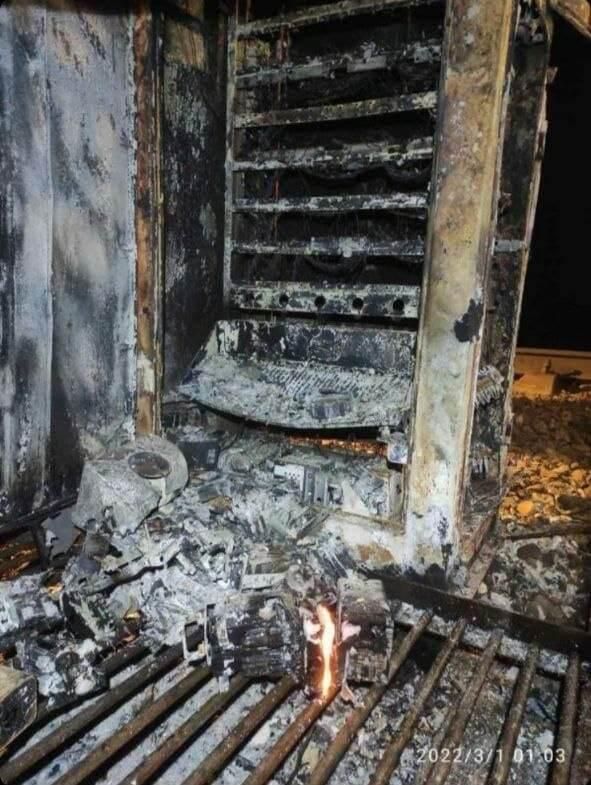
A burned out cabinet of the SCB, photo: community of railway workers of Belarus
Then Bypol made a call to Belarus_kam:
“Belarusians, today our country is drawn into a criminal and bloody war with the fraternal Ukrainian people on the side of the aggressor - the Russian Federation. Our duty is in our power to do real things in order to stop it, free from the occupation of the Russian troops and restore the good name of our ancestors. ”
A rail war is the knowledge that we inherited, this is what we can and that each of us can do it
The security forces of the Lukashenko regime announced the partisan_ok hunting and put them up by terrorist_ki. From the beginning of March, brutal detentions began to take place, the suspects were beaten, and the whole process was shot on the video. In total, more than 50 people were detained during this period. Three activists from Bobruisk - Vladimir Avrantsev, Dmitry Klimov and Evgeny Monkevich - demonstratively shot his knees during the detention. They are accused of "preparing terrorist actions."
On March 17, BYPOL announced that those who wish to participate in the railway resistance need to write in telegram boot. They promised to provide detailed instructions for organizing resistance shares.
View this post on Instagram
Not only partisan and cyber -partisan_ki participated in the promotions - the Belarusian railway community played a large role, who massively refused to go to the distillation and control of the locomotives. As a result, many railway workers were fired, and the security forces made them apologize for the video.
On March 17, Bypol summed up the intermediate results of the rail war. They said that, thanks to resistance shares, the Belarusian authorities had to prohibit the movement of the military echelons of Russia and the moving trains of Russian Railways through the territory of Belarus at night.
On April 23, Washington Post has released a material that tells how the Belarusian partisans with the help of direct -action shares managed to slow down the movement of Russian troops. “We believe that the fact that the Russians refused to take Kiev is the result of our work, because the Russians did not feel in Belarus in such security as they expected,” said Vyachorka, spokesman for the leader of the Belarusian opposition Svetlana Tikhanovskaya , Washington Post Franak Vyachorca The office of Svetlana Tikhanovskaya is one of the partners of BYPOL and regularly sums up the results of the work of the Belarusian anti -war movement.
The partisan_ki was hunted in Belarus, and the legislation was tightened to intimidate people: on May 18, Lukashenko signed a law that allows the death penalty for “attempting to commit terrorist attacks”. According to one of these articles in Belarus, criminal cases against Partizano_k and some representatives of the opposition were instituted, including Svetlana Tikhanovskaya, Lukashenko’s rival in the last presidential election.
How cars stop in Russia
From the beginning of April, news began to appear that railway tracks began to be damaged in different regions of Russia. One of the first was the news of damage to the paths in the Belgorod region, which was announced by Governor Gladkov.
All news about the shares of railway resistance began to publish the stop “ stop wagons ”, launched at the end of March. In the channel, they told how to damage the relay cabinet or close the rail to stop the movement of train. Together with the news in the channel, they talked about the possible reasons for stopping wagons: for example, about suspicious objects found on railway tracks, or about disassembled rails.
After a few weeks of work, the channel was blocked in a telegram for an unknown reason. The channel owner claims that Telegram forever forbade him to create new channels. The channel was restarted the next day, and an attack was instantly organized on it: 10 thousand new “subscribers” appeared in a day.
The author of the channel suggests that the channel was removed due to the publication of the railway resistance map , which on May 8 showed that the organized resistance covered more than 30% of Russia.
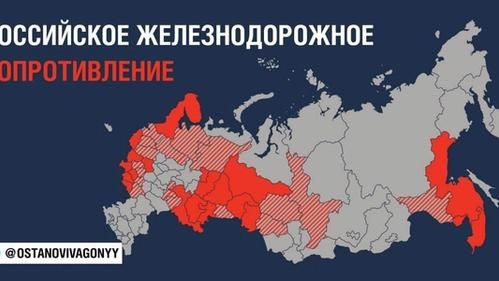
The author’s special attention was paid to the fact that all shares did not threaten passenger or other civilians. As a rule, the object of attack is the ways for commodity or freight trains.
In the channel, it is impossible to find information about who exactly initiates direct action shares. Whether the channel is a network of partisan_Ok or for security purposes they do not know each other is unknown. But it can be accurately argued that railway resistance has grown: news about the giving train from the rails from different regions of Russia began to appear several times a week. They were published not only by partisan channels in Telegram, but also by regional media. In the course of preparing the material, we were not able to contact the “stop of the wagons” for comment, and on July 14 a post was released on the channel in which activist reported that they were not associated with journalist_ki for security reasons.
The reactions of the authorities were quite unambiguous: since the beginning of April, in some regions of Russia, a high level of terrorist danger has been declared: in the Belgorod, Bryansk, Kursk regions, in two border regions of the Voronezh region, in the north of the annexed Crimea and in several areas of the Krasnodar Territory.
On June 1, just a month after the publication of the first map of railway resistance, the initiative said that railway resistance is already covering 50% of the country, as well as the main railway arteries.
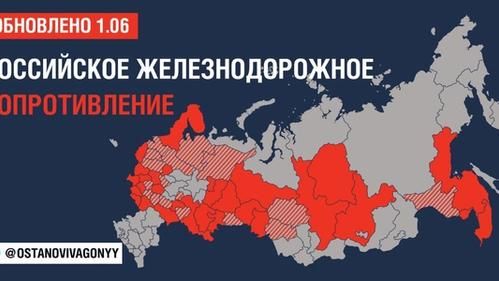
In June, trains went away:
- In the Sverdlovsk region - 7 cargo wagons with crushed stone and a technical wagon on the crossing;
- In Krasnoyarsk - 24 cars loaded with logs and lead concentrate;
- In Chelyabinsk - maneuverable locomotive;
- In the Orenburg region - two cars with dry building mixtures;
- In the Kuban there are 9 wagons with coal, which damaged three supports of power lines and 250 meters of railway tracks;
- In the Pskov region - 13 carriages of a freight train, which "refused the brakes";
- In the Amur Region, 14 carcasses of a cargo train have passed, which suspended traffic on the Trans -Siberian Railway.
In the Chelyabinsk region, an “emergency shutdown of the voltage” occurred - in this case, the wagons did not go, but the power supply network was disconnected and the train traffic was suspended.
The largest event of railway resistance is the stop of traffic on the world's longest railway - on the Trans -Siberian Railway. Partisan_s stopped traffic on a section of a railway track 8.3 thousand kilometers. Only with its help can troops be moved from Vladivostok and Khabarovsk. According to Russian Railways, the consequences of the accident were liquidated by 330 highways and many equipment, the injured and harm of the ecology were not found.
In July, the rail war continued and the trains walked in the Urals , in Tver , in the Kirov region , in Bryansk , in Voronezh , in Krasnoyarsk on the Trans -Siberian Council, near Tula , in the Moscow region , again in Krasnoyarsk , in Tomsk , in the Samara region , Dagestan , in Chelyabinsk and in Yekaterinburg .
Despite the scale of railway resistance, at the moment it is not known about cases of the detentions of the partisan_ok for participating in a rail war. The propaganda channels at the very beginning of the war distributed information about the detention of young people preparing a direct action, but it is impossible to find confirmation of this information.
The Investigative Committee and the Transport Prosecutor's Office report the initiation of criminal cases for all cases of damage to the railway infrastructure, but nothing is known about those detained in such cases. The human rights organization "Agora" in a commentary for our publication reported that it was not known about the detentions in such cases of the organization, in the OTD-Info chronicle there is also no such information.
And who stops the wagons?
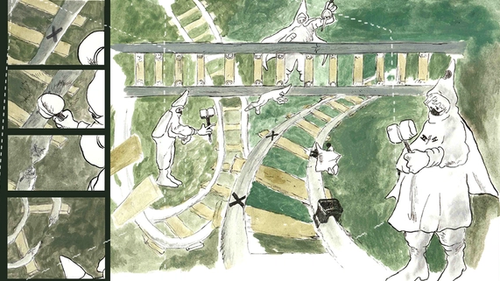
Despite the fact that there is no information about the detentions, the responsibility for the shares is taken on the lower initiatives. So, on May 11 it became known about the combat organization of anarcho-communists, which took responsibility for two shares of railway sabotage in Moscow and Vladimir.
The combat organization of anarcho-communists is an anti-war initiative created in May 2022. There are not many posts in the initiative, mainly reposts with the “fighter anarchist” resource about radical methods of resisting war.
We managed to talk with the Boac cell, which attacked the railway in the Moscow region on May 23. The attacked section of the road leads to the military facility of the Main Directorate of the Ministry of Defense of the Russian Federation. Activist_ki was dismantled by a rail joint on the bend of the path. A feature of the weakening of fasteners on the bend is that it is more difficult to see and brake the disassembled joint to the driver. According to activist, when choosing an object, they took into account that the railway line leads to a military facility and civil trains do not go along it.
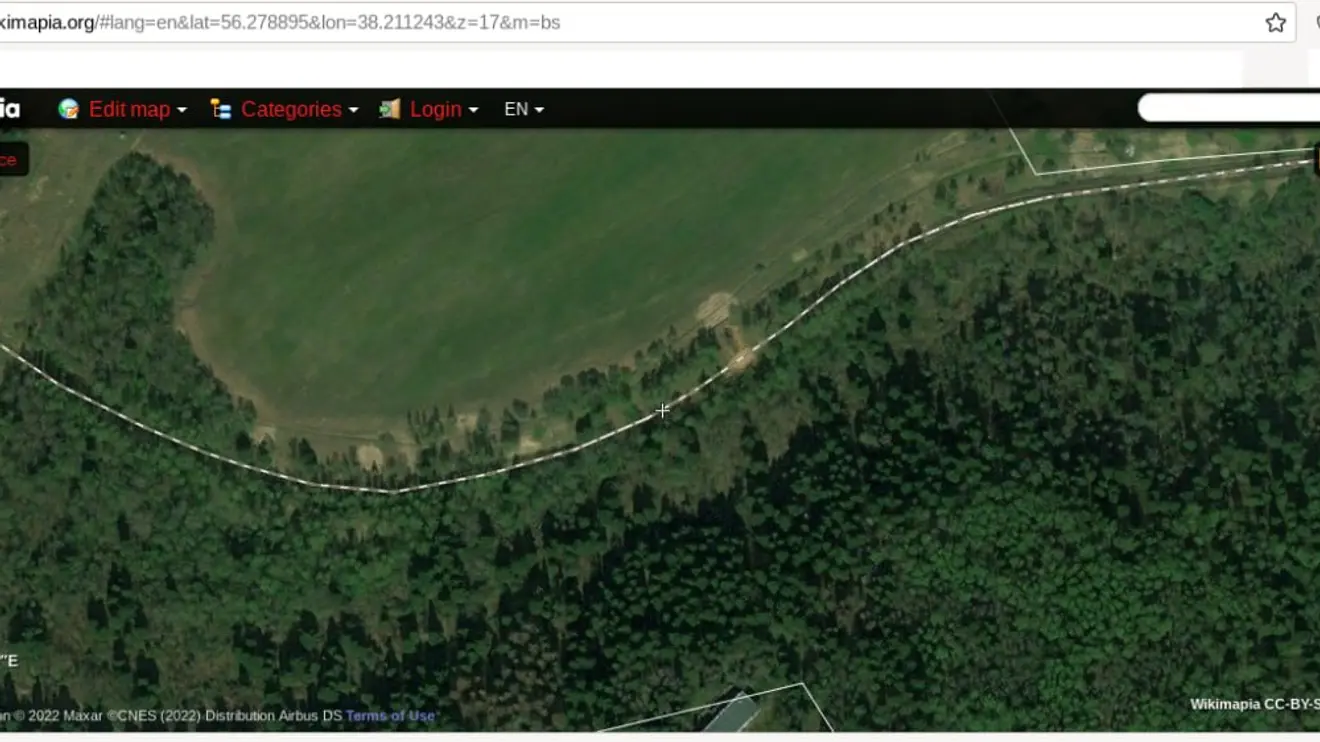
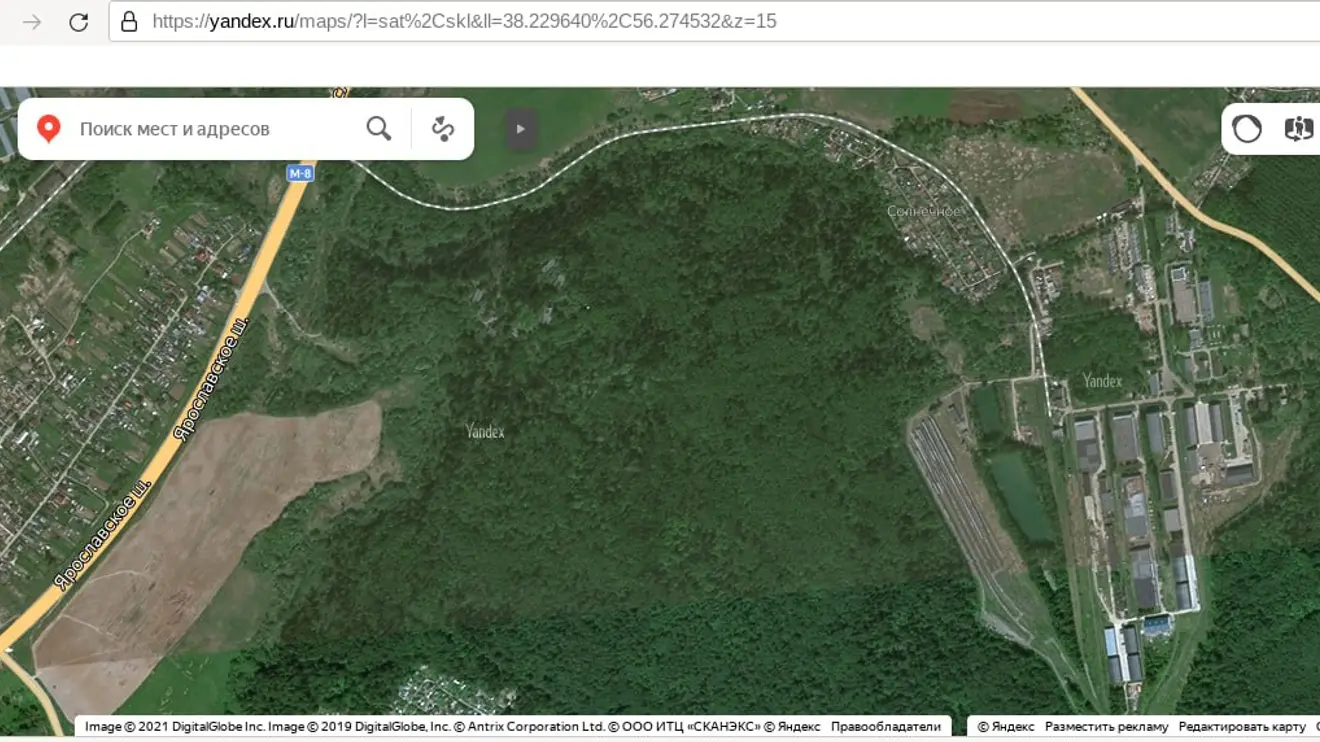
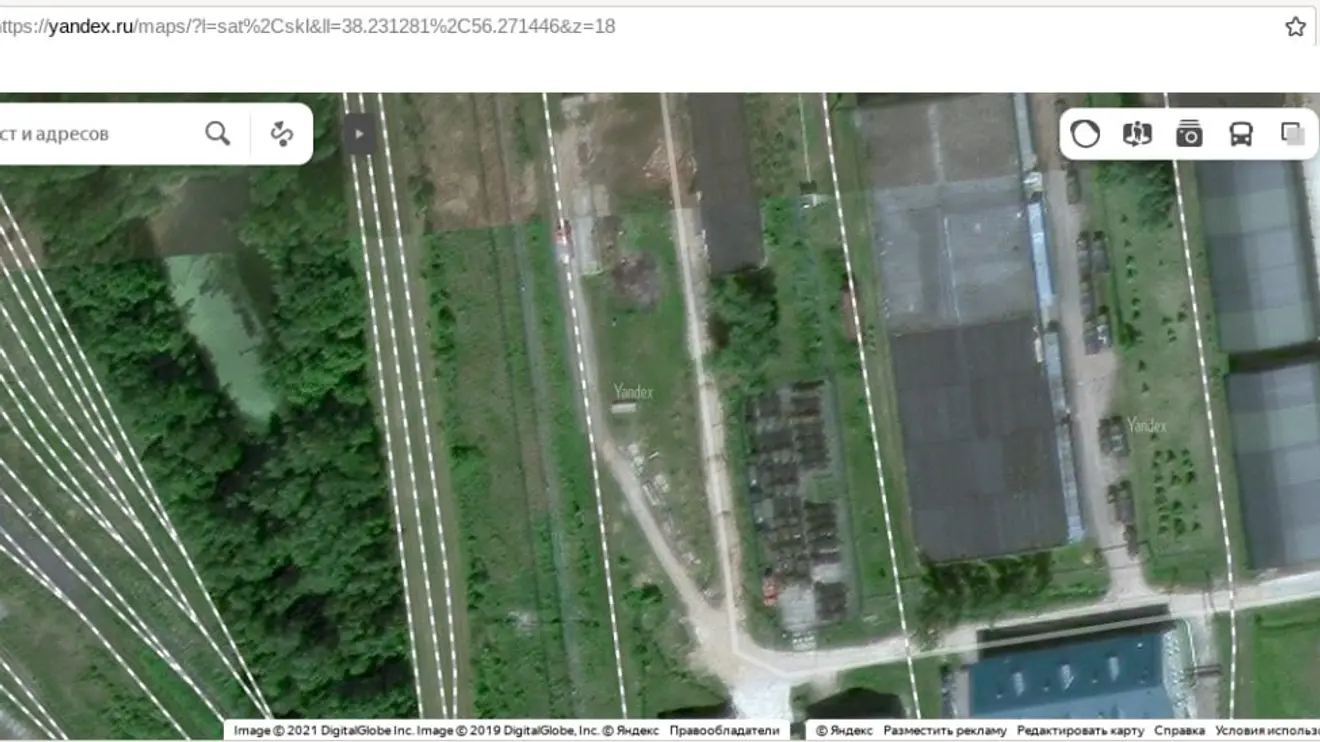
BOC: attacked railway in the Moscow region on satellite maps
When planning the shares of anarchist_ki, they were inspired by the experience of the Belarusian Partisano_k, but did not fully copy their tactics Slow down by the movement of civilian trains by damage to the signaling network, destroying the cubic meters and other control systems. : We decided that this can bring many problems to ordinary people. “We are in the border regions of the Russian Federation, where even a civilian railway is constantly used to transport military equipment, we would probably have decided differently. But in the Moscow region we chose to focus on unambiguous evil - military facilities. ” The BOCA claim that the attacks on the railway “look very effective in economic terms” (it means that the minimum of costs for the partisan_ki lead to the fact that the Russian army is losing time and money while the railway tracks are restored ). “While they seem quite safe in preparation and conduct,” the activist_ki says.
Partisan_ki say that the authorities cannot guard the railways throughout the ways: “Forest areas will always remain where there are no random witnesses, which means that the partisans will find a place for action. Of course, as partisan attacks develop, there is a risk that the paths will patrol. ”
The second action was initiated by the organization of the organization in Vladimir on June 28. Activist arranged a diversion on the railway leading to the arsenal of the Rocket-Artilrey Directorate of the Ministry of Defense of the Russian Federation. The partisan_s dismantled the rail joint and took it aside. The sabotage was discovered, but the restoration of paths took time and delayed the movement of compositions with military equipment.
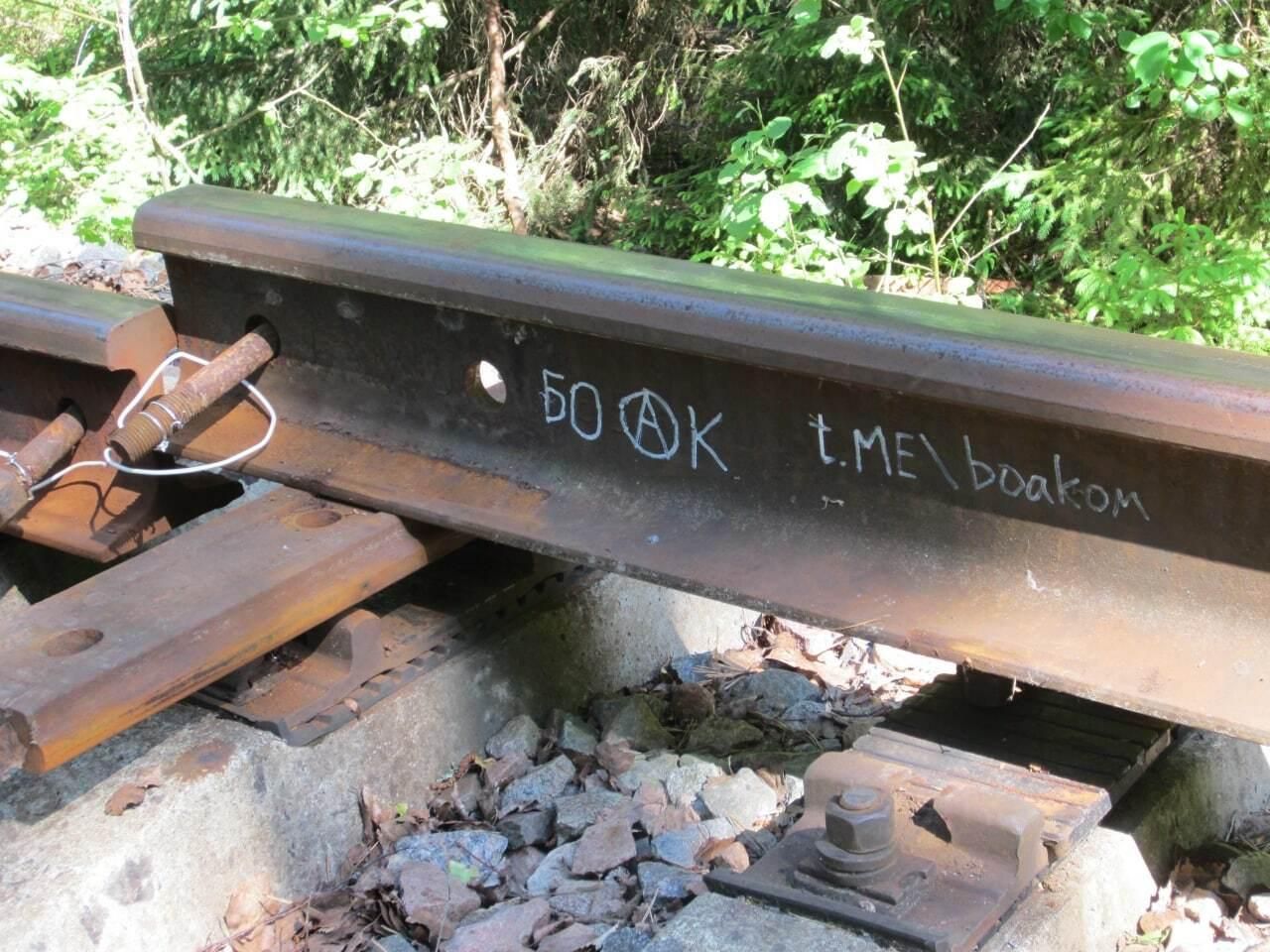
BOC: attacked railway in Vladimir
What you need to know if you stay in Russia and decided to continue resistance? Tips from BOC
Together with the experience of rail resistance, the BOC shared the recommendations for activist_ok, which prepare for any promotions.
In the sixth month of the war, many - both in Russia and beyond - it seems that anti -war resistance in Russia is dead and nothing to do with it. The last anti -war rallies in Russian cities were March 6 - for the third week of the war. But the railway tracks used by Russian troops continue to be destroyed, and trains stop. And it is important to talk about this.