
Translated material
Your university is ziga, but do you want to study?

Read more about what is possible and impossible, read in the cards.
If you are in Russia or plan to return to it, you can not replace our materials on social networks, refer to them and publish quotes.
“Smolny without borders” is an independent educational project, which was created by the former teacher of the Faculty of Free Arts of St. Petersburg State University. Until September 2, on the site “Smolny without borders”, everyone can apply for courses. The program includes post -Soviet history, feminist filming, conflictology and much more.
"Smolny without borders" - what is it?
The program of free online courses of a university level, which are read both in Russian and English. By passing the course, you can get loans Actual for those who are in parallel in an educational institution. This means that your final assessment and the fact of passing the course can be inscribed in the transcript of the university where you are learning. The organization from which you will receive loans is Bard College (declared an “unwanted organization” in Russia). . The main feature of Smolny courses is that the lecture format is minimized, and from the student_k, active participation in pairs is assumed.
Semeship courses (15 weeks) and mini-courses are now available (five weeks of two pairs or ten weeks each). The list of courses is here (you can also go on the site).
"What to read" - recommendations
We asked the teacher of “Smolny without borders” to recommend a potential student in one text that is somehow connected with their courses. For convenient navigation on this rather big list: the texts below are indicated in the order of their location in the article so that you can immediately climb to those books that interest you more.
The name of Socrates has become one of the names of philosophy as such. After all, her story is largely a constant return to the figure of Socrates. As Maurice Merlo-Ponti said in his inauguration speech to her college de France: all philosophers (or almost all) “never stopped recognizing a man who did not write, did not train, turned to passers-by on the street and had difficulties with public opinion and with the authorities.”
The provocative story of these returning to Socrates can be found in an interview with another professor of college de France - Pierre Ado, who described ancient philosophy not as a closed system of thought, but as a way to live. Translation of this interview "From Socrates to Foucault. A long tradition ”entered the book of Ado“ Philosophy as a way to live ”.
2. Stuart Jeffries, Grand Hotel Abyss : The Lives of the Frankfurt School - Council of Artemy Maguna , teacher of the course "Introduction to Dialectics"
Fresh version of the history of the Frankfurt School She appeared at the Institute of Social Research at Goethe Frankfurt-on-Maine University. Its participants were engaged in the critical theory of modern society. , the most important dialectical tradition of the XX century. The book is written entertaining and living language. It combines interesting moments of biographies and brief, but accurate retelling of the main theoretical works of Frankfurts.
3. Yuri Manin, “ Mathematics as a metaphor ” - the council of Andrei Rodina , teacher of the course “Introduction to mathematics as free art (in English)
Yuri Ivanovich, who left us at the beginning of this year, subtly felt the connection of mathematics with world culture in all her dimensions and was able to express it in his literary texts collected in the book “Mathematics as a Metaphor”. I recommend this wonderful book to all DOXA readers who are not yet familiar with the work of our brilliant contemporary. In the course I try to follow the principles of uncompromising mathematical humanism (or humanism in mathematics), which I learned from Yuri Ivanovich.

We talk about Russia's military invasion of Ukraine, protests and repression. We believe that now, when dozens of media have closed or ceased to cover the war, access to independent information is more important than ever.
When they ask me about the recommended literature on conflictology, I often hesitate: there are incredibly many books on this topic. But there is one book that is especially distinguished. Nonviolent Communication: A Language of Life Marshall Rosenberg not only tells, but also demonstrates practical exercises for the development of non -violent and empathy. This approach helps to reduce the level of aggression, anger, hatred and fear in relationships.
Together with the participants, we plunge into the practice of conflict resolution, and also study the cognitive processes that control our communication. Our goal is to learn how to manage these seemingly uncontrolled processes, making our stay in this world more comfortable and harmonious.
The Fata Morgana’s stories that have just been translated into Russian-this is a mast ride for everyone who prefers the letter, as Blancho understands it, fiction, as Taffy evaluated it. Littlel is better known as the author of “goodwriters”, a huge epic narrative about the Second World War, exploring the nature of mass violence. It is much less known for his experiments of small forms in which the theme of the same violence develops, but private.
6. Ernest Renan, “ What is a nation? " - the Council of Viktor Apryshchenko , teacher of the course " World History from 1300 "(in collaboration with Princeton and Cambridge)
“A nation is a daily plebiscite National voting. ", Renan said in his lecture in 1882, - and" two things that are essentially one, constitute this soul, this spiritual principle. One is in the past, the other is in the future. One is the general possession of a rich legacy of memories, the other is a general agreement, a desire to live together, to continue to use the inheritance that has not been divided. ”
Completion of history, in some cases - oblivion of the past, is the central element of the construction of the nation. In the course of “World History from the 1300”, students together will pass the ways of creating nations, the struggle for their idea and understanding national unity.
7. Alexandra Dzhukhash, “ Women of the look : stories in feminist cinema and video” - the council of Maria of the one -year -old , teacher of the course “Fundamentals of the cinema” (in English)
The book is the result of a large study of the film artist and activists of Alexandra Dzhuhash in the field of feminist alternative and independent cinema, video and media-"Creativity carried out outside the sanctions and the desire for profit in the industry." The book includes an interview with contemporary artists and directors such as Karoli Schneemann, Barbara Hammer, Cheryl Dunier, Carol Lee, Valery Sow.
All of them turn to the moving image as a way of self -expression in conditions of isolation and political alienation, discrimination, migration, as well as in the search for their own voice. .
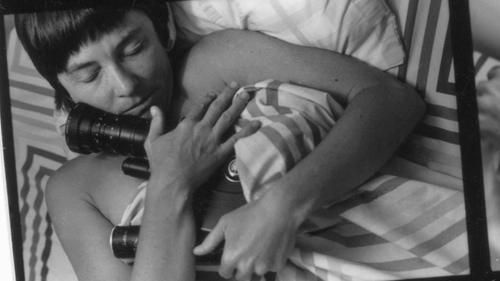
Barbara Hammer
It is to the search for our own voice through the cinema that we will turn in the framework of our classes. We will make exercises, collectively disassemble them, watch and discuss the movie, and perhaps the final result will be short participation of participation. However, the result is not always the goal of feminist filming/video production-the process itself and immersion in the space of collectivity are important.
8. Sam Green and Graham Robertson, “ Who is the power here? Citizens, the state and the struggle for Russia ” - the Council of Alexei Gilev , teacher of the course “ Russian Politics after 1991 ”
The book explains what the support of power in modern Russia is based on. Among other things, the authors reveal the plot about how the desire to be pleasant people in everyday communication turns them into statesmen.
The course “Russian Politics after 1991” is dedicated to the post -Soviet political trajectory. There will be 15 topics, including “Elections and their features”, “Support for power, public opinion”, “Family and gender”. In each topic, we will analyze the results of scientific research, study academic discussions.
An excerpt from a new, just released book by Alexander Borovsky about public art in Russia opens a discussion about the origins and self-determination of Russian modern art. Alexander opened almost the first post -Soviet institution of Contemporary Art, reviving the “Department of the latest movements”, which was created in the Russian Museum and disbanded in Stalin's times. The very history of the transformation of the former Lenin Museum into the key Russian site of contemporary art talks about how much a postmodernism was in a curiosity even in the 1990s and 2000s.
However, do we not think about it today in another coordinate system, what does this seem to be one of the leading Russian art critics?
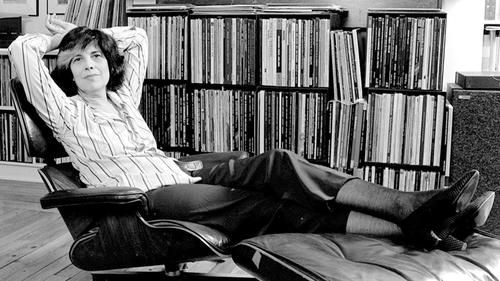
Susan Sontag
10. Susan Sontag, “ On photography ” - the Council of Denis Skopin , teacher of the course “Critical view of human rights: human rights and viewer” (master's level in English)
The main thesis of the author in this book is simple: the photograph made it possible to extend the capitalist possession of things that before that it was impossible to possess. Possessing a photograph of a thing, we have the very thing. Marxist logic leads a Sontag to the consideration of the photographer as a “minister of capitalism”. Photography, as a capitalist tool, cannot arouse human emotions in us.
But is it really so? How does the photograph affect the viewer? Is a photograph capable of changing the world for the better and become a weapon of the struggle for justice? On our course we will try to look at the human rights not from dry legal positions, but through the prism of photographs that record violations of these same “rights”.
11. Meyer Shapiro, “ still life as a personal object ” is another advice from Denis Skopin for the course “Introduction to the Philosophy of Art”
In his text, art critic Meyer Shapiro polemizes with Martin Heidegger about the picture of Van Gogh “Bashmaki”. According to Shapiro, Heidegger, who believed that these shoes belong to the peasant woman, is mistaken. Shapiro is sure that the picture depicts the shoes of the artist himself. However, behind this “art history” dispute about the belonging of shoes is hidden something more: Shapiro criticizes not just an attribution, but the whole philosophy of Heidegger, Adept and the theoretician of fascism.
What does fascism have to do with it? How are shoes and Nazi ideology related? In the end, what is Nazism, about which the Russians and Russians are constantly repeated by propagandists? In our course, we will try to answer all these questions.
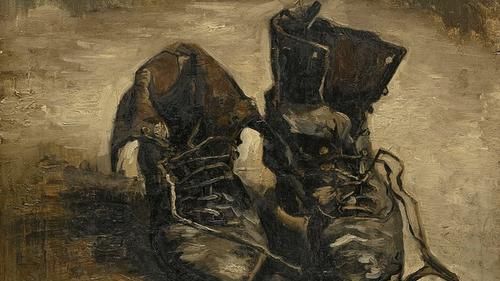
Vincent Van Gogh, "shoes"
12. Annie Erno, “ Return to Ivto ” - the Council of Larisa Muravyeva , teacher of the course “Auto -firm at intersections of experience and letter”
In 2012, French writer Annie Erno made public lectures in IvTO - a small town in Normandy, where her childhood passed. Despite the fact that IVTO served as a scene of action for several of her early novels, the writer often avoided describing it directly, reduced the name of the city to the title letter, and the events associated with him were completely scaled before the incidents that could happen in any other town.
“Return to IBTO” is not only a nostalgic attempt to pay tribute to the city of childhood, but also the desire to realize the laws by which life spaces become part of literature. In his lectures, Erno compares his memories of Normandy with those who were described in her novels and, continuing the line of French writers who thought about memory problems, adds a affective dimension to this problem. On the course, we will reflect on how memory and affect are connected, how fiction and the fact are related to what role, when trying to recreate the past, the way of writing about him plays and why Annie Erno herself avoids denoting his texts with the term “auto -firm”.
13. Maria Stepanova, “ Memory of Memory ” is another recommendation from Larisa Muravyova, but for the course “narratives about trauma in modern Russian literature”
Perhaps the most insightful relationship of injury and narrative was determined by Maria Stepanova in the novel © E “Memory of Memory”. The figurine of a porcelain boy with chips and cracks, accidentally found on an antique collapse, becomes not only a metaphor for a injured personality, who has survived in a vice of history, but also a symbol of futile attempts to appropriate this injury with narrative means.
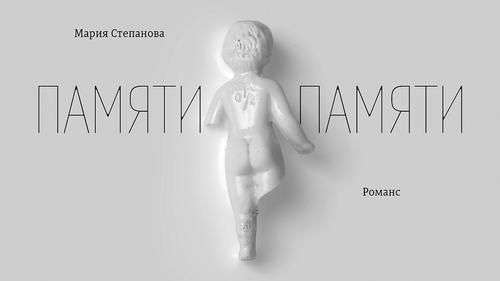
Thinking of making a porcelain boy in the finale of the future novel and the answer to all questions, the narrator accidentally breaks it - so the assigned experience again scatters into fragments, and the injury confronts traditional attempts to give her a holistic appearance. Nevertheless, literature finds ways to talk about injury: a porcelain boy from the hypothetical final moves to the cover, and what seemed inexpressible through the spider web in the letter. The course “narratives about injury in Russian literature” will be devoted to the study of paradoxes of traumatic experience, which is contrary to the classical methods of narration.
14. Edward Said, “ Orientalism ” - Council from the faith of Schengelia , teacher of the Laboratory “Anticolonial Museum and Practice of Reconciliation”
In the laboratory, we are going to read mainly newspapers, internal museum documents to look for answers to the question - who owns the museum? I selected several texts from the book of the classic of the post -colonial theory of Edward Said. This book recently published at the publishing house of the Garage Museum, and it seems to me an excellent reason for thinking about the empire, postcolonialism and cultural authorities.
15. Andrew Solomon, “far from the apple tree. Parents and children in search of their “I” ”are another advice from the faith of Schengelia, for the laboratory “ The struggle for the rights of people with disabilities. History of the United States, Great Britain and Sweden "
This is a non -academic reading, full of the most pressing questions about the identity, connection and disparate of loved ones. It is not new, but in the war it began to sound as if even louder.
16. Georgy Demidov, “ Dubar ” - the Council of Dmitry Bykov , teacher of the course “Prison and Kutorg in Russian literature”
Demidov is an engineer who describes camp events and customs with truly mathematical accuracy. His texts were completely confiscated in the seventies, the daughter achieved their return and managed to print five books relatively recently. Shalamov called Demidov the only unrealed man he met on Kolyma. The story is short, and probably it can be called scary. But with all the stinginess and accuracy of descriptions, this is an enthusiastic poem about man. And she makes approximately the same impression as the sunrise over the ice cemetery.
17. Melanie Anderson and Louise Creger, “ she wrote monsters ” - another advice of Dmitry Bykov, but for the course “Aesthetics of the thriller”
On the course, we will study the book of Louise Creger and Melanie Anderson “She wrote monsters” is the only intelligible manual in the nature and history of Gothic, which I can recommend for mastering the genre. The book is dedicated exclusively to the writers who advanced the genre: from Mary Shelley to Shirley Jackson. The text is not only brilliantly written, but also illustrates the features of modern discourse.