
Translated material
Moscow Navalny
The Novo-Europe correspondent walked in places where he once lived, worked and protested Navalny, and along with the inhabitants of the capital remembered how it was then
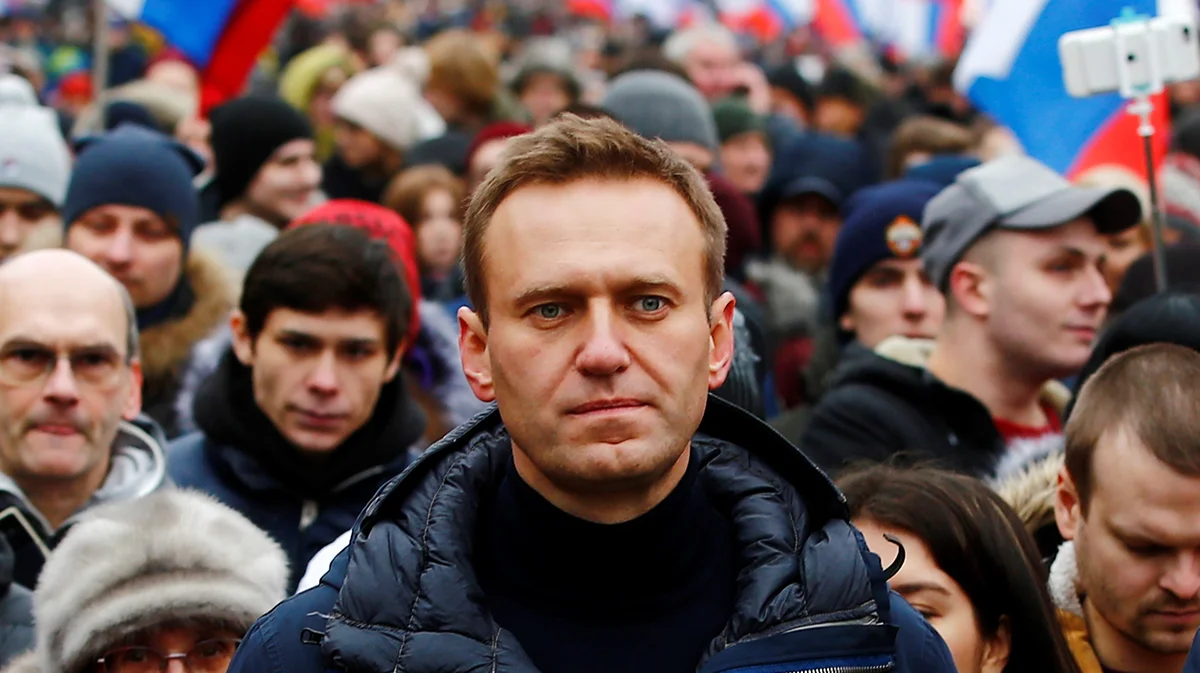
Alexey Navalny participates in the march on passionate Boulevard in memory of Boris Nemtsov on the fourth anniversary of his death, Moscow, February 24, 2019. Photo: Sefa Karacan / Anadolu Agency / Getty images
On February 16, 2024, Alexei Navalny was killed in the IK-3 colony near Salekhard. Before poisoning in 2020 and the arrest of returning to Russia, the country's chief opposition policy lived and worked in Moscow, many addresses of which are related to its activities. In Maryino there was his apartment, the first “Russian marches” took place here, in which Navalny often recalled the participation. In Bolotnaya and Prospekt Sakharov, in 2011-2012, many thousands of rallies gathered, and Navalny stigmatized the “crooks and thieves” from the stage. On Paveletskaya in 2018, during the presidential campaign, there is a pre -election headquarters of Navalny.
What was Moscow when there was no war, but Navalny was alive? The correspondent of Novo-Europe went for a walk in places remembering the main oppositionist of the country.
Lublino and Maryino
At the exit from the lobby of the Bratislavskaya metro station, in the middle of the working day, is little bitter. Couriers are fussing, office workers hurry, pensioners dragging bags-houses. Cars pass along the street of the Pererova.
In the late 2000s, there was one of the main protests of Moscow. Every year on November 4, on the Day of National Unity, on the Street of Pererva, nationalists gathered for the “Russian March”. Several times in the marches, Alexei Navalny also participated in the marches, who “for the infliction of political damage to the party, in particular for nationalist activities” in 2007 was excluded from Yabloko. After this event, Navalny created his first independent organization-the National Democratic Movement "People". The politician defined the National Democracy as a separation of nationality from the nation, characterized himself as a "normal Russian nationalist."
The penultimate time Navalny participated in the “Russian march” in 2011. Journalists of the “tape” described this this way: “On the march Navalny was a little uncomfortable. The blogger tried not to glow with the other organizers of the march and carefully turned away from the crowd chanting non -prospecting slogans. When he was interviewed by Radio Liberty, Navalny asked not to shoot him against the backdrop of the Orthodox borelogs who were heading at the head of the march with a huge icon (the priest with a guitar behind his shoulders was salted there). “Well, this is already a very hellish background,” Navalny commented on and stood in front of the poster of the singer Valeria. During his speech, Navalny then called on all the march participants to "expel the thieves' bastard from the Kremlin and from the government."
In 2024, there was no trace of the “Russian marches” in Lublino and Maryino. In the courtyards of panel houses are quiet. Hurrying from Pyaterochka a local resident-pensioner in a pink sheepskin coat shares her memories: “My friend lives right next to the“ Bratislavskaya ”, she often saw them. It was stupefied youth, walked along the break with columns. They just was bored. Navalny was also, the kingdom of heaven ... There are many shortcomings in power, especially now ... Changeability, of course, is needed, but not the same methods. ” As if frightened that she had said too much, the pensioner hastily apologizes and goes towards the store.
Nationalist rallies often ended at the monument to the soldier of the Fatherland of the twentieth century. The monument was erected in 2005-in the year of the first “Russian march”. A tired soldier sits in the center, who, according to the plan of sculptors, "after the fight there is no strength to rejoice at the victory over the enemy and that he survived." In the background is a series of slabs with the names of all wars that the Russian Empire, the USSR and the Russian Federation waged in the twentieth century: from Russian-Japanese to Chechen. Several fresh wreaths are powdered by snow. A PERFECTION PERFECTION REMOVES: “RAMS? Yes, they often pass here. Cadets from textile workers come, honor their heroes ... And in the 2010s, the nationalists really walked, they were right. Now 10 million migrants have arrived, we do not know what they have on their minds. I am the eighth dozen, I'm scared. It’s good that the police disperse them. Navalny was then a good man, he fought against them. Then, of course, he blurted out. ”
In 2013, Navalny stated that he was stopping participating in the “Russian marches”. Heexplained this decision as follows: “My participation in the“ Russian march ”will now turn into a film comedy into Adova: as Boniface surrounded by children, I will go in a crowd of 140 photographers and operators trying to take me off against the backdrop of worshiping schoolchildren. Naturally, our “Kremlin friends” will do everything so that there are always a lot of these ziguers around me. ” More Navalny almost did not return to nationalist rhetoric-only in the mid-2010s he spoke of the need to propose the conservative part of the population “Civil Nationalism” as opposed to “Imperial”.
At a 15-minute walk from the monument to the soldier of the Fatherland of the twentieth century is the usual panel house of the Moscow series of the 1994 building. It was here, on Lublinskaya Street, 175, that Alexei Navalny with his family was registered. He owned a small three-room apartment, which RBC-Real Estate journalists in 2012 dubbed the Economy Class. I failed to talk with the neighbors - they refused to answer questions.
Bolotnaya Square, Academician Sakharov Avenue
Swamp Square is deserted. A lifeless block is piled on her a house on the embankment - an architectural symbolof repression of the past. On December 10, 2011, 80-150 thousand people came to an inconsistent campaign against falsification of elections to the State Duma.
The letter of the detainee a few days before that by Alexei Navalny was then read out by the journalist Oleg Kashin: “The most powerful weapon that we have is a sense of dignity.
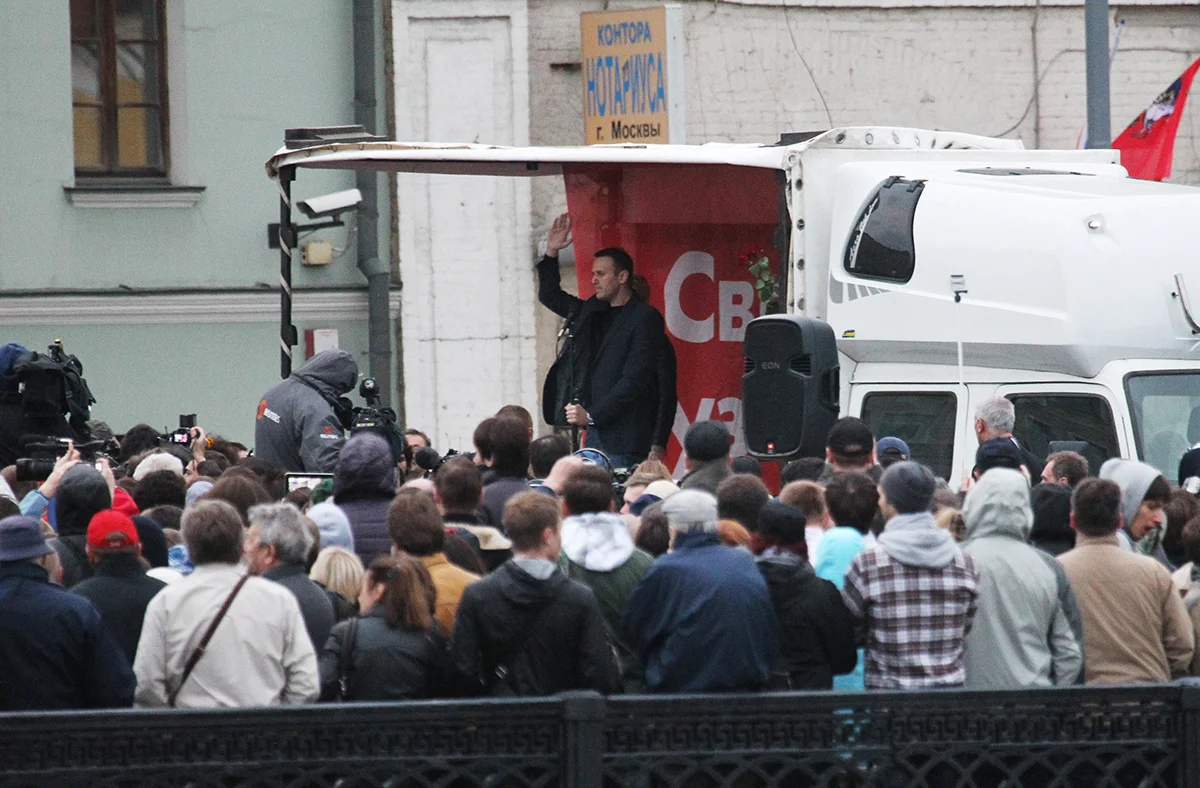
It cannot be removed and put on as a velvet jacket. <...> It is time to lose the numbness. We have a voice and strength. People with self -esteem should feel their solidarity. ” For the dispersal of protests, internal troops were introduced to Moscow.
In 2024, in Bolotnaya - a void, a bunch of excursion buses and the sounds of construction. On Luzhkov (Tretyakovsky) bridge, which during a rally on December 10, the police blocked under the pretext of a potential collapse, a company of adolescents 13–15 years old is walking. The girl, dressed in everything black, holds in her hands a volume of Immanuel Kant, whose mile in Kaliningrad has become one of the places where flowers are now carried in memory of Navalny. When asked if they know what happened here in 2011-2012, teenagers laugh: “What Russian does not know about the tragedy of Bolotnaya? They drove democracy ... And why did Navalny ordered them to go to the Kremlin? They could squeeze! "
Teenagers have in mind a rally on May 6, 2012 against the inauguration of Vladimir Putin, which was called the “Million Marsh”: then the action participants found that the marsh square agreed in advance was blocked by the police cordon. Alexei Navalny with other politicians announced the "sedentary strike." Soon after, he was detained. After the skirmish, which lasted about an hour and a half, the riot police managed to disperse the protesters.
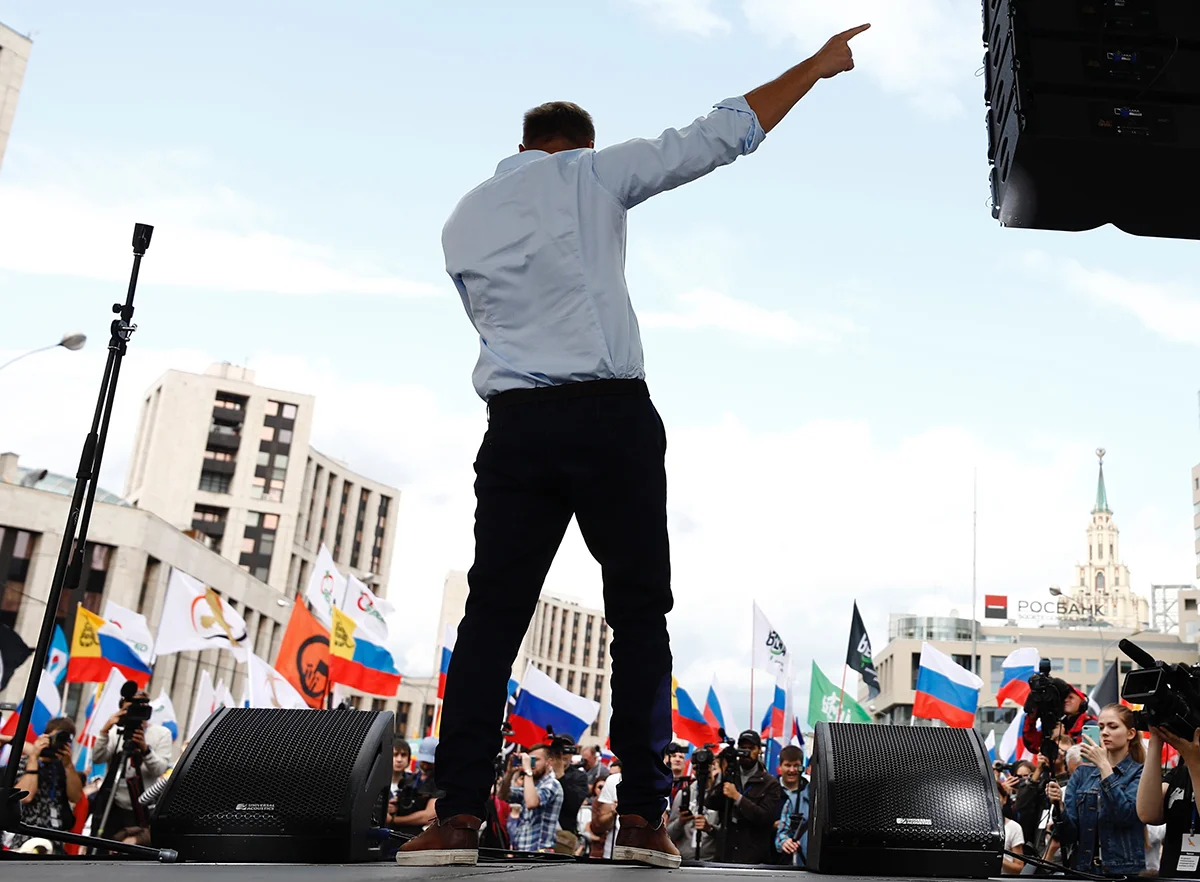
Another hot point of Moscow protests 2011-2013 was Academician Sakharov Avenue. On December 24, 2011, a rally “for honest elections” was held here, to which it came from 29 (an assessment of the Ministry of Internal Affairs) to 120 (evaluation of the organizers) thousands of people. The rally was attended even by ex-Minister of Finance of the Russian Federation Alexei Kudrin. Aleksey Navalny, during a rally from the stage, said : “I see enough people here to take the Kremlin and the White House right now, but we are peaceful people and will not do this yet. But if it is Julie to continue to lie and steal, to deceive us, we will take it ourselves. ”
The rallies continued until 2013, but it was not possible to achieve their goals - the results of either parliamentary or presidential elections were not revised. Against Alexei Navalny, 15 administrative and criminal cases were instituted, human rights organizations recognized him as political prisoner.
In 2024, Academician Sakharov Avenue looks deserted. Advertising of the elections (the literal v in the flowers of the tricolor with the slogan “Together we are power - vote for Russia!”) On the digital screen is replaced by an advertisement for the contract service (“Join your own”).
At the building of the International Investment Bank, which is called the "Spy Bank" of Russia, there are four flags - the Russian Federation, Mongolia, Cuba and Vietnam. The rest of the flagpole are empty. A group of the military hurries to the Kazan station. One of them has a chevron with Putin and the inscription "if the fight is inevitable."
At the intersection of Academician Sakharov Academician and Garden Ring, a monument to the victims of political repression “Wall of sorrows”. At the opening of the monument in 2017, Vladimir Putin spoke : “This is a terrible past [of political repression] cannot be deleted from national memory, it is all the more impossible to justify anything, by any the highest so -called benefits of the people. The very memory, clarity and unambiguity of positions, assessments in relation to these gloomy events are a powerful warning against their repetition. ” Seven years later, the monument became one of the sorrows on Putin’s chief political enemy, killed in prison. The monument is guarded by four employees of the Ministry of Internal Affairs, a police bus stands nearby. A middle -aged woman and two teenagers, ignoring the police, have red carnations to the “wall of sorrow”. They say: “This is the first time we participate in something political. This is no longer possible to miss. Our future died. Now it is not clear what is ahead. ”
Metro station "Avtozavodskaya and Paveletskaya"
In 2011, Alexei Navalny created the Corruption Fund. Under the wing of the new organization, all the Politics projects developed - “Rospil” (the fight against corruption in public procurement), “Rosyama” (the fight against bad roads), “Roszbros” (observation of the elections), “Roszhkh” (the fight against deficiencies in the work of the housing and communal services), “a good car of the truth” (the fight against corruption and abuse of power). The FBK office was located next to the Avtozavodskaya metro station, in the Omega Plaza business center.
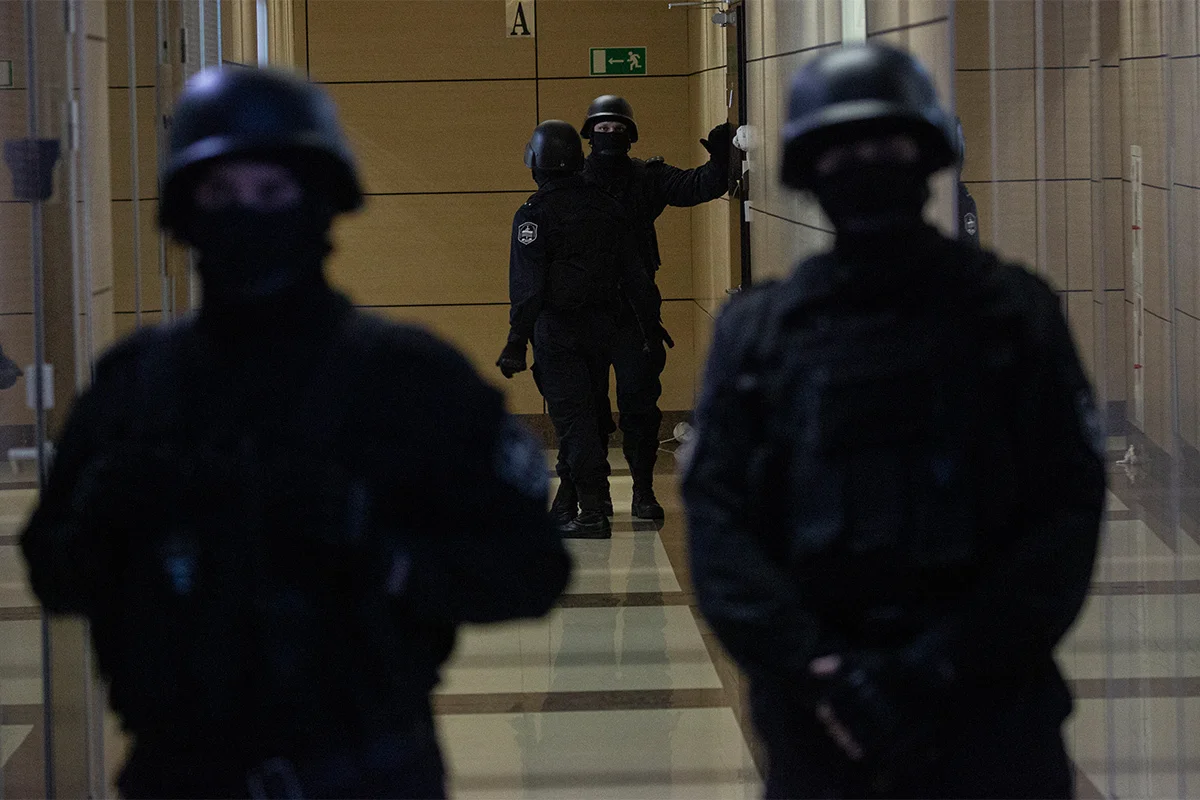
In 2024, Omega Plaza continues to live and develop. The passage has a small traffic jam from delivery machines, parking are clogged with car sharing cars. On the back glass of the dirty Citroeon, the letter Z is placed in the colors of the St. George ribbon. One of the guards says: “Well, yes, they were sitting here before, I have not found it already. Comrades said that because of them some problems arose. Constantly the cops came, hacked the doors here, blocked everything. Fire anxiety was constantly arranged. Without them, all of us is felled to all, thank God. ” The young man who came to Omega Plaza in June 2020 complements: “He came there on business, did not even hope to see someone. And here is Navalny with Yarmys! They have a good office, fashionable. Alexei was tanned, looked good. He reminded me of the American businessman. "
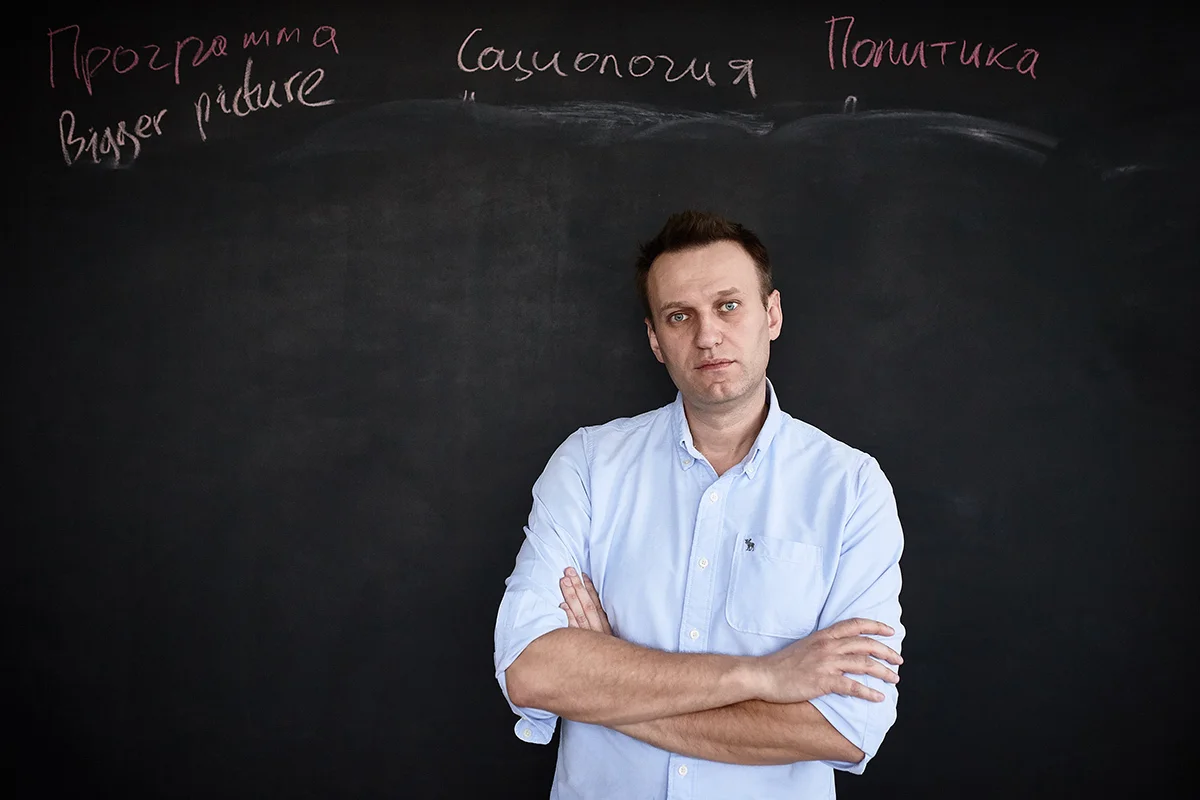
FBK helped Navalny in his campaign to the post of mayor of Moscow in 2013. The politician took second place, losing to Sergey Sobyanin. In the second half of the 2010s, the FBC was repeatedly searched, and in 2021 the organization was recognized as extremist and eliminated by court decision. In July 2022, the Navalny team announced the creation of the International Corruption Fund.
The next station after Avtozavodskaya - Paveletskaya. Here, on Sadovnicheskaya Street, was the headquarters of Alexei Navalny during the presidential campaign in 2018. The former headquarters volunteer says: “I was an ordinary teenager who wanted changes. In March 2017, I participated in the protests “He is not a dimon”, was very inspired by Navalny and his video. I especially remember his ironic appeal to the youth , he laughed there at the United Russia, accusing him of the operation of schoolchildren. Therefore, when I found out that I could be a lord for Navalny, I immediately ran to the headquarters. ”
The headquarters of Navalny on Paveletskaya was subjected to constant police attacks - either castles were changed in the building, then they initiated a criminal case of “arbitrariness”. But this did not scare young volunteers. “Listen, but what choice was,” continues my interlocutor, “go to the“ Young Guard of United Russia ”? I directly remember this exciting feeling, which is possible only in adolescence, when you go to the subway after meeting volunteers with love sable, inspired, young, happy.
A warm summer sunset above Moscow. In the distance you can see the Ostankino Tower. And it seems that ahead is only freedom, liberal democracy, honest elections and president of Russia are called Alexei Anatolyevich. ”
In 2024, in the building of the former headquarters of Navalny-a fashion restaurant-confectionery with a menu in French.
Nemtsov bridge, Lubyanka, Pushkinskaya
In February 2015, the ally and friend of Navalny Boris Nemtsov was shot dead on the Big Moskvoretsky Bridge in Moscow. At the scene of the crime, the spontaneous memorial “Nemtsov Bridge” immediately arose - people carried flowers, lamps, flags and photographs of the murdered. The place was attacked, and volunteers began to be on duty on the bridge. One of them in 2017 died after a skirmish with an unknown.
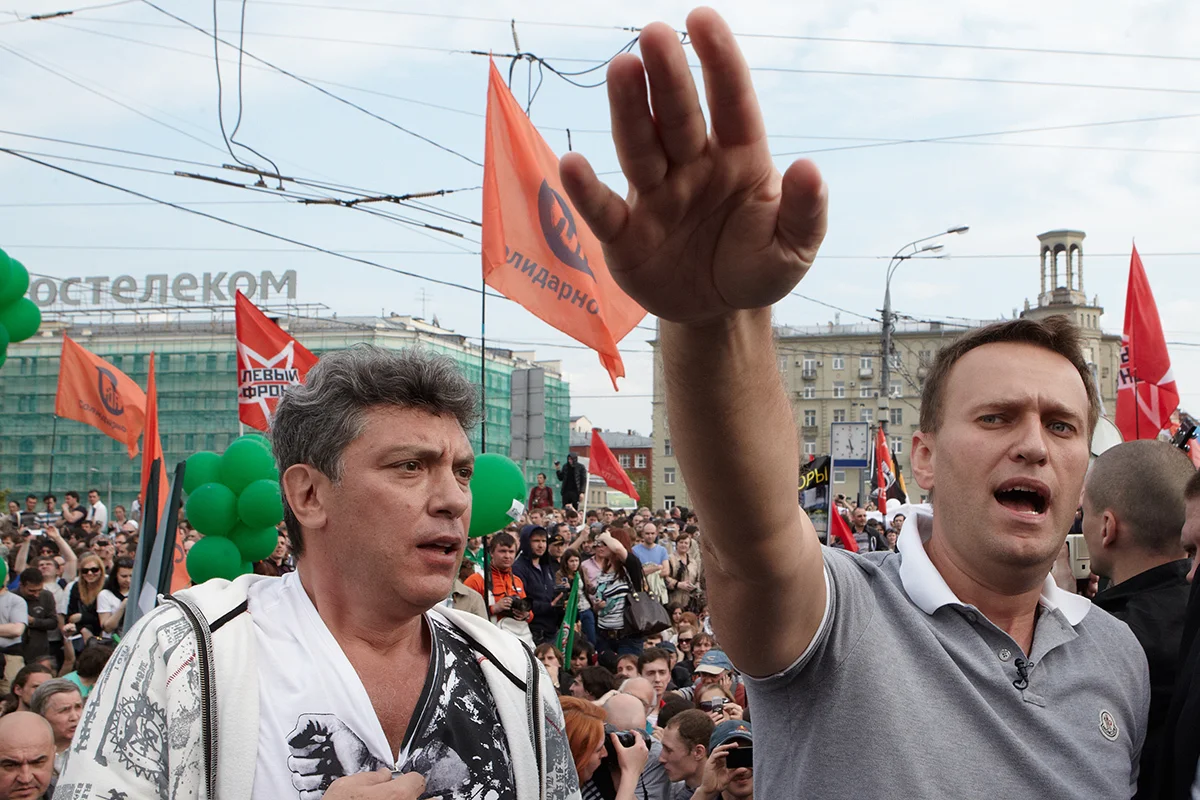
In 2024, Nemtsov Most was guarded by two Ministry of Internal Affairs, a police bus stands at the Kremlin tower. On the memorial are Nemtsov’s photographs with Navalny and written by a pen on the notebook paper the phrase “Russia will be free” and “it’s not a shame to do little - it’s a shame not to do anything” . The young tourists passing by stop, they take pictures with interest: “Hmm, and we didn’t know about this ... Is this some kind of Navalny friend? And what, he was also killed? "
Since 2015, annual marches of memory of Boris Nemtsov have been held in Moscow. In 2018, a former volunteer of Navalny’s headquarters came to such a march: “I wanted to honor Boris Efimovich’s memory. I did not know anything about him then, except that he was with Navalny in Bolotnaya and was killed by the Kremlin. This was enough. During the march, everything was quite peaceful until Navalny came. Crowds of reporters immediately ran in, began to photograph it, ask some questions. He replied that he came to say goodbye to Nemtsov, and not talk about politics. Somehow, the crowd carried me directly to Navalny, I walked next to him, even made several selfies. He possessed some unimaginable charisma, almost magnetism. When I asked him about the photograph, he agreed and smiled, after which I was ready to follow him anywhere. ”
If you go from the “Nemtsov bridge” to the Solovetsky stone on the Lubyanka, which has become the main place of farewell to Navalny, the spontaneous monument to another opponent of Putin will meet along the way - though from the radically opposite side. On Varvarka Street, a few hundred meters from the Kremlin, there are wreaths of Evgeny Prigozhin, whose plane was blown up in August 2023. They are also guarded by police officers - no matter what happened. On the Russian flag, a marker says: "Death is not the end, it is only the beginning of something else."
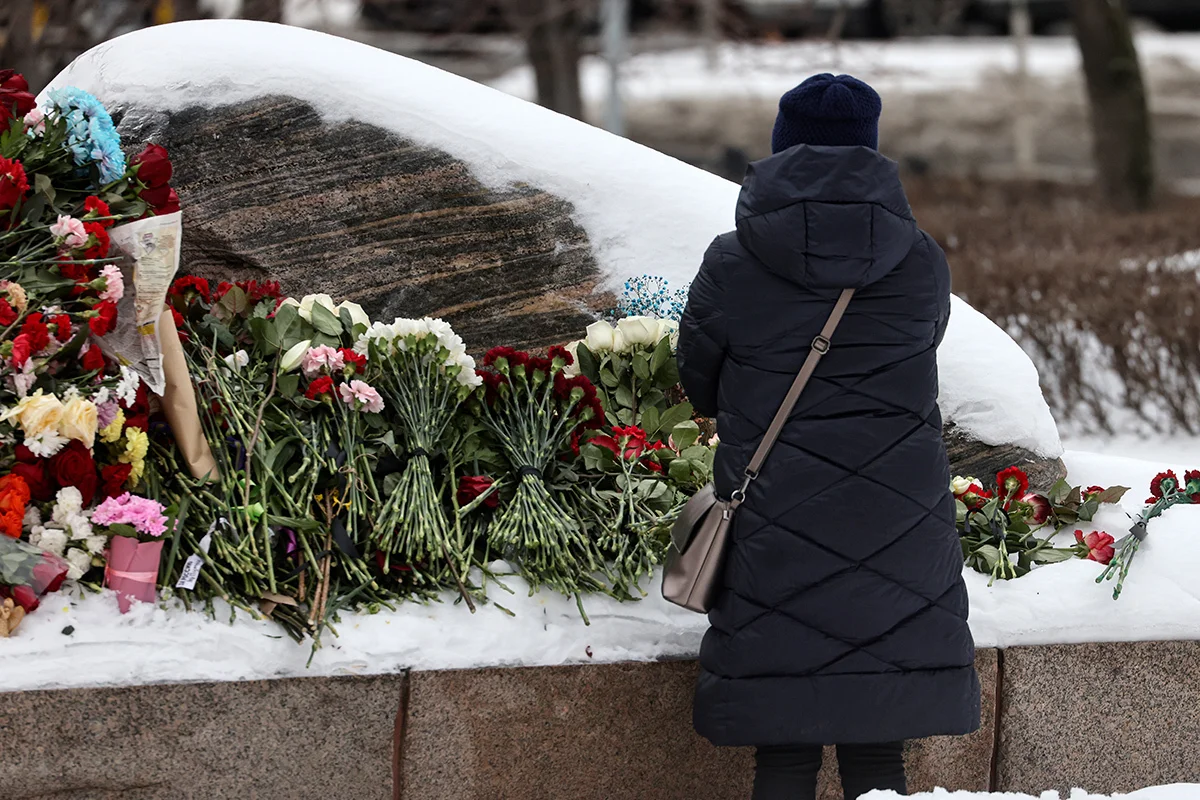
On Lubyanka, right next to the FSB building, there is a stone from the Solovetsky special purpose camp. This is the oldest monument to the victims of political repression. Already in the first hours after the news of the murder of Navalny, flowers and photographs began to carry him. Moscow communal workers clean them every night, but over the next day mountains of carnations, roses and lilies grow again at the monument. Three police officers stand at the “Smirno” rack at the exits from the underpass and at the stone itself.
Their immobility and seriousness creates a feeling of honorary guard - they do not interfere with the last memory of the chief oppositionist of Russia.
People who came with flowers share their sorrow:
"Something inside broke off with his death." "We cry continuously for the sixth day." “You heard that he said: if they kill me, then we are stronger than ever.” “I read a wonderful slogan on Instagram: we will fill this country with flowers. Let the flowers shut up machines. ”
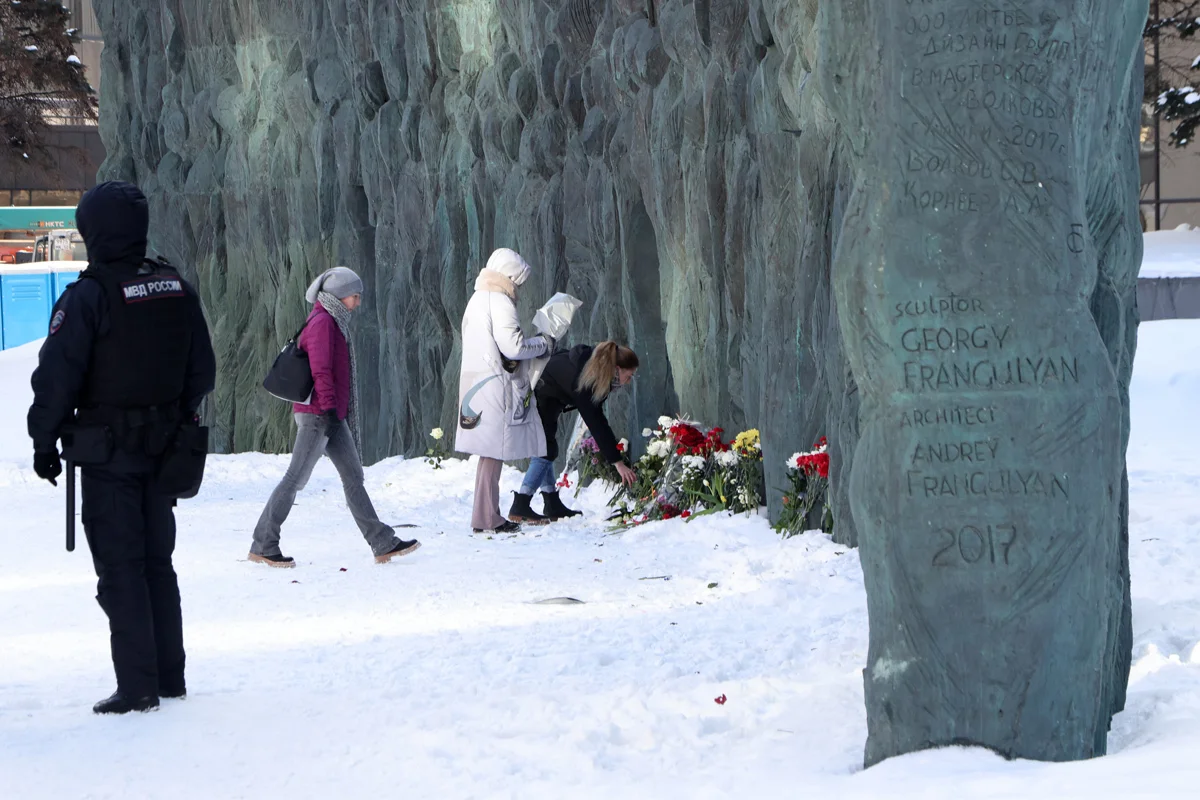
The anthropologist Alexander Arkhipov calls a “flower protest”, which became popular in Russia in 2022 as a way to express sorrow through the dead during Russian missile strikes in Ukraine, “weapons of the weak”: in a situation where any manifestation of dissent is prohibited, the petty and implicit confrontation of power is updated.
However, Putin’s power is even afraid of this - as soon as several people arise in Solovetsky stone, the policeman approaches and the bass indicates: “The crowd does not need to be created, we leave the flowers, if any, and we pass.”
In several stations from Lubyanka-Pushkinskaya Square, the main protest place in the second half of the 2010s. Dmitry Medvedev opposed the corruption after the film “He is not Dimon” in 2017, here they “walked” against the falsification and unremarking of candidates for elections to the Moscow City Duma in 2019, they threw the riot police with snowballs after the arrest of Alexei Navalny in 2021. In 2024, police officers are on duty at Pushkinskaya, who in pairs walk under the New Year's decorations of Sobyaninskaya Moscow.
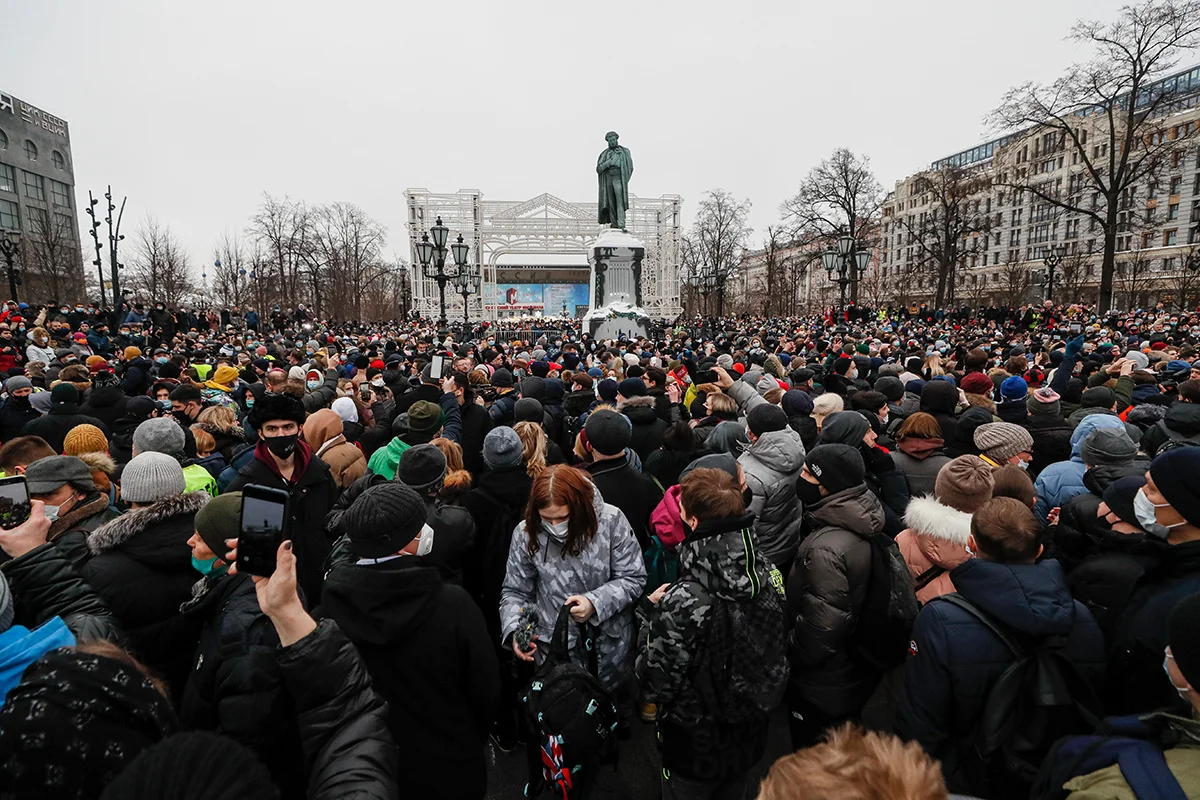
At the monument to Pushkin, next to whom Alexei Navalny was repeatedly detained, red carnations are lying. The poet looks at them approvingly. On the pedestal - lines from his famous poem:
*And for a long time I will be so kind to the people,
That I felt good feelings with a lyre,
That in my cruel century I glorified freedom
And mercy to the fallen called.*