
Translated material
Disturbing
Why are newspapers who have been published in Gulag for many years, are becoming more and more similar to today's free press
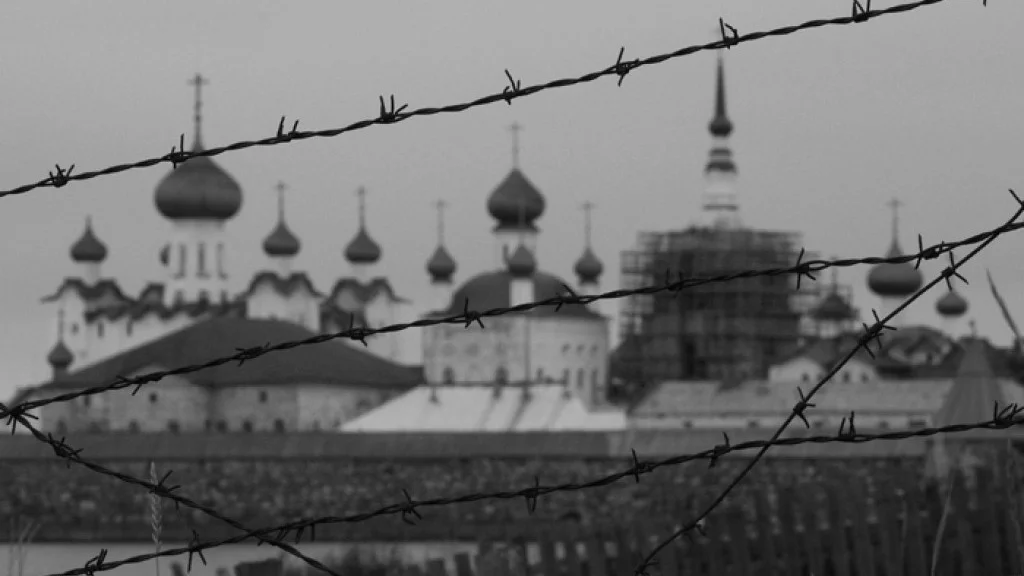
Solovki. Archive photo
Charms of hard labor
The first “camp” newspaper “New Solovki” came out, of course, on Solovki on January 11, 1925. Its actual editor became P.A. Petryaev, writer Boris Shiryaev, a Solovetsky prisoner, who later fled abroad, writes in his memoirs, the Solovetsky prisoner (in 1992, his memoirs were finally published in his homeland).
The guardsman Pavel Aleksandrovich Petryev in 1918 switched to the side of the Soviets, quickly advanced (became the commander of the XIII Army), and in peacetime - an inspector of artillery, but was soon “eaten” (they said, for the connection with Trotsky).

QUOTE
From the memoirs of Boris Shiryaev:
“As an editor of the hard labor newspaper, he (Petryaev) was more than in its place ... Always even, restrained, tactful and always clearly versed in the balance of power so variable on Solovki, he knew how to easily and quietly bypass all the pitfalls, gently and elasticly removing obstacles.
Gracefully fronting, playing witty, he beat off all attempts to penetrate his “gut”, but was very responsive to someone else's misfortune, and I do not remember the case that he refused to help someone or intercession. ”
Censorship did not constrain Petryaev, because the censor was a certain drying wahmisters who went through the co -sabotage school. The former Wahmister, who became the military commissar of the Solovetsky regiment, clearly timid in front of the “former”, signing all the corrections proposed by Petryaev to the press, sometimes even without reading them. But even with careful reading, he was clearly beyond his power to figure out in many ways.
The head of the camp, who lived still with old revolutionary traditions, wanted to make the mass newspaper of the Solovetsky Public the mass newspaper of the Soloveki. But it was impossible. In the newspaper, only a small circle of former professionals and scientists collaborated in the newspaper. The “masses” responded only from their worst, immoral part, Shiryaev writes.
Most of the letters and notes came from the part, to disgust, are saturated with that sneaking, that voluntary-compulsory lie that became the quintessence of the Soviet press in general. The authors narrated about their degeneration, re -education and even praised the charms of hard labor - “delicious fish soup” and “funny healthy work”.
On Solovki, this meanness had some justification: naive authors hoped to reduce the deadline, which for many was equal to the salvation of life, but the falsehood was too obvious and shameless. However, the newspaper was read and bought. Price - 5 kopecks in the expense of the "Fengling Book" (money was not issued on hand). The circulation mainly went to the mainland, where most subscribers were relatives of prisoners, they wanted to know at least something about the camp life of their loved ones. Of course, they learned something.
QUOTE
From the memoirs of Boris Shiryaev:
“Nobody even believed in the possibility of“ distortion ”among the Chekist authorities. They didn’t talk about her. In those years, the bizarre plexus of Russia who had gone into the past of Russia, who was invading consciousness, still lived the remains of ideas about conscience, about shame, about personal honesty even among the Chekists.
Beginning. The administrative part of Vaskov, betraying Petryaev one of these notes, directed through the admiration with the calculation of reading it to them, said:
- Here, take it. Then some kind of bastard is lying to you. ”
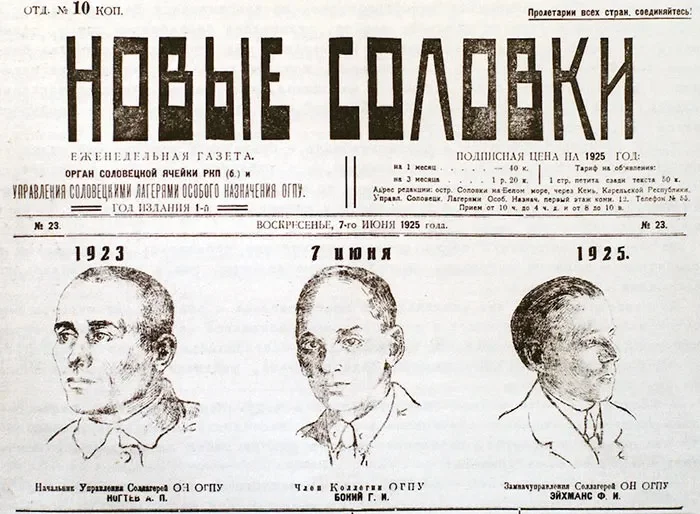
On Solovki (in the newspaper), they first read brief information about life in the USSR and an overview of the international situation. The monthly literary magazine “Solovetsky Islands” was considered noticeably more interesting than the newspaper. His circulation of 500 copies was all at the disposal of the OGPU. The transfer of the magazine from the island to the mainland was allowed only by special permits, while the newspaper could be sent freely.
But he brought the OGPU undoubted benefit, writes Shiryaev.
“Firstly, he informed him (in addition to the will and intentions of the authors) about the moods of some circles of the Russian, mainly Moscow, intelligentsia; Secondly, he was an advertising trump card in the hands of the same institution with which it operated on as evidence of the humanity of the Solovetsky regime to foreigners, and most importantly in the highest layers of his own party, where at that time the opposition of the old Bolsheviks (Ryazanov, Tsuryup, Krasin, Tomsk and others), which were negatively related to Lenin-Dzerzhinsky, and to their owners Russian intelligentsia. "
The magazine not only did not have a provincial appearance, but outwardly resembled the best of the old editions of this type. Seven or eight numbers came out.
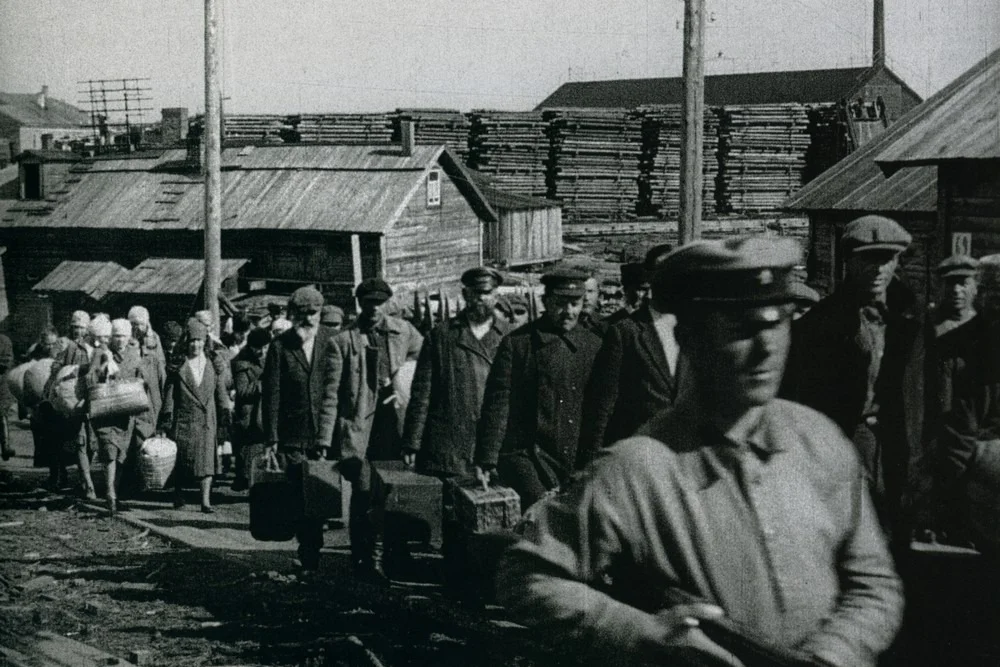
The coefficient of Bolshevik will
But the freemen (unless, of course, you can put it like that) of the 20s replaced the “real” press. And the main newspaper for the construction of the White Sea-Baltic Canal-the “distortion”-can be called the genuine ancestor of the camp press in the USSR.
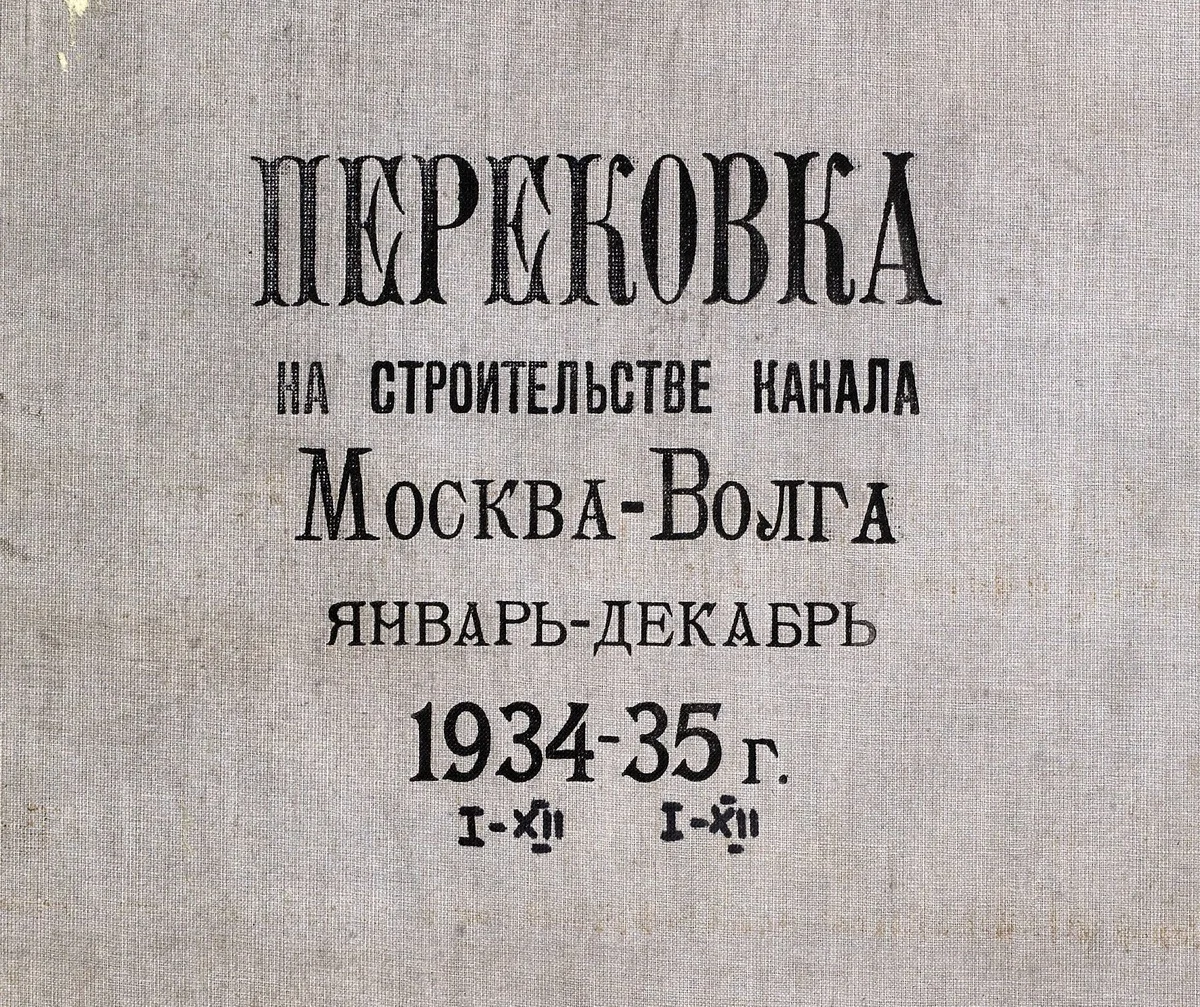
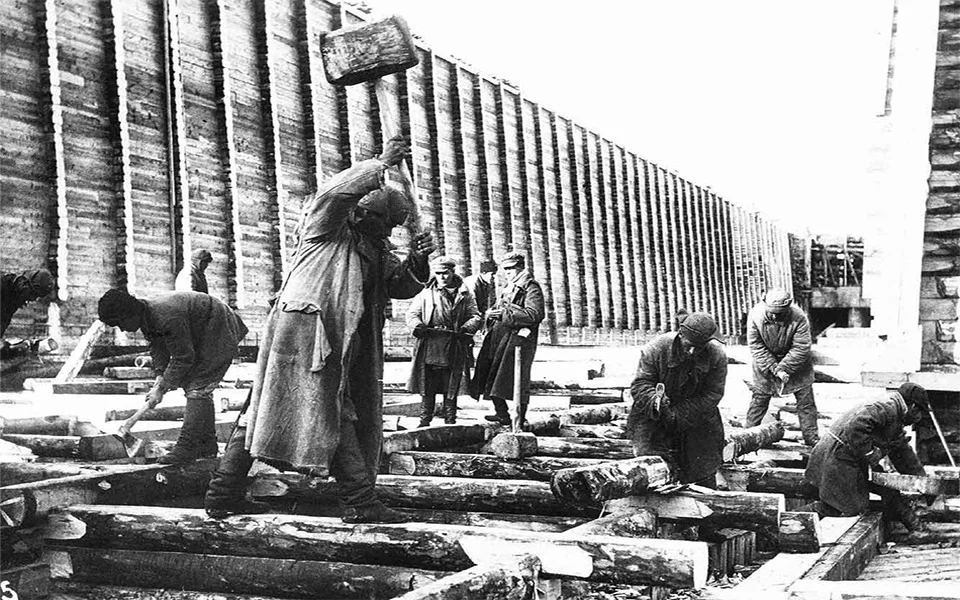
From the first days of the “skew”, a Campaire cult was created in it. The authorities wanted people not only to work enthusiastically, but also love their slavery, praise him at every opportunity. A real camp is a strong man who thinks only about the channel, about the standards of development and public work.
Army vocabulary of forced labor is amazing: “assaults”, “labor landing”, “Canalar feats”, “front of work” ...
QUOTES
“The one who exposes a prerequisite for hundreds of excavators, steam locomotives, etc. - He does not want to build a channel. Focus on a shovel, wheelbarrow, grab and manual drilling ... It is good and you need to know mathematics, but it is dead for the builder, if he does not know the correctional coefficients for Bolshevik will, on socialist methods of labor organization, for cultural and domestic services for the worker and the ability to organize a real production order, ”wrote L. Kogan, the chief of construction.“Lagcore (as called the camp correspondent, journalist. - P. G. ) - scout in combat construction positions. The first duty of laggore is to become advanced in the line of drummers. Raise the mass of camps to fight for the speedy implementation of the plan. Follow the fulfillment of obligations, organize the audit brigades, arrange roll calls, fight for falsemen, loales and simulators ... Lagcore is not only an exposure, but also the organizer of the camps for the implementation of programs. The entire camp seal is mobilizing to fight for the relimb of the plan. ”
The camp seal is becoming more and more similar to the "free". Brightly similar.
The first editor of “Sprinkling” was the poet Sergey Alymov. He worked "with all his heart and talent":
*Like in the hands of a clock rifle
Invariably hard and clean,
It’s also firmly and you, “distortion”,
Never left the post.*
Alymov collected money from prisoners for security, to build a squadron named after his camp (for which each convict was supposed to give 160% of the monthly earnings), called Belomorkanal to his beloved, considered the camp "the school of processing thousands of violators."
In 1948, after the death of the poet, his mother and children, personal pensions were assigned.
Admiration for their own slavery
In 2009, the publishing house of Moscow State University published a thin book by Alla Gorcheva Press Gulag. You can get a lot of interesting things from it.
So, in No. 18 for 1934, “District” published “Letter of women to the heads of the construction of TT. Kogan and Firin. "
“We, prisoners of women, congratulate you on the great International Day of March 8 and wish to spend it well. We want to say how much Soviet power gave a woman. Here we are in the camp as temporarily isolated from society for our crimes - and then we feel that they pay attention to us, cross us. ” This chopping admiration for its slavery is a constant topic.
In No. 59 of August 10, 1934, for example, a letter of a woman who worked shockly and received a vacation was published. She reports that she refuses vacation and cannot "part with his favorite channel for two weeks." There were a lot of such letters in the newspaper: people are freed, but they “don’t want” to go home, leave a “favorite business”.
Letters from the will were published. Here in No. 62 of September 8, 1933, a letter from the former prisoner Yeremeyev: “Guys! Do not surrender the pace! Believe me, I envy that you are on Muscanal, and I am building civilians! ”
The fictional love of the channel, the enthusiasm of the transformation of nature, the love of “glorious Chekists” (the bosses whose names are called labor groups) - all these topics are required in any camp newspaper.
The romanticization of slavery, the assurances that people live only on the plans of socialist construction and for this can voluntarily abandon normal life.
If the “distortion” was overwhelmed with ostentatious fanaticism and enthusiasm, chanted camp life and called to be proud of the title of “camp”, then newspapers for prisoners of the 40s and 150s changed dramatically. They carefully bypass army-camp vocabulary, replace the word “camp”, “prisoner” with a more delicate “guarded”, intrusively write about the convenience of everyday life, good conditions for obtaining education and profession, high earnings of prisoners, useful and interesting cultural and educational events.
The myth that prisoners are more and more closely rally around party and trade union organizations, which relate to people carefully and not only protect them from pests and spies, from mistakes and disappointments, but also change them for the better, twist them, join them, as with unreasonable children, very tenacious. There are many notes about how the Chekist came up to the prisoner, talked to him - and he corrected, began to work with enthusiasm.
In notes, prisoners did not get tired of thanking the Chekists for the individual work "with us, criminals."
The District newspaper published its library. These were separate issues in the form of books in which stories, poems, essays of prisoners and poets were published. There were 16 such issues in total, but only two of them were preserved in the Moscow archives: “Sowing about the channel” (Sat. Poems. Ed. Dmitlag NKVD of the USSR, 1936. 3,200 copies), and “New Volga” (Sat. of the Campaires of the Moscow Channel - Volga. Department of the Dmitlag NKVD, 1936. 3,200 ecc there. 3,200).
At these publications stood the vulture "is not subject to spread outside the camp."
Here, for example, “not to spread” the line of the camp poet Akim Serdyukov.
*I see the chaos of primordial
And I hear a clear ringing shovel,
What is in labor competition
The channel of greatness is created.*
*I am a drummer and a builder,
I'm standing on the new shore
Miracles of a legitimate resident,
I will not give it to the enemy.*
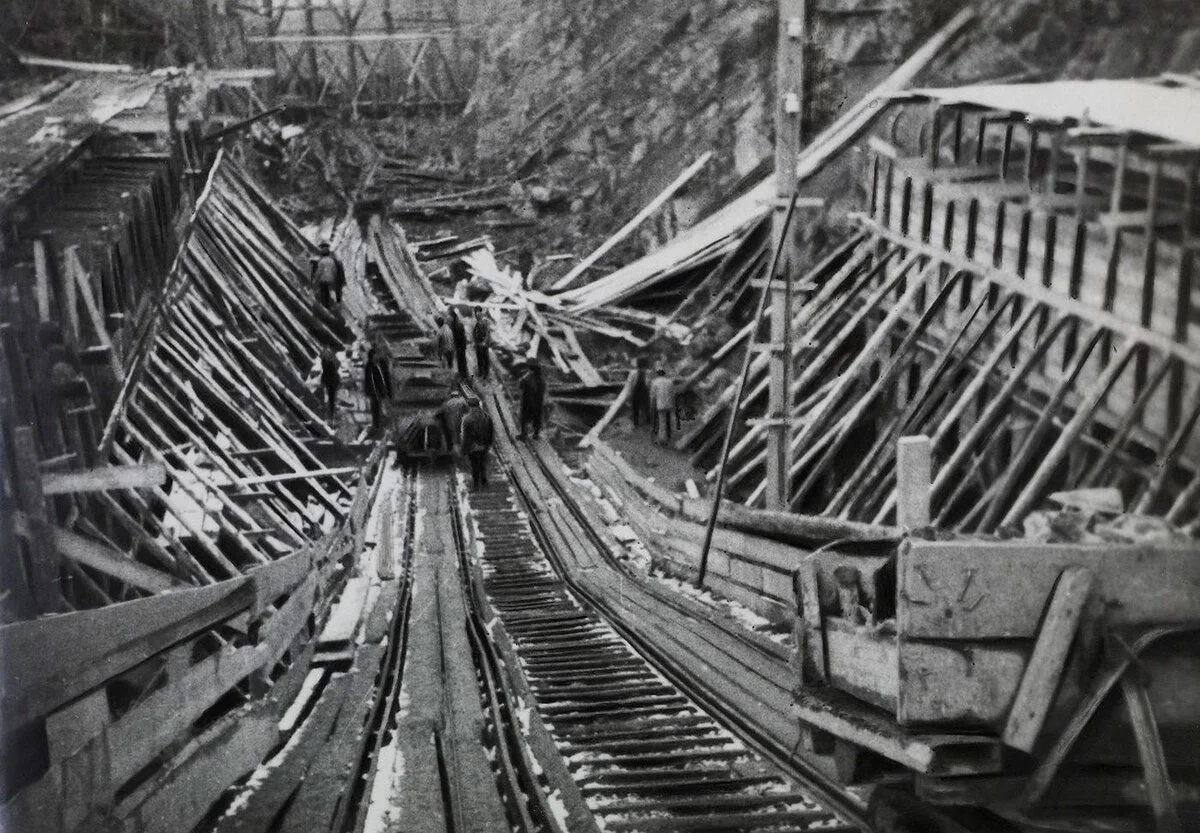
Naturally, thousands of prisoners were killed during the construction of the channel, even in the “Referee Library”. According to official figures, 12,300 prisoners died during the construction of the channel in Belbaltlag . Unofficial estimates begin at 50 thousand, reaching 86 thousand.
But by the end of the war, in 1945, the Norilsklag newspaper printed a note on how the drawing fought for the repair of a carousel machine. “She showed Bolshevik perseverance, reached the highest camp authorities, but achieved the goal.” This masterpiece of journalistic creativity was recommended by the political department for reprinting all camps, construction sites and colonies of the NKVD. 33 camp publications reprinted him.
The camp seal differed little from the newspapers published in the country. It seems that everything was made from one matrix, only the name changed. But the main idea always remained unchanged: to convince the masses of the need for inhuman life and forced labor for a great goal.

In the preface to the Book of Gorcheva, the legendary dean of the Faculty of Journalism, Yasen Zasursky wrote:
“I recommend reading this work to every historian of the Soviet press of Soviet society - it will help to understand the mechanism of lack of freedom, not overcoming which it is impossible to achieve freedom, freedom of personality and real humanity.”
In 1988, I published in Izvestia a large material about the district from the tiny Karelian village of Spear, which opposed the election of the “agreed” at the very top of the chairman of the district executive committee. The newspaper not only exposed the entire “electoral mechanism”, all numerous violations in specific elections, but also drew impressive pictures of life, went against the then almighty district committee, and moreover - entirely supported by the republican authorities.
The newspaper then, no matter how strange it seems, won. Perestroika!
***
About ten years ago in Petrozavodsk, I talked about this case at the seminar of editors of district newspapers, and a girl, the current editor of the same sparlet newspaper, thanked me during the break, thanked, said that I had not even imagined that "this could be." At the same time, she told how it can and it happens ... Now she is preliminarily wearing this very administration, “coordinates”.
I asked where she got into the newspaper. She, he says, was thrown into the newspaper as a specialist in the district administration.