
Translated material
Berlin, 17th
In the morning, on Sunday, thousands of Russians reached out to the capital of Germany to take part in the campaign "Half of Putin"
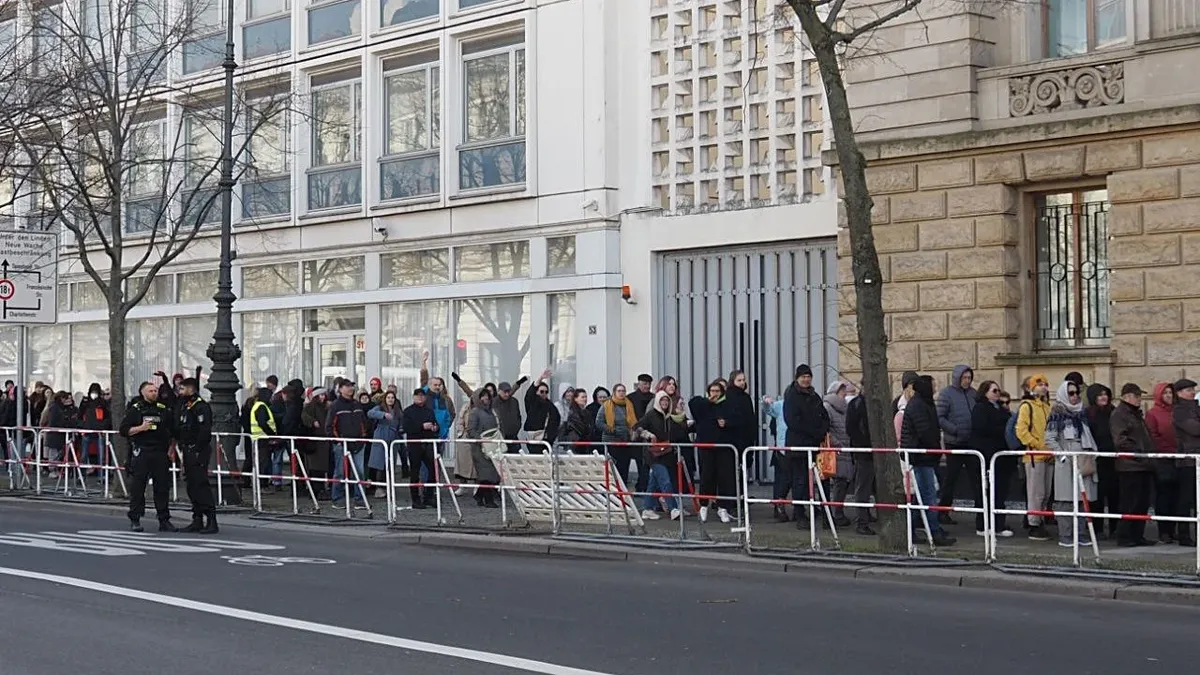
The Russians are standing in line in front of the embassy in Berlin, March 17, 2024. Photo: Elena Romanova / "New Gazeta"
The most convenient morning Sunday train from Leipzig in Berlin with each carriage was noisily in Russian.
- At 10.44, writes, arrives. Well, we have time.
- ... When the consulate worked, I, of course, for every election - there ...
- At 12! Do you hear? In 12.
The oldest Russian diplomatic mission in Germany - Leipzig - having worked 240 years, closed last year. According to the Ministry of Foreign Affairs, 26 thousand people consisted of consular accounting, mainly residents of Saxony and Thuringia.
Having lost the opportunity to vote nearby, on the morning of March 17, thousands of Russians reached for the capital of Germany in order to take part in the two most important political events of this year: the presidential election and the “Noon against Putin” campaign.
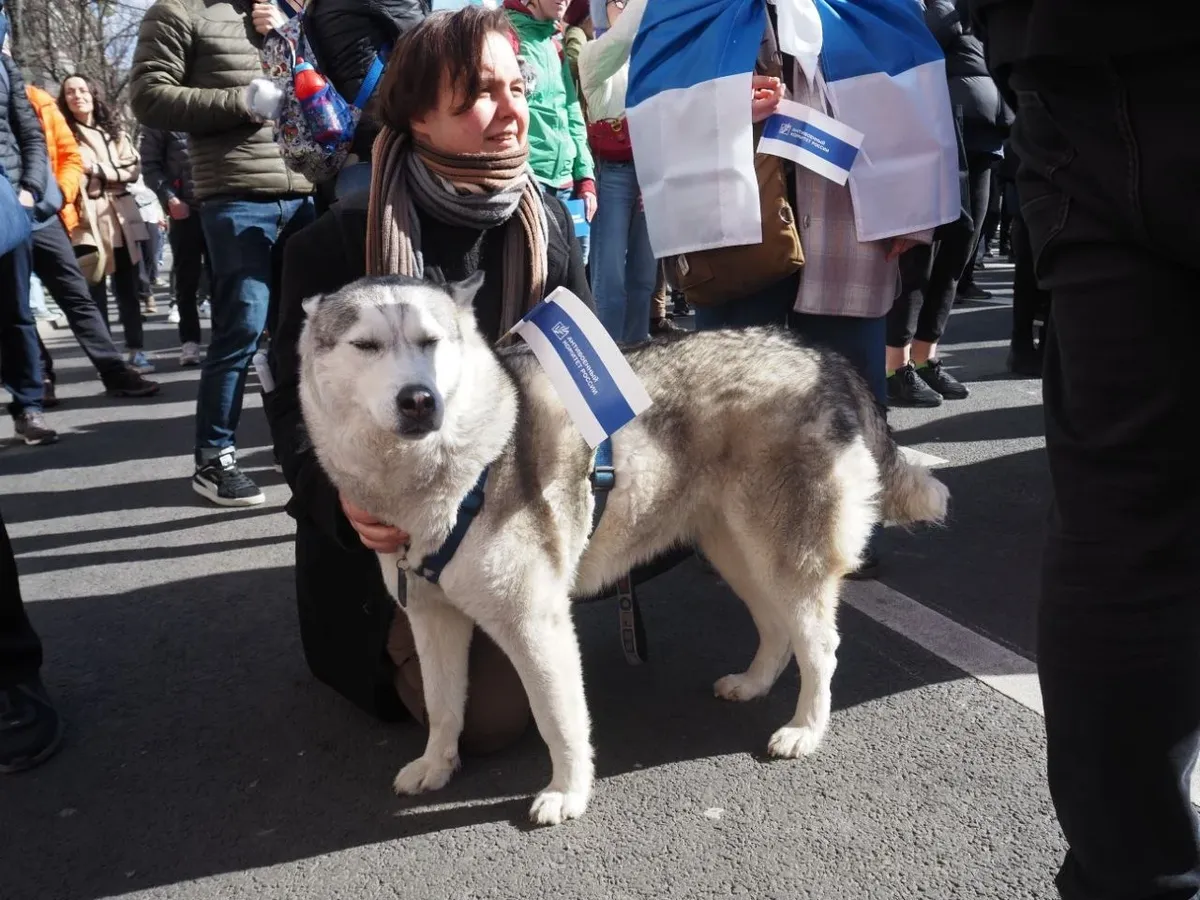
In the wagons - a lot of young people, some with banners.
“Literally last night, these cardboard were found, and I realized - it fits perfectly,” the girl tells the girl the story of her poster, and small curls dance at her face.
She is 20 years old, from Siberia. Two years ago, Masha, having graduated from a school with a decent level of German, found a volunteer program and left for Germany.
- A volunteer has passed the year, now I have a short break, and in the fall I plan to go to the faculty of art history. I do not want to call myself, because in the summer I need to go home, do documents. And now everything is: both the person recognition system, and all that,
- Masha seems to be slightly shy about her emigration. - I just want to live safe, understand? To grow up, gain experience, become someone. And then, perhaps, I will come back - why not? ..
On her banner - a text in German, a quote from a song by a popular young performer Soffi.
- Für Immer Frühling? "Spring forever"? Why not in Russian?
- I want to reach the Germans. I want them to realize that it is necessary to fight for democracy not only in Germany ...
The calculation of arriving at Unter Dem Linden did not justify itself to 11. By this moment, the turn at the Russian embassy did not just absorb the quarter. Her tail was lost in the March haze of Tyrgarten, which means that it was at least one and a half kilometers. The colleague found 150 meters from the treasured entrance admitted that he began the path to the will of 9.30.
“I will vote - and to you,” he promised.
The woman in a down jacket with a rush turned grimly to see him.
On March 17, the wide, with the Soviet scope of the restored Unter Den Linden boulevard was supposed to become an arena: on one side on the sidewalk, fenced with metal fences and police patrols, an endless line of people leaned to vote in the elections of the President of Russia. On the other hand, the speakers of the stage of the main event of the Russian opposition emigration “Noon against Putin” were directed right in the windows of the diplomatic mission.
The “culprit” of the celebration ensured crowding to both sides: out of 15 diplomatic agents, where the Russians could vote before, only two remained in Germany - in Berlin and Bonn. Therefore, the embassy was unprecedented.
The massive protest was provided by the new Russian Aliya: in June last year, the German Ministry of Internal Affairs stated that 301,511 citizens of the Russian Federation lived in Germany. This is 32,183 people more than before the beginning of his. In total, there are 1.2 million Russians in Germany - this is the second conditional diaspora after the United States. Together with immigrants from other republics of the USSR, almost 2.7 million people live in Germany in Germany.
The city’s authorities did not stop the movement along the boulevard, and a rare flow of cars became another barrier between these two “scenes”.
Officially, a protest action was announced at the walls of the embassy, but, in fact, we had to protest at the walls of the old representative office of Aeroflot. The site is strictly opposite the facade of the Russian diplomatic wipes for two years has been holding the Ukrainian diaspora for two years. There is a constantly operating exhibition of photographs from the combat zone. After February 16, a spontaneous memorial appeared nearby in memory of Alexei Navalny.
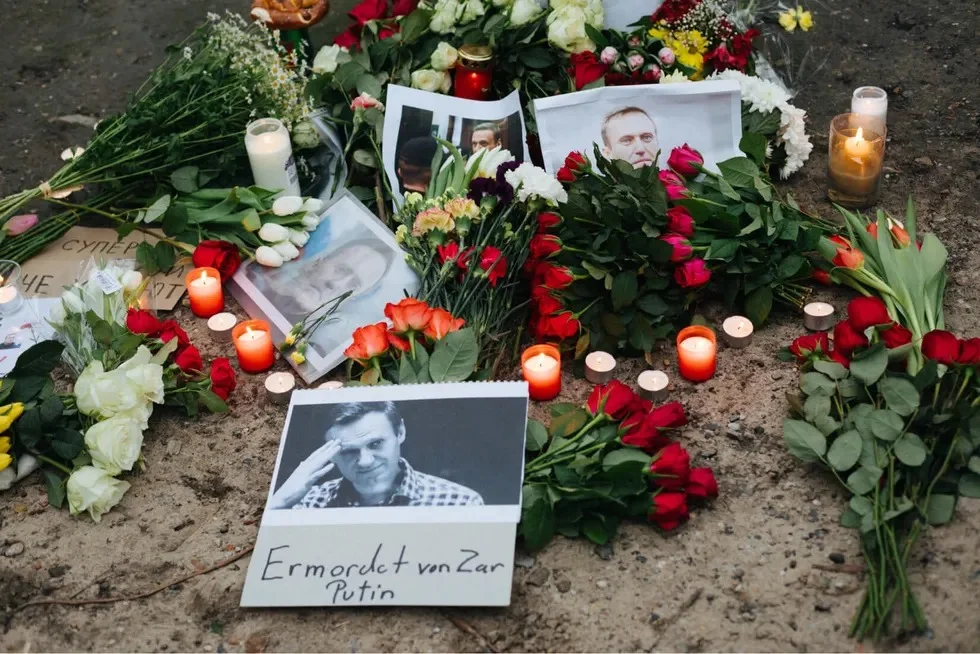
The border between the Ukrainian exposition and the site “Half by Putin” is carefully guarded - everyone is afraid of provocations.
At the entrance to the “Russian Zone”, police are talking about something with a group of girls with posters. On one - a popular image on the Internet with the letter Z.
- In Germany, this symbol is prohibited, understand? - In English and German, the policeman explains to the girls.
Those in response in the same English retell their version of the German Constitution about freedom of opinion.
Assess the "danger" of the poster with Z invites a member of the organizing committee. A girl with a badge comes and once again explains the police essence of an artistic statement.
The initiator of the action “Noon against Putin” is called the Russian politician Maxim Reznik*. After the chief opponent of Putin Alexei Navalny acted in his life, the action acquired, without exaggeration, international proportions. As planned, at the same time at noon, having come to the polling stations, the Russians had to show the level of solidarity of Putin's opponents. But in Berlin, due to the excitement and closed consulates, involuntary participants in the protest campaign were thousands of Russians who completely support Putin.
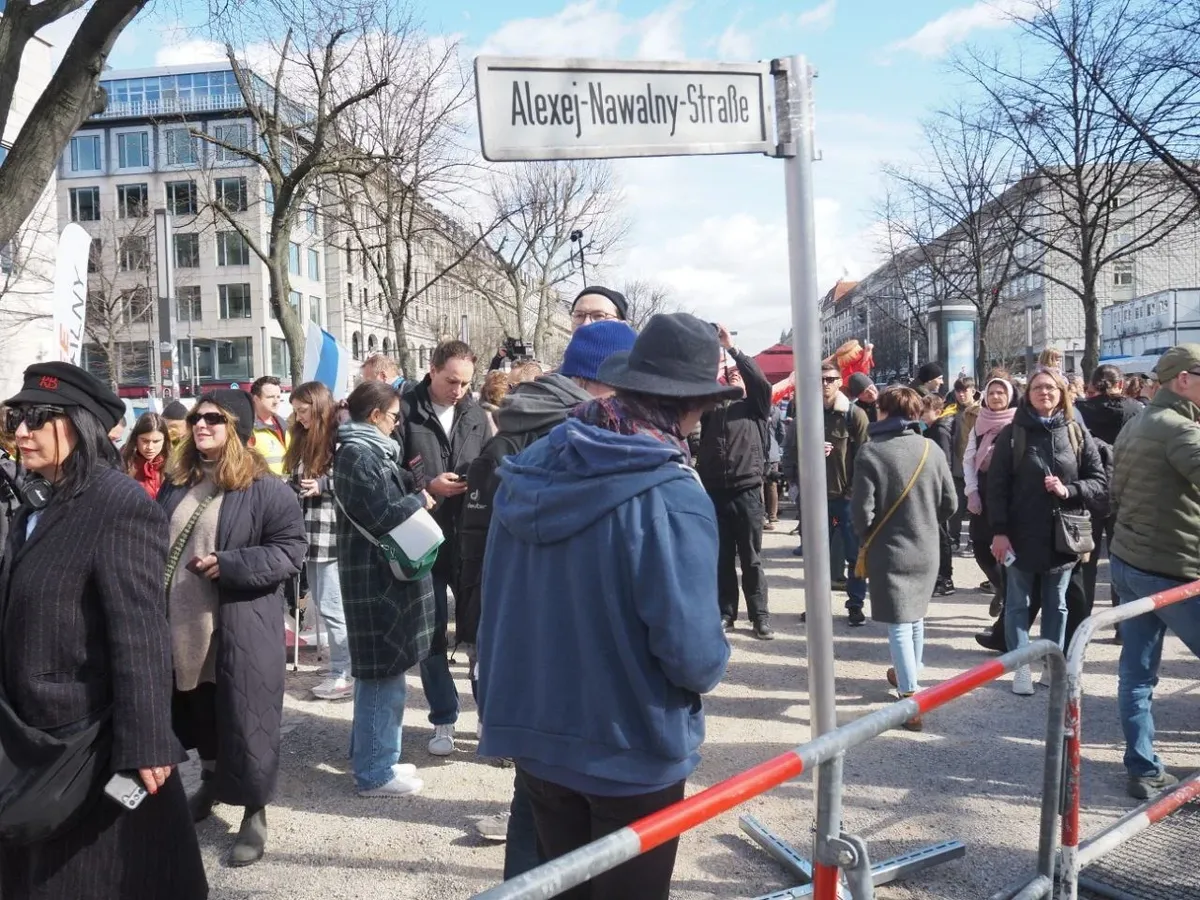
The representative of the Democrat-Ja Foundation, one of the co-organizers of the action in Berlin, Daria Dudley says that this is not their first mass event, but almost the most difficult.
- At first, we did not want to give permission to hold this action at all. The police wanted to put us at the maximum distance from the Russian embassy. Formally, this was explained by security measures so that we did not have any conflicts with people from the line. The whole thing was that about three weeks before the rally, the Ambassador of Russia Nechaev spoke out in such a way that “extremists are going to hold anti -Russian actions,” says Daria.
According to her, the Germans were not ready to ignore statements about extremism from the mouth of the ambassador. And talking about the danger of "anti -Russian actions" was conducted literally at the level of two worlds.
“Hence such anxiety from the local police and such increased security measures,” the organizer explains.
The action was supported by Mikhail Khodorkovsky*. The politician flew to Berlin, talked a lot on the street with passers -by.
In anticipation of the performance of the headlines of the rally, the new Russian Berliners entertained the guests of this festival of disobedience as they could. Right on the boulevard it was also possible to vote: to take the ballot, where the name of Alexei Navalny was added to the main four candidates, “make their choice” in an impromptu cabin, and then lower the “ballot” into the ballot box, the hole of which was equipped with a paper chopper. So the organizers tried to explain the essence of the Russian elections. By two o’clock in the afternoon, both urns were indicatively filled with tinsel.
“Putin is illegitimen,” the audience chanted.
-Now let's the same-in German! - The presenters did not let up.
On the corner, near the pedestrian crossing, leaning against the traffic light, in solemn indecision is a man of about 45 years old. He looks at the corner of the line to the embassy, where two rosy and extremely polite employees are preliminary testing. On the chest of a man is a plastic St. George ribbon. He boldly seems to Maxim Melnikov and frankly admires compatriots.
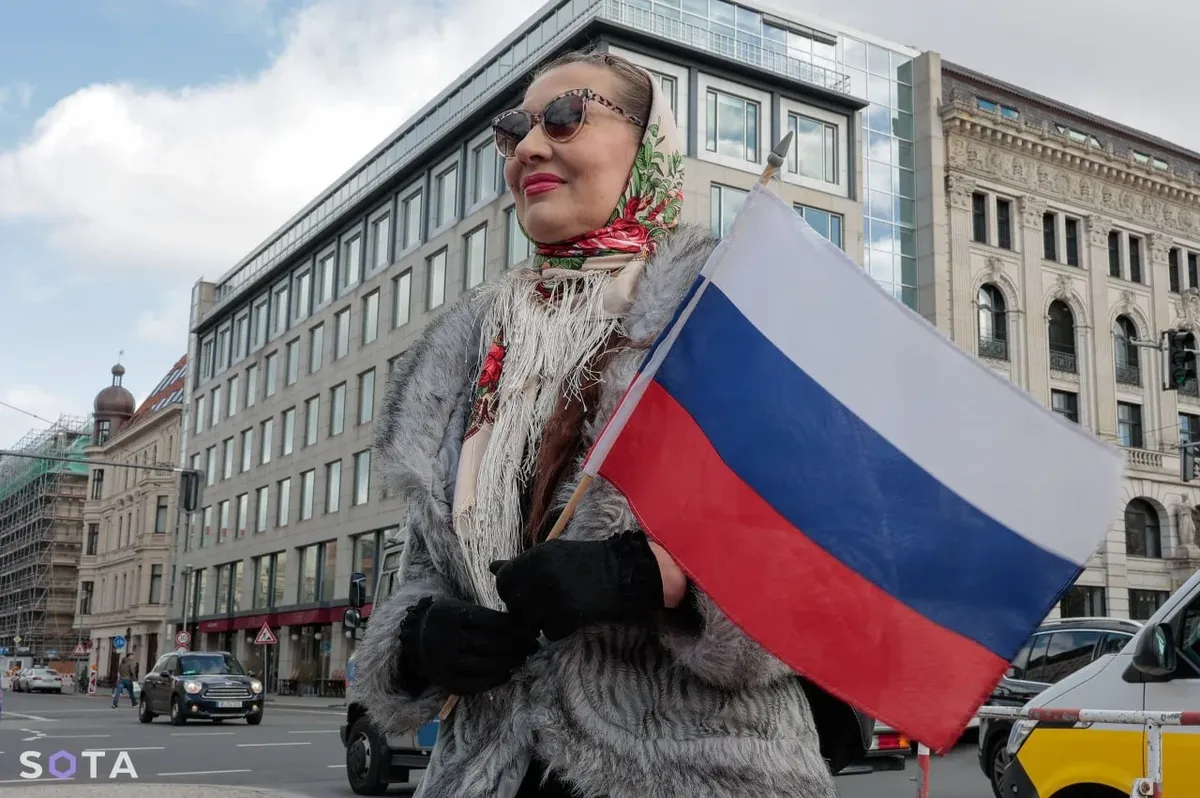
- Of course, only for Putin. And for whom else? I left Russia 27 years ago. I remember what was happening there. Now look at how people live - Maxim is extremely sociable and absolutely non -aggressive.
He says that there are also repressions regarding dissenters in Germany, that Russia is his homeland and two years later, he will definitely return there, meet old age. He says that he has already bought an apartment in Yekaterinburg. To the question about the amount of pensions of Russian old people, it confidently answers - 30,000 rubles.
- Do you sell property?
- Are you laughing? Who has property in Germany? Everything here rents everything, they live in debt.
The founder of the Rus Sitting Foundation on stage ** Olga Romanova* makes a new proposal to the slogan set of events. "Freedom is political prisoner!" - the crowd picks up.
A beautiful woman smokes near the stage, putting either a staff or a torch on a bench. Around the workpool of the swarm, amateur photographers curl, because on its top there is a naked doll with very recognizable facial features.
- How long have I been in Germany? For a long time, ”the woman answers lazily, taking a lighter from his handbag. - From the beginning *** we went out every two weeks and rally near the consulate, until it was closed. There were few of us, five people. Now we go here regularly.
- Feel: among those who left are there really a lot of those who support Putin?
- So many. Among those who left in the 90s, almost everything. They left the country that fell apart. Putin in their eyes is still the same young and energetic president, who replaced the strongly drinking Yeltsin. He came and saved everyone. And I'm from St. Petersburg. We all know him there since 1992, ”says the author of“ Installations ”, introducing himself to Tatyana. - After February 24 - what elections can be?
Unter den Linden is filled with passers -by. They slowly float along the Brandenburg Gate Boulevard - this is one of the most popular tourist routes in Berlin. Ahead is loomed with domes and porticoes of the museum island.
- Ah, these are Russians protest against Putin! - one of the Americans, judging by the pronunciation, and surprisingly similar to Kim Jong -un.
- These are Ukrainians! -objects to him another, pointing to the yuvto-clatter flag on the back of one of the participants in the action.
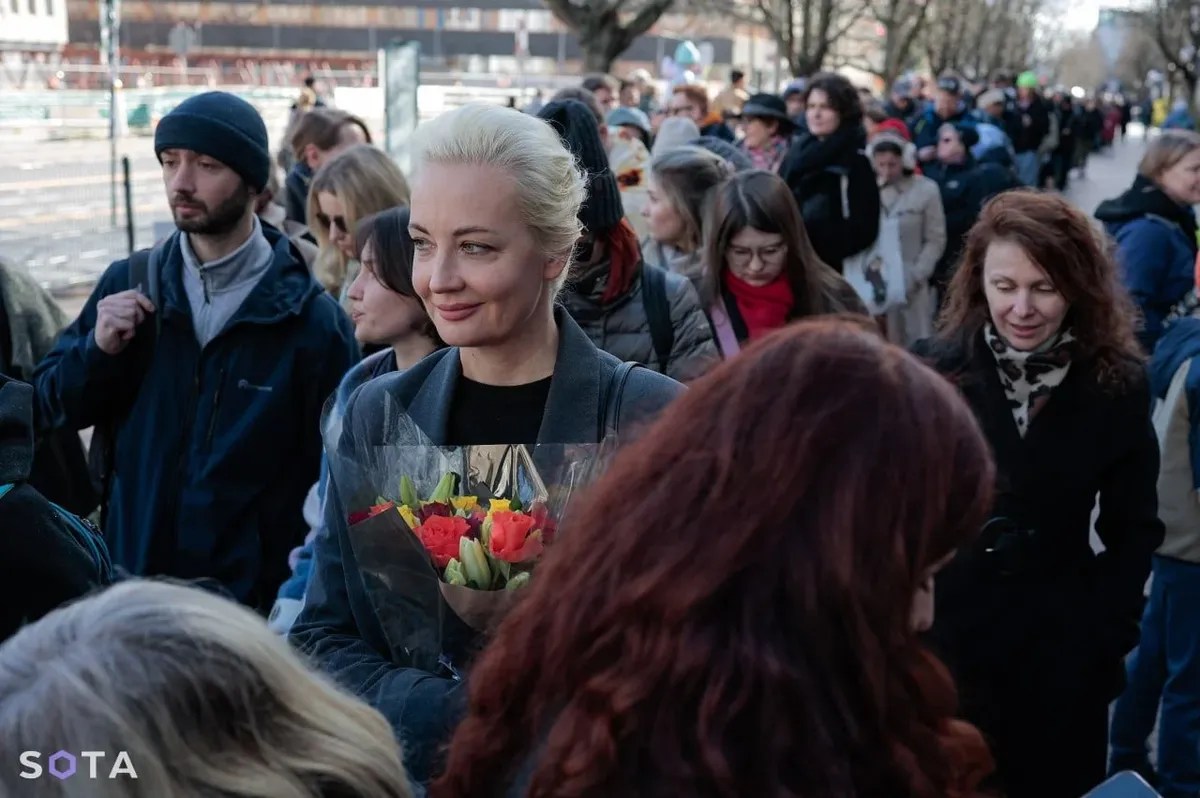
Closer to six o’clock in the evening in line to the embassy, people notice Julia Navalny. They chant: “Julia! Julia!" Leaving the embassy, the widow of the murdered politician tells reporters that she entered her husband’s name in the voting ballot.
... So they stood opposite each other for several hours: the line of those who wanted to vote and several thousand participants in the action with posters and banners, until someone from the stage to the microphone decided to contact people at the embassy.
“If you support us, if you think the same way as we, wave us to see us!”
And the line at the walls of the embassy buzzed in a greeting, fluttered with her hands, joyfully came to life.
Berlin