
Translated material
The ghost of multipolar Europe
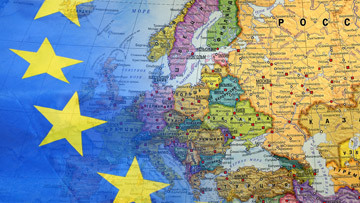
The French sea resort Doville gained fame at the end of the 19th century - in the era of large hotels and luxurious casinos. In addition, it was the era of Europe, divided between the great powers, which jealously guarded their territories, and the spheres of the influence of which constantly collided. Thus, Doville is quite suitable for the summit of the three eternal great powers of the continent - Germany, Russia and France, which begins on Monday (October 18) - all the more so since Europe is again multipolar.
Angel Merkel and Nicolas Sarkozy establish relations with Russia, believing that European security has ceased to be the problem of NATO or the European Union. In this they are right. The United States made it clear that they are now less interested in the internal security of Europe. Last but not least, this is evidenced by the refusal of President Obama to visit the celebration of the twenty years of the fall of the Berlin wall. In addition, the current order is simply ineffective - he could not oppose the wars in Kosovo and Georgia, the recent unrest in Kyrgyzstan and the so -called frozen conflicts scattered through the continent. A large project for promoting the European Union to the East has recently also stalled. It is obvious that even when Turkey and the countries of the Western Balkans join the EU, what we continue to hope in the European Council on International Relations - NATO and the European Union will not be the main institutions of European security, which include all European countries. Therefore, Europeans need to rethink their security concept. However, although the summit’s agenda is quite correct, it has the wrong composition of the participants.
Russia, of course, should be present at the negotiating table. She never took order established after the Cold War, and now is strong enough to openly throw him challenges. At the same time, it is quite open for cooperation, and a couple of years ago, Medvedev himself proposed starting work on a new European security agreement.
Türkiye - one of the future poles of the European continent should also receive a place at this table. As its Foreign Minister Ahmet Davutoglu put it, she is a subject, not an object of politics. The Turkish sphere of influence begins in Central Asia and stretches through the Caucasus to the Middle East and Western Balkans. Europe, which in these controversial regions also has influence and interests, will either have to compete with Turkey or cooperate. The same is the case with the regions that Russia considers to be its "close abroad."
In addition, the European Union should participate in the negotiations, but many of its members do not like that they will be represented by Berlin and Paris. On their part, it would be most reasonable to choose Baroness Ashton with his representative. This would become a logical consequence of the Lisbon Treaty, in addition, such a decision would have ended with an abnormal situation in which the European Union, one of the key guarantors of European security, is not presented in any of the safety institutions on the continent.
Instead of trying to repair existing institutions, a new life should be breathed into them. NATO could attract Russia to the project of the missile shield, which was initiated by the Americans and, based on the “reboot” begun by Obama, create a general capital identity in the field of security focusing on external threats to Europe. However, besides this, the European Union must attract its neighbors to strengthen intra -European security. He must achieve trust between European powers and encourage them to demonstrate determination - in particular, attracting Russia to resolve frozen conflicts, such as conflict in Transnistria, and supporting Turkey’s participation in solving Bosnia's problems. A regular unofficial tripartite dialogue between the EU, Turkey and Russia is necessary, which would allow them to work on these issues along with other interested powers.
The meeting in Doville and the November NATO summit, which will consider the new strategic concept of the alliance, indicate that it is time to revise the ideas of European security. The European Union spent a fair amount of the last ten years on the defense of a no longer working European order. He hoped for the future multipolar world order, which, most likely, would never be. The report “Ghost of Multipolar Europe”, which has just been published by the European Council on International Relations, calls for creatively and reasonably respond to a changing situation and take seriously the requirements of Russia and Turkey, which are full -fledged players. Poophrazing Lord Ismay, we can say that the task of the new approach to security is to preserve Europe, Russia - Pospersky and Turkey - European.
Mark Leonard - Executive Director of the European Council on International Relations.
("Open Democracy", Great Britain)