
Translated material
Goering's list.

![]() This is not a mistake, the list is, indeed, not Schindler’s, but Goering’s. True, not Herman, but his younger brother, Albert.
How bizarre are the lines of human destinies! But they are not random. And they are not meaningless at all.
Everything is very meaningful despite the bitter departure. But the questions of why and for what are a completely different story...
It is difficult to imagine more dissimilar brothers than the Goering brothers.
Hermann, the Fuhrer's closest associate, the initiator of the massacres, and the anti-fascist Albert, who personally saved 34 lives.
0n helped many Jews leave Germany and provided assistance to members of the Czech Resistance.
A big name often helped Albert Goering, but it also became his curse. Today almost no one knows about him. His story is too incredible to be true. But historical research and collected documents indicate that he was an extraordinary and extraordinary person. The younger brother of Nazi criminal Hermann Goering saved Jews. During World War II, hundreds of Jews and dissidents survived thanks to this enterprising businessman, who used both bribery and his family name to achieve his goals. And most importantly - family ties.
Since childhood, the two brothers were as different from each other as day and night. Born in 1893, blue-eyed Herman was a brawler and a bully; quiet and shy, brown-eyed Albert was born two years later, in 1895. The godfather of the brothers was Baron Hermann von Epenstein, a German Jew who converted to Catholicism. The head of the family, Heinrich Ernst Goering, held a diplomatic position in the German colonies in Africa and was not often at home. Many historians believe that Albert's real father was Epenstein, whose relationship with the brothers' mother, Franziska Goering, was no secret to anyone.
Herman went to study at the military academy, and Albert decided to become an engineer. Subsequently, Herman said: “My brother is my complete opposite. He was never interested in politics or military affairs. Albert always seemed like a recluse, but I loved noisy companies. He is melancholic and a pessimist, and I believe in the best. And yet he is not a bad guy.” During the First World War, Herman gained fame as a fearless pilot and began his ascent to the heights of power, while Albert received several front-line wounds, after the war he studied to become an engineer in Munich, and was married three times.
With Hitler coming to power in 1933, the situation in Germany changed dramatically. Albert, hating the Nazis with all his heart, moved to Vienna, where he got a job at a film studio. Over the next six years spent in the Austrian capital, Goering never hid his hatred of the Third Reich. Nevertheless, after the Nazi invasion of Austria in 1938, he lived in Vienna for another year. At the same time, his brother Hermann became Hitler's right hand, thanks to which Albert never experienced a direct threat from the SS or the Gestapo. But there were plenty of confrontations with the Nazis in his life; several times he was even arrested.
One summer day in 1938, Albert witnessed an ugly scene. For fun, the SS forced the Jewish women to clean the pavement with toothbrushes. Albert knelt down next to the women and also began to scrape the street. The soldiers demanded that he show his identification and, after reading his last name, quickly ended their entertainment.
Soon after, in front of Albert, the Nazis surrounded an elderly Jewish woman and hung a sign on her chest that read, “I am a Jewish pig.” Albert, without thinking, pushed the soldiers away and freed the woman. He was taken to the Gestapo, but thanks to Herman’s intercession he was quickly released.
It may seem strange that one of the leaders of the Reich, a convinced Nazi, helped his anti-fascist brother, but the fact remains: despite serious ideological differences, the brothers carried a warm affection for each other throughout their lives. “Herman said that if I want to protect the Jews and help them, it’s my business. But I have to be as careful as possible, because this could create huge problems for him, given his position,” said Albert, testifying during interrogations after the end of the war.
According to historian Guido Knopp, Hermann Goering was verbally an ardent anti-Semite, and yet his attitude towards the Jews was remarkable for its amazing plasticity, strange for a man so close to Hitler. Consider the phrase “Who is a Jew here, I decide,” which he repeated after the famous Viennese burgomaster of the early twentieth century, Karl Lueger!
There was a fierce struggle for power at the top of the Nazi Party. There was strong animosity between Hermann Goering and Heinrich Himmler, chief of the SS and Gestapo, the main ideologist of the Jewish question. Goering’s younger brother was like a red rag for Himmler’s people, and in order to protect Albert, in May 1939, Hermann sent him to Prary to serve as foreign sales manager for the Czechoslovak Skoda concern. Over the next six years, Albert took an active part in the fate of both the Jews from among the factory employees and members of the Czech Resistance. The Jewish plant director, Jan Moravec, and his family survived only thanks to Albert, who helped them escape to Romania on false visas.
Karel Sobota, Albert’s assistant, recalls that he did not allow Hitler’s portrait to be hung in his office and never raised his hand in a “Heil” greeting, and at that time few people got away with such liberties. When a high Nazi official came to him without knocking, he was asked to leave and wait until the owner of the office was free. After that, Albert talked with his assistant for another half hour about the weather and showed him an album with family photographs. And only then he said with a smile: “Thank you, Herr Sobota, for the pleasant conversation. And now you can invite this gentleman.” The rank, exhausted in anticipation, by that time had already turned purple from barely restrained rage.
In 1942, Albert was approached by Franz Lehár, the author of the operetta “The Merry Widow,” with whom they became friends in Vienna. Lehar was given a condition: either he divorced his wife, the Jewish Sofia, or he himself would be considered a Jew with all the ensuing consequences. Albert rushed to Berlin to see Hermann, who called Goebbels. “The Merry Widow” enjoyed wild success among the Nazi leaders, as a result, Lehár was left alone, and Sofia was given the status of Ehrenarierin - an honorary Aryan.
In 1942, Albert married Milanda Klazarova. From the point of view of Nazi ideology, this was a serious mistake, almost a crime that threatened the purity of the Aryan race - Milanda was Czech.
Clouds gathered over Albert himself. If earlier he was looked at as an annoying misunderstanding, now he became a real enemy of the regime, and he was closely monitored. For example, as follows from the reports compiled by the Gestapo in Prague, Czechs in trouble flocked to his office for help.
In 1944, in Bucharest, Albert was invited to a banquet for diplomats and high-ranking Nazis, where German Ambassador Plenipotentiary Manfred von Killinger was present. In the 1920s, he was a member of right-wing extremist death squads and, according to many, was involved in the 1922 assassination of Foreign Minister Walter Rathenau, an ardent German patriot of Jewish origin. Albert Goering categorically refused to “sit next to the murderer.” A scandal broke out
Albert was recalled how once, in a cheerful company, he called Himmler a murderous maniac, and Hitler the greatest criminal of all time. Albert was again arrested by the SS - and again Hermann rescued him.
Albert made his last major contribution to the rescue of Jews when he arrived with several trucks at the Terezin concentration camp north of Prague. A witness to those events, Jacques Benbassat, later recounted how Albert told the camp commandant: “I am Albert Goering of the Skoda plant. I need labor.” The commandant had no choice but to carry out the order. The trucks left the camp, filled to capacity with prisoners. Having driven to a safe distance, the cars remained
were rebuilt near a large forest area, and several hundred prisoners received freedom.
On August 24, 1944, Prague SS and police chief Karl Hermann Frank persistently asked Himmler for permission to arrest Albert for defeatist sentiments and anti-Nazi activities. Berlin gave the go-ahead.
Herman managed to rescue his brother this time, but he openly admitted that his position had been greatly shaken, and asked Albert to keep a low profile and sit quietly until the threat hanging over him had dissipated. The Reichsmarshal sent the restless troublemaker to Austria, to Salzburg. The Third Reich was on the verge of collapse, there was not long to wait.
The last time the brothers saw each other was in May 1945, when the Allies arrested both of them and they were allowed a meeting. Herman, with tears in his voice, said goodbye to his younger brother forever: “I’m so sorry that you have to suffer because of me.” A year later, the Nuremberg court sentenced Hermann Goering to death by hanging.
Sitting in his cell, Albert made a list of the people he saved. In June 1945, when he was called in for questioning, the investigator stared in amazement at three names, among which were the Austrian Archduke Joseph Ferdinand IV, the film screenwriter Ernst Neubach, the Austrian Chancellor Kurt von Schuschnigg, the engineer Oscar Pilzer, and the film director Wilhelm Szekely. The list was considered a fake: then many war criminals tried in every possible way to whitewash themselves...
Albert was saved by chance. A year passed, Goering's list fell into the hands of another investigator, it turned out to be intelligence officer Victor Parker, nephew of Franz Lehár. He knew what the family owed to the brother of “Nazi number two.” Parker confirmed Apbert's words. And still the Allies did not dare to release Goering; they handed him over to Czechoslovakia. The new investigator collected testimonies from Skoda employees and received written testimonies from those he helped. At the same time, the Americans discovered a case filed against Albert Goering by the Gestapo, where all his “crimes” against the Third Reich were listed. In 1947 he was released.
Albert returned to Salzburg, but upon hearing his last name, everyone shied away from him like a leper. Nobody wanted to hire him. He began to drink and started endless casual relationships on the side. His wife Mila could not stand it, took their daughter Elizabeth and left for Peru. They never saw each other again. Albert did not even respond to the letters that Elizabeth wrote to him regularly over the years.
Albert survived the post-war years only thanks to the support of the people he saved. In the last years of his life he worked as a translator and engineer for a construction company in Munich. Shortly before his death, he married his housekeeper in gratitude for her care of him and so that she could receive a state widow's pension.
Goering Jr. was not destined to receive, like Oskar Schindler, the title “Righteous Among the Nations.” He died in December 1966 from pancreatitis, alone and forgotten...
http://enews.md/blogs/view/2321/
List of Albert Goering.
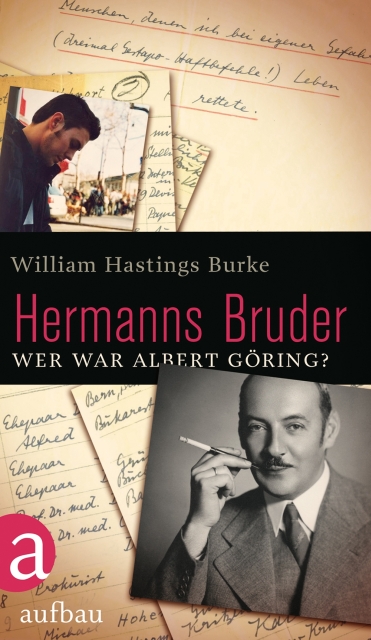
Albert Goering
As you know, Field Marshal and Hitler's official heir Hermann Goering was one of the main pillars of the Nazi regime, an ardent anti-Semite and a war criminal.
Hermann Goering
It is all the more surprising that his brother Albert, from the very moment the Nazis came to power, was not just an ideological opponent of Nazism, but actively saved its victims, sometimes even risking his own life because of this. Despite this, the brothers maintained a completely fraternal relationship for a long time. This is the story of a new book by Australian historian William Bourke.
The crowd on Vienna's square cheered with joy when SA stormtroopers hung a sign "Ich bin eine Saujüdin" ("I am a Jewish pig") around the neck of a Jewish old woman and began to mock her. Suddenly, a stately man with a high forehead and a thick mustache appeared in the crowd and began to furiously make his way to the center of events. Having reached the old woman, he tore off the sign from her and threw it on the ground. Two stormtroopers rushed at him, whom he knocked down with blows to their faces. A fight ensued, the man was pinned down and arrested. However, he was immediately released - for this he only needed to give his name: Albert Goering, brother of the all-powerful Reichsmarshal, commander-in-chief of the Luftwaffe and close friend of Hitler.
Years later, when the Third Reich had already sunk into the abyss, he again found himself in prison, this time an American one, and this time his last name did not help him, but harmed him.
“The result of the interrogation of Albert Goering,” investigator Paul Cabela indignantly wrote in the interrogation report, “was one of the most brazen attempts to cleanse and justify himself that our SAIC (Seventh Army Interrogation Center) has ever experienced.” Translator Richard Sonnenfeldt was also skeptical at the time: “Albert told us a fascinating story, which I could not believe at the time.”
Goering's brother is a Resistance fighter, well, what normal person would believe that?
The life of Hermann Goering's younger brother is indeed a fascinating story, which even almost 70 years after the end of the war is still almost unknown to everyone. This is probably partly due to the fact that most people have the same reflex as the American investigator Paul Cabal. The brother of Reichsmarschall Goering, Hitler's official successor, the savior of the Jews, who supplied them with money and false documents and even freed concentration camp prisoners - is this even conceivable?
“I’ve been in prison for 4 months now, and I don’t even know why,” he writes to his wife in 1945. After all, he voluntarily came to the American military on May 9, 1945, Goering further writes, for years he tried as best he could to correct what his older brother did, and now he feels unfairly punished. To correct the injustice, he took a pen and paper and wrote down 34 names on it in alphabetical order.
"Albert's List". In alphabetical order, listing their professions, citizenship and former place of residence, here are the names of 34 people whom Albert Goering saved from Nazi persecution, thereby saving their lives. Many of them are Jews, some were already interned in concentration camps. Many of the survivors or members of their families after the war confirmed this information.
The title he gave to his list: “People whose lives I saved by putting myself in danger (the Gestapo signed a warrant for my arrest three times).”
This list, like other documents relating to Albert Goering, gathered dust in the archives for decades and no one cared about them, although the life of his older brother is described down to the smallest detail: his addiction to morphine, passion for hunting, collections of paintings and other art objects looted throughout Europe. Until, in 1998, a team of British television crews shot the documentary “The Real Albert Goering.” In distant Sydney, 18-year-old William Bourke saw this film. This story shocked him and did not let him go for a long time. “The idea that this same monster, about whom we all know well from history books, had a younger brother who was a kind of Oskar Schindler seemed incredible to me,” he later wrote.
Without hesitation, Burk withdrew all his savings from his account and went to Germany. He rented a corner in a Freiburg hostel, worked part-time in an Irish pub, and for three years persistently collected information about Albert Goering. He studied the archives and met with people who knew the younger Goering, with those whom he helped to escape. As a result, a book was born, which will be published in German in May of this year - “Goering’s Brother.”
In it, Bourke describes a man who was the complete and striking opposite of his older brother. “He was always my complete opposite,” Hermann Goering himself said during interrogation in Nuremberg. “I was always interested in politics and the army, he was never. He was quiet and modest, but I love society and large crowds of people. He was always a sad melancholic and pessimist, but I am an optimist.”
Even outwardly, the brothers were so different that there were rumors that Goering’s mother Francis had taken her youngest son on the side. Herman was blue-eyed, and Albert was brown-eyed, Herman was squat and fat, and Albert was tall and thin, Herman was domineering, loving submission, flaunting pompous and pompous phrases, and Albert was a cultured, sophisticated and charming bon vivant, well versed in music, a four-time married womanizer, always having affairs with women.
When the Nazis first appeared in Germany, Albert decided not to fight them, but to leave. In 1928 he moved from Haizungsbeulern to Vienna and took Austrian citizenship. However, the imperial policy pursued by his elder brother, which he hated, overtook him 10 years later in Austria after its Anschluss.
From the very beginning, he decided not to turn a blind eye to the injustice and tyranny happening around him, but to help the victims. For example, such as Oscar Pilzer, former president of Tobis-Sascha-Filmindustrie, the largest film company in Austria, as well as Wilhelm Grüss, director of the same company in which Goering himself worked. Both were Jews, and this gave the Nazis a reason to ban films produced by their film studio from being shown - in order to ultimately communize this film studio. When in March 1938, a day after the Anschluss, Pilzer and Grüss were arrested by the Gestapo, Albert Goering stood up for them.
“Using his famous name,” Pilzer’s son Georg later said, “Albert Goering pulled all the levers to first find out where my father was and then free him.” Grüss was also released.
And there were many similar cases. “In the fall of 1939, when my husband and his son from his first marriage were threatened with internment in a concentration camp, Mr. Goering managed to get them expelled abroad,” said Alexandra Otsop.
One day, Albert Goering, out of a sense of solidarity with the humiliated Jewish women, scraped the Viennese pavement with them - on all fours! When the SS men asked him who he was and heard the answer, they were horrified and immediately ordered him to stop washing.
While his brother was intensively building the Luftwaffe, Albert supplied his friends with false documents, warned them of arrests and gave money to refugees from Austria. He cleverly intimidated officials who tried to stop him with his loud name, and sometimes he had to falsify his brother’s signature.
Among the people saved by Goering were such famous personalities as the composer Franz Lehar, the Austrian Archduke Joseph Ferdinand IV and the Austrian ex-chancellor Kurt von Schuschnigg.
It all looked very strange and bizarre. “Nobody knows who will get the cards,” as one song says. The vain Herman, of course, knew what his brother was doing - and, nevertheless, did not interfere with him. As Albert recalled, his brother told him: if you want to save your Jewish friends, that’s your business, but please don’t involve me in these matters. Albert’s attitude towards his older brother was also slightly schizophrenic: he tried to distinguish between his brother and the Nazi boss: “Despite all the contradictions, the relationship between us remained brotherly,” he recalled.
However, Albert remained deaf to his brother’s calls to be careful, especially since at the end of 1939 he himself occupied the relatively important post of head of the export department of the Skoda concern in Brünn, Czech Republic, from where he began to support the Czech Resistance movement, as many of its activists later confirmed. If you believe their testimony, then Albert Goering gave out not only the exact plan of the harbor for submarines, but also a plan for the German side to break the Soviet-German non-aggression pact. As the same Czech partisans confirmed, this important information was successfully transmitted to Moscow and London. Goering was also one of the participants in the underground center at the Skoda itself. The underground, among other things, engaged in acts of sabotage and protest against the Nazi regime. As a result, Skoda director Jan Moravec was forced to flee from Gestapo persecution, and none other than Albert Goering arranged for him and his family to travel to Romania.
But that's not all. In 1944, Goering managed to free prisoners from the Terezin concentration camp. “He said: “I am Albert Goering, head of the export service of the Skoda concern, I need workers,” Jacques Benbassan, the son of one of Albert Goering’s associates, later said. “He filled his trucks with prisoners. The head of the concentration camp agreed because he did not dare to contradict Goering’s brother. The trucks drove into the forest and all the prisoners were released."
The fact that all these stories are not fiction is confirmed by documents from German authorities. Thus, the head of the Prague Gestapo made a note in Goering’s file that his office at the Skoda factories had turned into a real headquarters for the “poor Czechs.” And Prague Police General, SS Obergruppenführer Karl Hermann Frank considered Goering “at least a defeatist of the worst kind” and in 1944 ordered his arrest due to “irrefutable and serious evidence.” The arrest order was signed by Gestapo Chief Müller and Goering Jr. was arrested. This was the last time Goering Sr. managed to free him. The older brother saved the younger brother from arrest many times, and this time he warned him that he could no longer help him. Because with every plane shot down, the star of the powerful Luftwaffe commander-in-chief also set. Therefore, shortly before the end of the war, Goering Jr. was forced to flee to Austrian Salzburg.
Fate prepared one last meeting for the brothers: in an American prisoner of war camp in Augsburg. “You will soon be free,” Hermann Goering allegedly told his younger brother. - “Please take care of my wife and my children.”
While the older brother, sentenced to death in Nuremberg, committed suicide by taking poison shortly before the execution of the sentence, the younger brother for a long time seemed to American investigators to be too suspicious a person to release him. Now his big name has become a curse for him. And although all the investigators who studied his case came to the conclusion that there was nothing to accuse him of, Albert Goering was not released, but was sent to Czechoslovakia so that the local authorities could convict him of war crimes (after all, the Skoda factories produced military products). Luckily for him, one of his investigators turned out to be Victor Parker, the nephew of Franz Lehár, who knew well the story of the rescue of his uncle and aunt and personally interviewed many people from Goering’s list. And finally, in March 1947, when many former Skoda employees testified in his favor, Albert Goering was acquitted and released.
He died in a Munich suburb in 1966 of cancer at the age of 71, impoverished and bitter. Almost no one knew about his anti-fascist activities. Being a highly qualified engineer, Goering was never able to find a permanent job in post-war Germany, only occasionally earning money as translations. A family connection with a high-ranking Nazi criminal, which saved his life and freedom many times, turned out to be fatal for him.
Based on materials from Der Spiegel
Albert Goering in the trenches of World War I
Bon vivant
Albert Goering was married four times; here he is filmed with his third wife, the Czech beauty Mila Klazarova. For the sake of Mila, who was 20 years younger than him, he left his second wife Erna, who was dying of lung cancer. However, marrying Mila was not an easy adventure for him: from the point of view of Nazism, it was a crime against the purity of the Aryan race. Albert's only child, daughter Elizabeth, was born into this marriage.
Prison photo of Albert Goering.
The famous composer Franz Lehar, author of Hitler's favorite operetta "The Merry Widow", with his Jewish wife Sophie Paschkis in the garden of their home in Bad Ischl, Austria in June 1945. Lehar was arrested by the Gestapo for connections with Jews and rescued by Albert Goering. After this incident, Lehar received a letter from the authorities demanding that he divorce his wife, otherwise he would be classified as a non-Aryan and all his works would be banned. This, too, was prevented by Goering Jr., who begged his elder brother to help ensure that Lehár's marriage was classified as a "privileged mixed marriage", which saved his wife from deportation. But friends and authors of the libretto for Lehár’s operettas, Jews Fritz Grünbaum and Fritz Lehner, died in the death camp.
In 26th place on Goering's list is the famous actress Henny Porten, one of the first German film stars who came under attack due to her marriage to the Jewish doctor Wilhelm von Kaufmann-Asser. According to the Nuremberg laws, the actress was registered as an Untermensch (subhuman), her films were boycotted and she was threatened with financial bankruptcy, prevented by Albert Goering. The photograph shows the Porten family after their wedding on June 24, 1921.
Albert Goering with his third wife. Hermann Goering was outraged by this marriage; he considered the Czech Mila Klazarova an untermensch and did not appear at their wedding in Salzburg on June 23, 1942.
In 12th place on Goering's list is Archduke Joseph Ferdinand Salvator von Österreich-Tuscany (here in a photo from 1895). The Archduke spent 3 months in the Dachau concentration camp, from where he was liberated by Albert Goering.
The author of the book about Goering is Australian William Bourke living in London. Interestingly, Bourke refuted the theory of journalist Leonard Mosley that Albert Goering was allegedly the illegitimate son of the baptized Jew Heinrich von Eppenstein, his godfather, in whose castle the Goering family lived for several years (at the time of Albert’s conception, the Goerings lived in Haiti without a break).
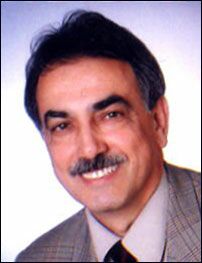
On May 8, 1945, soldiers of the US Seventh Army arrested Hermann Goering, who had long occupied second place after Hitler in the Nazi hierarchy, at Fischhorn Castle, located in the Austrian resort town of Zell am See. A few days later, in the city of Augsburg, the Americans organized Goering's last press conference. Journalists from many countries had a unique opportunity to ask questions to the Reich Marshal, the commander of the air force of the Third Reich, the organizer of the German military industry, the man responsible for the persecution and destruction of hundreds of thousands of political opponents of the fascist regime, for the genocide of “racially inferior” peoples, especially Jews.
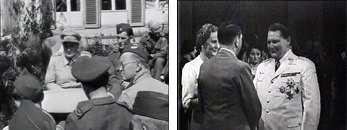
But it is unlikely that anyone present at the press conference knew about the existence of another Goering - Albert, Hermann's brother. Albert was also arrested. In mid-August 1945, he was transferred to the main prison for war criminals in Nuremberg. Only a few cells separated him from his brother, who became the main accused at the Nuremberg trials. He also faced severe punishment, although he was convinced that he would be able to prove his innocence. The main evidence was to be a list of 34 names - all of these people he saved, at the risk of his own life, from being sent to Dachau and other concentration camps. However, the American officers who interrogated Albert did not believe him. It sounded too wild: the brother of the Reich Marshal and “Nazi number two” is an opponent of the regime and a defender of the Jews. This still seems incredible today. And yet it is true.
Albert and Hermann spent their childhood in the town of Veldenstein near Nuremberg. The large Goering family—Albert and Hermann were the youngest of ten children—lived in a castle owned by Hermann von Epelstein, a German Jew who converted to Catholicism. Epelstein was the godfather of both brothers, Herman was named after him. There were rumors that these were in fact his children: Epelstein's long-term relationship with their mother, Franziska Goering (née Tiefenbrun), was no secret to anyone. Whether this is true or just gossip, apparently no one will ever know. Officially, the boys' father was considered to be Heinrich Goering, who served for many years in high ranks in the German colonies of Africa. Henry was twenty years older than Francis. By the time the Goering family lived in Weldenstein, he had long since retired and occupied a modest room on the ground floor of the castle. Franziska and Epelstein's bedrooms were next to each other on the second floor.
Herman and Albert were not very similar in appearance, and their life paths also developed differently. However, the brothers always remained humanly close to each other.
In the thirties, Hermann Goering had an impressive political career, becoming the Fuhrer's right-hand man and occupying senior positions in the Nazi Party apparatus. In 1933, the newly-minted Fuhrer appointed him Minister of Aviation and Forestry, and in 1935 - commander of the Reich Air Force. In 1936, Goering became state commissioner for a four-year plan for the development of industry and agriculture. A year later, the largest network of metallurgical enterprises in Europe, the State Works of Hermann Goering, was founded in the city of Salzgitter, and a year later he received the rank of Field Marshal of the Wehrmacht. On August 30, 1939, two days before Germany attacked Poland, Goering was appointed deputy chairman of the Reich Defense Council. On September 1, the day the Second World War began, Hitler officially declared him his successor. And finally, in 1940, Hermann Goering was awarded the highest military rank - "Reichsmarshal of the Great German Empire."
In the subsequent war years, when Germany's defeats in air battles became more frequent, Goering began to lose his authority and influence. And although in 1944 he was again appointed state commissioner for the four-year plan for the development of industry and agriculture, other people from the Nazi elite already occupied places in the Fuhrer’s inner circle. On April 23, 1945, for attempting to conduct separate negotiations with the enemy, Hitler dismissed Hermann Goering from all posts and ordered his arrest and expulsion from the party. But the days of the Fuhrer himself and the Third Reich were already numbered. The career of the Reichsmarshal also ended. In September 1945, Hermann Goering appeared before the international military tribunal in Nuremberg as the main defendant.
In contrast to his famous brother, Albert Goering stayed away from politics all his life. He worked as a sales representative at the Junkers aircraft factory. Later he became the head of the studio at the Vienna sound film studio "Tobis-Sasha". Immediately after Austria joined Germany in March 1938, persecution of Austrian Jews began. 24 hours after German troops entered Vienna, Jewish studio owner Oskar Pilzer was arrested. As Pilzer's son Herbert recalls, Albert Goering began to act immediately. He petitioned the German authorities, and two hours later Oskar was free. According to Herbert Pilzer, Goering's main weapon was his name.
In 1939, Albert Goering accepted an offer to take the position of foreign sales manager at the Czech automobile concern Skoda. His name helped the company make good money on military orders. During the war, an underground center formed among Skoda employees, leading actions of sabotage and protest against the Nazi regime. Albert knew about this and supported the Czech Resistance. People liberated from concentration camps received work at the concern. And when Skoda director Jan Moravec was forced to flee from Gestapo persecution, Albert Goering organized for his entire family to travel to Romania.
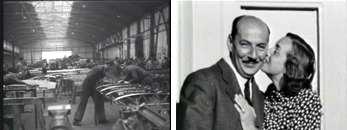
In 1942, Albert married Milanda Klazarova. From the point of view of Nazi ideology, this was a serious mistake, almost a crime, threatening the purity of the Aryan race: Milanda was Czech.
Among the people on Goering's list whom Albert helped escape Nazi persecution were celebrities, such as the Austrian composer Franz Lehár. After Austria joined the Third Reich, Lehár found himself in an ambiguous position. On the one hand, Hitler more than once publicly declared himself a fan of his music—the Fuhrer especially liked “The Merry Widow.” But on the other hand, the composer “compromised” himself by working with Jewish librettists, and most importantly, his wife Sophia was Jewish. Leghar refused to emigrate with his wife to a safe place. He was already 68 years old, and he hoped that his fame would protect them both. But he was wrong. In fascist Vienna he had to endure many difficult days. His friends and libretto authors Fritz Grünbaum and Fritz Lehner were killed in a concentration camp. The Gestapo was going to send Sofia there too. Literally on the eve of her arrest, Albert Goering turned to his powerful brother for help, and Lehár’s family was left alone.
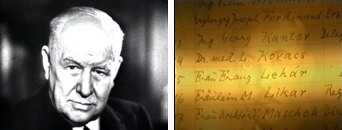
In 1944, Albert himself needed help: by order of Gestapo chief Heinrich Müller, he was arrested. Hermann Goering managed to free his brother. However, times have changed. Almost nothing remained of the former power of the Reichsmarshal. Herman openly admitted this to his brother and advised him to stay away from government affairs: next time he would not be able to help him.
Investigators who interrogated Albert Goering in a Nuremberg prison considered the list presented to be just a clumsy ploy invented to evade responsibility. During interrogations, war criminals often lied and got out, presenting false papers and false witnesses in order to clear themselves.
In June 1946, Albert was still under investigation and his situation looked almost hopeless. He was saved by chance: in the internment camp in Darmstadt, the “Goering list” with the names of 34 rescued people fell into the hands of another investigator. It was Victor Parker - the nephew of Franz Lehár. According to his uncle, he knew what Albert Goering had done for their family. Parker collected testimony from Goering's former colleagues at Skoda and received written testimonies from many people whom he helped. It became clear that Goering was telling the truth: he really saved people. His Swiss bank account, opened in the late 1930s, served only to support Jews and other persecuted people trying to escape Nazi Germany. In 1947, Albert Goering was released.
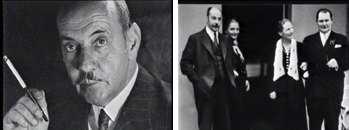
Speaking on central German television in November 2000, Herbert Pilzer, whose name along with his father’s name was on the “Göring list,” said that Albert saved not only his relatives from death. Several dozen more families from different European countries owe their lives to the brother of the Nazi Reichsmarshal.
Albert Goering did not receive the title of Righteous Among the Nations, like the famous Oskar Schindler, who saved more than 1,200 Jews during the war. No tree was planted in his honor in the Avenue of the Righteous at Yad Vashem. But righteousness is not determined by recognition. The Talmud says: “Whoever saves one life saves the whole world.” In 2002, the number of Righteous Among the Nations recognized by the Israeli government increased by almost six hundred names and as of January 1, 2003 amounted to 19,706 people. The search for the righteous continues...
http://berkovich-zametki.com/Nomer28/Goering.htm