Date
Author
Владимир Григорян

Preserved copy
Translated material
Depreciation

"This Side"
When the confrontation begins, first some halftones and nuances are cut off, then essential things fly into the basket. False or erroneous information is being spread, and against which, like radiation, there is almost no protection. Directly responding to the worst in their opponents, both sides respond in kind. The result is degradation, which can go very far. I want to emphasize that I personally am far from “all in white”; anger is a bad assistant, it blinds and stupefies.
I think this is why I have not yet been able to convey even to a small extent my understanding of what is happening in Ukraine.
Is there fascism there? Yes, and it’s not even about the nationalists who add fuel to the fire. This could have been dealt with, but... Recently, one Ukrainian, Oleg Yasinsky, gave a very accurate description of what happened to his country: “ Perhaps for some, fascism is just columns of Krauts with swastikas stamping their steps. For me, these are also the sweetest boys and girls who like the death of others here .”
This is typical not only for Ukrainians, very few
different from us. Reading enthusiastic comments about the “dead dill” who were surrounded near Ilovaisk, I recalled the jubilation on Dumskaya.net
regarding those killed in the House of Trade Unions. It seems like a whole generation has grown up, for
for whom someone else's death means nothing. This means that Russia has every chance of repeating the terrible path that Ukraine is now following, and it doesn’t matter at all what forms it will take. Fascism for me is, first of all, a cynical attitude towards life and death. The USSR inherited from Russian culture a strong rejection of this abomination, I think precisely
that's why we won. Now this is going away and the tragedy in Odessa has become
one of the first consequences of the devaluation of life.

In this city lives a person I deeply like - pathologist Boris Yavorsky, who somehow reminds me of another doctor - Anton Chekhov. He is a Jew, but not a “Jewish Baderite,” but an old-fashioned smart, very decent person who tries to distance himself from politics, but not from his conscience.

“ I remember on the evening of May 4th I met a friend from the Maidan on the street, and he expressed condolences to me - either about the deaths of people I knew, or about the difficult situation at work. I replied - thank you, but, in fact, it is I who should sympathize with you: in the end, the people in the House of Trade Unions only died - and how many of your friends are now alive, but have ceased to be people? I remember very well the clear-eyed boys and girls – including Odessa residents – rejoicing over the “fried Colorados”... And, perhaps, it is this aspect of the May events that is most important to me
painful ."
For me too.
"Integrity"
I want to emphasize once again that there is not much difference between Russia and Ukraine; what has been happening there for the last year and a half could begin here tomorrow. Most of those who came to the Maidan were completely normal, sane people, and even the “Right Sector” were basically the same guys as ours from the various “Minin and Pozharsky militias”, ready to use weapons to force the government to serve the people. The trouble is that the world is structured completely differently than idealists think, and the consequences of their failure to understand this are more often
all tragic. Therefore, when I write about today’s Ukraine, I also say
about tomorrow’s Russia, partly already today’s. We clearly see what puppeteers can do to a naive crowd who want the best for their country.
As Boris Yavorsky says about this:
" The actions committed by the government of both current and “pre-Maidan” Ukraine in its last days, starting from the provocation of the “tyrant” law on January sixteenth 14 (I wrote about this back in those days), continuing with the linguistic speculation of February 14 and ending with the current “anti-Soviet” law on April 9, seem too numerous, and, most importantly, consistent and timely to be an accident. They are expedient and are clearly aimed at inciting mutual hostility both within Ukrainian society and between Ukraine and Russia. And this leads to a simple and disgusting conclusion.
The clans that have now seized power in Ukraine can afford to let the war with Putin, real or virtual, leave their country. For these groups, the war with Putin is an indulgence, an excuse for any dirt, abomination and blood. This permissiveness intoxicates, corrupts and quickly becomes vital, like a daily dose for a drug addict. If Putin goes anywhere in Russia, he will have to be cloned in Ukraine ."
Russian intervention certainly played a role, but it was a consequence, not a cause, of the disaster. The reason is that the oligarchy, the liberal public and nationalists have finally come to the conclusion that the existence of “two Ukraines” is an unaffordable luxury. One of them is focused on Russian, Soviet culture, canonical Orthodoxy, and certain ideas about good and evil. The other is to demolish all this, creating something fundamentally new.
To reconcile them means sacrificing something, wasting enormous mental strength. It is easier to use force, deceive the electorate, even at the cost of dictatorship or civil war, a sharp deterioration in the economic situation, to put an end to duality once and for all, and to gain INTEGRITY.
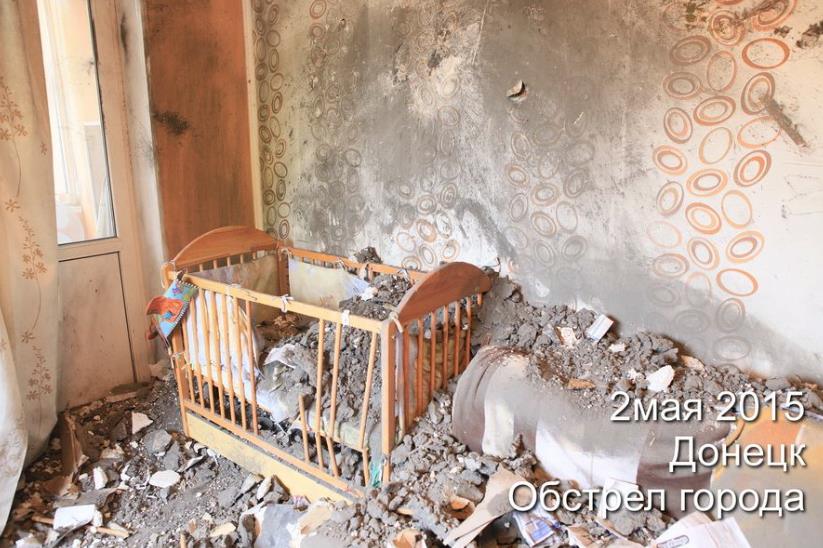
It’s like a good thing, which sounds scary in this context. We tried to find it twice in one century, first with the help of the Red Terror, then with shock reforms, in both cases there were energetic attempts to reformat consciousness. In Turkey, for the sake of integrity, they sacrificed the Greeks and Armenians. In Germany, Jews and the former diversity of culture, including political. In Czechoslovakia, Poland, and the Baltic states, on the contrary, they considered it possible to sacrifice the Germans. It’s not a matter of nationality, but a passion for simplifying the structure of society, the idea that the more monotonous it is, the more effective it is.
And in the USA and in Europe and in Russia today there are also people who strive for this, because it’s a trend, sir. So far everything is quite moderate, as it was in Ukraine over the past 23 years. But at any moment there may be “effective managers” who will put an end to slowness. And if we talk about us, I have absolutely no idea whether these will be pro-Putin or anti-Putin managers. I do not rule out that people who can give the go-ahead
basically it doesn't matter. They need controllability, this is the goal, and everything else is technical.
Of course, no one in Kyiv, Lvov, Dnepropetrovsk imagined that everything could go so far. But in general everything, more or less, goes according to
plan.
What happened in Odessa? Word to journalist Sergei Dibrov
The Odessa tragedy gave rise to many different assessments and points of view.
The other day I once again heard the most cynical of them, the farthest from the truth: “The civil society of Odessa fought back the provocation.” In the same way, the civil society of Odessa fought back against provocation in 1905, organizing Jewish pogroms. As it seemed to their initiators - dull philistines,
If you kill the shoemaker Moisha, rape his wife and daughter, then Moisha’s second cousin Yakov will stop throwing bombs at policemen, give up revolutionary activities and begin making boots instead of Moisha.
But you see, this world was created by God, and no matter how radically we violate them, it exists according to them. Therefore, you cannot kill 42 people, mostly innocent, and then enjoy progress and freedoms. However, I will not read you a sermon, instead I will tell you about the background of the events that refutes the assertion that the Odessa tragedy had some kind of eerie, but positive meaning, that it stopped the transformation of the region into the Odessa People's Republic, and prevented even more bloodshed. All this is complete nonsense.
As a matter of principle, I will not operate with the opinions of supporters of the victims, those who shared their ideas. I would not like suspicions of bias to obscure my thought.
I'll start from the point of view of one smart Odessa resident, perhaps the most famous journalist in the city - Sergei Dibrov. He is an opponent of federalization and was a supporter of Maidan. At the same time, he is a professional, a decent, fairly sober person, with his own misconceptions, naive expectations, but not a scoundrel, not a liar, which by today’s standards is a lot.
This post , which I will give in abbreviation, he wrote on May 3, 2015:
“ At mourning events dedicated to the anniversary of the sad events in Odessa, I repeatedly heard: “On May 2, Odessa residents stopped the “Russian Spring” in Odessa” ... “On May 2, we managed to prevent the “Donetsk” scenario” ... “The Kulikovo residents were preparing an uprising, Strelkov was in Odessa” ...
Let's put the rhetoric aside, remember the facts and face the truth. “Russian Spring” in Odessa ended on March 3, 2014. Yes, that’s right - two months before the tragic events.
That day, during a session of the regional council, a rally of thousands of pro-Russian activists took place. On the flagpole in front of the Regional State Administration building, the Ukrainian flag was removed and the Russian flag was raised. Then there was an attempt (or imitation) to storm the regional administration building. The leader of the Kulikovo Field, Anton Davidchenko, entered the session hall with a demand: to make a decision on secession from subordination to Kyiv and holding a “referendum”.
But the regional elites, whose representatives sat on the regional council, did not play “secession and independence.” I don’t know what was the reason for this - I think, first of all, economic considerations. Everyone understands perfectly well that if the Odessa region were transformed into a gray zone like Transnistria (or even the current Crimea), the region’s economy, and with it the well-being of the elites, would collapse overnight.
Be that as it may, the deputies did not vote and literally kicked Davidchenko out of the hall.
This was the end of the “Russian Spring” in Odessa. Without the support of local elites, in the presence of a large and organized pro-Ukrainian layer, the Donetsk scenario will never pass... The expected continuation was the cessation of external funding for the tent city, the severe financial crisis of the Kulikovo Field and the departure of a number of leaders outside Odessa long before May 2. And all this against the backdrop of the constant strengthening and expansion of pro-Ukrainian structures.
If in March the Kulikovo Field attracted thousands of rallies and marches every week, up to 5-7 thousand participants, then no more than a thousand people came to the May Day demonstration. This includes leftists, pro-Russian activists, and Kurdish students.
Moreover, until May 2, the process of liquidating the tent city was in full swing. The most combat-ready part of the movement, the “Odessa squad,” has already left the camp. The end of the 2014 protest movement was already a matter of time.
The behavior of individual activists of the Odessa squad on May 2, which cannot be explained from the point of view of logic and common sense, was the final chord, the farewell parade of the “Russian Spring” in Odessa, which from day to day was supposed to finally end, having essentially never begun. And I am inclined to believe that the activists of the Odessa squad really hoped that they would be able to “cause trouble,” after which the police would separate the warring parties, and everything would end “as usual.”
I have no evidence or proof that any kind of “uprising” was planned or carried out that day. The leaders of the “Kulikovites” knew very well that additional forces of pro-Ukrainian activists from other regions had been brought to Odessa. To plan an “uprising” in such a situation means to violate all the canons of military art. The few forces of the gathered “Kulikovites” were barely enough to siege or storm one administrative building, but to attack at least five times superior forces of the “Maidanovites” - in a military sense, it was real suicide...
The tragedy of May 2 did not stop the “Russian Spring” in Odessa - by that time it had already died out on its own. But the death of dozens of people fueled it, gave it a second wind and a second chance, primarily in the Donbass... "
Word to ex-governor Nemirovsky
The day before the appearance of Sergei Dibrov's post "Novaya Gazeta"
published an interview with the ex-governor of the Odessa region Vladimir Nemirovsky.
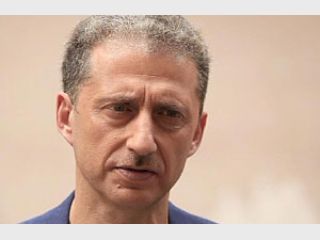
He was appointed to this post after the victory of the Maidan, as a person not associated with the previous government and the Party of Regions. He deeply despised the leaders of the Odessa Maidan and Anti-Maidan:
“ There were memorandums with Euromaidan and with the Kulikovo Field. Considering that all the leaders are scoundrels of the Odessa type, they are not interested in Odessa at all, only self-PR, narcissism and self-presentation, naturally, they began to arrange a confrontation with each other .”
However, the likelihood that they would grab each other's throats was practically zero. Nemirovich was still nervous, and the police were sure that everything was under control; they did not understand what could happen if they threw Kyiv yeast into the dough of the Odessa rallies.
And then, the most important thing:
"Nemirovsky:
- And in general, my deep conviction is Euromaidan and the Kulikovo Field... There is the geometry of Lobachevsky, and there is the geometry of Euclid. Do you know the difference?
Journalist:
- For Lobachevsky, parallel lines can intersect.
Nemirovsky:
- Yes, it is my deep conviction that these two Maidans overlapped. Only very far away. They were secretly manipulated. I have quite a lot of operational information for this, after all, I managed to get something, and I am inclined to analysis. In general, May 2 was programmed. Yes, not on such a terrible scale, of course. But there were conversations that “this government cannot take control of the situation, but someone else can.”
Here Nemirovich more than transparently hints that a decision was brewing in Kyiv to show, using the example of Odessa, that the government is in control of the situation in the country.
Then the ex-governor recalls how the situation unfolded:
“there was some kind of mass hysteria created by representatives of the so-called “Euromaidan”. I emphasize - the so-called. About the “little green men”, about breakthroughs, re-breakthroughs, about “how will you protect us”. The main problem is not in the “little green men”, who do not exist, not in the GRU officers, but in general in you and what you have produced here... Hysteria was whipped up and thrown in all the time "Left" information, 90% - "Euromaidan", through Facebook and other social networks ."
And further about the prelude of the tragedy, “peaceful fans”, i.e. the above-mentioned Kyiv yeast:
" It was already the last days of April. By that time, Self-Defense buses began to travel to the region. There were a lot of them. We did not let them into Odessa as much as we could. But they went to Belgorod-Dnestrovsky, and somewhere else. They spread throughout the region.
— Did they come from Kyiv?
— Yes, in the direction from Kyiv. The law enforcement officers completely stepped aside, they were already demoralized ."
Then on May 2, about “civil society in Odessa”:
“ I ask for the car of the regional prosecutor, I get to Kanatnaya. I get out at the outer alley, which goes to the corner of the building. I’m walking on my own, they know my face, now I’ll come and make an agreement, but everyone listened to me before. And then some devils appear, clearly not Odessa, aggressive looking, with weapons. Again with claims .”
Nemirovsky's conclusion:
“ In general, the initial order was this: a collision was supposed to happen, but without such tragic consequences. It was programmed, it was supposed to happen.
- Who programmed it?
- Look for who benefits. According to the logic of all previous and subsequent events, it was all no coincidence ."
Guess three times who he meant?
Reasons
The reasons for the tragedy that is happening in Ukraine today are within it. This also applies to Crimea, where, according to a German survey, more than 90 percent are glad to be part of Russia. This concerns Donbass, where an armed uprising began before Strelkov appeared. It concerns Kyiv and so on. This does not justify the Russian government, which has made not even dozens, but hundreds of mistakes in relation to Ukraine, both over the past 24 years and in the last year and a half. But the Russian factor did not play and does not play a key role there.
As David Eidelman, an Israeli political scientist and former adviser to Prime Minister Ehud Olmert, who worked in the 2010 Ukrainian elections in Yatsenyuk’s team, speaks about the tragedy of our neighboring country:
"Probably the main reason is the atmosphere of hatred and intransigence that prevails in Ukraine... The second reason is the degradation of politics. State policy and strategic thinking are reduced to the level of the Sonderkommando. Inhumanity and crimes that Europe has not seen since the Second World War are beginning to be justified by political expediency ."
This text, like all the previous ones, is not only and not so much about Ukraine, but first of all about us, our attitude to what is happening. Each of us passes a kind of test that largely determines the future of our country. I can’t say that I passed it brilliantly.
* The material mentions an organization whose activities are prohibited in the Russian Federation