
Translated material
There is something to read

Alfred Koch, Olga Lapina. The story of one village
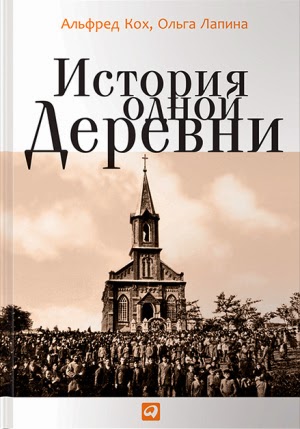
Having pushed the book, you might think that this is the private story of the village of Dzhiginka in the south of Russia, interesting only to her immigrants (including the authors) and their closest neighbors. However, having begun to read and after the storytellers carried away by the unraveling of the intricacies of the fate of the heroes, we understand that, using the example of one German colony, the authors managed to show the thorny path of the Germans in Russia - from the first settlements that arose under Peter and Catherine II, to the present. And if, having read to the last page, close the book and think, it turns out that this is a story about strong spirit people. If they do not interfere with them, they will poke such a way of life that they can, without any help from the state (and even contrary to their obstacles), overcome any obstacles and achieve any goals.
Why is the book "History of one village" worthy of reading?
- This book is a wonderful example of documentary prose, read in one breath. The authors did a tremendous work: they found all the available archival documents, talked with all the descendants of the actors, and hundreds of years later they handed causal relations ... and built a fascinating narrative.
- On the example of the inhabitants of one village, you will see the origin of the people, its flowering and disappearance. This people disappeared, as the ancient Sumerians, Khazars, and Phoenicians once disappeared. The only difference is that the listed peoples lasted many centuries, and sometimes millennia. The history of Russian Volksduch was short and took some 200 years.
- After reading this book, you will see that people have a natural tendency to self -organization - and can exist perfectly without a state.
Excerpt from the book:
Preface
I am ashamed to admit, but the idea of this book does not belong to me. Once I received by e -mail a letter from journalist Olga Lapina with a proposal to help write a book about the village of Dzhiginka of the Anapa district of the Krasnodar Territory.
“What is the shame? - the reader will ask. -A certain Moscow uncle pushing journalism receives a proposal from a provincial journalist to participate in writing a book about some southern village forgotten by God and is upset because this idea did not occur to him. Moreover, (you are now prompting) this Olga Lapina lives in this very jigin. What is amazing that she came with this idea? "
And it is amazing in this that my father was born in this village. And I myself spent almost all my childhood in this village, namely, all my summer holidays. And this village was originally called not a jiginka, but it was the German colony Michaelsfeld.
One way or another, but I clung to this proposal and with pleasure began to help Olga in writing a book. As she sent her individual chapters, I was more and more immersed in memories. Among other things, much of what Olga was excavated, I did not know before, and I am grateful to her for the work that she did.
The genre of preface involves a certain announcement of the book, but I will not deal with a brief retelling here: it repels the hunt to read it. I’ll tell you here only about the impressions, emotions and thoughts that she caused me.
The first impression is unexpected, but if you think about it, it is quite banal and lies on the surface: in the history of this German colony, as in a drop of water, the whole history of Russia is reflected over the past 150 years. Not a single event passed by. Everything can be seen in it: both the gradual, but the steady and obvious growth of the well -being of the Russian peasantry, caused by the reforms of Alexander the Second, and the trouble of 1914, especially painfully hit the German colonists, and the tragedy of the Kuban Cossacks (and with it and the Germans living in the Kuban) to the civil war, and the relief of the NEP, and the “final decision” of the Russian peasant issue in the Russian peasant issue The form of collectivization, and wretched “collective farm happiness”, and the disaster of 1941, and followed by deportation, exile, labor and Stalin camps, post -war hunger, “thaw”, a rehabilitation of a jigskan exile. And the final outcome in Germany.
The second impression is an epic impression, philosophical. The circle was closed: for almost 200 years, the small people wandered through the expanses of Eurasia and now he returned to the ground of his ancestors. Or, as the Germans say, Vaterland. As you want, but there is something biblical, Old Testament in this story.
The two hundred years ago overpopulated Europe threw out low-earth peasants, city lower classes, impoverished nobles and simply seekers of good luck and adventurers. The huge masses of people moved where: some to America, some to the south of Africa, some to Australia, and who - to Russia. The aristocrats moved “to catch happiness and ranks” to St. Petersburg, and the peasants to the south of Russia, to the lands of the northern lands that were just conquered from the Turks.
The cruel logic of the 20th century broke the entire patriarchal, naive peasant faith of my people in the justice of labor. The fact that the work will grind everything and everything can be fixed with labor. It turned out that this is far from the case. It turned out that unexpectedly and suddenly blinded by rage and mutual hatred, powerful ethnic groups can, like a grain of sand, grind a small colony of foreigners, lost in the Kuban floods. First in 1914, and then in 1941. What a mystical power in these two symmetrical numbers ...
The third impression is pride in my people. Appearance of his incredible stamina and vitality. Where his fate was not thrown: in the Kuban floods and the Volga steppes, to the Altai taiga and on the banks of the Rhine. Everywhere he, not long grief about the lost life, dexterously and patiently began to equip and methodically and work hard. It did not pass for several years, and again German villages are the richest, crops are the most plentiful, and the brides are the most enviable.
Somewhere, far, thousands of kilometers to the west, from the ruins of Dresden and Hamburg, Nuremberg and Würzburg by the work of the "large" people, the power of post-war Germany was revived. There was no connection with her, there was no help from her, the German origin in the post -war USSR was already a stigma of the geek and enemy of the people. But just as in the “big” Germany, almost already forgotten, perceived as a distant fairy tale, even knowing anything about this revival, the “small” people in the Kazakhstan steppes and in the Siberian taiga lifted German collective farm-and-and-offs.
However, even the most stubborn work is not able to change the iron tread of history. History is that everything sets in its place. And he calls all things his names: stupidity - stupidity, meanness - meanness, and ignorance - ignorance. No most beautiful spotlights can survive if they are not on the use of knowledge about human nature and the laws by which human society develops, but on attempts this nature and these laws change. Such projects are dangerous utopias. As, however, this was originally among Thomas Mora: everything in his utopia was beautiful and harmonious, except that somewhere there, behind the scenes, slaves worked imperceptibly for everyone.
Already what the Chinese are a textbook example of methodical hard work, but in the conditions of Maoist utopia and they almost not be stared with hunger. And only their orders became more or less reasonable, as they surprised the whole world with their economic miracle.
Both the fourth and for me are the most important thing. This book helped my personal self -identification. What am I talking about? Now I'll try to explain.
From early childhood, I experienced some discomfort from the ambiguity of my origin. This Putin tells everyone that in the Soviet Union there was some kind of "new community of people-the Soviet people." But in reality - there was no such community. Yes, the peoples who inhabited the USSR lived in a relative world, but this does not mean that national identity cost nothing. This is a lie. Perhaps it seemed only to the "older brother" - Russian. But the rest of the ethnic groups did not at all consider themselves members of the "friendly family of Soviet peoples." You can ask the Baltic States, the Georgians, among the Jews, the Western Ukrainians, the Chechens, the Germans, the Gypsies, the Kalmyks, and many other peoples who inhabited and inhabit our country - did they have oppression in connection with their origin? And they will answer you: yes, the so -called “fifth graph” in a personnel accounting sheet is not an invention of anti -Soviets, this is a cruel reality that Putin knows, but which he prefers to be silent.
Thus, my discomfort was that I felt a completely Russian person: my mother was Russian, at home they spoke only Russian at home, in early childhood my Russian grandmother told me Russian fairy tales, and my Russian grandfather-stories about how he beat the Germans in the war. However, where does this strange name come from - Alfred? Where is this monstrous (you can break) patronymic - Rhindoldovich? And this funny last name is Koch? Is my dad, my beloved, big, strong dad, is German? These lanky whitish people with hunchbacked noses from films about the war are my fellow tribesmen? Not these beautiful Russian heroes with whom I speak the same language and live in one, the largest and most beautiful country and each of which can be put on a dozens of hateful thin people with one blow? No, these heroes are people of others who, if that, can send me to exile and put me in prison, but these same freaks are my blood brothers. What a horror.
At first I really wanted to be Russian. I wanted to merge with a large ethnic group, to become part of it, to share with him his story, his mistakes and achievements. I wanted to be protected by his power, to feel this specific comfort of unpunished wrong, which can only give national, blood cohesion.
However, then I understood all the futility of my efforts. Everything broke up about the name. Koch Alfred Reingoldovich is (as Lenya Partenov once correctly remarked) Bundestag with Bundesrat, and even with a Bundaver. Never, under no circumstances with such a “chase” can become a Russian person. After all, it only seems that self -identification is enough for national identification. This is far from the case. That's what the point is that I will imagine myself a Chechen or Georgian? Yes, I read at least tons of books about their morals and customs, learn their tongue thoroughly and spend many years among them, all the same: if they themselves do not consider them a fellow tribe, all my attempts will be in vain. And with such starting data, like mine, to count on the fact that the Russians will accept me to their people is the top of frivolity.
No, I am not offended by the Russian people. God forbid. I am grateful to Russian culture, the Russian language, to all Russian women whom I loved and love. Moreover, Russian mentality is perhaps the most understandable and mastered mentality. But I could not get through the national shell inside this ethnic group: they do not let me in. As soon as I lose my vigilance and begin to say what I think, how immediately a shout: “This is not your business! If you don't like it, you can get out of Israel! ” Israel is even somehow clear. This is a certain Old Testament image of the promised land. Yes, and any non -Russian surname of any Great Russians automatically passes the “Jewish exam”. Which I, of course, almost always fail. By the way, even if someone doesn’t say that (about “get out”), this does not mean that he does not think so.
However, in possession of this name there are certain utilitarian advantages. For example, never a single investigator in the history of my relations with law enforcement agencies wrote my last name, name and patronymic at the same time. Almost always there was a mistake in the summons, and I had a legal reason to believe that they caused me not me.
Regarding jokes in my direction, you can write a whole sociopsychological study. From the diapers I know about the “Koch wand”, about the “Gauli-Ter of Ukraine” and about the “wife of the director of Buchenwald”. Moreover, it is believed that all this “wit” is extremely original and ridiculous to convulsions. I will dwell on the “Back of Koch” in more detail, because it, in my view, is a kind of phenomenon.
All my life, in whatever company I have ended up, be it professors and politicians, tractor drivers and concrete workers, art historians and musicians, driver and milkmaids, businessmen and directors, all people, regardless of the educational and intellectual level after half an hour, will certainly somehow plunge this notorious “wand”. Someone-sincerely trying to joke in a friendly manner, someone-thinking that he thus shakes me subtly, someone-stranglingly trying to seem erudite and original.
After pronouncing this sacred phrase “Koch’s wand”, the behavior of all people (again, regardless of their age, origin and mental development) is exactly the same: they squinting their eyes cunningly, they have a sarcastic smile on their lips and they begin to twist their heads, looking for mental applause from the participants in the conversation: look, they say, how great and gluttonously, I rang out!
I have not reacted to this "humor" for a long time. I have already heard all this a million times. Yes, I know that my cock is played out here. My member is the “wand of Koch”, it is also the causative agent of tuberculosis. Yes, it's wild, it’s funny to colic. It's funny, right? I even called my son - Robert. In honor of the great Nobel laureate of Robert Koch, who, in addition to the causative agent of tuberculosis, also discovered the causative agents of cholera and the Siberian ulcer.
How is it (with all the desire) to become Russian? “German, pepper, sausage” - and that’s it. The simplest would be to change the name, surname and patronymic. To become some Alexander Rodionovich Karpov (my mother is Karpova). And that's it, it's a hat. But then the hesitations begin ... As O'Genry wrote, "something inside us chooses our path."
Here take at least the name - Alfred. Ancient German, still pre -Christian name, meaning "voice of forest spirits." This name was named one of my father’s brothers, Alfred Koch, born in 1912. Born in the German colony Michaelsfeld (now the village of Dzhiginka of the Anapsky district of the Krasnodar Territory). They grew up with his brothers and sisters in an ordinary peasant family of a village blacksmith, my grandfather Davyd Karlovich Koch and his wife Augustine Rudolfov (in girlhood - Bukhman). After graduating from school, he went to Leningrad, having studied there at the pedagogical institute, returned to his native village and began to work as a school teacher. He married, a daughter was born. In 1937 he was arrested under the 58th article-"Anti-Soviet agitation and propaganda." In 1938 - shot. And in 1956-rehabilitated. Certificate of rehabilitation, here it is, lies in front of me. It says black and white here: Alfred Koch - shot. Already goosebumps. He was the idol of the family, the only person with higher education. In honor of him, my father called me Alfred. What, say, change? Somehow the hand does not rise ... Maybe this is the voice of ancient forest spirits tells me “tolerate, nothing, it is necessary, will you stand it”?
Well, well, let Alfred be. You never know what nonsense will find people on people, they can also call a child and call Jessica. But the middle name, patronymic! Reingoldovich! This is not at any gate!
Yes, I agree. With such a middle name, it is better not to meddle in Russians. Well, will we change? Reingold means "pure gold." Also ancient German, still pagan name. My father was born in 1935. When the war began, he was six years old. In September 1941, they were deported from Dzhiginka to East Kazakhstan. Father did not remember the deportation. But he remembered the life of life in the poor taiga collective farm in the village of Kutikha, Blackminsky district of the East Kazakhstan region for his whole life. All working deported Germans were taken to the labor and camps. There were only old people and children on the collective farm. Fasted terribly. The Germans, for obvious reasons, went the food last. Many have died. It was especially difficult and hungry after the war. It seemed that they could no longer stand. And there is nowhere to run: there are no pas ports. At 17, his father escaped from the collective farm. Without a passport, practically for sure death in the camp. He dangled in the city semi-legally, working in the garage as a gap.
But here in March 1953 Stalin died. The relief of the passport regime began. Since his father worked well, the head of the garage was busy for him, and he was given a passport. But the status of the exile -settler was not removed from him for a long time, and he went for ten years to the special code as a repressed person. For what? What did he understand in his six years? Can a child be considered a criminal? Yes, however, what am I talking about. Everything is already clear.
Father and then worked a lot and honestly. When they allowed to leave exile, he thought for some time, and then went to build a Volga car factory. Having built it, he worked on it until the very pension. He had many orders and medals for valiant work. He died six years ago. The kingdom is heavenly. No. We will not change the middle name either. Let it be left. Spit what they think. Let what they want, they think.
Well, maybe at least change your last name? It will be: Alfred Reingoldovich Karpov. It sounds, of course, stupid. But at least something.
If this is done, then I will no longer be connected with Aunt Olya. The older sister of my father Olga Koch, who actually saved him from starvation on the collective farm, shared the last piece with his younger brother. To her, I went to Dzhiginka every summer all the 1970s. She and her husband returned to her native village as soon as they were allowed - in 1964. Разумеется, их отчий дом оказался занят чужими людьми, и ей его не вернули. Они построились напротив, на другой стороне улицы, и всю жизнь она ходила мимо дома, построенного ее отцом. Пройдя и трудармию, тюрьмы и лагеря, она сохранила спокойную, терпеливую рассудительность. Она была до тошноты чистоплотна, много и красиво вышивала, прекрасно готовила.
А как она доила корову! Мыла ее, затем отдельно мыла вымя, смазывала его вазелином. А потом струи начинали звонко бить в оцинкованное ведро. Какое это счастье: пить парное молоко с выпеченными ею пирожками — ку-хами. Корова сочно хрустит зелеными стеблями кукурузы или, как ее называют местные казаки, «бодылки», за стенкой аппетитно хрюкают поросята, кудахчут куры, хлопают крыльями гуси. В саду под тяжестью черных и оранжевых ягод склоняют свои ветви вишни и абрикосы местного сорта «жердели». Красное южное солнце садится за «кручи» в конце деревни. Она умерла от рака в 64 года.
Или отцов брат Рудольф, 1923 года рождения. В 1941 году из армии — сразу в лагерь. И вплоть до конца войны — лесоповал. Оттуда он пришел с женой, тетей Галей. На руках у нее были синие наколки, и она без конца курила «Беломор». Потом всю жизнь дядя Рудольф проработал в совхозе. Там, на лесоповале, на обских болотах заработал он жуткий тромбофлебит и умер 60 лет от роду.
А была еще старшая сестра Мария. Ее звали Марихен. И у нее был сын Генрих. В деревне его звали Гаррик. Был неведомый старший брат Карл, который умер где-то во Фрунзе. Он уже был совсем взрослый, когда их депортировали. Был еще брат Адольф, которого в 1940 году забрали в Красную армию и который пропал без вести в первые дни войны. Видимо, погиб сразу или попал в плен. Поэтому его не успели депортировать.
Наконец был отец (мой дед), умерший в 1944-м. Он умер в 59 лет, зимой. Отец рассказывал, что могилу ему выкопали за деревней, на склоне горы. И долго еще потом после похорон чернел на снегу его могильный холмик. А потом и его занесло снегом. Была мать (моя бабка) Августина (баба Гутя), умершая в год моего рождения, так и не научив меня немецкому языку.
Все они жили недолго, рано умерев от голода и болезней. Судьба была несправедлива к ним. Они много и тяжело работали, светлых дней в их жизни было мало. Но это были совсем не злые, красивые и работящие люди. Они были все крепко скроены, с огромными жилистыми руками, мощными плечами, физически очень сильные и выносливые. Но даже таких людей убивает непосильный, изнурительный труд. Они просто надорвались.
Можно ли было сделать вид, что ничего этого не было, что этих людей в моей жизни не существовало? Стать не Кохом, а Карповым?
Там, по русской, материнской линии тоже была и коллективизация, и раскулачивание, и стройки первых пятилеток. Была война, ранение, инвалидность деда, тяжелый беспросветный труд бабки. But this is another story. Но что делать с этой, с историей семьи Кох?
А ничего не делать, оставить все как есть. Ничего уже не изменишь, что было — то было. Все мы несем на себе груз прожитых до нас жизней. Это только кажется, что ты в ответе только за себя. No! Недаром в Библии сказано, что Бог наказывает детей за грехи отцов и так на несколько поколений вперед...
Вот это: Альфред Рейнгольдович Кох, что это? Punishment? It is unlikely. Then what? Почему это так важно для меня? Почему я не могу перестать им быть? Don't know. Наверное, это долг перед своими предками. Странно, откуда этот долг взялся? Почему я чувствую — я должен? Don't know. Но ведь чувствую! But not only. No. Не только долг. What is it? Как назвать это острое чувство потребности в национальной идентификации?
Ученые говорят, что вкусовые рецепторы у человека открываются и обретают чувствительность постепенно, не сразу. Человек уже перестает расти, он уже может иметь детей, давно бреется и даже уже отслужил в армии, а вкусовые рецепторы все еще продолжают раскрываться. В 25 человек начинает понимать букет хорошего вина (до этого все вина казались на один вкус), потом — прелесть сыра «с душком» (а раньше казалось: какая гадость — дерьмом воняет), тонкий аромат испанского свиного окорока, нежность спаржи и удивительный вкус выдержанного говяжьего стейка. Он начинает понимать, что правильно поджаренное на гриле мясо не нужно поливать кетчупом, что картошка фри — не самый лучший выбор для гарнира и что макароны «по-флотски» — это не «спагетти болонезе».
Так и с национальностью. Может, это очень субъективно, но мне кажется, что где-то в районе сорока у мужчины возникает потребность «назвать себя». Понять, кто ты, откуда ты, где твои корни, продолжением чего ты являешься, из недр чьей истории ты вынырнул и прервется ли на тебе та тонкая линия, которая началась задолго до тебя?
Национально детерминированные люди проходят этот этап легко: у них все понятно и органично. Они живут на земле своих предков, отец и мать у них титульной нации, и проблемы выбора у них нет. Быть может, поэтому они этого этапа не замечают, а метания друзей-инородцев кажутся им «му-довыми рыданиями».
Это не только моя персональная история. Я это знаю по всем своим друзьям и знакомым, которые принадлежат к национальным диаспорам либо являются «полукровками».
Я уже больше десяти лет как вступил в этот период жизни. И моя помощь Ольге Лапиной в написании этой книги — моя дань памяти моим предкам. И тем, кого я знал и любил. И тем, кто были до них.
Alfred Koch
ОТ РОЖДЕСТВА К РОЖДЕСТВУ
Несколько лет назад, кажется, ничто не предвещало, что эта книга будет написана. How did it all start? С Рождества. С немецкого Рождества.
Городской журнал «Анапа сегодня» заказал мне статью о немецком Рождестве. Предполагалось, что писать я буду о том, как в бывшем немецком селе отмечалось (и отмечается сегодня) Рождество.
«Гвоздем» статьи предполагалось сделать рецепт кухи — немецкого пирога. Сама же статья должна была быть приятной во всех отношениях — вкусной, волшебной, красивой.
Но в результате в бывшем немецком селе мне не удалось узнать рецепт кухи. Были и такие потомки джигинских немцев, что всерьез переспрашивали меня: «А что такое куха?» На что я обескураженно отвечала, что вот это-то я у них и хотела бы узнать.
Сама, кстати, я пробовала куху «по-джигински». And more than once. Помню, как пожилая джигинская немка, у которой я жила на квартире некоторое время, по праздникам пекла эти самые кухи. С вечера замешивала тесто, после чего всю ночь не спала — «священнодействовала» над квашней. Я очень хорошо запомнила, как она аккуратно выбирала из сахара малейшую пушинку-пылинку, как тщательно просеивала муку, как придирчиво просматривала выбитые в чашку яйца — чтобы все было идеальное, чистейшее, белейшее. И в итоге вкуснейшее.
Это были изумительные кухи. Они таяли во рту. Действительно таяли! Но это было так давно. И немка та давно уехала в Германию, и жизнь ее совершенно изменилась с тех пор. Раньше, до отъезда в Германию, ее день состоял из многочисленных хлопот по хозяйству. Вставала она, как правило, рано, еще затемно. «Управлялась» по хозяйству. И только после добросовестно сделанной работы садилась пить горячий кофе. С чем-нибудь вкусным. С той же кухой, например. Представить ее без работы и вне работы было невозможно. Хотя в то время она уже была на пенсии.
Так вот, в Германии моя немка зажила совсем другой жизнью. Никаких «трудовых десантов» в огороде (в Германии они не приветствуются), никаких стирок в банях и развешивания мокрого белья на морозе (когда пальцы примерзают к металлическим струнам, а по спине течет горячий, липкий пот), никаких печек, угля, дров, солярки, никаких забот о том, чем кормить поросят, гусей, теленка и корову. Все это было в прошлом. А в настоящем — путешествия, разнообразная культурная жизнь, будни знающей себе цену фрау. От прошлой жизни, пожалуй, остался только обжигающий, густой, свежесва-ренный кофе по утрам.
Но вернемся к кухе. Конечно, я могла бы обратиться к Интернету и найти любой рецепт любой кухи. Но этот вариант я не рассматривала. Мне хотелось узнать рецепт именно и только «джигинской» кухи.
Но никто не мог мне его дать.
Вмешался случай. Мне посоветовали обратиться к Балько Иде Готлибовне. Она, мол, из немцев, хорошо знает и помнит немецкие обычаи и традиции. И уж рецепт кухи тоже ей знаком. Более того, она сама печет превкусные, превосходнейшие кухи.
Нужно сказать, что Ида Готлибовна к этому времени была уже «звездой» анапских СМИ. У нее неоднократно брали интервью, ее имя было на слуху. И я отправилась на встречу с Идой Готлибовной.
...Маленькая, сухонькая, но чрезвычайно подвижная и энергичная Ида Готлибовна. Взгляд цепкий, речь великолепная, голос зычный. Даже удивительно, как в таком хрупком теле может существовать такой мощный голос.
Белый платочек, изящный наряд, чулочки, тапочки. Белоснежные волосы собраны в маленький пучок. Пронзительно-голубые глаза на желтоватом лице. Длинный нос, узкие губы. Лицо доброй колдуньи.
И мы начали наш неспешный разговор. О кухе. Потом нечаянно затронули тему семьи Иды Готлибовны. Перешли к истории Джигинки. Все это было необычайно интересно. То есть я знала, конечно, что Джигинка — бывшее немецкое село. Но информация эта приобрела свой истинный смысл для меня только в беседе с Идой Готлибовной. Она сама была из этой истории, живой ее персонаж.
Другими словами, история бывшего немецкого села стала обрастать плотью и кровью.
Ида Готлибовна рассказывала, как ее семья жила до войны. Как отмечали Рождество. Как жили немцы в то время, чем они жили. Рассказала историю своей куклы, которую ей подарили на Рождество родители. Как берегла она эту куклу, как любила и никогда бы ее не бросила, если бы только их не выселили тогда.
«Не выселили?» — переспросила я ее удивленно.
Так мы и пришли к теме выселения немцев из Джигинки 28 сентября 1941 года. Когда немцы были вынуждены бросать свои дома, все нажитое добро, семейные архивы. Когда им на сборы дали всего 24 часа. Потом посадили в товарные вагоны и отправили в Восточный Казахстан. Там, в Восточном Казахстане, родители Иды Готлибовны погибли от голода. А сама она попала в трудармию.
В общем, статья началась с кухи, а закончилась тем, как выживала Ида Балько в трудармии на Урале.
Ида Готлибовна оказалась удивительной рассказчицей. Например, она рассказывала мне историю, когда ей уже в Восточном Казахстане привезли повестку в трудармию. Как подъехала к ней женщина на лошади. И силуэт этой всадницы, этого грозного вестника, ярко чернел на фоне полыхающего заката. Ида Балько, которая до этого момента говорила достаточно односложно, рублено и суховато, вдруг стала говорить картинками, ярко, художественно. Словно не Ида Балько сидела передо мной, а Татьяна Толстая или, к примеру, Авдотья Смирнова. No less.
Главный редактора журнала «Анапа сегодня» не только пропустил эту статью в новогодний (воздушный, прелестный, праздничный) номер, но и попросил меня развить тему, описать более подробно перипетии жизни Иды Балько в трудармии и в Восточном Казахстане. Which I did.
Журнал со статьей вышел перед Новым годом. И теплый еще журнальный номер я торжественно вручила Иде Готлибовне. Мне было приятно видеть, с каким удовольствием она рассматривала свою фотографию в журнале, как внимательно слушала меня, когда я вызвалась прочитать для нее статью вслух.
В декабре 2010 года на Всероссийском конкурсе работников СМИ «Родная речь» эта работа получила главный приз конкурса. Церемония награждения состоялась в Тульской области, в родовом поместье Л.Н. Толстого Ясная Поляна. И здесь тема немецкого Рождества получила неожиданное продолжение. Нужно сказать, что на конкурсе в качестве жюри и приглашенных гостей были имена весьма известные — Дмитрий Быков, Ирина Петровская, Владимир Вишневский, Леонид Каганов и другие. Информационным же партнером конкурса был ТК «Культура». ТК «Культура» представлял Владислав Флярковский.
И на вечернем, очень красивом и вдохновенном банкете Флярковский взял слово и стал говорить тост.
Тост получился развернутым, переходящим в перечисление фактов биографии Владислава Пьеровича. Впрочем, затяжной характер тоста принимался на «ура» ввиду того, что «докладчик» говорил необыкновенно красочно и артистично. И вдруг — что же я слышу?
«...Мой дед был из немцев... сослан в Башкирию... репрессии...»
Словом, я слышу отголоски истории «Немецкого Рождества». Казалось, что эта тема начинает неотступно следовать за мной.
Наконец, однажды я перелистывала очередной номер журнала STORY и наткнулась на статью, главным героем которой был Альфред Кох. К этому моменту я знала о нем ровно столько, сколько знали о нем все обыватели в России. Но знала я и то, что его корни следует искать в Джигинке.
Мне удалось выйти на Альфреда Коха, и вскоре между нами состоялся телефонный разговор.
И на все мои пространные рассуждения (что, мол, бедная Джигинка, бедные немцы, никому их история не интересна) я услышала в ответ спокойное:
— Почему же «никому не интересна»? Мне, например, интересна.
И вот я уже в Германии. Любопытно то, что в Германию я попала именно в дни рождественских праздников. No more or less. То есть с чего все началось, к тому все и пришло. От Рождества к Рождеству. Хотя это совпадение было почти случайным. «Почти», поскольку подсознательно мне, конечно, хотелось увидеть эту страну в волшебном ореоле рождественских праздников.
Но к этому, «германскому», Рождеству мы еще вернемся. А пока перенесемся в 60-е годы позапрошлого века.
Olga Lapina
http://read-this-text.blogspot.ru/2014/04/blog-post_2177.html