
Translated material
In Yoshkar-Ola

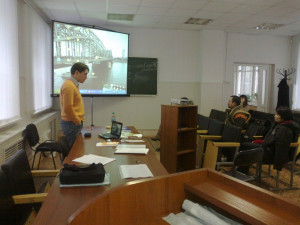
The day before yesterday we arrived in Yoshkar-Ola in the evening. In the morning I go to a lecture given by Robert Latypov from the Perm Memorial for history teachers. They developed many lessons on the history of Stalin's reign and proposed these developments. A very interesting approach. They rely only on documents and review documents with students. The era of Stalin through a document is professional and expert. It is a pity that in the hall there is only one history teacher, one school theater director, a human rights activist and the director of the museum on the History of the Gulag in Yoshkar-Ola. All this can be downloaded here . The seminar takes place in the Yoshkar-Ola education department. It's freezing outside and very cold in the hall.
Then we go to eat at the "Tarelka" cafe. There I meet, by agreement, with Irina from the Mari Public Monitoring Committee. She has just returned from a visit and after lunch runs to the Investigative Committee. We discuss general issues. We are talking about the fact that in Russia they again do not put prisoners closer to home, but transport them all over Russia, which in itself has a bad effect on socialization.
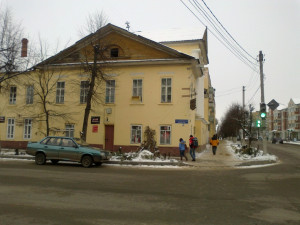
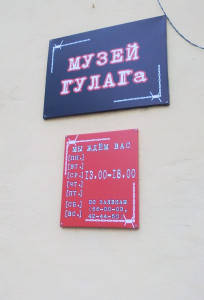
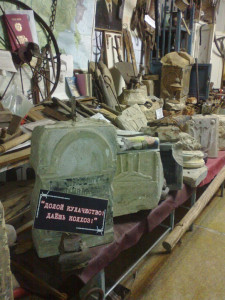
Next we go to the Gulag Museum. Former NKVD building. Let's go in. More like a warehouse. Lots of exhibits. The director is a very active man with strong hands and is not afraid of physical work. Shocking stories about the Holodomor in Mari El. About how cemeteries were dismantled in the 20s and houses were built from limestone tombstones,
Old women, children of the repressed, sit right there, they look after the museum. Leads to the preserved chamber. A strong impression. Bunks, parasha. 100 people lived in the cell at a time. I can imagine the terrible cramped conditions. Shows how torture was carried out. Shows photographs of those who tortured. These were NKVD officers. One of the women was an NKVD employee and was convicted of too severe torture. She served her time and asked to return to the party. They didn't take her. She worked at different jobs, was the director of a cultural center, and somewhere else. She died in the 80s. The technologies of torture of prisoners in the NKVD described in the case in which she was convicted are simply terrible. People agreed to everything after they passed her hands. Then there is a story about another NKVD officer. He and his brigade shot about 7 thousand people. Surviving prisoners described how they feared they would be taken to him and his firing squad and described how others were taken away to be shot. They shot us right there in the yard, to the sound of a diesel engine. The morning sound of a diesel engine was heard by the relatives of those being shot, because they spent days and nights under the doors of this terrible mansion. In the 1980s, an old executioner was found hanging from his door at home. They closed the case, saying it was suicide, but none of the neighbors believe it. After death, several tens of kilograms of moldy chocolates and a well-greased pistol with cartridges were found in the shooter’s apartment. Why the NKVD officer did not shoot himself, but very stupidly hanged himself on the door - this is the main question.
We leave the museum in shock. Little time. We run to the hotel. There is our meeting with the “ 7x7 ” bloggers. 22 people came. Long conversation. We talk about the past, about the future, about responsibility, about what we would like to talk about on our website. The conversation ends only at 18 o'clock. Let's go our separate ways.
We go to my room with several bloggers and have a long conversation on various topics. We talk about “ 7x7 ” About the Mari, about the Komi, about mythology, about multiculturalism in Europe and Russia, about Central Asia, about the opposition, about victimhood, about Neanderthals, about the history of Syktyvkar, about the heads of our regions, about archeology, etc. etc. We leave 10 minutes before midnight.