
Translated material
7 moments of the week. Historian Mikhail Rogachev:

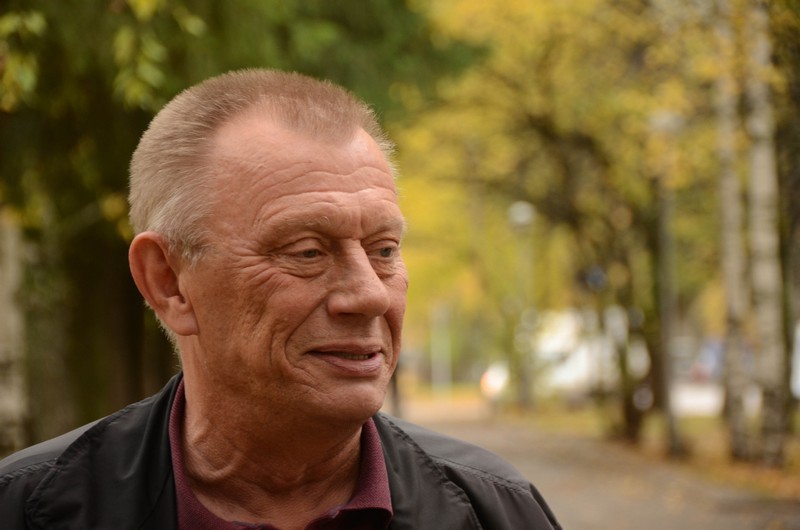
Dear readers and listeners of the online magazine " 7x7 "! Today, historian Mikhail Rogachev became our guest.
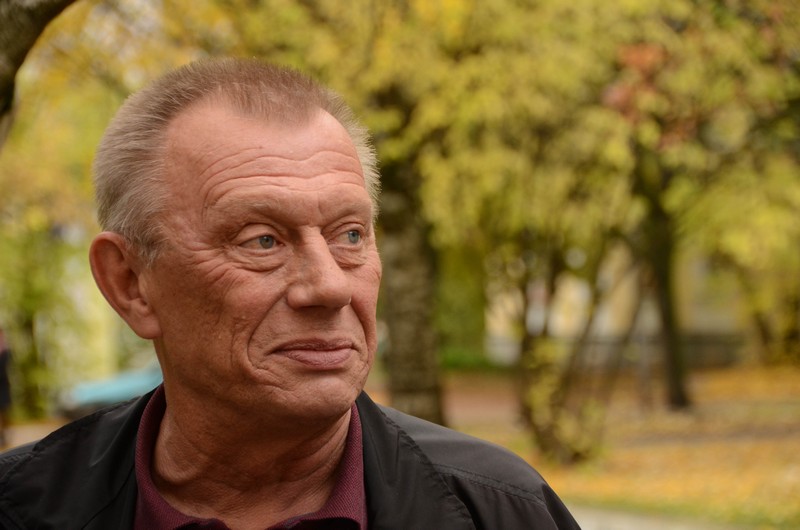
Photo by Maxim Polyakov
Decoding:
Elena Solovyova: Hello, dear readers and listeners of the Internet magazine 7x7. With you, I, Elena Solovyova, and again the program “7 Moments of the Week ”. Today, our guest is historian Mikhail Rogachev. Hello, Mikhail.
Mikhail Rogachev: Good afternoon!
E. SOLOVIEVA: The first thing you and I will talk about is the theme of the old and still some kind of new, this is a new textbook of history. Yesterday, a finalized concept was presented, now I will explain to you in more detail why I want to ask you this question, yesterday a modified concept of a new history textbook was presented. Speaker of the State Duma Sergey Naryshkin, he is also the chairman of the Russian Historical Society (everything is serious!), He called it significantly improved, balanced and politically not engaged. This is important - politically not engaged. And among the important innovations awaiting school after the final adoption of the document, Naryshkin allocated a return to linear teaching history from primary school to the 11th grade. With the current system, if someone does not know, I explain this not for you, you are in the know, the whole story goes to the 10th grade, and repeat the last two years. And the synchronization of teaching Russian history with the world had in mind Naryshkin. We will not have the term “ Mongol-Tatar yoke ”, everything, you can forget about it, there was no Mongol-Tatar yoke. It will be replaced by a " system of dependence of Russian lands on the Horde khans ." This was achieved by historians of Tatarstan. They erected a monument to Gumilev, who also somehow spoke well of them, well, you know. The protests that took place after the elections to the State Duma in December 2011 will also not be mentioned, and the word “ opposition ” in the concept is mentioned only once and dates back to the time of Alexander the Great. That is, the last, recent story, it is also somehow leveling, I don’t know what to call.
M. ROGACHEV: And the opposition called the “ revolutionary movement ” during Alexander the Second, where did she go?
E. SOLOVIEVA: This is a secret covered with darkness.
M. ROGACHEV: That is, Alexander the second with us, it turns out by his death in his bed, surrounded by loving family members.
E. SOLOVIEVA: No, he was not blown up with a bomb. You see, I feel that I learn a lot of new things, I just can’t wait to read a new history textbook. How do you like it? And how do you feel about this?
M. ROGACHEV: Well, I must say with all the Bolshevik frankness that I have not read a new concept. Since she was published only yesterday, I have not seen. But I doubt that the textbook, and we will agree, as before, by the textbook, keep in mind the line of textbooks, because one textbook on the history of Russia from 1st to 11th grade, of course, cannot be a line of textbooks that we will conventionally call a “ textbook ”. This textbook cannot but be politically engaged. Well, maybe you should not use the term " engaged ." Let's just say: politically oriented. History in any presentation always acquires, in the presentation, it always acquires some kind of political shade, and this shade is set by the one who, in fact, sets this story. Therefore, of course, the term “ Tatar-Mongol yoke ” can be abolished in order to political correctness and, so to speak, going towards the wishes of Tatarstan. Moreover, this is really outdated, because the very concept of “ Tatar-Mongols ” is very vague, in general, in general, there was never such a people or such an ethnic community. You can replace the term “ yoke ” with the term “ dependence ”, “ political dependence ”, it may be correct, but this is already a politically engaged production. Well, at least because in this case we act in the interests and reflecting the wishes, so to speak, one of the constituent entities of the Russian Federation. Others may disagree with this, but this is not political engagement? As for the fact that the word “ opposition ” will disappear with us-this is completely strange because the opposition of the authorities in general has always been, starting with Kievan Rus. Such power was not yet born that would be supported by all unconditionally, it always has critics, it is inevitable. These critics act either alone or unite into any groups. Including revolutionary, setting the goal of changing the existing political system in the country. Is this not the opposition or what? She will not be? No matter how we relate to the revolutionary movement, say, we would approve of it, we would not approve, but it was. And I will repeat: what, Alexander the Second died in his bed? The emperor was killed by revolutionaries, the Narodniks. Is the Narodniks not an opposition?
E. SOLOVIEVA: Despite the fact that there were so many reforms with him, and he had a “liberator”.
M. ROGACHEV: So natural. The reforms of Alexander the Second are evaluated in different ways, the same peasant reform caused a very ambiguous reaction, although it was for it that he received the nickname "Liberator". Although also a controversial thing. In many ways, it is considered its liberator, because he freed the Slavic peoples from Turkish domination, this refers to the Russian-Turkish war. And the same peasants who were given free rein, gave the land, albeit limitedly, very ambiguously about this reform. It is enough to say that there were a lot of cases when the peasants asked back to serfdom, "return us to the landowner." You must also be able to live with freedom and answer for yourself, this also needs to be studied. You have to get used to it, it’s not so simple. Freedom is not an absolute good.
E. SOLOVIEVA: This is responsibility.
M. ROGACHEV: This is the responsibility primarily for itself, for its actions. Therefore, how this textbook will look without the history of the opposition, I, honestly, is difficult to imagine. Probably Naryshkin had something wrong, or his words were retold somehow ...
E. SOLOVIEVA: There is not even a term there. That is, here it is mentioned only once - "opposition".
M. ROGACHEV: Well, this is strange, and this, by the way, is not a political engagement - to scrape the “opposition” from our history? Is there, Social Democrats will also not be in this textbook, Bolsheviks, Leninsev? So, after all, we can go to the point that we say that there was no revolution in Russia. Then the question arises, but how did our political system then change, in October 1917 or in February 1917, what was it? Is this a peaceful transition of power from one to another through parlias of some way? Where are we all we are going?
E. SOLOVIEVA: But it does not seem to you that something strange has happened in relation to history in recent years, and even those films that are filmed about November 4th, “1612” was called the film, try to rewrite, reinvent and imagine somehow in a completely one RU Goma ?
M. ROGACHEV: No, nothing strange is actually happening, this is a common approach to history. It’s just that some groups are always definitely tried to adjust the story to themselves. The history of creatures is , regardless of how we evaluate it. And here are the assessments. The prime affair, they always cause disputes, and the opposed groups, the same power, she always tries to adjust this story for herself, as it is beneficial to her, let's say so.
E. SOLOVIEVA: I have a personal question for you then, can you recommend any authors in the history of Russia? Naturally, not one author, because, it seems to me, it would be strange to build your own opinion on one author, relatively speaking only according to Gumilev or Danilevsky.
M. ROGACHEV: Well, I can't say that. Who I would recommend on the history of Russia. Here we must keep in mind if you take the classics, as they say, then, of course, not from Karamzin.
E. SOLOVIEVA: In no case.
M. ROGACHEV : And better with Klyuchevsky. Vasily Osipovich Klyuchevsky was not only a brilliant historian. He was also a brilliant writer. It is interesting to read. His concept of history of Russia is quite neutral, less politically engaged. It is extremely difficult to read the same Sergei Solovyov. The Solovyov History of Russia is a dry presentation of facts, its texture is perfectly stated, but it is boring to read it. In general, the classics are a very interesting historian - Kostomarov. Here is who wrote both artistically and documented. If you recall the monographs about the Time of Troubles - very detailed and interesting. And I would say that he is a troubled time - the most difficult period of our history - neatly.
E. SOLOVEVA : And who would you still advise?
M. ROGACHEV : Platonov, magnificent historian. In the ancient history of Rus', interesting things were written by Boris Rybakov. He is very well criticized. But Boris Alexandrovich was Slavophiles.
E. SOLOVIEVA : He loved to write about the period of pre -Christian.
M. ROGACHEV : Maybe, as the director of the Institute of Archeology, he causes not the best memories among many archaeologists, because he was an uncle of tough leading methods. But his trilogy about paganism, about early Christianity of Kievan Rus, is very interested in me. I read it with great interest.
E. SOLOVEVA : I read it in my school years, and it was exciting.
M. ROGACHEV : Yes, he writes well. It is very difficult to read more modern historians. What we now see in bookstores, online publications, what is read, bought, catches your eye, 90% is written by unprofessional historians. Professional historians have now dissolved, have fallen. The fact is that their books are almost not published. And if they are published, then small circulations. These are professional publications. They are designed for specialists. You will not publish their circulation 100 thousand copies, they will not read them.
E. SOLOVIEVA : And on the Internet?
M. ROGACHEV : And there are almost no on the Internet. We must look for collections of articles published to conferences. The magazine "History of Russia", it is on the Internet. "Questions of history." But there are few of them in wide access. And what is published, the same books of Medinsky, the Minister of Culture, are about historical hack. It is clear that such books are to sell, it is necessary that they have what can interest people. And if they tell them that we have 300 years of the Romanov dynasty rule, who will buy such a book? Everyone knows this. What is new, what's interesting? But if you say, allegedly prove that we were not ruled by the Romanovs for 300 years, but the dummy Polovtsian princes who were disguised as the Romanovs. ABOUT! This is already interesting! Nonsense is a dog, but they can buy such a book.
E. SOLOVIEVA : What are one or two of the surnames of contemporaries, who must be carefully looking for.
M. ROGACHEV : I will not even call it right away. I read little. It so happened that I hardly read special historical literature. It cannot be taken out. I can’t say who could be called the rulers of the thoughts in history. Each industry has its own specialists, but I would not recommend them. There are few of them who read.
E. SOLOVEVA : We will cope ourselves. We were talking about reforms, scientists. And it is natural to move on to the topic of the reform of the Russian Academy of Sciences, which was supported by the Federation Council. It remains for the law to be signed by the president. Yesterday, scientists brought to the presidential administration a signature under appeal so that he would not sign the law. Do you think it will sign or not? And what will happen next to the wounds?
M. ROGACHEV : I am sure that he will sign the document. All this reform was carried out, it is clear the matter, not without Putin’s knowledge. He himself is responsible for everything. Obviously, the key provisions of the RAS reform were approved by the president. So, I think that he will sign this decree. And then scientists will appeal, explain, explain, as small children, that all the property has been taken from you - this is not scary. We will give you money to develop your science. Only you ask this money well, then we will give you. Ask badly - we will not give it. You will lead well - let's give it. Only we ourselves will decide what to give you money for.
E. SOLOVEVA : Lord, do scientists really behave badly? They, in my opinion, are quieter than water, below the grass.
M. ROGACHEV : In the political sense, the scientific community is most neutral. Although, if you remember the textbook example of Academician Sakharov. That's how a large scientist. And by the way, not only him. In the modern human rights movement, there are a lot of scientists. They left the sciences: doctors, candidates of science. They began to engage in human rights activities - this became the meaning of their life.
E. SOLOVIEVA : It seems to me that real scientists from science cannot leave.
M. ROGACHEV : Maybe, maybe. It may well if he finds something no less interesting. In addition, science is a rather specific activity. Physics, mathematicians do something in the early years, and then live what has been done. You can not live with this, you can do and leave. Well, scientists are different. One business is a star, a leader ... there are very few of them. Such cannot go anywhere. This is the meaning of their life, and this meaning is well realized.
E. SOLOVEVA : And what happens to our science at all? It seems to me that everything is bad. All the most intelligent and capable of us run away to where they are given the opportunity.
M. ROGACHEV : No. Firstly, not everyone runs out.
E. SOLOVIEVA : No brain leak?
M. ROGACHEV : Of course, there is a leak. But not global. Secondly, I can’t say for the whole science. I don’t understand if I understand, say, in the features of the exact sciences. For me, physics, chemistry, mathematics is a dark forest. And how mathematicians work hard to say to me. I saw how Revolt Ivanovich Pimenov worked. By the way, another example. A major scientist who did not prevent him from being no less large publicist, human rights activist, politician. We somehow went with him on a train in a compartment. And he suddenly takes a napkin, begins to write some formulas on it. He will write a napkin, thinks, crumbles it, throw it away, and we talk further. Then again he will embroider something in his head, he again takes a napkin and with some formulas incomprehensible to me, he will look and put it in his folder. And this is completely not clear to me, because he is a humanitarian. Humanitarians work differently, they may have, and brains are arranged differently. By the way, historians are not very running from Russia. It is understandable. From Russia, one who wants to continue his career in the field of accurate and natural sciences leaves. Let's say the conditions, as I understand it, are an order of magnitude better than ours in foreign universities.
E. Solovyova : So maybe now they will take away all the property from scientists and create all the conditions for them?
M. ROGACHEV : Theoretically can.
E. SOLOVIEVA : You do not know how to create conditions here. Give us, we will create you.
M. ROGACHEV : Maybe. But what it will result in, God news.
E. SOLOVIEVA : And this can lead to radicalization in a scientific environment? Will they go to pickets more often?
M. ROGACHEV : No. It is unlikely that this will lead to radicalization of the scientific environment. Scientists for the most part are calm people. They have political views. On the same Bolotnaya was full of employees of the Academy of Sciences. Here is the question is different. The Academy of Sciences certainly needs reorganization, because the Soviet model is non -life. A huge ballast accumulates in it. When whole academic institutions from year to year give out the same thing. He work in idle. And this, in fact, is not punishable, let's say. Because it is impossible to demand discoveries from historians and literary critics. This is another specificity. From physicists, chemists - you can. Here you will receive money and create something new. And what can I say to historians? What is new should they create? Such institutions should work by order in the normal sense of the word, and not to write the same thing from year to year, accumulating a huge number of publications that no one reads, because there is one and the same thing.
E. SOLOVEVA : About whether humanities are needed, this is a separate topic. You can speak endlessly.
M. ROGACHEV : There was not a single society where there were no humanities.
E. SOLOVEVA : Just not everyone understands why they are needed. Explain this for a long time, we will not do it, since not in the program. Therefore, let's move on to the next issue. I wonder what you think, as a historian, about such a situation. Now they are again going to return to the column “Against all”. At one time she was thrown out of the ballots, and now they are going to return. We already had such decisions: with single -mandate, who were removed, and then returned. The elections of the governors were removed, and then returned. Do not you think that the authorities do as it is convenient at the moment? It is convenient that there are no elections, they are canceled.
M. ROGACHEV : The authorities always make it as it is convenient, because it is primary in the initiatives. She can always offer what is beneficial to her and reinforce it with an administrative resource. Most likely, with the count “against all” the same thing happens. It is clear that we live in a society, which, to put it mildly, does not suit everyone. In this case, the use of the instrument “against all” can negate elections where their results do not suit power.
E. SOLOVIEVA : It does not seem to you that those people who vote for the opposition will now vote “against all”. And this decision will pull off the vote from the opposition.
M. ROGACHEV : I cannot definitely answer this question. I don’t know, I didn’t think. But the fact that part of the votes will delay it. Voting the opposition, a person must decide on which political party votes. A certain political system called “opposition” does not participate in the elections. There is no such political party. And we vote for the parties or their representatives. This is our electoral system. If a person is against the existing order of things, but did not decide on which of those who criticize the order of things will give his vote, then yes, most likely the priority of everyone will vote. And in this case, he will pull the voices of the opposition political parties. Понимаете, очень сложный вопрос, а какие партии мы можем считать оппозиционными.
Е.СОЛОВЬЕВА : Мне кажется, что дело в том, что у нас была «Единая Россия» и все остальные. За «Единую Россию» у нас народ голосовать уже не хочет. И те, кто приходит на выборы, они волей-неволей голосуют за те партии, которые считаются оппозиционными.
М.РОГАЧЕВ : Правильно. У нас самая оппозиционная партия – это ЛДПР. Вот у него всегда своя позиция. Но ЛДПР – такая же оппозиционная партия, как я балерина. КПРФ – это оппозиция или нет. Да, оппозиция, но коммунистическая. А «Яблоко»? А вот эти новые мелкие партии? Человеку довольно трудно определиться. По крайней мере он четко знает, если он коммунист, то за КПРФ надо. Хотя тоже не факт. Сейчас коммунисты критикуют КПРФ в хвост и гриву, считая ее партией продажной, подстроившейся под власть.
Е.СОЛОВЬЕВА : Значит, там есть жизнь. Она у них кипит.
М.РОГАЧЕВ : Кипит. Достаточно сказать, что у нас несколько коммунистических партий, но только зарегистрированная одна.
Е.СОЛОВЬЕВА : А что вы думаете про еще один острый момент, который связан с активистами Гринпис. Недавно они провели традиционную для себя акцию – забраться на платформу «Приразломная» в Печорском море, это Мурманская область. И вывесить там баннеры. Они всегда так делают. Но здесь все пошло по очень необычному сценарию: их жестко арестовали, сейчас держат. К ним не пускали представителей консульств. И это ведь граждане 19 стран. Не боясь того, что это иностранные граждане, их распихали по СИЗО, даже не все они в Мурманске.
М.РОГАЧЕВ : Часть в Северодвинске. Не уместились все.
Е.СОЛОВЬЕВА : Больно много, 30 человек. Как вы относитесь к этой ситуации? Как относитесь к Гринпису, их акциям?
М.РОГАЧЕВ : Я от экологии далек. И оцениваю Гринпис только как гражданин со стороны. Хотя как и любого нормального гражданина проблемы экологии меня не могут не интересовать: я живу на Земле, дышу воздухом. Поэтому, как обыватель, я к Гринпис отношусь очень хорошо. Это мощнейшая международная организация, которая делает очень полезное дело. Если мы не сохраним нашу планету, то мы будем марсианами, будем болтаться в Космосе. Эти экстремальные акции составляют малую долю их деятельности.
Е.СОЛОВЬЕВА : Они просто наиболее заметны.
М.РОГАЧЕВ : Это ярко выраженные пиар-акции, которые призваны показать отношение организации к этим экологическим проектам. Ведь это беда многих общественных организаций: каждодневную рутинную очень полезную работу никто не видит. Переписка, суды, акции в поддержку, сбор подписей – этого никто не видит. Нужны яркие акции. Насколько эти акции Гринпис оправданы, мне трудно сказать.
Е.СОЛОВЬЕВА : А насколько оправданы действия наших доблестных защитников?
М.РОГАЧЕВ : Действия наших доблестных защитников с моей точки зрения совершенно не оправданы. Тут цель одна – доказать, что мы здесь хозяева. Что Россия – сильное государство, что хочет, то и делает в пределах своей компетенции, Во-первых, я не вижу здесь пиратства, хотя я и не юрист.
Е.СОЛОВЬЕВА : Пиратство – это когда с целью захвата имущества. Все знают, что корыстных интересов там не было.
М.РОГАЧЕВ : Да, с целью захвата имущества. Я его захватываю, чтобы его продать, обратить в свою собственность. Короче – получить выгоды. Здесь Гринпис извлекать выгоды не собирался. Платформу захватывать не собрался. Здесь нет пиратства. Well, no. Статья придумана для того, чтобы попугать сроком. Потому что срок по этой статье порядочный – от 10 до 15 лет лишения свободы. Конечно, их никто не осудят. Их месяца два подержат, а потом смилостивятся. Сделают такой деликатный жест.
Е.СОЛОВЬЕВА : Но даже два месяца в наших условиях…
М.РОГАЧЕВ : Не сахар. В наших СИЗО и день не сахар. И я не говорю, что это мизер: мол, посидите два месяца, а потом мы вас выпустим. Но я думаю, что до более серьезных акций не дойдет. Я больше всего боюсь за россиян, которые туда вляпались.
Е.СОЛОВЬЕВА : Четыре человека. Вот им, как своим любимым, перепадет.
М.РОГАЧЕВ : Как своим любимым может попасть по полной программе. И тут власть на компромисс не пойдет. В любом случае она на компромисс не пойдет. Просто сажать 30 граждан 19 государств – это серьезнейшая международная проблема. Do we need it? Думаю, не надо. Их попугают и выпустят. И покажут отношение к этой акции – не суйтесь больше сюда с вашей экологией. Мы сами свои бочки вывезем из Арктики.
Е.СОЛОВЬЕВА : А вам не кажется, что все этого из-за того, что эта платформа «Газпрома»?
М.РОГАЧЕВ : Конечно, кажется. This is obvious. «Газпром» наше государство будет защищать всеми возможными силами. Это корпорация особая. Если бы это была бы частная конторка, но покричали бы. А то, что это «Газпром», безусловно, имеет значение.
Е.СОЛОВЬЕВА : От «Газпрома» перейдем к «Лукойлу». У нас недавно наш замечательный блогер, человек, которого я уважаю, Иван Иванов, выставил пост об очередных разливах нефти, которые «Лукойл» пытается замалчивать. И которые они постоянно настойчиво вскрывают. Почему такая ситуация складывается? К чему может привести их деятельность? Это донкихотство или это может быть чревато последствиями для «Лукойла»?
М.РОГАЧЕВ : Это не донкихотство. Это очень нужное и важное дело. Потому что прозрачность, открытость, публичность – это то, что может остановить нефтяных королей, по крайней мере, сократить разливы нефти или повлиять на них. Еще раз повторю, я не могу судить о том, почему эти разливы нефти происходят, я не технарь и не знаю особенностей добычи и переработки нефти.
Е.СОЛОВЬЕВА : Я тоже не технарь, но мне кажется, что по халатности российский.
М.РОГАЧЕВ : Возможно, но я еще раз повторю, что здесь надо быть осторожным, так как я имею в виду самое примитивные представления о том, как нефть добывается и транспортируется. Я знаю, что она по трубам перекачивается, а чтобы ее добыть, надо дырку в земле просверлить. Вот на этом мои представления о нефтедобыче и заканчиваются.
Е.СОЛОВЬЕВА : Вопрос не в этом. Вопрос в том, почему скрывают?
М.РОГАЧЕВ : А скрывают, потому что привыкли. МЫ здесь хозяева и чихать мы хотели на вас. Они, собственно говоря, и не скрывают. Они не сообщают. Ну вот разлилась нефть. Ну вот у вас в квартире чашка чая хлопнулась на пол, залила пол сладким чаем. Вы же не звоните во все СМИ, не сообщаете о том, что у вас чашка хлопнулась, поэтому вы будете мыть полы. Это ваше личное дело: взяли тряпку, помыли полы.
Е.СОЛОВЬЕВА : Это другое дело. Ладно бы, если бы кроме «Лукойла» там никого не было. Но ведь там есть и местные жители.
М.РОГАЧЕВ : У них деньги, они их дают туда, сюда: детскую площадку построили, книжку напечатали. Все, они хозяина. И чего это они будут ставить каких-то общественников о том, что у них чашка нефти разлилась. Они, скорее всего, не обращают на это внимание. И вот такие люди, как Иван Иванов, делают очень важное и нужное дело. Это не донкихотство. Собирать информацию, сообщать, делать ее публичной – значит, доказывать этим людям, что это вы в нашем доме работаете. Мы здесь живем, так что будьте добры, дойдите своими мозгами до того, что это вы отвечаете за этот дом перед нами. Может быть, когда-то это и сработает. Сразу такие вещи не делаются. Но то, что он и его команда делает очень нужное дело – у меня сомнений нет. Чем больше мы будем цепляться, дергать эти нефтяные компании, чем больше мы будем давать информации об их деятельности – именно цепляться – тем лучше. Надо приучить людей менять сознание.
Е.СОЛОВЬЕВА : Мне кажется, у Ивана Иванова это может получиться. Он очень настойчивый.
М.РОГАЧЕВ : Эту работу, как человек, который здесь живет, просто поддерживаю.
Е.СОЛОВЬЕВА : У нас не на все обращают внимание. Недавно у нас нацисты из «Рубежа Севера» забрались в антикафе «Кампус». Вроде сидели там спокойно, но после их ухода обнаружилась куча пакостей: она матюгами исписали стены, попортили мебель, обклеили наклейками и ушли. Они известны своим маргинальным поведением, набрасываются на женщин. Как вы оцениваете даже не их действия, а то, что они свободно это творят? Почему это происходит, почему они чувствуют себя настолько спокойно?
М.РОГАЧЕВ : Потому что их никто не трогает. Потому что на них спокойно смотрит власть. Я не могу сказать, насколько правдива информация о том, что «Рубеж Севера» подконтролен Желтому дому. У меня таких фактов нет. Но это скорее всего так. Потому что абсолютная бесконтрольность этой команды, которая в открытую на том же БНК в блогах изо дня в день разжигает национальную ненависть, выставляя мигрантов извергами, насильниками, бандитами – причем всех. Читайте заголовки – «В Ухте разворачивается этническая война», «Усинск в огне этнической войны», и так далее. Я не наизусть. And nothing.
Е.СОЛОВЬЕВА : А зачем государству вообще нужны эти войны? Это по принципу «разделяй и властвуй»?
М.РОГАЧЕВ : Они уже вышли из-под контроля государства. Их надо было вовремя их деятельность пресечь, причем в правовом поле: наказывать строго по закону за экстремистские высказывания, за экстремистскую деятельность. И, как в случае с «кампусом», за порчу чужого имущества. Штрафовать, применять другие меры, повторяю, строго в рамках законодательства. Чтобы показать, что взгляды взглядами, а деятельность деятельностью. За взгляды не сажают, а вот противоправная деятельность подлежит оценке с точки зрения закона. А когда группа людей, которая, честно говоря, не имеют никакой четкой идеологической позиции, чувствует себя безнаказанными, и видит, что она безнаказанно может изгадить чужое имущество людей, которые им неугодны по взглядам, могут безнаказанно нападать на женщину. Ну пусть они считают эту женщину чуждой им сектантской группы. At the expense of sectarianism, this is a separate song, we will not touch it. Нормальному мужчине не может в голову прийти поднять руку на женщину. Интересна она или нет, сочувствует ли он ее взглядам или нет, но это нонсенс. For this you need to beat the face. А вот для них это сходит с рук. Можно устроить драку, можно с помощью провокаций ловить этих, как они считают педофилов, ничего не доказывая. С помощью провокаций. No matter how we relate to pedophilia - in general, pedophilia is bad. Речь идет не о нетрадиционной ориентации, а о педофилии. А у нас это часто совмещают.
Е.СОЛОВЬЕВА : У нас все мешают в одну кучу.
М.РОГАЧЕВ : Как и с мигрантами: назвать всех иноземцами всех мигрантов, в том числе и лиц кавказской национальности. Но если мне память не изменяет, Кавказ – это территория России, и эти граждане являются гражданами России. Это все в одну кучу можно свалить. И все это сходит с рук. И люди откровенно высказывают свои расистские взгляды в открытой печати. Нацистские взгляды, и ничего.
Е.СОЛОВЬЕВА : Я в последнее время слышу такие разговоры, что после Олимпиады жизни не будет. Доживем до Олимпиады, а потом будет черти что. И эти наши времена окажутся мирными и спокойными. Задам последний вопрос. У нас на Октябрьском проспекте, улице Советской красят дома как раз к тому моменту, когда в Сыктывкар прибудет олимпийский огонь. Эти дома будут очень красиво выглядеть на телевизионной картинке. Но мы ходили, фотографировали эти дома и решили зайти внутрь. Некоторые дома довольно приличные. Но есть и такие, что заходишь и ужасаешься. Я люблю деревянные дома, один наш блогер Любовь Попова написала, что там чудесный воздух. Но я не уверена, что жители всех этих деревянных домов с ней согласятся. Они может быть они бы их и на панельные поменяли. Там что-то страшное творится. Вот как относитесь к потемкинским деревням?
М.РОГАЧЕВ : А как можно относится к показухе? Покрасить фасад, а там пусть трава не расти. Но с другой стороны это наша народная традиция – потемкинские деревни строить. Хотя сами потемкинские деревни – это миф во времена Екатерины. Но термин сохранился. Мне вспоминается классическая юмореска Задорнова: «Товарищ президент, вы к нам не приезжайте. Вы только сообщите, что хотите к нам приехать, и этого будет достаточно. Уже из-за этого, глядишь, и колбасу в магазины завезут, и дороги заасфальтируют. Если относиться к этому не слишком серьезно, то так: уже благо то, что фасады покрасили, это пользу. А чтобы еще и подъезды отремонтировали, вы слишком много от нашей власти хотите.
Е.СОЛОВЬЕВА : Там все красиво выглядит. С обратной стороны так покрасили окна, что закрасили кому-то стекло.
М.РОГАЧЕВ : Вспоминая свои студенческие годы, как раз в это время в Ленинград приезжал американский президент. На некоторых улицах дома покрасили заново только до второго этажа. Потому что из машины выше второго этажа не видно. Но и ничего. This is a tradition.
Е.СОЛОВЬЕВА : Это большая радость, что у нас хватило краски покрасить эти дома со всех сторон, и не только со стороны фасада.
М.РОГАЧЕВ : Вы видите. Краска свежая сохранит эти дома чуть-чуть подольше. Если бы покрасили только с одной стороны, то было бы гораздо веселее. Ну народу бы дали возможность посмеяться.
Е.СОЛОВЬЕВА : Ну они покрасили дома в разные цвета: с одной стороны синим, с другой – зеленым.
М.РОГАЧЕВ : А где такие дома? А пока таких не видел?
Е.СОЛОВЬЕВА : Вот мы один такой дом видели на Советской. Вы посмотрите, у нас есть об этом репортаж. Очень симпатичный. И синий, и зеленый – красоты.
М.РОГАЧЕВ : А на счет того, что жизни не будет после Олимпиады, это вы не правы. Еще четыре года поживем, у нас еще и чемпионат мира по футболу будет в 2018 году.
Е.СОЛОВЬЕВА : Слава тебе, господи. Про это-то я и забыла.
М.РОГАЧЕВ : Вот это забывать не надо. Мы еще все в футбол играть будем через 4 года. Пока рано волноваться. С лыж слезем и все за мячом.
Е.СОЛОВЬЕВА : На этой оптимистичной ноте я пойду набивать мяч.
* The material mentioned the organization of the border of the North, whose activities are prohibited in the Russian Federation