Translated material
Rostropovich's mistress

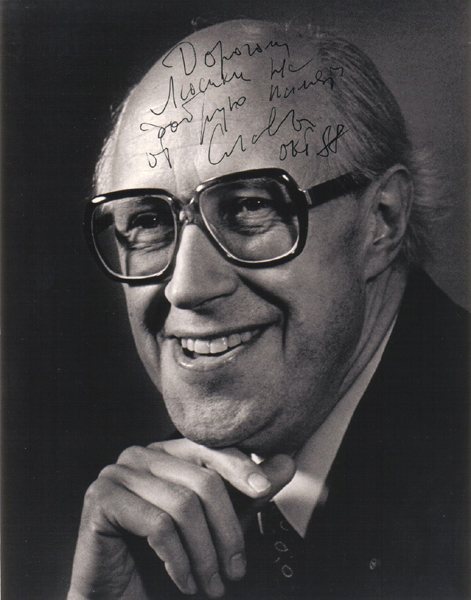
Fragment from V. B. Chernov's cycle "Temptations and Tempters. Parables of the Great"
Photo selection and afterword by the author of the message
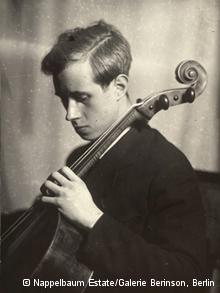
Cello
It used to be that Mstislav Leopoldovich, covered in lace, would lie in his cello case and indulge in dreams. The parents kept the Great Maestro in a box that smelled of rosin, so that it wouldn’t fall somewhere. They took great care of it. A childhood that smelled of rosin made him something of a drug addict. Outside of rosin vapors, he felt destitute.
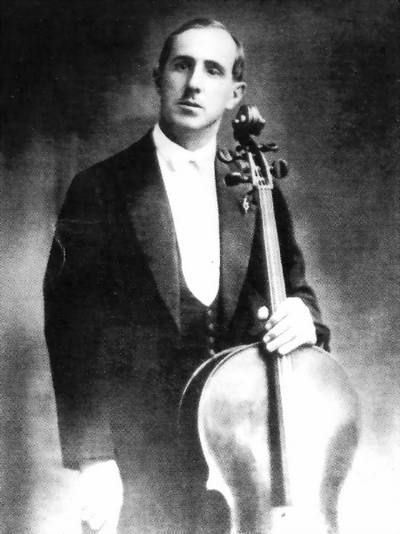
Leopold Vitoldovich Rostropovich
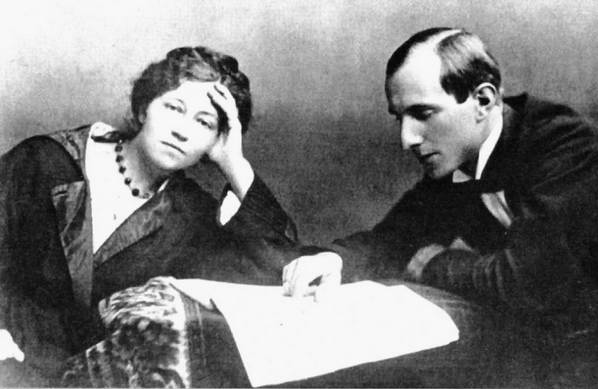
Leopold Rostropovich with his accompanist Sofia Fedotova
One day, the parents sat down to play music: mom at the piano, dad at the cello,
- they found their child nestled in a corner with a mop between his knees and a twig in his right hand, with which, sniffling, he moved the mop to the music of his dad.
- My God, Slava! - said the parents. His name was Slava in childhood. It is called Glory to this day. He was doomed to fame.
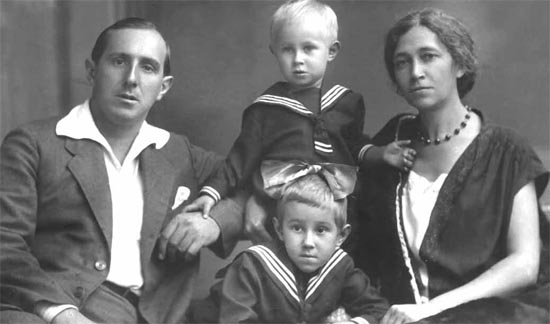
Leopold and Sofia Rostropovich with their daughter Veronica and son Mstislav
I haven't seen him play the cello since he left. It was unbearable to watch then. It was something forbidden, almost indecent. It was some kind of erotic ecstasy. I saw how, squeezing the cello with his feet, he takes her by the throat and, sticking out his lower lip, whips the bow, a little ruler with his hair standing on end, extracting from her body the sounds of such passion, and leans back in ecstasy! Lord, how good it was for them!
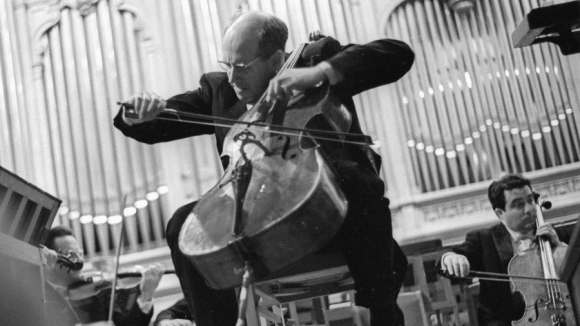
“Well, of course,” he told me in his burry patter, “of course, ha-ha!” All cellists feel a partner in her. The very shape of it, uh, shape... is attractive. This, you know, is the feminine principle. Rubens! Yes-ah!.. You know, I was simply shocked when I found out that in French cello is masculine! And the double bass, can you imagine, is female! What nonsense! I told the “immortals” that the French language should be reconsidered!
- What kind of “immortal”?
- Well, “forty immortals”, French Academy. Ooh! This is a sight! Dressed as under Louis XIV, the dress is trimmed with gold, hats with feathers, swords. Well! The sword is very expensive, 65 thousand dollars. Everyone should buy it for themselves. Where did I get that kind of money in those days? And they’re already discussing me, they’re already inviting me, a place has become available. They hire new people there only if one of the “immortals,” uh, so to speak, has died; there should always be forty of them. And my great friend, the English sculptor Henry Moore, died. And they choose me instead of him. I must say, I was confused. There is no sword.
But I had friends! They bought me a sword, chipped in and bought it. So they tell you, go and join! Yes, the thing is that upon introduction it was necessary to give an hour-long speech dedicated to his predecessor. I would say it, but I have to speak French. And even now I speak French, well... I can still chatter, but I can speak seriously! But I had a friend Benjamin Britten, who is also a great friend of Henry Moore. Britten wrote a suite for solo cello, ending with a wonderful movement
- “Rest with the saints.” Yeah! Let me play this suite for them instead of a speech! So, with a joint effort, my friends equipped me to the teeth. With the sword and the suite I already looked quite good.
And still it would be necessary to say at least a few words. I wrote these couple of words on paper in Russian letters and, standing in front of the “immortals,” burr and lisp, read out to them my proposal to revise the French language. I must say, they were stunned. Well, I quickly began to play, as a result of which, I hope, they were convinced that I was right. In any case, they really liked my performance in the end. But for some reason they did not want to revise the French language. It's a pity.
— Interesting, did you also perceive a mop as a child as...
- No, no, no, I was little. If my parents decided to teach me to play, say, the drum, I would start playing the drum. I just loved music very much. And I still love it, by the way. All sorts of things. I love both opera and operetta. Just music. You know, around the age of four, honestly, I was a very talented boy, I even composed some work, my father recorded it. It ended, I remember, disgustingly. From then on I began to lose my talent. There is some left, but not much.
Veronika Leopoldovna, sister: As a child, Slava loved candy very much. And I'll go to sleep. Or read. And we studied at a music school. Slavka was just starting out, and I was already playing the violin with all my might. And so our parents leave us alone, close the double doors (we lived in a communal apartment, but we had two rooms separated by these doors), go into the next room so as not to interfere with my work: I must be an example for my little brother, from childhood he must see that adults work tirelessly, just as dad and mom worked all their lives. Work, work and work. And they leave, and I say with just my lips: “Glory!” And I have candy!” A warbler immediately forms nearby. I give him candy, take a book, lie down and!.. And he, a smart kid, already knows what to do: chews the candy, takes my violin, puts it like a cello between his legs and starts playing my lesson. And I imagine how my parents look at each other with satisfaction when they hear my quick passages.
And he learned my entire repertoire, he even played the Mendelssohn concerto, and freely, all the complex technical things. He played in such a way that our dad, a professor at the conservatory, never realized that it was not me who was playing all this and not a violinist at all.
Although he was a decent lazy person and preferred to do only those things that he liked, and he liked to do God knows what. He was probably ten years old when, having climbed onto a stool, and it was his own stool, with the legs cut off to make it easier for him to play as a little boy, he began to make a swallow on this stool, that is, he spread himself all out and swayed. And I'm just coming in. And I see: he is standing in this stupid swallow of his, and sways, and looks at me, and begins to fall, because the stool moved under him. And he flopped, and screamed, and cried, and he is very restrained, he never cried from pain, but now he cried, because, it turns out, he broke his arm. Two bones at the base of the hand - in half, I take his hand, and it hangs like this on the skin, like a step. Then I started screaming. And what a hand! Bow, right!
Pre-war years, a family of musicians, protected from life by music, a talented child, whose future is built on its own, but he accidentally breaks his arm and... a different fate. Hospital, plaster, a month in plaster, they take it off and see that these broken bones have grown together like a step, as wonderful doctors put them together, so they have grown together and can no longer move. Alas, it’s the end of you, Mstislav Leopoldovich, as a cellist. Soviet medicine is powerless here. No, here is paraffin, massage, gymnastics, over time the brush will even move, but this, alas, is all we can do. There is no need to make swallows on stools. We put an end to music.
The despair of the parents, the gloominess of the victim. Material resistance.
And then he went into himself. Literally. From everyone. He sat and spent hours developing this hand. He lost his temper when they tried to distract him from this activity, he stomped on the distracting ones. But it was enough to look at this crooked paw to understand: it would never be possible to take the bow with it as it should be. And he shouted: don’t interfere! I need to study, but it doesn’t work!!! He took fate into his own hand. And he turned it millimeter by millimeter, and you know, suddenly one day he grabbed the bow with it. Yes, not as it should be, but! And he attacked this cripple even more forcefully and tormented her, making sure that the bow would float in her with the necessary pressure in any part of it.
I have heard before that all of Rostropovich’s success lies in his special technique, which he invented to defeat everyone. Look: the pin with which the cello usually rests on the floor at an angle is turned and placed vertically, which makes the instrument lie more comfortably, and have you noticed how he holds the bow? An ordinary musician would not be able to twist his arm in such a manner. And somehow he turns it out like this, and the sound is unique. And many turned their spiers, many twisted their arms in despair, hoping to play like him. A!
On his next visit, after the very first words, I rushed at the dumbfounded Maestro, grabbed his unfortunate right hand, demanding to show him. He condescendingly rolled up his shirt and eerily moved his still protruding bones like levers. Do frantic followers know what is hidden under Mstislav Leopoldovich’s cuff?
- Yes, yes, I have been asked more than once to teach how to hold my hand the same way. I answered: you have already missed this opportunity. To do this, you had to not only break your arm, but also live in the Soviet Union during the period of the final victory of socialism.
- But in the end, all these devices: a higher stand for the strings, a differently placed spire - all only in order to finally extract its own, full voice from the cello. But the voices are different?
- The voices are different. Although I once had an encounter with a unique instrument. IN
In 1942, during the evacuation, in Orenburg, then Chkalov, when my father died, I, a fourteen-year-old boy, was taken with them on a tour of regional towns and hospitals by the artists of the Leningrad Maly Opera Theater, Malegot. I took with me not my father’s Italian cello, I regretted it, but a government-issued one from the music school. This was a wonderful instrument. It was knocked together from strong boards, and the inventory number was large on it in blue paint. Number eight. In addition to the complete absence of sound, this wonderful instrument had another very important property: you could sit on it. It was a cello, simply created for traveling in vestibules, and it was not supposed to have any case, it did not need one, a rag case with a strap was enough.
— A violin cello?
- Approximately. But she and I made a splash in hospitals and at concerts. I had a number that was a phenomenal success among listeners. A puny little green boy comes out, drags a hefty cello behind him, grabs onto it, and then the presenter, and we had such Don Borisovich Lyutikov, announces at the top of his lungs: “And now Slava will perform for you “The Pangs of Love”!” The audience fell to the floor with laughter, and like a fool I played to this audience, exhausted from merriment, a completely serious, touching thing. I think the sounds that my powerful friend made also contributed to the fun.
And a wonderful man, Boris Osipovich Geft, tenor, was traveling with us. He was a real singer, he had an amazing sense of sound. And he treated me wonderfully. He obviously liked me. But he was not being familiar, on the contrary, he behaved in a fatherly way, and so he came to the corner that I occupied, positioned himself like a master, cross-legged, and ordered: “Slava, play me Bach’s “Aria.” And I, happy, played for him in a great mood. With all the greater joy that he was the only person who called me “you” and clearly loved me. There is such sympathy between a boy and an adult when affection is expressed not by compliments, but by grumbling. And in general, tenors in ordinary music are not considered great philosophers, to put it mildly, therefore, after listening with attention to my playing, at the end he usually declared: “Glory! You are a shoemaker! Not a musician! You have to sit and study all day, but what are you doing?” He knew that my cello did not sound, but he demanded that I extract the proper sounds from it too. Such an amazing tyrant. I will be angry with him, I don’t want to communicate with him anymore. But then he came again, sat down, palm under
cheek and asked: “Let’s have Bach’s Aria!”
— Is there the best cello in the world?
- Eat. I met her in 1956 in America. In my opinion, I was the third Soviet artist to appear there after the revolution. Before me, only Oistrakh and Gilels climbed there. I played in New York, in a small hall, they didn’t know me much, there weren’t many people, but all the cellists in New York came to this concert, and then went backstage. And one nice man came with them, Jerome Warburg, a banker and a terrible lover of cello music. And so he asked: “Slava, do you want to look at the Stradivarius Duport?” And then I started shaking. The point is that all great instruments have names. Usually these are the names of the great musicians who owned them. There are Stradivarius “Disai”, Stradivarius “Sarasate” or Guarneri “Paganini” and so on. So the Stradivarius Duport is the greatest cello that ever existed. And Duport is a classic of cello music, I played his etudes back in Moscow, everyone learns from them. Duport once played for Emperor Napoleon at the Tuileries. And Napoleon liked it so much that he came backstage and said to Duport: “Give me your cello, I want to try it myself.” He took it, sat down, and then a heart-rending scream was heard
Duport. The fact is that Napoleon had spurs on his boots. But it turned out that it was too late. He had already scratched the cello with one spur. It was this legendary thing with Napoleon’s scratch that I was invited to look at.
I didn't sleep that night. I was thinking about this cello. I understood that since I would never possess her, I thought maybe it was not worth dating, but the temptation was great, the person was weak. The next morning I went on a date with her. And so they showed it to me. And I asked permission to touch her. And they allowed me, and Voorburg’s wife took a Polaroid photo of this touch. I touched on the myth. And he took the photographic evidence to Moscow. Well, it’s like if a fan of Italian cinema from the city of Kopeisk showed his friends a photo of him hugging Sofia Loren. In those years.
He was kicked out of Moscow on May 26, 1974. They threw me out, taking everything away at customs. “But these are my awards,” he mumbled to the customs officer, who was raking up competition medals and the badge of a Stalin Prize laureate. “These, citizen Rostropovich,” the customs officer answered him, “are not your awards, these are state awards.” “But then there are international awards, and they are not made of brass, they are made of gold.” - “And these are not awards, these are valuable metals that you want to take abroad!” They left him only the dog Kuzya. Since it was not made of precious metals, and the state would have to feed the hefty Kuzya.
Together with Kuzya they ended up abroad. In England. Where to move with a dog is no joke. And poor Kuzma, spoiled, luxurious, the ancestor of all Moscow Newfoundlands, was immediately captured and thrown behind bars. In quarantine. For six months. And the unfortunate owner, who himself was left penniless, had no choice but to visit his sufferer and bring him parcels.
But there really was not a penny of money, there was not a single contract, all contracts are signed in advance, which means there was not a single way to earn money.
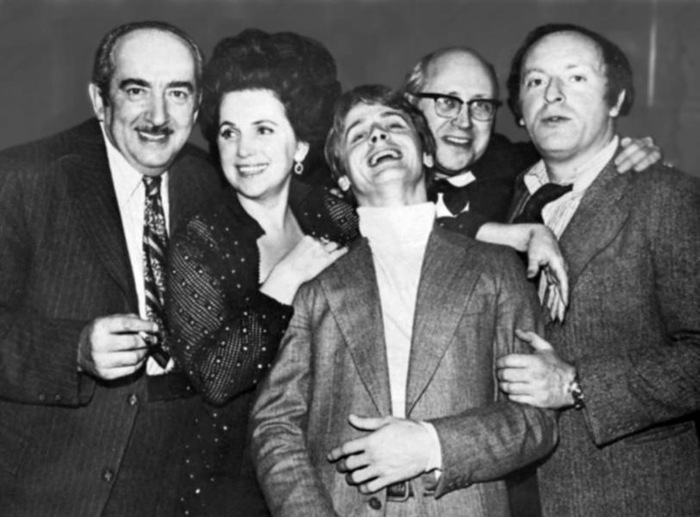
Alexander Galich, Galina Vishnevskaya, Mikhail Baryshnikov, Mstislav Rostropovich, Joseph Brodsky. New York, 1974
But, you already remember, he had friends. And he began with what every Soviet person began with in a new place. He started borrowing money from friends. A destructive path, and many who set foot on it never left this path. "But suddenly Uncle Marc, Marc Chagall, called me and said: 'My mosaic is opening on September 10 at the First American Bank in Chicago. Could you play Bach at this opening?' Judge for yourself, I couldn’t refuse Uncle Mark?”
Really. So he flew to Chicago, went into a hotel room, heard the phone ringing, picked up the receiver, and a woman’s voice said to him: “Slava, maybe you won’t remember me, I’m the widow of Jerry Warburg. He died two years ago and before his death he said: “Offer our cello to Rostropovich.”
If he doesn’t buy it, let it remain in our family forever.’ I know you can’t buy it, but I’m calling, fulfilling my husband’s last wishes.”
There was no pause, although it was expected. Rostropovich responded instantly, getting goosebumps from the impudence of what he was saying: “You have the only chance to impeccably fulfill the will of your late husband - to immediately send me this cello.” Now there's a pause. Widow Warburg took a deep breath: “Okay, I’ll look at the plane schedule now and, if I have time, I’ll send it to you.”
In America everything is simple. Just before the start of the concert, the door opened and a man stood behind it, holding a Stradivarius Duport in his hands. Without changing his face, Mstislav Leopoldovich with an unwavering hand took the materialized treasure by the throat, discovering at the same time that the strings on it were not the ones he was used to, but there was no time to rearrange them, he took his new partner by the throat and went to play on wobbly legs.
“In a small hall, by the fireplace, I played Bach’s third suite, everything floated slightly before my eyes, my cello sang in my hands...
- How was your wedding night? With the fairy queen? What about the payback?
— And I had a friend, Paul Sacher, in Switzerland. I went to see him the next day and said: “Can you make my life happy?” And I told him everything. He asked: “How much do you need?” And he immediately wrote out a check. In general, the purchase was completed for one dollar. This is customary when a thing that has no price is sold. And even the crazy money I paid is nothing, this instrument is the property of humanity. And I play it. I ordered a special case for it, metal, heavy, like a safe, on wheels. And I carry this hippopotamus with me.
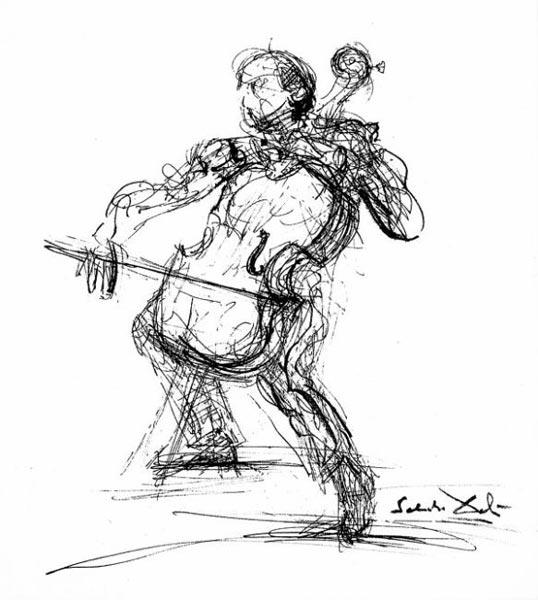
— So, has your relationship with the cello been fully clarified?
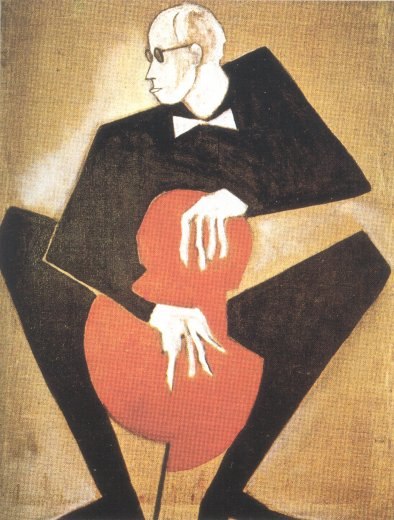
- And there are no more relationships. For some time now I cannot understand where we are separated from her. I have two portraits of me, one old, of Salvador Dali, the other, made later, of such a wonderful artist Glickman, he lives in Germany, he is over eighty now. So at Dali’s it’s just the two of us with the cello, I’m holding it, everything is fine. And Glickman has me, and the cello has become such a red spot on my stomach, like an open peritoneum. And in fact, I feel it now the way a singer apparently feels his vocal cords. I don't experience any difficulty in reproducing sounds. I say without realizing how. I play the same way, unconsciously. She stopped being a tool.
Rostropovich and the Muse", Gabriel Glikman.
“She’s probably offended.” So dissolve...
- What a shame! It’s okay, he’ll be patient.
Well, I don't know, I don't know. It’s better to be careful with these capricious creatures. He went a little too far and... Then one day he showed up for a concert in London. I was late and in a hurry. Already at Heathrow he began to get nervous, irritably tugged at his priceless safe with a treasure, and immediately the heavy steel platform on which the case was fixed hit him on the heel. He passed out. The doctor administered anesthesia, and the Maestro, limping, rushed to the concert. And the next one. Pain relieved and played. A few days later the leg became monstrously swollen. It turns out that the heel was crushed and infection had already begun. Hospital, operation. For some reason he called Veronica in Moscow.
“Where are you from, Slava?” - “Yes, from the hospital, now they will perform the operation - and I’m back on my feet!” Veronica froze and began calling Vishnevskaya: “Galya, what’s wrong with Slava’s leg?” - “With which leg? - Galina Pavlovna got angry. “What nonsense?!” Then she called back from the hospital, she was already sitting in the room next to her silent husband, who immediately realized the degree of his guilt and the misfortune that befell him, he immediately agreed with all his wife’s arguments, was inspired, and promised to be good. And the entire hospital was already on alert, obediently listening to the orders that the illustrious wife of the illustrious Maestro gave in her famous, penetrating voice.
Mstislav Leopoldovich does not risk testing the patience of women. Therefore, he simply does not tell them anything, does not burden them with his misfortunes. All his life he turned to women with his lucky, festive side. Thus, he is very well protected from them, because their irritation is much more dangerous than the possible insults of a capricious but inactive cello. And yet, the women in his life always came right behind her in importance.
. .. from an interview with Mstislav Rostropovich (OGONEK, No. 34, August 20, 1996):
- You have two magnificent instruments - Stradivarius and Storioni. Which one do you prefer to play on?
- Storioni is my wife, with whom I have been for more than 30 years; I took her from Moscow and have not left her. And I consider the famous Stradivarius instrument to be my mistress. It was ordered around 1709 by a certain doctor from Lyon who wanted to have the best in
world instrument. The master replied: “I don’t guarantee it, but I’ll try - I have a wonderful tree.” When the doctor arrived in 1711, Stradivarius told him it was ready, and named a staggering amount. The customer, having played the instrument, paid twice as much... Then this cello was sold at auction for 30 thousand gold francs and fell into the hands of the cellist and composer Duport. After one of the concerts in the Tuileries, Napoleon Bonaparte wanted to play in it. Duport could not disobey the emperor, he sat down with the cello, the musician screamed, but it was too late: with a boot spur, Napoleon made a large scratch on
side of the instrument. It is still visible.
- Did you arrive in St. Petersburg with a faithful wife or with a scratched lover?
- With my wife. You see, the mistress should be more beautiful than the wife, if possible. I don’t have a mistress in my life: I can’t find a more beautiful woman than Vishnevskaya. And the Stradivarius-Duport cello, I must admit, is more beautiful than my wife... That’s why I sometimes go with it when I play Bach and lyrical music.
(Vishnevskaya: - I will endure the cello mistress...)
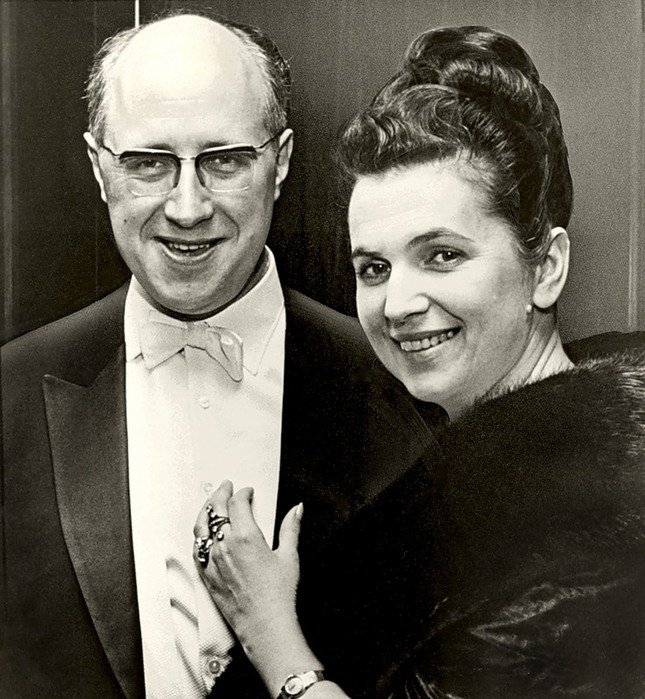
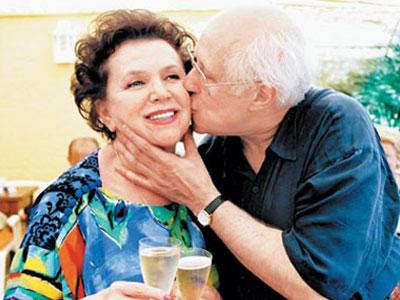
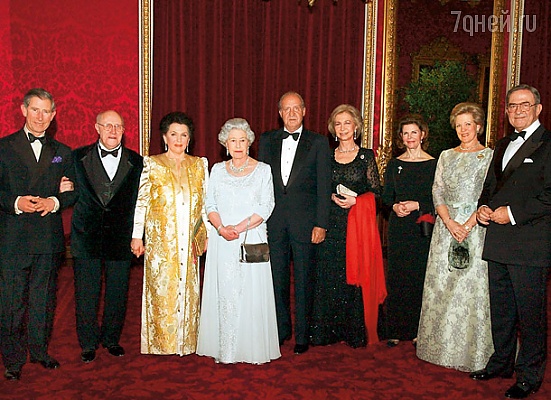
P. S: But after the musician’s death, Galina Vishnevskaya sold “The Mistress” for $20 million to the Japanese Music Association (Rostropovich once paid $500 thousand for “Duport”).
Today, the Duport cello is considered one of the most expensive musical instruments.
In conclusion, I would like to add that the child prodigy Slava Rostropovich gave his first public concert in 1940 at the park stage in the city of Slavyansk in the Donbass. Here on this one. I remember her. Many times in my childhood I visited there with my family for concerts and movies.
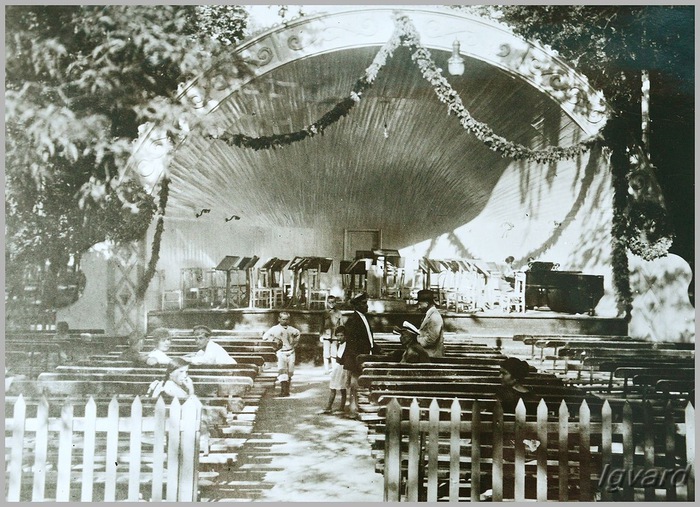
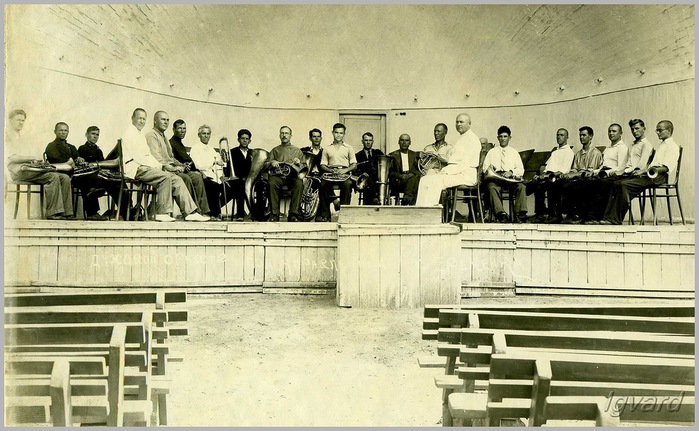
Visits to this summer stage were memorable for the fact that the sounds coming from the sink were sometimes drowned out by the incessant noise of leaves. Resort vacationers on the way to a “cultural vacation” stocked up on freshly broken branches to ward off truly satanic mosquitoes for the entire session - the stage was located right on the shore of the lake, literally ten meters from the water. Surely Rostropovich had to perform to this green accompaniment.
Mstislav Leopoldovich spoke about this fact in his biography when he visited Slavyansk for the second time in August 2000.
In the summer of 1940, in Slavyansk, his father, Leopold Vitoldovich, led the cello group of the resort symphony orchestra. And it was there that 13-year-old Mstislav performed publicly for the first time in his life, playing a cello concerto with the Saint-Saëns orchestra. He came here again only 60 years later... The occasion was more than pleasant - Rostropovich was awarded the title of Honorary Citizen of Slavyansk. Moreover, documentary evidence that his concert activity began here was provided by three publications in the newspaper “Socialist Donbass” in the summer of 1940: dated June 16, July 3 and August 21.
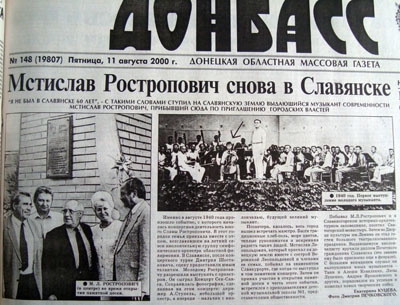
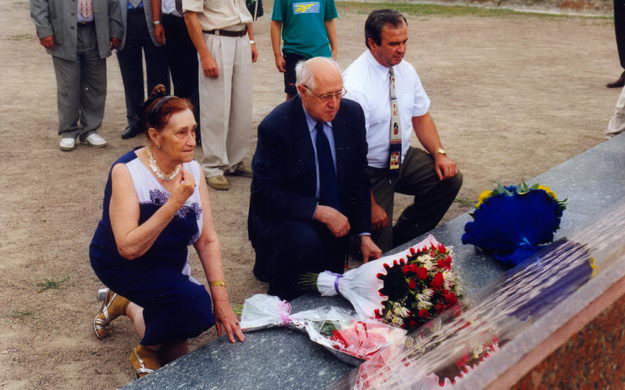
In the photo - Mstislav Rostropovich with his sister Veronica at the grave of Prince N.B. Golitsyn in the Svyatogorsk Monastery near Slavyansk.