
Translated material
Hunger of Myth

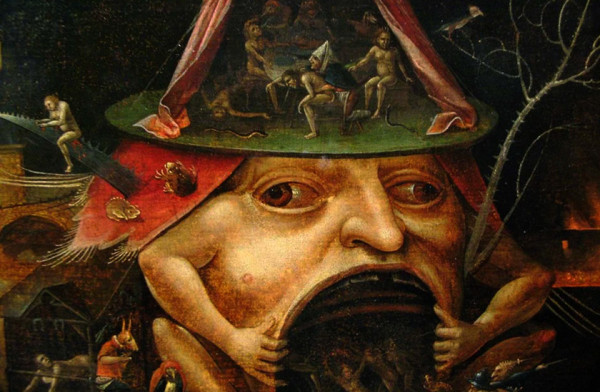
Food in itself is nothing more than a set of some elements, but I am interested in the other side of food. Food in a context that fills the entire flow of our lives. Food and its absence. Food can also control our lives and subjugate us. We are creating a culture where food is not just an element, but a defining element. Because there is not only a question of satiety, but also a question of aesthetics, a question of limiting food, etc. Why did I start this conversation? Another defining element of our culture for me is myth, myth as food. Those. a certain element, the absence and presence of which creates culture. It should be understood that myth is very similar to food. Hunger for biological food and mythological hunger are quite comparable states.
And here you can find many parallels. We cannot exist without consuming myths. This is one of the basic conditions for human existence. Myth is the every-second and every-minute energy that fills us and moves us. The absence of a myth drives you crazy; the absence of a myth creates such a powerful emotional experience that can end a person’s rational existence. And rationality here is in no way connected with reason; here, rather, rationality is connected with some kind of short-term balance.
Myth comes to us from the very beginning and accompanies us throughout our lives. The myth comes out of the context of our life and we hold on to it, experiencing it again and again. This experience, constant experience, is very important. A myth does not sit in our head like some kind of dead picture, a myth is an aspiration or rejection. Either a myth pulls us somewhere, or pushes us away from something, and our experiences about this are an important energy of life. As soon as we start talking about a myth, various bright pictures immediately appear, but the myth is in no way connected with these pictures. The myth is rather associated with a certain set of imbalances that we are currently experiencing. Imbalances can be very different, for example, related to the injustice that surrounds us, to the fears that were instilled in us or that we ourselves gave birth to when faced with something reliable through experience about this. And it's all interconnected. Our experiences can be born not only from our experience or what we have heard, but also from general social experience, from a general experience, a part of which we have perceived in one way or another.
If there is an uncomfortable experience, then there is a void that must be filled with myth. At the same time, a myth cannot be personal; it still has a social connotation, because myths come to us from society from the very beginning of our existence. If the experience is not satisfied by the myth, we may perish. And since life is a continuous series of social and personal uncomfortable experiences, myth-hunger is the norm of our life. Even when everything is good, even this very presence that everything is fine can give birth to an experience that immediately requires a myth.
And yet, we must understand that myth is in no way connected with reality. Rather, a myth is an agreement born within us and living inside us all our lives, capable of bringing to the surface of our mental activity certain combinations of signals that can be bright or faded - this depends on the need for the brightness of the myth at a given moment of discomfort. And what gives birth to a myth is something that we once quite vividly experienced and accepted as an explanation. But again, this has nothing to do with authenticity.
I'll try to draw this in the form of the following example. If a person is walking through the forest and suddenly sees a bird sitting on the branches, and when approaching, he suddenly discovers that it is not a bird, but moss grows beautifully on a tree. Then we are dealing with a myth that fills an unbalanced space in our head and immediately piles up in place of emptiness. And the more experience we have, the sooner our brain takes out the one that is most “close to us” from the holder of myths and plugs the holes in reality. The less experience we have, the closer we are to the certainty. The discomfort of emptiness forces us to look more closely, looking for a more acceptable myth within us and even creating new myths.
What am I talking about? Moreover, when reading another sociological survey, one must understand that we are simply looking at a set of myths that people have learned from their mythological experience. And this set of myths is in no way connected with the reality of what is happening. If I stand on the sand and look at the traces of various kinds of animals, birds and insects that have run through this sand in the last hour, then maybe I am standing on the sand along which a wave of rain has passed and washed away all the traces, and I am worried about what I have not seen, about the fact that animals, birds and insects do not walk on this sand.
We must learn to look at the myths of other people and our own myths presented to us as a culture of polympsest. It doesn’t matter what text I read on this calf skin today, I must understand that over 1000 years more than one text has already been washed away from this old calf skin and a new one has been written, but the old myths have not gone away, they are still here.
What I mean is that Dzhugashvili was recognized as our most outstanding person... This is not true, this is only the top layer of the myth. What social discomforts forced the hunger of myth to plug this hole, forced us to immediately get drunk, that’s what we need to think about, and not about the most striking mythological plug of our consciousness, hastily pulled out and presented outside. Otherwise, it turns out that we declare the myth to be reality. And at the same time, we need to remember that myth-hunger is not a passing thing, it is a condition of our existence and the body, our consciousness will demand myths from us, will cry out. But reality will create discomfort for this.