
Translated material
The last flight
Volunteer Alexander Demidenko, who helped Ukrainian refugees, died in a pre -trial detention center. Journalist Victoria Litvin talks about their joint trip to the border on the eve of his arrest
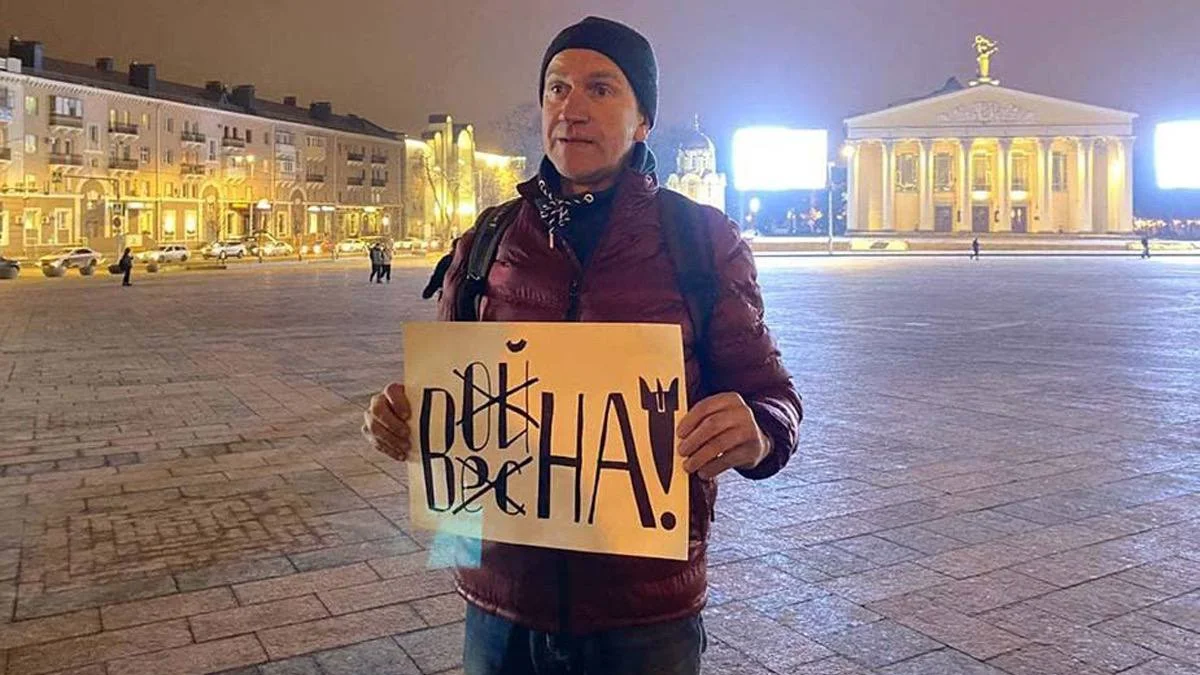
Alexander Demidenko with a picket in Belgorod. Photo: 7x7 / Telegram
In early April, it became known that Alexander Demidenko, a pensioner and a volunteer, who had helped a thousand Ukrainians from the occupied territories to his homeland, to Ukraine from the beginning of a full -scale invasion, had died in the Belgorod pre -trial detention center.
On October 17, 2023, Alexander was detained in the area of the border post of Kolotilovka. Although eyewitnesses did not say “detained”, they use another word: stole. A month later, Alexander managed to inform his son that he was tortured in a pre -trial detention center. The journalist of Novaya Gazeta Europe Victoria Litvin went with a volunteer to the last current Russian-Ukrainian checkpoint just a few days before his detention. She talks about this last trip.
October 9, 2023, 11:00. Belgorod
I meet Alexander Demidenko in a parking lot on the outskirts of Belgorod. He came from the Shebekinsky district, where he lives. Its large white SUV is very loaded: there are so many things from behind that in the first seconds I don’t even understand how many fellow travelers are traveling with us. I’m looking closely, all three rear seats are occupied by Ukrainians returning home: grandmother and grandfather and a girl of about 20 years old. They highlight the chair in front, although everything is also busy: food, thermos with tea, bags with things ... There is almost no place for legs, and they still put a bundle with plaids on my knees.
Go to Kolotilovka about 100 kilometers. An hour and a half.
Alexander has a little disheveled look, several gray strands peek out from under the hat. Only then I will find out that he is 61 years old. When I agreed with him on the phone about this trip, on a vigorous voice, I suggested that he was twenty -minute younger. He now speaks loudly and assertively, jumping from the topic on the topic. To myself and his activism, about the border, about some grandmother, who, waiting for her turn on the checkpoint, spent the night right on the bench, under the hoarfrost.
Kolotilovka is the last current checkpoint between Russia and Ukraine. Every day, a huge number of people gather on the site before this gearbox. These are Ukrainians who left Russia from the occupied territories (often it was the only direction in which one could leave at all). Now these people are trying to leave Russia and get to Ukraine. This can be done directly only through the colotilovka, and Kolotilovka is hell.
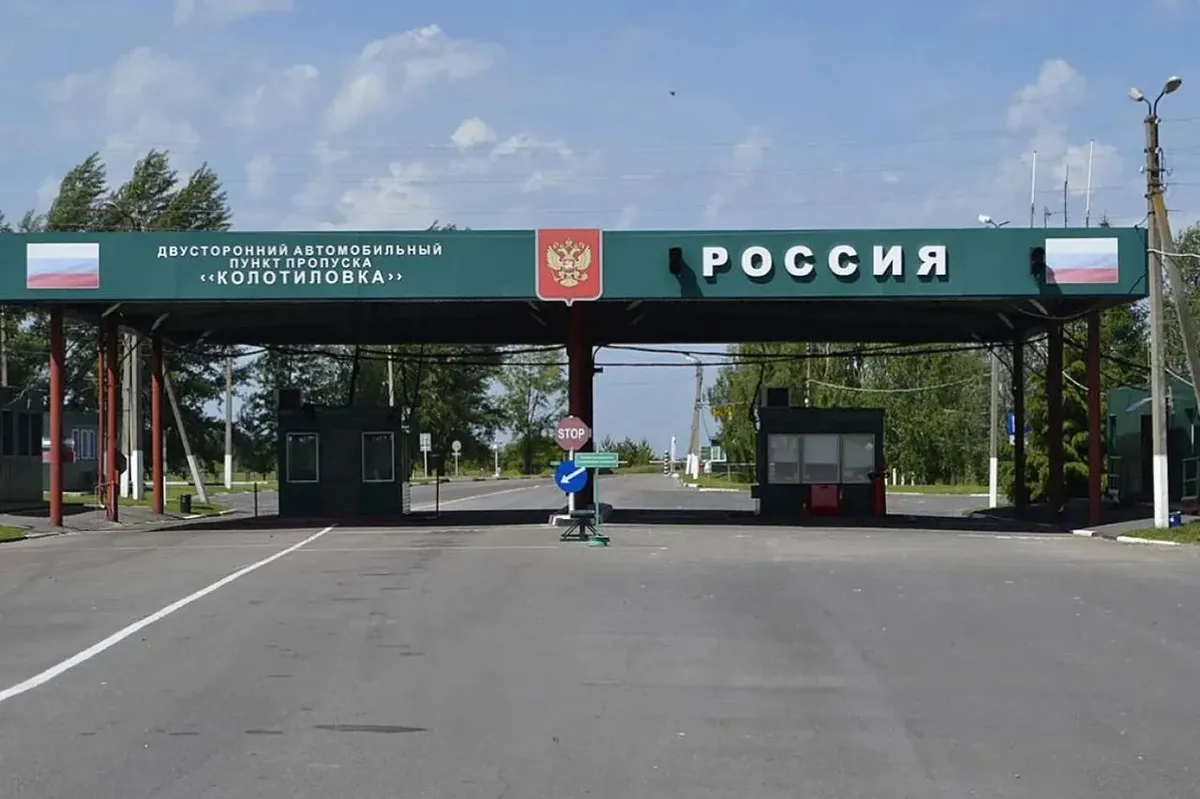
The car is touching, and Alexander continues to swear: the authorities do not help people awaiting the crossing of the border. These people cost several days, someone does not even have money for food, they sleep on the street, do not eat, except that they go to the store nearby for water. Some of them are with children.
Alexander reads to us his appeal to the governor of the Belgorod region, which he wrote in verses, so that he at least somehow pay attention to him. Here is a part of it, I wrote down:
*"... sometimes stand for three days and without food, and without drinking,
And they drag things with them: there are two kilometers there
And then we arrived. A platform where it would be possible to relax,
Gather with thoughts and strength
And again continue the difficult path.
But there are no shelters on the site.
No from frost, from the rain ... "*
The appeal did not help.
Belgorod - Kolotilovka, 12:00
Outside the window is an autumn dusk, but Alexander charges all of us with its optimism. He says that someday they will no longer shoot in our area, and the people who travel with us will return not only to their homeland, but also to their home.
Alexander is a crown designer by education, but by profession he worked only a couple of years after the university. Then he went to the teacher, taught computer science. In the 1990s he traded textbooks, opened even his own store. His future wife worked in the publishing house, so they met. At a traffic light, he takes out the phone and gives us you to watch the video how they with his wife sing a song of their own composition. He tells some completely everyday stories: either about the breakdown of contacts with the once best friend, then about traveling to Ukraine before the war, then about the family. He has two children from his first marriage and two grandchildren.
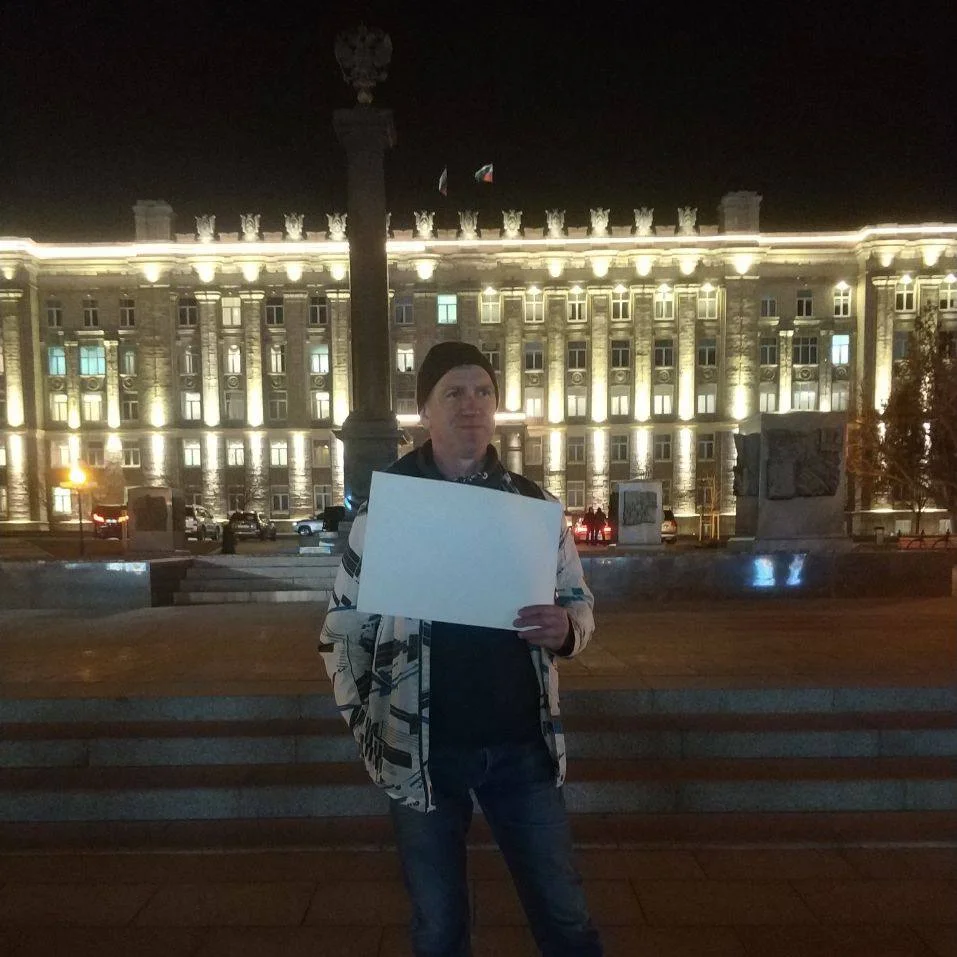
He was against Putin for a long time. In 2014, I saw the Maidan with its own eyes. In 2021, he went to rallies in support of Alexei Navalny, was even detained on one of them and received a fine of 10 thousand rubles. On February 24, 2022, he reached a single picket on Cathedral Square - the main square of Belgorod. In his hands was just an empty sheet of paper. He says that he did not have time to write anything, and there was no need: everything understood everything anyway. In front of Belgorod, on the day of the invasion, there were three single pickets. The protocol for participating in an inconsistent campaign was drawn up only on Alexander.
The activist jokes that "he himself drove his son out of the country." Oleg Demidenko supported Navalny and shortly before the beginning of a full -scale invasion at the insistence of his father moved to the Czech Republic. It was Oleg that was the first to help Ukrainian refugees in the Belgorod region, and later Alexander himself joined his son.
He very clearly remembered his first refugee: in May 2022, his son asked to help his girlfriend, whom he once met in the courses of the Portuguese language.
She was traveling from the occupied territories to Ukraine through Belgorod, she had nowhere to spend the night. Oleg was already in the Czech Republic and asked his father to shelter the girl. So it all started.
Closer to the border, we stop to buy products. In a one -story shopping center, a number of shops: household, furniture, cafes and, finally, grocery. There are people in shape around: the military is also purchased by foods. Alexandra hasn’t been about ten minutes already, in the meantime, our fellow travelers-Ukrainians who go to the checkpoint turn to me. They ask to help deal with the phone settings. These are people from the Kherson region, from Olesha’s city almost completely flooded after the Kakhovskaya hydroelectric power station, and this is immediately noticeable: to go to Google, they are at first out of habit to turn on the VPN. In the occupied part of the Kherson region, the search engine is blocked. “It flew around our house, at the neighboring one - and in general on both sides,” the woman sighs. Alexander returns with purchases, and we continue the way to the border, discussing her life in the war with the fellow traveler. She tells everyday time: there was no light, there was no connection, but there was nothing at all - and obscurity is complete. It turned out only now, goes to relatives to Ukraine, and through Belgorod is shorter than through other countries.
“We drive to the third front line. In the sense of the third line of defense, ”Alexander says loudly, interrupting our dialogue with the Ukrainian. This is the beginning of defensive structures at the entrances to the border.
Dugs and trenches along the road, soldiers are visible in some places. On the bridges - special reflectors who "hide" military equipment from radars. On the fields - traces from the wheels of military vehicles and caterpillars of tanks.
“It was done stupid, because with one bomb it will immediately cover all positions. Some kind of inexpressions did a lot, ”the activist comments the views outside the window.
And he warns: it is mined here, you need to walk carefully. One local ran after the dog and was blown up.
The names of the villages, which we see on the poisoners, are vaguely familiar, too often they fall into the reports of the shelling of the region: the village of Ilek-Penkovka, Vyazovka, Resipykhovka.
Demidenko turns on the radio - says that he has a whole playlist with songs about freedom. Sings Natella Boltyanskaya:
*"The faithful knights are so few in the world,
And other talents are in price today ...
These are books, and only, and book children
They are not at all in any war. ”*
Then he puts “Bella Chao” performed by Magomaev, explaining: “These are the songs of our youth.” He tells the story: this is the anthem of Italian partisans during the Second World War.
I am a little worried and ask how the checkpoint is being arranged now. “Why do you need? Planning there? " - the activist jokes and laughs at his joke. Then he says: on the checkpoint there are trenches, machine -gun cells, interrogation chambers, lined with sand bags. And there is still a room with good sound insulation: "So that when they interrogate, the speech and screams were not heard." Here the activist is interrupted by a new comment: "The second line of defense has begun."
And the first will be near the border itself.
PPP Kolotilovka. 13:00
There are no checkpoints to the checkpoint itself. But they will not let us go there, my end point is a “waiting area”, the usual parking with which border guards call people to the transition. To get to the territory of Ukraine, you must first leave the territory of Russia, and at this moment there are problems: filtering, long interrogations, inspections. The passage through the checkpoint can take several hours, so the line moves very slowly.
Sometimes the already long process of passing Ukrainians through the checkpoint even freezes: the parties change prisoners or corpses. Alexander tells how once from the Ukrainian side "Kamaza with the corpses of the military rode for half a day."
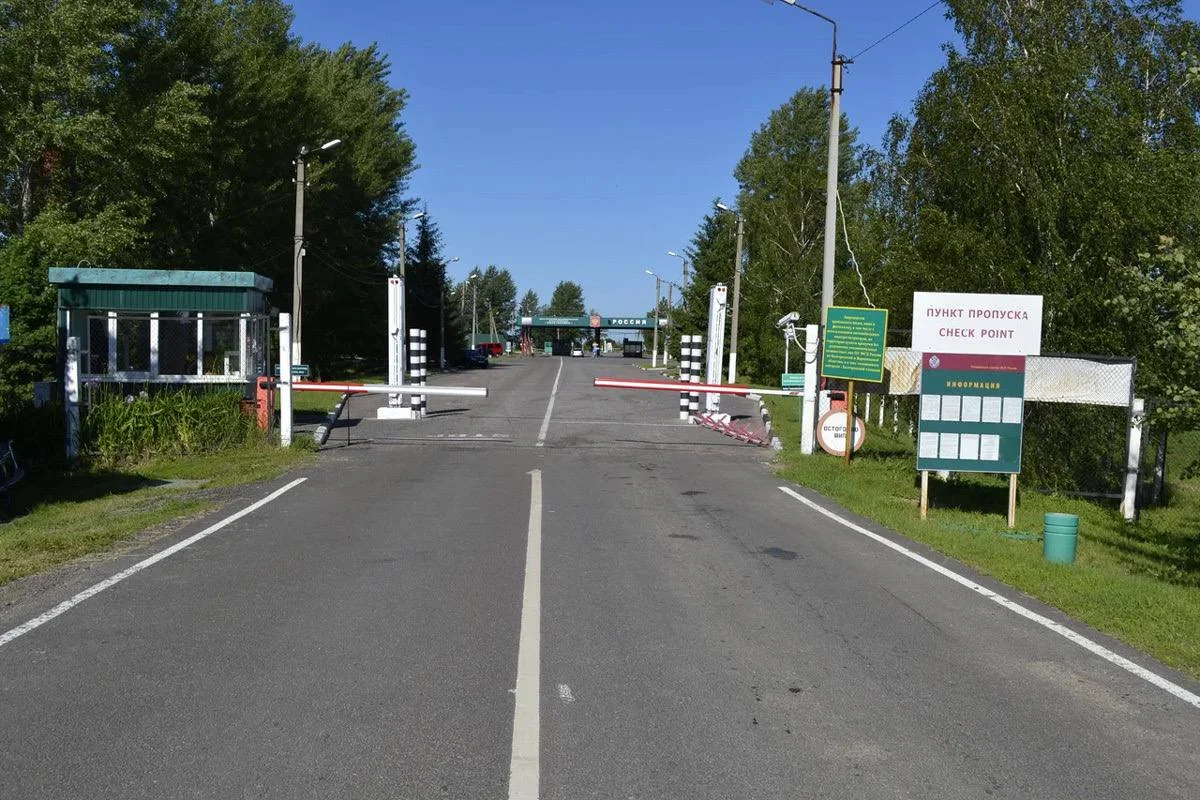
You can’t get from Ukraine to Russia.
At the entrance to the parking lot, however, no one is inspecting us, and everyone already knows Alexander here. Leaving the car, he warns me: “If they ask who you are, say that you are seeing your mother in Ukraine ... Well, you understand!”
There are several cars in the parking lot, the rest is occupied by minibuses that carry “caused” refugees on the checkpoint, which is 800 meters from the parking lot. On the side are shops with canopies from a profiled sheet, they resemble market rows or bus stops in remote areas, where civilization managed to get only partially. The volunteers modernized several awnings, pulling the awning to protect people from the wind. On the opposite side there is one booth of the dry closet, there are also refugees near it.
Previously, there was no waiting area in the parking lot: Ukrainians had to wait at the checkpoint itself, in a clean field, and only after calls from volunteers were transferred to the parking area.
Those who have the opportunity are hiding from the cold and drizzling rain in cars. But if the car stands with the engine turned off, it cools quickly and becomes as cold inside as it from the outside. And almost none of the drivers wants to spend fuel on heating. But Alexander does not turn off the engine of his car, and the jeep is warm.
Alexander says: “At first, Donetsk, Lugansk, then Kherson, Crimea, went here (to Ukraine), and is now going to be mainly Zaporozhye.”
While “RIDE” occurs - my fellow travelers give way to completely frozen refugees who want to bask in the cabin - Alexander begins to unload the car. He takes out products, tea bags, thermos. People run to pour boiling water into a rural store. The volunteer puts edible on the table, located near the canopies with shops. Nearby he puts a box, refugees throw money there - a little, a trifle is visible at the bottom: a ruble, two, five, sometimes dozens of. There are almost no paper bills. A woman approaches the table and, looking at the packaging of cookies and hot tea, complains: she has no money to buy it. Alexander smiles, slightly pushing the package with his hand, replies that you can take it just like that, money is for those who have it, who can put at least some.
Sometimes, somewhere nearby, arrivals occur. If someone pays attention to this, the duty officer, writing in the queue for the transition, begins to shout: “Everything is fine with us, do not breed panic, do not hesitate the situation!” When Demidenko tries to take a picture of the parking lot, she screams again, a slightly carpet name: “Alexander, Alexander, you can’t shoot! It is forbidden!" Trying to come up with the reason - it is supposedly dangerous, Ukrainians can fire if they find out the place. All this does not sound very convincing: photographs of the checkpoint on the network on the network are already hundreds.
A girl of about nine is under a canopy. All adults are in jackets, and she is in a light sweater. The girl tries to cover at least part of the face and hands - maybe this will turn out to warm up a little. I remember about the rugs in the car and give it alone. She, not thinking for a second, takes and hides them. But as soon as we are moving away by Alexander,
The girl gives the blanket to her grandmother and tries to stretch her jacket to the size of a full -fledged blanket, and even better - jackets. Her grandmother covers her husband with a blanket, says that after a stroke he feels bad.
We talked. It turned out: they are from Donetsk, a girl under guardianship with her grandparents, without parents. Grandma says that they and their grandfather were forced to take Russia's passports instead of Ukrainian, threatening to take the child. After “joining”, children began to be considered Russian, and therefore, problems arose: the guardians have Ukrainian citizenship.
When the DPR guardian found out that the family plans to leave, the employees there began to threaten the FSB about the abduction of the child. Grandmother had to get out so as not to admit that they were leaving for their homeland: “We hit that we were going to Germany. And they ask: which country are you going through Poland? We then lied that we would go to Moscow and from there - a plane with a transplant in Latvia, ”she says.
Water for tea is warm in the store nearby. When she ends again, the girl runs to help. He bounces and moves running - either just fast, or wants to warm up like that. But he returns with nothing: in the store they now began to demand money for boiling water: one hundred rubles. Alexander is going to understand the store, and I remain to communicate with the Ukrainians.
One of the elderly women wants to go to the Belgorod District Center, to the Red Yaruga to withdraw money: she has to stand in the queue for many days, but her grandmother has no money, everything is on the card. But you need to spend the night somewhere and eat something.
Alexander returns: whether they took money from him - remains a mystery, but in his hands he has a complete thermos. He agrees to throw his grandmother to the district center so that she withdraws money, I am going with them.
On the way, Alexander talks about everything again and recalls his poems again:
*“The empire is crumbling.
I hear sounds from the window now.
It seems to be breaking itself.
However, it has always been so.
Silently sitting in the trenches,
You will have something to remember.
Then did not go to the rally -
To fight for this now ... "*
Grandma leaves the department of Sberbank, barely rearranging her legs, shuffling and looking down at the paving slabs. She has a “DPR” issue card, she did not know that such cards work only in the occupied territories. “You can't even get a passport,” the grandmother retells the conversation at the bank. - Well, since you have annexed us, as I understand it, to Russia, right? Well, what do we do, what do we do? At least then make us like all Russians. ”
Grandma will have to sleep on the street. Today, the turn will definitely not reach her, she recently arrived, and some wait a few days. Even hotels and houses of local, who could have shelter, are already scored in the district, where without money.
Alexander talks about one entrepreneur who sets himself for money at home of Ukrainian refugees. And her husband is fighting on the side of Russia.
On the checkpoint, a woman immediately approaches the volunteer and on a surzhik reports that she is waiting for the fourth day. She used to be told that there are three cars in line in front of her. And now, in some way, there are four cars. She asks Alexander to take her into the car, at least somehow to be transported.
“Bringing is not a problem when the line is suitable. But I have already tried: I planted people - and they had to wait even longer. You see, I’m a bone in the throat, so contact me is already if you want to stay still on a day, ”the activist replies.
The authorities themselves caused a “traffic jam”, creating a corruption scheme. On the border, the line was carried out along a small notebook, into which the car number and the number of passengers in it were recorded. The names of passengers were not recorded. It turned out that minibuses could enter any number of passengers, and then, closer to the end of the line, just to get the missing for a high price.
Everyone understood everything, both border guards, and drivers, refugees, and Alexander himself. But only he spoke about this problem alone, he also helped refugees, even set them up at home. Over the entire time of the war, about a thousand refugees stopped in his house, who were traveling transit through Russia.
Detention
On October 17, at the same checkpoint Kolotilovka Alexander was kidnapped. As the publication of Pepel wrote, the fighters of the Akhmat battalion could do this. Even before the abduction, the activist really said that the Chechen military would often be on duty in the district. Then he laughed: “Tick-Tok-Voysk. It’s safe enough, so they are on duty. ”
After the abduction, an official justification of the detention appeared: administrative arrest for ten days for “drinking alcohol in a public place” (Article 20.20 of the Code of Administrative Offenses).
On October 20, Alexander was brought home so that he was present during the search: during his administrative arrest, a criminal case for illegal storage of weapons managed to appear.
During the search, Alexander's wife saw bruises and abrasions on her husband’s body. The refugee also saw them, who at that time lived at the house with Alexander.
During the search in his house, a fragmentation grenade of the RG-42 and two fuses were allegedly discovered: one for grenades, the second for mines.
At the trial, the family found out that officially Alexander was detained not on October 17, but on October 20. Where these three days were kept is unknown.
After ten days of the arrest, Demidenko was released. Then he contacted his son.
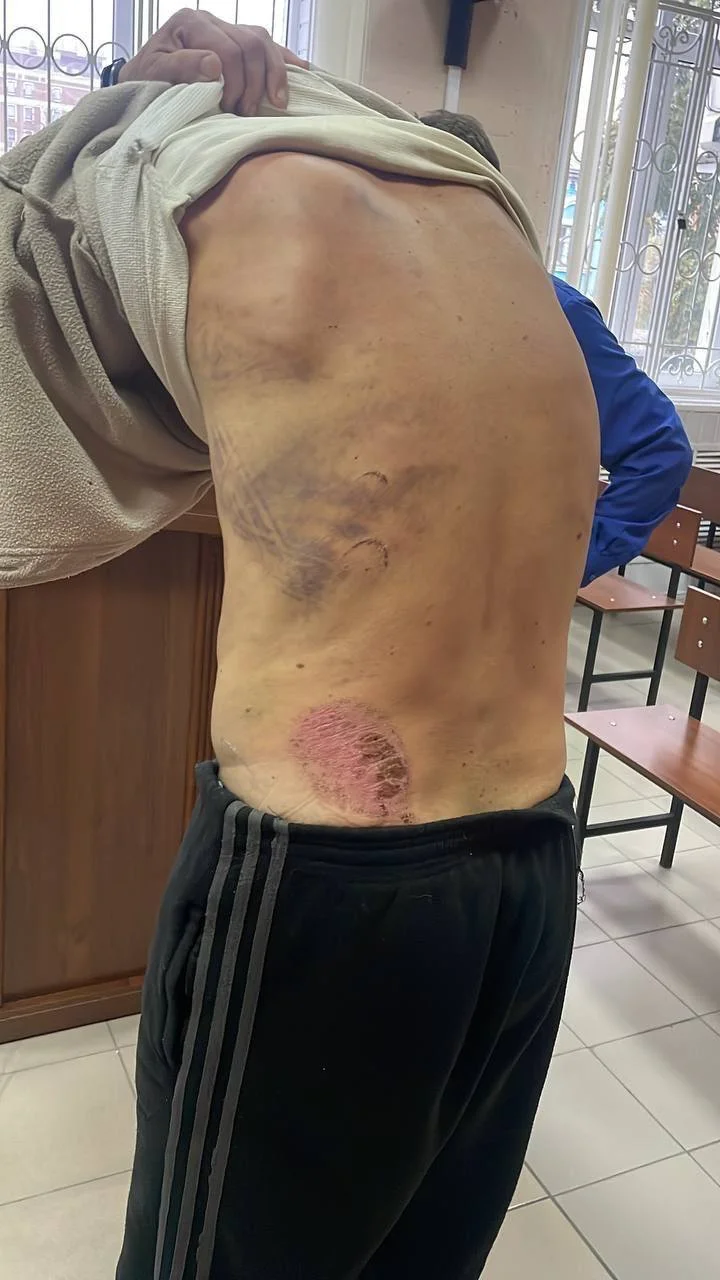
“He said that he was tortured: they tied him to the battery and shot under his feet,” said Oleg Demidenko later. — Что “ахматовцы”, которые задержали его, дали ему гранату и заставили держать ее. Возможно, эту гранату они и подкинули ему позже. I am sure that everything else was thrown to him. Кроме ракетницы ( сигнальный пистолет для пуска осветительных ракет, продается в любом охотничьем магазине без лицензии. — Прим. ред. ). Она у отца еще с 1990-х».
1 ноября Александра Демиденко задержали снова. Тогда же ему предъявили уже уголовную статью о незаконном хранении оружия.
Дело Александра Демиденко официальные СМИ практически не заметили. Под постами о его случае в соцсетях часто появлялись однотипные комментарии: якобы на самом деле он никому не помогал, а это было только прикрытием, чтобы ездить на границу. Пишут ли это боты или реальные пользователи, достоверно неизвестно.
Белгородские пропагандисты высказывали аналогичные мысли: «Какой он волонтер, вы о чем? У него дома нашли гранату и взрыватели, ему вменяли госизмену. Каким беженцам он помогал? Have mercy! Агентам СБУ?»
Красная Яруга. 16:00
Я уверена: во многом именно из-за нежелания молчать о замерзающих на границе людях Александра и начнут преследовать. Защищать его станет адвокат по найму Елена Палымова, прославившаяся защитой в суде бывшего мэра Белгорода Антона Иванова, задержанного за взятку. В соцсетях у нее размещена фотография, на которой она целует картонную фигурку Путина, — судя по всему, политические взгляды с Александром у нее разные.
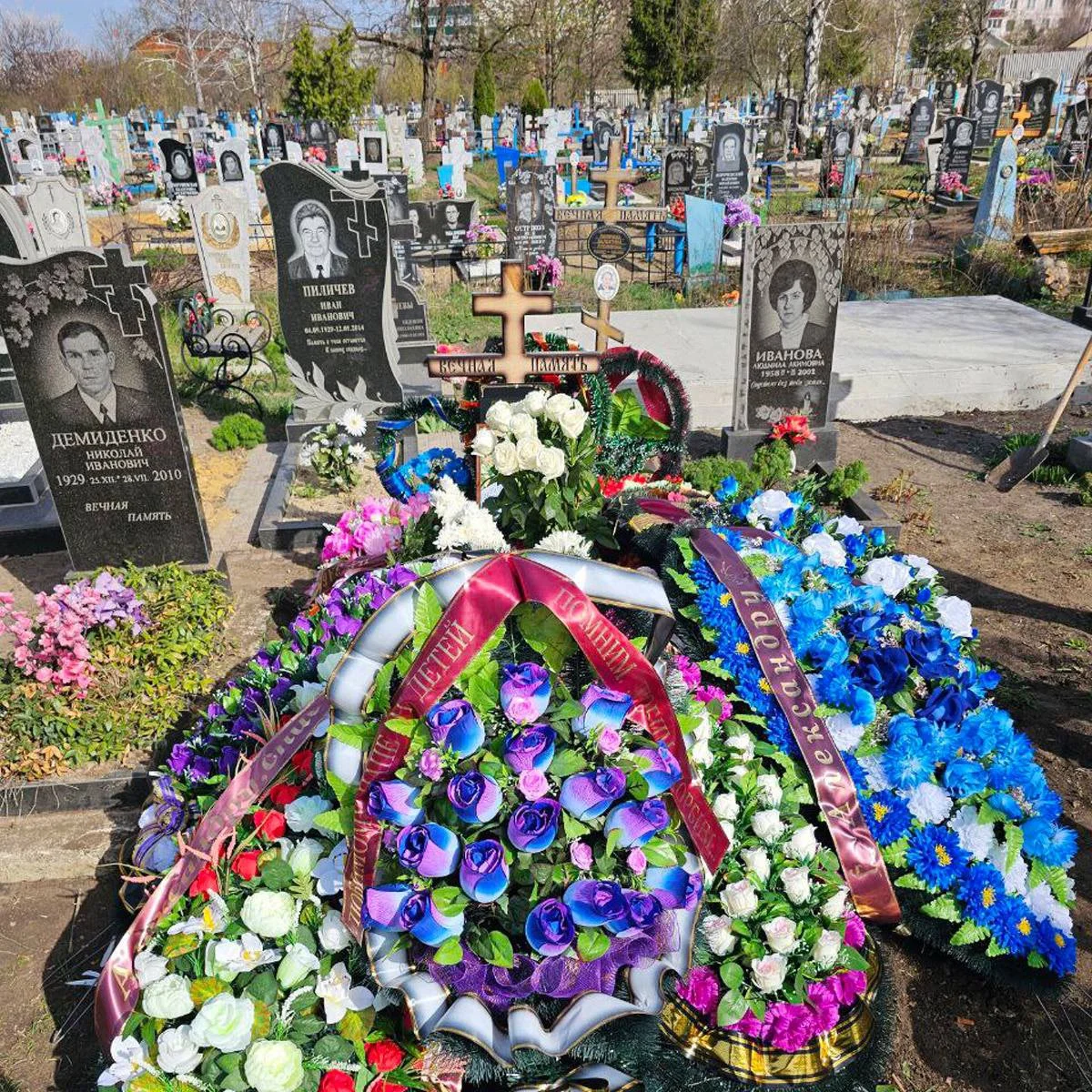
За несколько дней до гибели Демиденко семья попробовала сменить адвоката. I did not have time. По версии властей, он совершит суицид.
Но это всё случится потом. А пока что Демиденко болтает с беженцами, раздает печенье и пытается хоть как-то их поддержать: говорит, что всё будет хорошо, не сегодня, так в другой день пройдут. Уже ясно: сегодня не пропустят, а денег у людей почти не осталось. Он говорит: ничего, переночуете у меня дома.
Места в машине для меня на обратную дорогу в Белгород нет, Александр везет беженцев назад: сегодня не прошли. А меня он довозит меня до автовокзала Красная Яруга, откуда идут автобусы в город. Я уже собираюсь выходить из машины, а он останавливает. Еще одну песню включает. Последню, очень уж хочет дать послушать.
Это «Баллада о борьбе» Высоцкого, одна из его любимых песен.
*«И когда pядом pухнет изpаненный дpуг
И над пеpвой потеpей ты взвоешь, скоpбя,
И когда ты без кожи останешься вдpуг
Оттого, что убили его — не тебя, —
Ты поймёшь, что узнал, отличил, отыскал
По оскалу забpал — это смеpти оскал!
Ложь и зло — погляди, как их лица гpубы!
И всегда позади — воpоньё и гpобы.
If you did not eat meat from a knife,
Если pуки сложа наблюдал свысока
И в боpьбу не вступил с подлецом, с палачом,
Значит, в жизни ты был ни пpи чём, ни пpи чём!
Если, путь пpоpубая отцовским мечом,
Ты солёные слезы на ус намотал,
Если в жаpком бою испытал, что почем, —
Значит, нужные книги ты в детстве читал»,* — звучит в авто.
И обрывается. Выхожу из машины, мой рейс подъехал. Из окна автобуса видны черные клубы дыма от прилета где-то поблизости. Машина Александра трогается и удаляется в сторону дыма. Rain begins again.
Через восемь дней Александра похитят, постфактум обвинив в незаконном хранении оружия. Его будут пытать. В апреле он умрет в СИЗО.