
Translated material
Epidemic of youth wiping
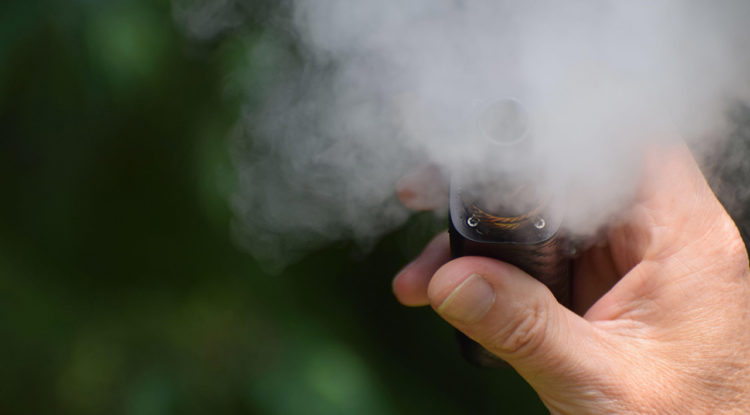
Millions of adolescents were hooked on electronic cigarettes. Most countries do not understand how to solve this problem
In many countries, adolescents of 13-15 years use electronic cigarettes more often than adults. Although the influence of electronic cigarettes on health has not yet been fully studied, it is already known that in the aerosol of vape there are chemicals and metals that can potentially cause cancer, and experts warn that adolescents are easier to form a dependence. To protect children from waping, they introduce prohibitions on disposable devices in Europe, schools in the United States are patrolled by dog handlers, and in some cases students can be sent to trial. "Cold" tells how in the world they are fighting waping among adolescents and what is happening to this in Russia.
In order not to miss the main materials of the "cold", subscribe to our Instagram and telegram .
At the end of 2023, the US Diseases Control and Prevention Center (CDC) published the results of a survey of 22 thousand secondary and senior students on the use of tobacco products and electronic cigarettes. It turned out that every fifth schoolboy at least once used some tobacco products, and every tenth uses constantly.
Electronic cigarettes have been widespread among American schoolchildren for 10 years than ordinary. Almost half (46.7%) of those who tried wards continue to use them, and every fourth of them smokes daily. Most (60.7%) of students choose disposable devices, including the most popular - electronic cigarettes from the ELF Bar brand.
The alarm is alarming due to waging among adolescents and in other regions-adolescents of 13-15 years old in the vast majority of countries where surveys were conducted, use electronic cigarettes more often than adults.
In the UK, schoolchildren also began to score. In 2020, 14% of students of 11-17 years used electronic cigarettes, and in 2023 - more than 20%. In Australia, a national survey of students of 12-17 years also showed that wards are ahead of cigarettes in popularity.
The most popular electronic cigarettes are with fruit and sweet tastes. According to WHO, flavoring additives are one of the main reasons why schoolchildren try wards: more than 70% of the US teenagers surveyed are ready to throw electronic cigarettes if they are available only with the taste of tobacco.
The same trend works in Russia. The Analytical Service of Finexpertiza based on Rosstat data recently reported that almost every sixth smoking Russian from 15 years old and uses electronic cigarettes. In 2018, wards were considered a rarity, but in five years the number of Russians who use them has grown 46 times.
Last spring, the Institute for the Study of Childhood, Family and Education at the Ministry of Education also released the results of the online survey of students from 10 to 18 years about waping. Of the 5225 respondents, 11.9% reported that they used electronic cigarettes once, 9.4% - several times, 2.7% will be scored for the company, and 6.9% constantly.
Waips mimic under toys
The American company Juul, which, as of 2018, controlled 72% of the market in the United States, began to produce one of the first wips. The device with interchangeable cartridges (sings) was called an iPhone among waves and positioned it as an alternative, which helps adults to quit smoking ordinary cigarettes.
However, a few years ago, the brand had to pay multimillion-dollar compensation because of its marketing techniques. The company was one of the first to rely on advertising on social networks and with influensers. Due to advance on the sites popular among schoolchildren and a wide line of tastes, it was soon suspected of marketing, focused on minors.
“Juul was distinguished by the use of social networks popular among American schoolchildren from middle and high school. It was their innovation, ” says Professor Stanford Robert Jackler.
The Stanford Research Group led by Jacker analyzed the Juul advertisement. The start of sales was accompanied by tastings in large cities in the United States: young people distributed devices at film and musical events for free. Juul also launched a bright advertising campaign with young models that look like teenagers.
Researchers believe that Juul attracted schoolchildren also because it was difficult to notice to parents and teachers - Vaip does not leave a persistent smell, like ordinary cigarettes, but looks like a flash drive or pen.
In 2020, from the claim of the Prosecutor General of Massachusetts , it became known that in the first months, Juul bought advertising on sites oriented towards children and students of the middle and senior grades. Including sites with children's and adolescents Nickelodeon and Cartoon Network, on educational sites for schoolchildren, on gaming sites for girls and on websites about entering college. As a result, the lawsuit against Juul filed more than 40 states - to resolve the company will have to pay about a billion dollars. The company received even more than five thousand lawsuits from school districts, local authorities and individuals, among whom there were parents of schoolchildren. On these claims, Juul agreed to pay another 1.7 billion dollars.
Time wrote that after the scandal, schoolchildren began to use Juul less. In addition, in February 2020, a ban on sweet flavors was introduced for wages with interchangeable cartridges in the United States, and the Juul line of tastes was greatly reduced. They were replaced by disposable wapes, which the restrictions on tastes did not affect. They are most popular now.
WHO noted that wards often look like toys, sweets, pens, lipsticks, cases for Airpods and other objects that are not related to smoking, which allows you to easily hide them from adults and visually like children. For example, Scottish schoolchildren 11-16 years old on focus groups called the design of these devices “cool” and “fashionable”.
Toxic fluid
The National Health Service of Great Britain (NHS) indicates that the vaping is not completely harmless , and its long -term impact on health has not yet been studied . So far, experts believe that “in the short -term and medium -term perspective”, waips represent less risks than cigarettes. People who completely switch from conventional cigarettes into wards significantly reduce the effects of toxins associated with the risks of cancer , stroke, lung diseases. However, NHS emphasizes that wiping is not intended for children and adolescents, since their still developing lungs and the brain are more sensitive, including the formation of dependence.
The most serious recorded consequences of Wiping are associated with Evali - damage to the lungs associated with smoking electronic cigarettes. In the summer of 2019, a surge of such cases occurred in the United States. Evali symptoms were cough, shortness of breath, chest pain, nausea, vomiting, abdominal pain, diarrhea, and the disease could manifest itself in the form of heat, chills or weight loss. Some patients reported that the symptoms have developed within a few days, while others have developed for weeks.
According to the CDC, by February 2020 more than 2,800 Veyp consumers were hospitalized due to Evali, and 68 of them died. More than half of the cases in which hospitalization was required affected people under 24 years old. Researchers believe that the development of Evali is associated with vitamin E acetate, which was in some electronic cigarettes with tetrahydrochanabinol (TGK, the psychoactive component of Cannabis). Also, this damage can be associated with other factors - for example, with a previous lung disease. Since September 2019 - after messages about the possible connection between TGK and Evali and the exceptions from fluids for vaypes of acetate vitamin E - the number of new cases began to decrease.
World War with Vapes
To date, in 88 countries, the minimum age is not established , from which it is possible to buy wards, and in 74 countries, their sale is not regulated at all.
At the same time, in more than 30 countries, the sale of electronic cigarettes is prohibited . Among them are Singapore, Ethiopia, Brazil, Turkmenistan, Qatar, Argentina, Iran, India and Türkiye. In two more countries - Australia and Japan - they are sold only according to the recipe. The British authorities have announced a ban on disposable waves from next year. The same ban is planned in France and Germany.
In 88 countries, the VAIPs market is regulated in accordance with the WHO framework for the struggle against tobacco (an agreement adopted to combat smoking). In some cases, they are equal to ordinary cigarettes, in others they are considered separately.
In part of the countries, only the taste of tobacco is allowed for wages (in some cases, menthol taste is still available). A similar measure is prepared in the UK.
At the local level, local authorities and school administrations are introducing additional measures to combat waging. For example, in one of the districts of Florida, the Sheriff’s office sends a dog handler with a dog to search for electronic cigarettes in educational institutions. And in many schools in the United States and Great Britain , touch sensors are installed in toilets to detect smoke from vapies.
In Texas, they adopted a law according to which students convicted in Waping will be temporarily sent to disciplinary programs - to special schools, where children who have committed serious offenses related to drugs, violence or weapons also fall . However, experts criticize this measure: in the American Association of Pulmonologists, it considers it ineffective, since it does not affect the causes of wiping among schoolchildren.
“You take these children who may simply experiment or first tried a vape, and place them with students who accustom them to more dangerous behavior and habits. It is easy to punish students for poor behavior, but this does not solve the main problem, ” says Charlie Gagen, a representative of the Texas branch of the Association. In his opinion, the authorities need to focus more on sellers and manufacturers of wipes.
There are more than 1200 school districts in Texas. According to the local branch of ABC, in the first months of the law, hundreds of students were sent to disciplinary programs. In two large school districts of Dallas and Fort Werth, 457 students were subjected to this punishment in the first four months of the law (including more than a dozen primary school students).
In some school districts, the Alabams went even further: the students who were found for Waping are sent to trial. This became possible due to local legislation, which involves punishment in the form of a fine of 10 to 50 dollars for owning electronic cigarettes for people under 21 years of age. However, schoolchildren instead of fines are offered to go through a special program. If they do not finish it on time, they are threatened with legal costs - several times higher than a fine for violation. In one of the districts for failure to appear in court in such a case, a student may face an arrest. Some experts fear that this creates the risk of adolescents in crime.
In the Canadian province of Ontario, the Ministry of Education is trying to solve the problem in another way - with the help of integrated work with schoolchildren, parents and teachers. As part of the QUSH program, schoolchildren will have access to an application that helps to recognize and overcome triggers to smoking. And adults in the framework of this program will explain how to support children in this situation.
The struggle in Russia
In 2017, the Russian Ministry of Health drew attention to the problem of Waping among schoolchildren and proposed a five -year concept of stateliness in combating tobacco consumption, proposed to equate electronic cigarettes with ordinary at the legislative level. In the same year, the first prohibitions on the sale of wages to minors at the level of individual regions began to appear: in the Penza and Vologda regions, as well as in St. Petersburg .
But only in the summer of 2020 did the president signed a law that equated wards with ordinary cigarettes at the federal level. Weips, in which the concentration of nicotine exceeds 20 mg/ml, was completely banned. According to NHS, a fluid for vape with the same nicotine content delivers about the same nicotine as a pack of 20 cigarettes. As a result, Juul closed all stores in Russia, and then the Russian representative office : some products of this brand were banned, since the share of nicotine exceeded the established limit in them.
In 2023, federal legislation again made amendments - now the nicotin -containing products were also attributed to the nicotnicotine fluid, which is used in vakes. Before that, she did not fall under the ban on the sale of adolescents.
Recently, Kommersant said that the Ministry of Health is going to prohibit the use of flavor additives in vakes. If the ban is accepted, only fluids containing nicotine, distilled glycerin and propylene glycol will be legally sold. So the authorities expect to reduce the use of electronic cigarettes among young people.
May 31 - on World Courage Day, the State Duma introduced a bill on the complete ban on the sale of wipes. Among the authors of the initiative there are no deputies from the ruling "United Russia", so the prospects of this initiative are unclear. The explanatory note to the bill states that in Russia about four million people are using wipes. “At the same time, the number of adolescents using wards, according to the Ministry of Health of Russia, at the beginning of 2023 increased 10 times compared to 2011, when the sale of electronic cigarettes began in Russia,” the note said. There is no exact data on the number of smoking adolescents.
Now, attempts to fight Waping in Russian schools are mainlyreduced to the duty of teachers in locker rooms and toilet checks. The devices found from the students can take and transfer to parents. Still in schools they conduct classrooms about the dangers of wiping, lectures with the participation of drug -dispensaries and preventive conversations with minors' affairs inspectors. If the student is 16 years old, he can be fined for waging at school. So, for example, it happened with a 10-grader from Abakan, who smoked in a school toilet.
In different regions, parents reported that teachers searched schoolchildren under the pretext of searching for wipes: inspected their personal belongings or demanded to turn their pockets when leaving the toilet. Although lawyers talk about the illegality of such a practice, it is not known about any consequences for teachers.
Russian politicians and officials have been expressing ideas for the complete ban on electronic cigarettes for several years. The State Duma speaker Vyacheslav Volodin called for this, saying that "children must be saved." At the same time, the Ministry of Industry and Trade , the Ministry of Finance , and even the Ministry of Health opposed this initiative: the government fears that this will lead to an increase in the black market and an increase in the number of wards, the safety of which is not controlled in any way.