
Translated material
Will the exam will be canceled?
The State Duma will once again try to change the rules of final exams. But, as always, does not understand what he does. The opinions of experts
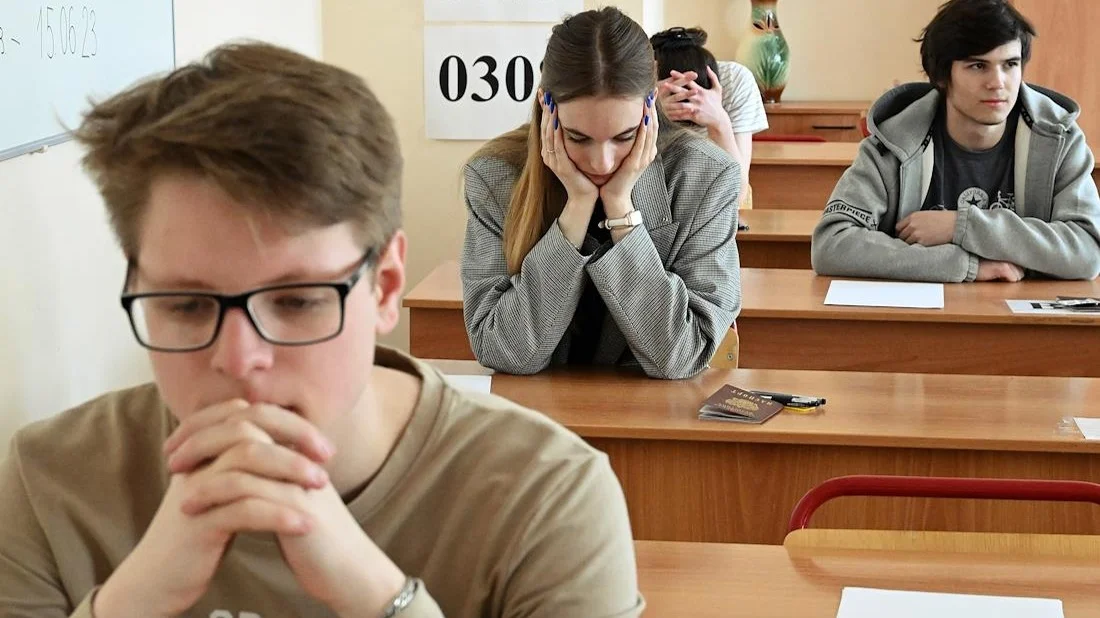
Photo: Anatoly Zhdanov / Kommersant
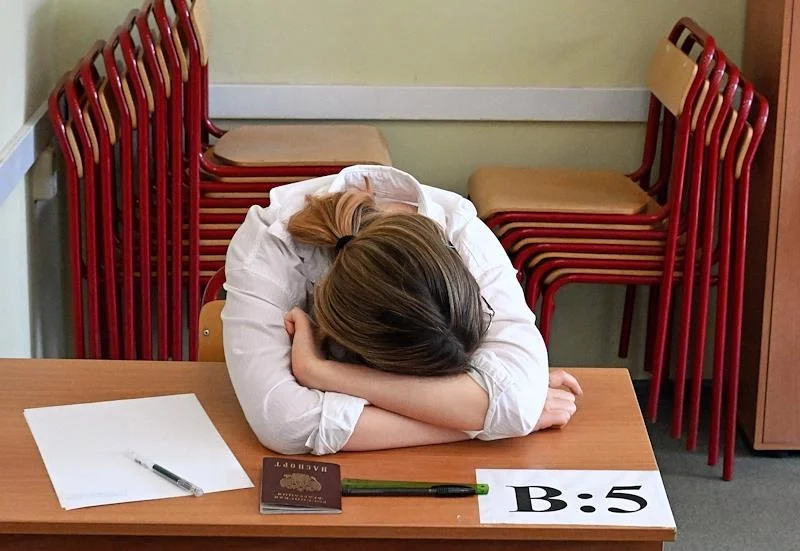
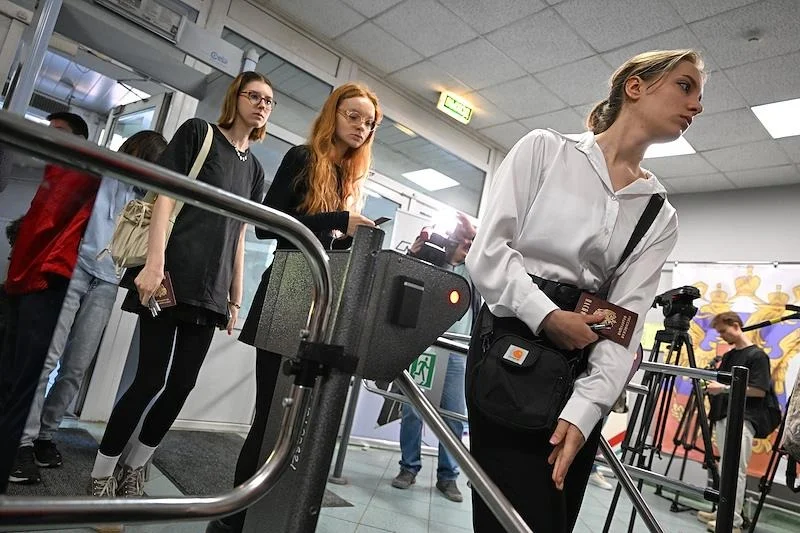
Every year, since 2007, Russian graduates of schools have been passing the exam. And every year it does not do without scandals: either the tasks on the network will merge, then in some republic an extraordinary crop of high-pointers will be found, then, as this year, children will be forced to undress at the framework of metal detectors. And every year there are talk about the need to cancel the exam. This year, the State Duma will once again try to do this. Two previous attempts - in 2016 and 2018. - ended in failure.
What do experts think about the possible cancellation of the exam - those who prepare schoolchildren for the exam, who are on duty in the audiences, check the examination and, finally, deal with freshmen in universities?
"Does not bring the expected results"
The bill No. 642303-8 on amendments to the Federal Law “On Education in the Russian Federation” was made to the State Duma on June 2, on June 26 was approved by the relevant Duma Committee on Education and will be considered at the autumn session of the State Duma in October of this year. Among the deputies who introduced the bill are Yana Lantratova, deputy chairman of the Committee on Education, Nina Ostanina, Chairman of the Committee on Family, Women and Children, Yaroslav Nilov, Chairman of the Labor, Social Policy and Affairs of Veterans, as well as a number of Communist Party, LDPR deputies and "Fair Russia - Patriots - for truth."
The authors of this initiative motivate the proposal to cancel the USE by the fact that "that the reform of education, begun with the introduction of the exam does not bring the expected results." The main complaints about the exam are as follows:
The mobility of applicants has increased, as expected, but families are now spending more money on their preparations for exams and moving to the place of study.
“The content of the exam is torn from the school course”, so families hire tutors, and this is expensive.
Budget places in universities are occupied by the winners and prize -winners of the Olympiads, so the high -stores of the exam cannot get there.
Corruption has moved from the admissions of university commissions to the sphere of Olympiads.
The USE is a primitive testing: he “teaches children only to put down boxes in cells. The USE is working on the USE, not his thinking. ”
Preparation for the exam is a simple training, so the exam is not able to identify the level of knowledge.
The school in high school instead of training is preparing for the exam.
“Society imposes the fateful nature of the exam, on which the life and future career of the graduate almost depends. It is not surprising that every year there is an increase in the number of suicides among adolescents who pass the exam. ”
Before the exams, children are morally humiliated, forcing them to undress.
The exam is expensive to the state, its rules are changing all the time, and these are experiments on children.
The authors of the bill propose to remove from the law on education an indication that the state final certification is carried out in the form of a single state examination since 2025. They assure that the abolition of the exam will not require any additional expenses on the part of the federal budget. But this “will increase the level of knowledge of graduates, save schoolchildren from the meaningless memorization of answers to tests, and most importantly, will allow you to preserve the physical and mental health of our children”, not to mention the fact that in the future it will give the country “more highly qualified specialists, without which Russia will not overcome the scientific, technical and scientific and technological lag”.
"Learn and put ticks"
The meaning and logic in this justification is quite difficult to find. Say, if when passing through the framework of the metal detector, schoolchildren are humiliated, forcing to undress, then it would be logical to just ensure that the children would not be humiliated? For example, change the inspection rules, give other instructions to employees of the examination points, introduce parental control, as already proposed this year in hot traces of scandals? If a passenger was rude somewhere at the airport during a pre-flight inspection, should aviation be canceled?
The authors of the bill, apparently, have never seen control and measuring materials to the exam, with their own eyes: as in the times of discussions twenty years ago, when they only introduced a single exam,
They continue to argue that the essence of the exam - the test, the task of the student - to learn by heart and correctly arrange checks, and knowledge of the subject is not at all. It seems that they have no idea that the test part in the exam for most items is minimized.
Say, in my subject, literature, these are 6 tasks out of 11; It seems to be more than half, but they solve in 10–20 minutes and give 6 primary points out of 48 possible. And the remaining five tasks are essays: four small and one large, the final score depends on their implementation.
Only basic mathematics and computer science are not implying tasks with a detailed answer - there it is enough to briefly write the answer (but do not put a box). In other subjects, with the exception of foreign languages:
In an exam in physics, 5 tasks out of 26 tasks require a detailed solution;
in profile mathematics - 6 out of 19 tasks;
on biology - 6 tasks out of 28;
in social studies - 9 out of 25;
on history - 9 out of 21;
In geography - 9 out of 29.
It would seem that if you are proposing a bill - well, study at least a materiel. No, and so it will do.
"Execute complicated"
At the same time, tasks with a detailed answer in all exams, in addition to literature, relate to the second part - that is, the in -depth level of study of the subject involves (in the literature 4 small works belong to the first, basic part). This is already to the question of "exorbitant complexity of the exam." In the same literature, for the basic part this year it was possible to score 30 primary points, or 51 test (it is also final). The remaining 18 primary (and 49 test) points gives the profile part. In the above items, approximately the same picture.
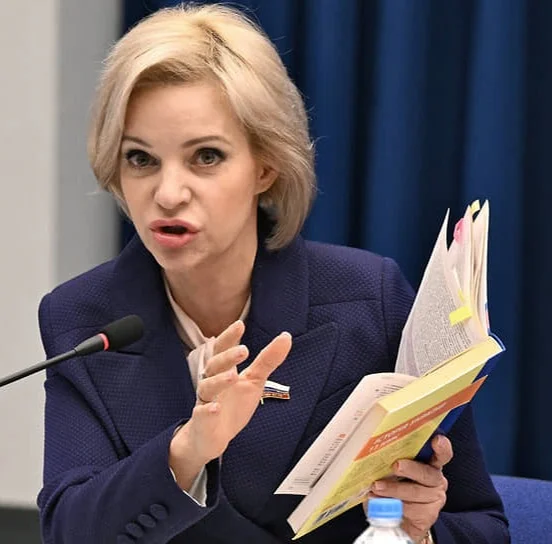
On July 4, the head of the Duma Committee on Education, Olga Kazakov, proposed to fix in the Law “On Education” the compliance of exam tasks not only of federal standards (Federal State Educational Standard), but also recently developed by federal basic educational programs (POOOP). She believes that the content of the examination tasks should be focused on the mass school, and not on classes with in -depth study of subjects: “And where the children are deepened by the subject and study it, which means that they should show that they know in depth. [Students must] then give out higher points in those areas that they study in depth, ”TASS quotes her words.
The proposal is formulated so that it is quite difficult to understand how exactly the new examination tasks should differ from the old ones and what place in them should be given to more complex tasks of the high level: after all, the USE by choice (and this is any subject, except for mandatory Russian language and basic mathematics), not so much to release from school, but for admission to the university.
And Kima (control and measuring materials) of exams in the Russian language and basic mathematics do not contain anything beyond the scope of the school curriculum.
Well, perhaps in the 26th assignment of Russian, it is required to identify the paths (visual and expressive means-metaphor, hyperbole, etc.), which are actually studied in the course of literature.
"Does not correspond to the school course"
When preparing this material, I interviewed a dozen school teachers and university teachers - I asked, among other things, and whether the contents of the examination of the school curriculum corresponded.
Typically, teachers say that the tasks generally correspond to the Federal State Educational Standard, and students of specialized classes should cope with them, but in practice school teaching is arranged so that some topics are not considered at all or do not have any important skills of the school graduates.
For example, the examination materials in literature are quite consistent with the Federal State Educational Standard and the POOP for high school.
But the program of the 11th grade (literature of the XX-XXI centuries) is so oversaturated that usually among teachers or among schoolchildren, even in specialized classes, hands do not reach either post-Soviet literature, neither to the foreign, nor to the literature of the peoples of Russia or the republics of the former USSR.
In addition, rarely in which school in literature lessons they teach the analysis of the literary text that you need to own in order to pass the exam well.
“The point here is not in the USE, but what is gradually turning into the study of literature at school: a petrified list of texts, reproduction of template interpretations, separation from history. As a result, students often come, not understanding how to read, analyze, restore context. But they are not to blame for this, and we are trying to teach them this, ”says university teacher Maria Toughs.
However, in Kima, some subjects are in tasks that verify what is not studied at school. Here is what the German language teacher Natalya Kuzovkina says: “From year to year, the compilers make several tasks incredibly complex. It has already been so that the assignment was based on an authentic text without any changes (although the level of the exam is declared as A2-B2). Naturally, this goes beyond the school curriculum. ”
Alexei Sibnev, a mathematics teacher, also notes that in the exam on his subject “The last two tasks are completely beyond the standard school curriculum. And to solve the few previous ones, we must confidently know school mathematics. ”
"You can train for the exam"
This is a common place in conversations about the exam: it must be “trained” on it. Is it really possible to “drain” the student to pass the exam?
Sometimes you can. Most often this is said by teachers of the Russian language. Anna (she asked not to name the last name), the tutor in the Russian language, says: “In my practice, there are many examples when illiterately writing children pass the test for very good points. Moreover, in ordinary life they continue to write illiterate. And ask the rule - yes, they know, learned. I had a mathematician, very pragmatic, immediately said: "I only need what will be on the exam." He wrote the first samplers for 50–55 points, passed the exam at 97. Does he know the language? No, but knows how to solve the test and understands what is required of the essay. ”
Tatyana Kreidenko, teacher of geography and associate professor of the Faculty of Economics RUDN: “All the same, certain knowledge is required. But this knowledge is more concerned, probably, the nomenclature part, but from the point of view of the content, serious geographical science - laws and laws - does not check this much. ”
Valentin Sh., Physics teacher: “Now it is probably possible to train a minimum score without knowledge of physics, but it is pointless. To get points passing for the university, physics needs to know. ”
Most often, it is necessary to “train” not so much on knowledge of specific facts as for algorithms for performing specific tasks, on understanding the exam format.
According to my personal impressions, a graduate who knows literature well, but does not know the exam format, did not work out his criteria, did not train to write small works quickly and without a draft, can pass the exam at about 70–75 points. But in order to claim a score higher, you need to know the format - and, alas, know what the inspectors expect.
Leah Bushkanets, doctor of philological sciences, teacher of Kazan Federal University, says: “The exam in literature evaluates stamped phrases - it is not necessary to read works at the same time: you need to know typical textbooks well in order to answer exam questions. Although, of course, texts are needed, because knowledge of some details is tested, but this reading, in my opinion, is formal, that is, at the level of memory, but by no means at the level of understanding, most importantly, the inconsistency of the work, its internal complexity, drama. ”
Stamping, stamping - generally a scourge of exams in Russian and literature. The composition in the exam in Russian is a completely dead text written according to the strict rules. “This is an artificial format that is not used in other genres,” says Viktor Kondakov, a Russian language teacher and literature from Lyceum No. 18, Kaliningrad. - “Help Industry” so “dismantled” this task that any student has a set of cliches and stamps. But the average student leaves school, having no idea about those types of written works that he will encounter at a university and professional activity. ”
Muscovite Asya, a teacher and tutor, agree with him (she asked not to name his last name): “I have a strong irritation (and the guys have great difficulties, even the best) format of essay. Firstly, the initial text in which it is necessary to find the problem and its solution-often this is an excerpt escaped from a large work (for example, on the exam this year there was a very shortened “fire” of Rasputin, which is somewhat unrelated to each other-the ligaments were thrown out). The theme of modern guys "does not catch." Well, the format itself: emasculated text, one -dimensional, primitive, which is written in the mass according to the template.
Humanitarian children experience a lot of suffering: they need to make a stump from a multidimensional work, which they themselves are very unable to. Writing something detailed and interesting and once, and there is no sense. ”
The Worde by Julia J. confirms: “Something must be done with the so-called essay, since in its current form it is an absolute perversion, far from the real relationship of a person with the text.”
And there are objects, Kima for which experts seem very good for experts. For example, Valentin Sh. Talks about the exam in physics: “I have been monitoring the development of options for the exam since 2010, and development is very clearly noticeable. The tasks have become diverse, include both subject and meta -subject knowledge and skills. I myself wrote the option of last year at the MCC ( the Moscow Center for Evaluation of the Quality of Education; Moscow teachers pass the exam there in their subjects. - I. L. ) in January. In general, the options are very good. ”
"Creates stress"
Probably, much can be said about other claims of the Dumans to the exam: the problem with the Olympiads and the Olympiads, that society attaches the exam too much importance, and this leads to children's suicides, that families spend more money on preparations for exams, tutors and then moving children to another city. And this is really - everything is true. And the transformation of the exam into an analogue of the Last Judgment. And the need to prepare with tutors. And the high cost of residence in another city (by the way, not only talented residents of other cities go to study in Moscow, but Muscovites with modest results of the exam are not so rarely going to other cities: to study as an actor - in Yaroslavl, for example, or on a doctor - in Tula).
Is it worth it to remind that during the about but the families spent money on tutors? Right personally, in 1985-1986, I had an English tutor, because this subject was practically not taught at school. And moving to another city has never been cheap.
Of course, the problem of the Olympiads exists: in top universities in demanded specialties, they actually occupy almost all budget places - but can this problem really solve the abolition of the exam?
And the statement “corruption migrated to the sphere of Olympiads” should be at least confirmed by facts, specific names of the Olympiads, specific details,
Otherwise, it is already time to say about the protection of the professional reputation of members of the Olympic subject commissions and the jury.
And, again, is all this really treated by the abolition of the exam? In order not to turn the exam into a state acceptance of graduates, which puts the doubles on the forehead and throws them into the outer darkness, where the crying and grinding tooths in order to reduce the price of failure, you can take several quite simple steps.
One of them was undertaken already this year: one examination became possible, and this innovation was grateful to graduates: 105 thousand took advantage of this right, of which 70 thousand improved their results, and 122 graduates retorted 100 points.
The second such step is the creation of clear educational trajectories for those who failed the exam. Where can he study next? Where to get a certificate? Where to prepare for a new surrender? Where to work? Contrary to the widespread opinion “let the country need working hands”-few people really need fresh school graduates without any skills and certificate, and some are not even 18 years old.
A few years ago, I tried to raise this issue at one of the round tables with the participation of representatives of the then Ministry of Education; The answer was tough: "They themselves were to blame, before it was necessary to think."
But if we do not want annual suicides after the exam, graduates and their families should clearly understand that no catastrophe has occurred, that there is a completely clear way to conduct this year with benefit, prepare for proper and re -pass exams.
The third step is for the future: to give the possibility of repeatedly surrender the exam over the past two years of study at the school in specialized testing centers that work all year round (according to a similar model, centers for taking international language exams work). Это дало бы школьникам возможность лучше распределять свои силы, сдавать экзамены по мере готовности и в последний год хотя бы немного учиться в школе, а не только готовиться к ЕГЭ. С другой стороны, часто предлагают вообще отменить уроки в 11-м классе и весь последний год только готовиться к ЕГЭ — так в английских школах готовятся к экзаменам A-level. Но что тогда делать с программой 11-го класса? А вводить 12-й класс — это уже слишком сложное решение.
Но самое грустное в думском обосновании отмены ЕГЭ — это полное отсутствие альтернативы. Взамен не предлагается ничего: в каком виде будет проходить государственная итоговая аттестация — непонятно. И вот эта неизвестность пугает и школьников, и родителей, и вузовских преподавателей (в конце концов, именно им вместо отпуска придется вступительные экзамены принимать).
Ася, репетитор, рассказывает: «Мне кажется (на основании родительских чатов), отмены ЕГЭ боятся, это неудивительно: только-только стала понятна хоть какая-то система координат. Расспросила дочь — она, при всех претензиях, считает ЕГЭ неплохим социальным лифтом. Как и другие ее ровесники».
А что вместо ЕГЭ?
Ни один из 15 опрошенных мною экспертов не поддержал идею отмены ЕГЭ. Первая и самая ясная причина — непонятно, что придет взамен. «Это все равно что спустить водохранилище, где уже образовалась какая-то экосистема, и на этом месте неизбежно образуется болото, — говорит Лия Бушканец. — Худо ли бедно, но сейчас какое-то количество детей по ЕГЭ поступает в хорошие вузы.
Если его отменить, неизбежно начнется коррупция в вузах. Единственное, что можно сделать, — брать на первый курс всех.
Но тогда надо перестроить программу первого курса. А дальше мы кого-то будем отчислять, поскольку поймем, что они нам не очень нужны. И со второго курса уже должно начинаться профессиональное обучение». Эту идею поддерживают еще несколько опрошенных.
Виктор Кондаков констатирует: «Если что и менять, то: ЕГЭ должен быть откреплен от школы, он должен быть только вступительным, итоговую аттестацию должна проводить школа, а ЕГЭ сдавать только те, кто поступает в вузы, к разработке заданий допустить соответствующие учебно-методические отделы вузов. Задания должны не столько проверять школьные знания, сколько определять готовность абитуриента к освоению программы высшего образования, поэтому и строиться они должны с учетом направлений подготовки. Передача права разрабатывает задания вузам благотворно скажется и на программе старшей школы: она станет ближе к реальному положению дел, а не будет списываться из учебников 70-х годов прошлого века. Неплохо было бы растянуть сдачу ЕГЭ по времени. Например, сдавать его целый год, а то и два, по готовности ученика».
«По мнению некоторых моих коллег — преподавателей вузов, к сожалению, с возможностью оценки реального уровня знаний выпускников школ общество не сталкивается нигде, с ним сталкивается только университет. Но при этом заказчиком образовательных услуг выступает именно общество, государство, которое выражает интересы общества, — говорит Татьяна Крейденко. — Если мы отменим ЕГЭ, выпускники будут сдавать внутренний экзамен в школе (в рамках школьной программы) и экзамен при поступлении в университет. Но в этом случае мы не сможем гарантировать, что экзамен в школе покажет объективную картину знаний даже самим выпускникам. Мы не знаем, как будет организованы и проведены эти экзамены, особенно в ситуации, когда результаты этого экзамена — показатель работы школы. А когда абитуриенты придут в вуз — общество опять не увидит всех слабых мест школьного образования, а с ним столкнутся преподаватели университета, принимающие вступительные экзамены. Тем более, что формат экзамена школьного и вузовского в такой ситуации пока непонятен. У нас не так много учителей, которые смогут быстро перестроиться и понять, что всё-таки мы хотим в школе и со школой сделать, что мы хотим получить на выходе, что мы хотим от детей. И отменив ЕГЭ, мы можем получить очередной провал, такой же как был в первые годы введения ЕГЭ.
Я противник ЕГЭ, но на данный момент пока альтернативы ему не вижу. Это не значит, что ее нет. От ЕГЭ можно и нужно уходить, но постепенно.
И прежде, чем от него уйти, мы должны сформировать ту команду учителей, которые будут готовы учить предмету, а не натаскивать на ЕГЭ».
Алексей Сгибнев, учитель математики: «Только-только все привыкли к ЕГЭ, только он стал выглядеть разумно, только появились хорошие стабильные пособия — и на тебе, давай опять все ломать. Нельзя так со школой. Реформы должны быть медленные, обоснованные, обсужденные с учителями. Конкретно про математику основное замечание сейчас такое: экзамен перегружен, за 4 часа сейчас его успевают решить только самые быстрые спринтеры. Надо уменьшить число задач процентов на 15, тогда роль скорости ученика станет не столь критична и будет более соответствовать его способности и готовности учиться дальше. Остальное уже детали. Главное — нужна игра с понятными стабильными правилами».
Мария Туфельд преподаватель вуза (фамилия изменена): «Мне кажется, что сама система работает отлично. Я вижу ее огромные достоинства как реально работающего социального лифта. Когда в лучшие вузы самостоятельно поступают выпускники с Сахалина или из Красноярского края, а баллы у них не ниже, чем у выпускников престижных московских школ — это отлично работающая система. Другое дело, что начинку во многих предметах, особенно гуманитарных, надо менять. Что это должно быть предметом общественного обсуждения. Что все реальные КИМы после экзаменов надо публиковать в открытом доступе. Что к их составлению надо наконец-то привлечь профессионалов и обновить те команды, которые бессменно работают по пятнадцать лет. Но разрушать систему для этого не надо. Не надо сносить дом, если вы хотите поменять интерьер квартиры».
Что еще нужно сделать?
Перестать мухлевать с результатами экзаменов, считают учителя. Для того чтобы показать, что выпускники прилично сдают экзамены и показывают хорошие средние результаты, экзаменационные материалы могут упрощаться, а шкалы перевода первичных баллов в итоговые пересматриваться. «Нельзя показывать, что реальный средний уровень в технических науках очень низкий, — объясняет учитель физики Валентин Ш. — Если показать как есть, окажется, что [с физикой] шляпа. С профильной математикой еще хуже». При этом результаты ЕГЭ становятся основной для оценивания результатов школ и для формирования проходного балла в вузах. Меняющиеся из года в год условия задачи совсем не способствуют формированию объективной картины.
Например, согласно статистике Рособрнадзора, средний балл по профильной математике и физике существенно вырос в этом году по сравнению с предыдущим: по математике — на 6,93 балла, по физике — на 8,36 балла.
Телеграм-канал «Кипящий МИФИ» комментирует: «Мы не поленились перевести абсолютные средние баллы в проценты решенного варианта: Физика — 48%; Информатика — 41%; Математика — 34%. Еще раз, для фиксации: в среднем школьник России решает меньше 50% в любом «инженерном» экзамене, а в математике средний школьник в среднем решает только треть от задания. И это еще благодаря тому, что варианты по физике и математике были в этом году упрощены, а в математике еще и пересмотрели шкалу перевода первичных баллов во вторичные».
А еще это ставит в неравное положение выпускников разных лет. В этом году, например, после изменения шкалы перевода баллов выпускники, потерявшие один-единственный первичный балл на ЕГЭ по литературе, лишились сразу шести тестовых — и со своими 94 баллами соперничают с прошлогодними выпускниками, которые с той же одной ошибкой получили 97 баллов.
«Я бы увеличила количество первичных баллов, чтобы цена ошибки не была столь высокой», — говорит учитель русского языка Юлия Ж.
Тем временем в Рособрнадзоре
Позиция Рособрнадзора по поводу отмены ЕГЭ вполне предсказуема: ничего отменять не надо. Глава ведомства Анзор Музаев регулярно выступает с жесткими заявлениями по этому поводу.
4 июля он обсуждал вопросы совершенствования ЕГЭ в комитете по просвещению в Госдуме, где сказал, что его ежегодно спрашивают, отменят ли ЕГЭ, а он всегда отвечает так: «Отменят, если эта группа депутатов предложит не просто вернуться к старому, а конкретную модель, которая в наших современных реалиях осуществима: как в этой модели будет обеспечена возможность подавать документы на поступление в несколько разных вузов, равенство прав участников, контроль над коррупцией при поступлении».
9 июля Музаев публично заявил , что
школьники никогда не согласятся на отмену ЕГЭ, потому что это увеличит для них число экзаменов, которые им приходится сдавать, в несколько раз, и при этом ехать в другой город: «Вот молодые ребята — наша аудитория, они не знают, что такой старый формат. И я уверен, они никогда не подпишутся под то, что было в прошлом».
15 июля Музаев предложил увеличить значимость ОГЭ — экзаменов, которые сдают девятиклассники, — и принимать в колледжи по их результатам, а не по среднему баллу аттестата, к объективности которого есть много вопросов . Это еще один шаг в направлении, противоположном тому, что предлагают инициаторы законопроекта.
Наконец, 19 июля Анзор Музаев решительно заявил , что в 2025 году никаких серьезных изменений в проведении ЕГЭ не будет: «Пусть школьники не переживают, вопрос закрыт.
…Все глобальные изменения, которые могут ущемить права выпускников, мы принимаем не сразу и объявляем о них за два года».
И добавил: «Я не верю в то, что сейчас можно придумать что-то кардинально новое. Когда мы ведем диалог с Госдумой, мы говорим, что подход должен быть не такой, как в 2017 году: давайте все разрушим до основания, а потом будем новый мир строить, — а говорим о том, что необходимо работать над тем, что мы уже создали».
В итоге до 15 августа 2024 года Рособрнадзор принимает предложения по улучшению ЕГЭ от всех заинтересованных сторон. Предложения принимаются на адрес электронной почты: exam2030@obrnadzor.gov.ru. А на последней неделе августа планируется всероссийское общественное обсуждение нововведений.
Автор — преподаватель литературы