
Translated material
Bridge
Further exchanges of the military and civilian are the salvation of lives and a method that will help to agree on a ceasefire
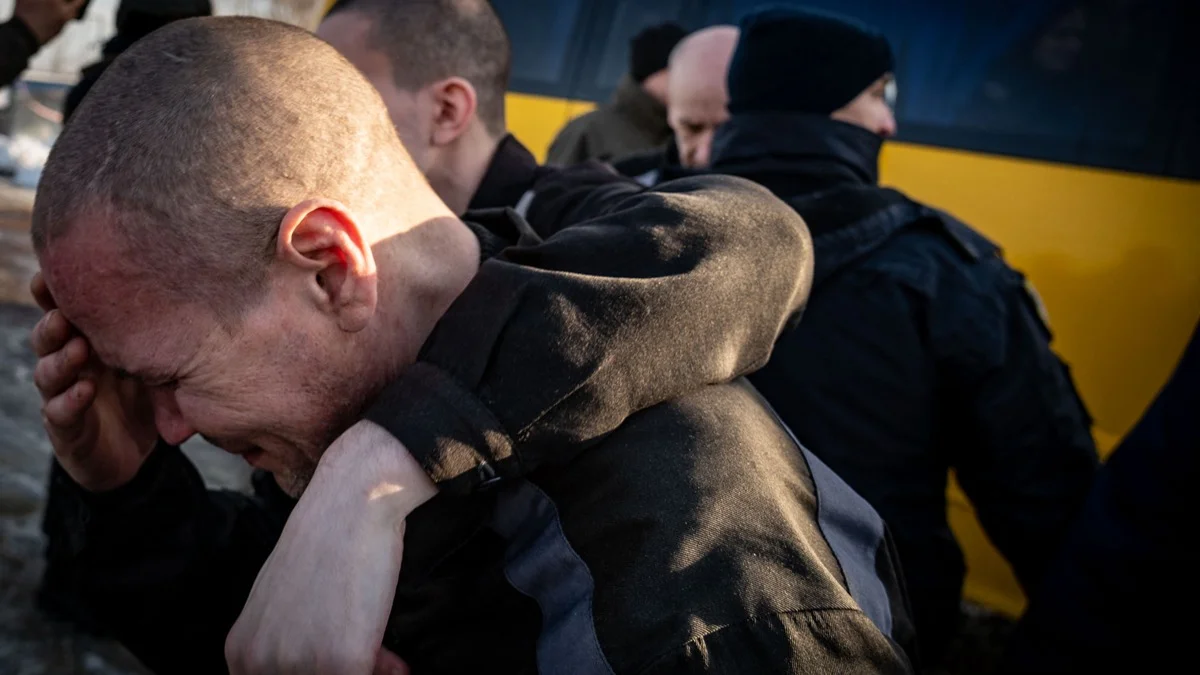
The return of Ukrainian prisoners of war. Photo: ABACA / TASS
18+. This material (information) was produced, distributed and (or) sent by foreign agent Vishnevsky Boris Lazarevich or concerns the activities of the foreign agent Vishnevsky Boris Lazarevich.
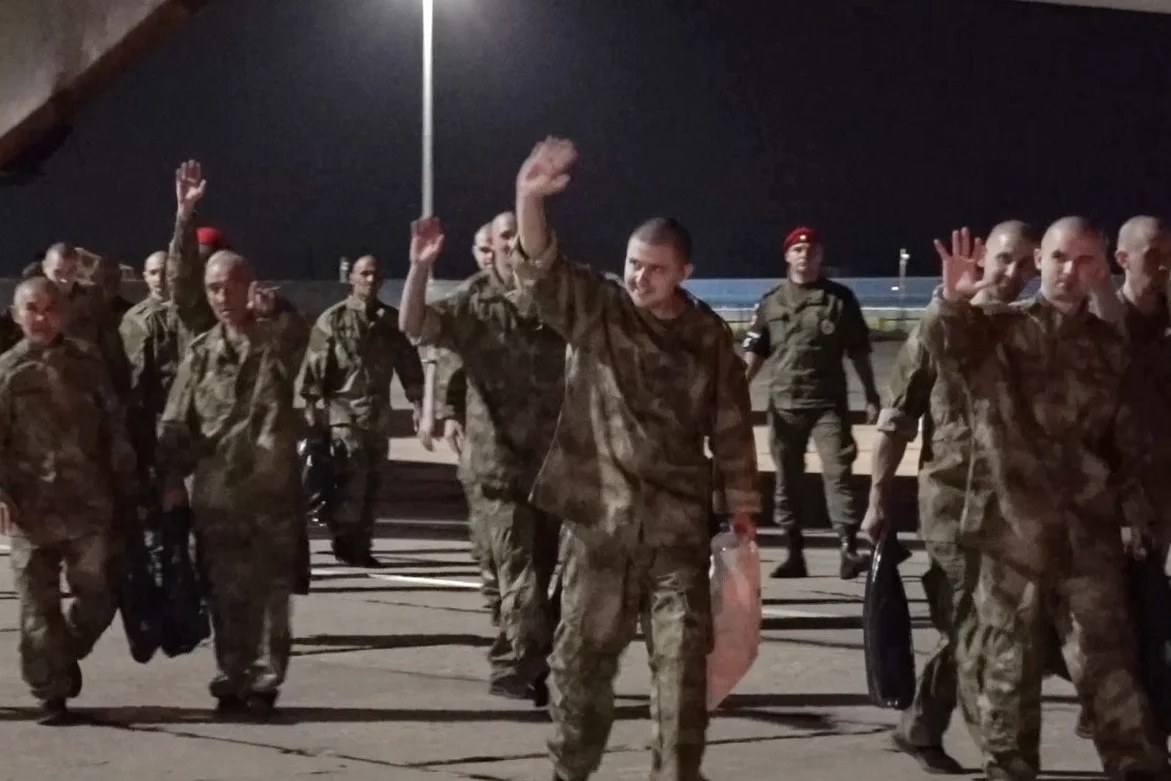
The exchange of prisoners that took place several days ago - and what the released after him managed to say - caused a great many response of various colors.
Starting with natural joy for the rescued lives and the acquired freedom of recent prisoners and sorrows from the fact that hundreds of political prisoners are still in captivity, and ending with statements that they were “not the same” changed, as well as claims of critics dissatisfied with what the newly released, because they, see, expected them completely different. In the style, either “no, guys, everything is wrong, everything is wrong,” or “so why you didn’t die, how should you, how is it supposed to you?” At the same time, critics-unlike the released-did not spend two or three years behind bars, in a schizo and susa, and their moralization, to put it mildly, is inappropriate.
However, in this case, it is significantly not that and in what expressions immediately after the liberation, people say, who had just escaped from the jaws of the repressive system, otherwise, will they be able to go out to freedom in its power. As a result of exchange or other events.
And this, in turn, very seriously depends on the main thing - the prospects for the ceasefire between Russia and Ukraine. Because this situation determines a lot, including the situation of political prisoners.
During any acute conflict, the most important conflict in its settlement is the problem of communication and dialogue: how can its participants talk? Especially with the complete lack of trust in each other understandable during the fighting.
So, the exchange of prisoners, as well as previously conducted exchanges of prisoners of war between Russia and Ukraine,, for all of their different mechanics and essence, are firmly related processes.
Related because both are the construction of the invisible “bridge” (the image that many now recall, speaking of exchange), in which representatives of the warring parties will then talk about other matters, including the most important thing - about the ceasefire.
Both the exchange of prisoners and the exchange of prisoners are processes requiring gigantic training. Almost all of it is not public, moreover, publicity is sometimes categorically contraindicated in it.
But it is precisely in the course of these processes that it turns out who, where, as and in whose mediation (or without it) on both warring parties can negotiate. With whom they are ready to talk - and with whom they are not ready. How to resolve controversial cases, how to discuss guarantees and who can give them. And so on…
Actually, this is the process of building a “bridge”, on which only final scenes are publicly taking place.
And if you return to the question of
Is there a chance to release the remaining political prisoners in Russia, who are now, as human rights defenders are evaluated, more than 800 people, they are unlikely to be able to exchange in the same scheme as last Thursday. Because there are no so many detained Russian intelligence officers and hackers in the West.
This means that this chance will appear when negotiations on the exchange of prisoners of war with Ukraine will be able to continue negotiations on the exchange of civilians - with the participation, most likely, about the same negotiators and intermediaries who are now talking about the exchange of the military, and those who have agreed on the exchange of last week. Both those civilians who are in prison in Russia and those who are in prison in Ukraine. Who played for the “Russian world” there or worked for Russian administrative structures and is now persecuted according to Ukrainian laws, which are sometimes no less tough in “political” issues than Russian.
To agree on the exchange of these people is a very, very difficult matter. And those who are now violently criticizing the exchange that has taken place, being at large and safe - not only do not understand on the personal experience of the situation in which the prisoners were or are located. They, with their “expert” opinion expressed in the public, simply reduce the chance of freedom for the remaining prisoners in Russia.
And among the remaining-hundreds of those about whom, as a recently died 39-year-old pianist and writer Pavel Kushnir, almost no one knows. Those who do not have influential support groups and protection campaigns. About whom they do not publish articles in significant media. To whom they do not seek lawyers and do not collect money for legal or medical assistance. Who does not write letters in a pre -trial detention center. And who can remain in obscurity for years - hoping either that there will be enough strength and health to withstand the conclusion, or for a miracle ...
And yet optimism - albeit very cautious - is.
If, even if it is very difficult, for a long and difficult confrontation, it is possible to talk between Russia and Ukraine, Russia and the USA, Russia and the European Union countries about the exchange of prisoners of war and the exchange of prisoners, it means that the indicated “bridge” is still being built.
And if it manages to agree on the preservation of lives and the facilitating of the fate of specific people on both sides, then it can be agreed on it about the ceasefire.
The main factor, as I had to write more than once, is the time.
We must act without waiting for the results of either American or any other elections, or other political events.
Because every lost day is the day that prisoners spend in captivity and which for people like Alexei Gorinov, Igor Baryshnikov, Yuri Dmitriev, Yegor Balazekin, given the state of their health, may be the last.
And every lost day is the new lives of those who lose them during hostilities and shelling.