
Translated material
"For the Dead Soviet Motherland"
About the verses of Z-Litterers who dream to break into the school curriculum in literature
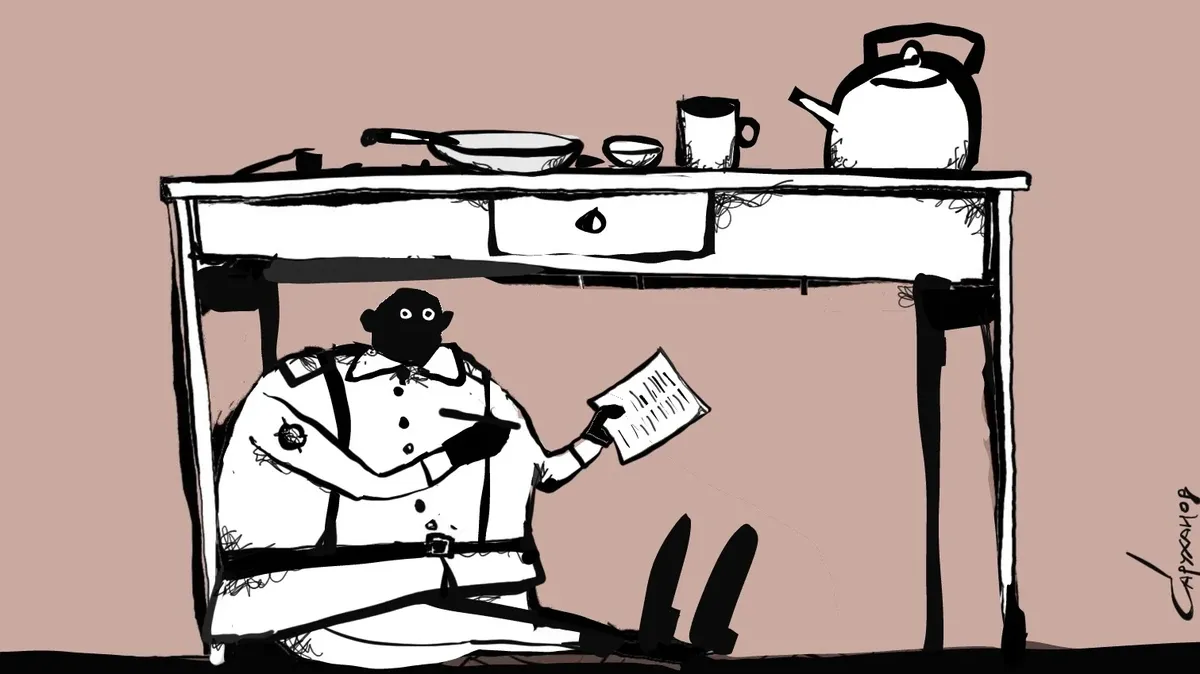
Figure: Peter Sarukhanov / "New Gazeta"
On Tuesday, the State Duma once again discussed the upbringing of children and youth - and how to make it even more patriotic: the Committee on Education is going to develop a manual instructing traditional values to students of schools, universities and even pupils of kindergartens. The Prilepin “tradition” and “defenders of the Fatherland” deputy minister of defense Anna Tsivileva were concerned in such a training manual even earlier: they compiled a list for libraries and schools, which included books, sculptures, performances “retaining their memory” - according to the compilers, they must be studied in lessons.
It is characteristic in this list-more precisely, in its literary part-the fact that it mainly consists of collections of poems, and that it is not poems, then collections of short stories (apparently, there are still no resources for a full-fledged Z-test).
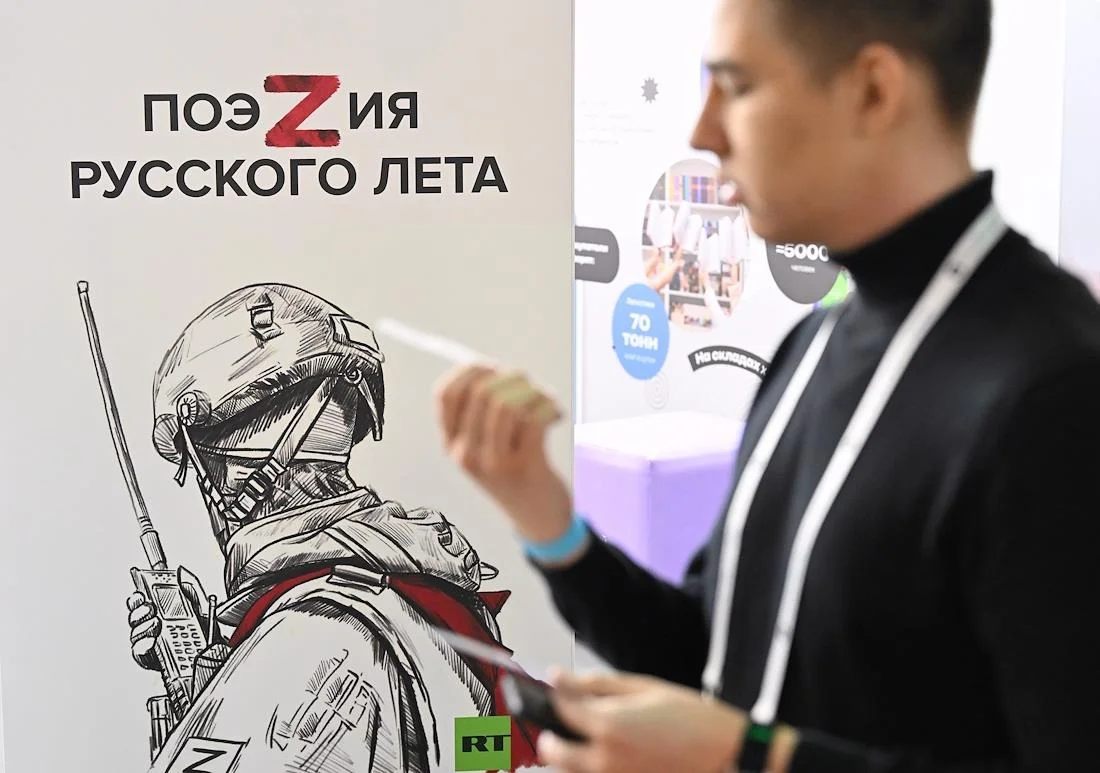
Here, the story of the collection “Poisia of the Russian Summer” is recalled by itself, which, in a fit of marketing genius, sent everyone through public services, and since then the promotion strategies have not become softer: you don’t want to buy - you will be held at school.
By the way, even then, in the Blerbe on the cover of this anthology, Margarita Simonyan complained that she did not see huge circulations and full shelves littered with Z-Litrate. I must say that in a year in this sense little has changed: I also do not see these circulations and shelves either. And what to fill up:
In those prosaic collections that Prilepin and Cyivers are planned to be laid out on desks, with all the softness of their covers and democracy of prices - a circulation of 2000 copies.
In the same Blarybe, Simonyan wrote: "It seemed to me unfair that our wonderful new poets did not go to school." It seems that the call was heard, and maybe they will pass soon. But while this has not happened, it seems to me useful once again to remind me of what exactly is written in these books.
Z-Poesia reviews have long become a separate sport for literary critics and critics-and this sport has its own masters, with whom it makes no sense to compete. But there are several important words that no one has said about Z-stiki yet-I will try to formulate them.
When you read the Z-star, you are surprised to catch yourself on rather unsuccessful attempts to navigate: who are they friends against? It would seem that after the most powerful irradiation by propaganda, the image of the enemy should be drawn quite clearly in such texts - and is unambiguously called. But no: the image of the enemy in Z-stikhas is extremely blurred and disintegrates into a spectrum of different subspecies.
For some reason, the main one is not some collective “dill”, but the townsfolk: those who “sit at the pajamas at home, noses in jam and poison on the segles” (these are the lines of Dmitry Artisa). Those who drink beer and watch football while “our boys” sit in the trenches.
In other words, the main enemy of the Z-patriots are those who continue to live a peaceful mid-class life, periodically looking at the TV screen (which is actually strange, because it is these people that are just the target audience of federal channels; with this attitude to their reader, the desire to be sold).
In all this, it is impossible not to hear the echoes of the collective “Eat pineapple, hazel grouse” from the twenties of the last century: as the historian of literature Mikhail Edelstein says, for the poets of the revolution, the main enemy was cats and canaries, personifying the comfort and normal life that ignored the great historical shocks (he also calls the most indicative z-condemnation in which It is honestly stated that the Russian "tanks are on the smell of well -fed other people's apartments"). Now, the canaries, apparently, came football, beer and pajamas-but the cats remained: Z-poets are buried, then they save the cats in each second work.
About the same category of enemies include other symbols of peaceful life - but not Russian, but “imported”: writers massively hate pounds and bucks, McDonald's, Stephen King and, of course, Gucci with Prada. All this corrupting influence of the West is logically contrasting Pushkin with Tolstoy, supposedly to be zedenelic outside of Russia. This also includes the image of another worst enemy, about which zuttors still can’t forget and who manages to interfere with even now, are the-rivals.
With all this, it is surprising that the image of that enemy, which, according to the logic of things, should not stomp in the mass, but be in the first roles, is not completely completely. Z-stikhs fight against what and anyone: against comfort, against McDonald's, against non-traditional values, against the "BEH" that eternally "working" on them, is not against a specific military force.
In place of her in all Z-stikhas-a lubricated, slurred image of a Nazis/fascist from Soviet poetry from the time of the Great Patriotic War: without a face, without character and without acts, clearly subtracted and never seen live.
And maybe it is precisely because of this depersonalty, and maybe due to the fact that 80% of any of these texts did not consist of experienced experience, but read out of bad verses, to understand where “good” and where “bad” is often very problematic. Zuletors can tearfully describe how children bury the cat in a funnel remaining from the explosion, but the reader about whose fault this explosion occurred, the silence will be an answer. The same thing-when some collective artis tries to metaphorically depict the battle through a reference to the “Lord of the Rings” and the local struggle of the orcs with the elves, but describes both camps so that even an experienced reader is unlikely to figure out who plays for the elf and who for the orcs.
With subjectivity in these verses, there are generally big problems - and they relate not only to the image of the enemy, but also to the image of themselves. In these texts there is no and cannot be the pronoun “I” - only “we”, only the clan, the people, the homeland and further according to the list of the same -stone words.
In one of the verses, by the way, this philosophy is formulated directly - it is difficult to understand whether the author Mark Leshkevich talked in it or said that he wanted, but in any case he got into the top ten: “Play in Chapaeva? Chur, I'm for the people. "

This folk abstraction called "we" also has a rather stable set of categories. Firstly, these are “simple guys” (the option “bad guys” who “save Russia”), “brown Russian Rusaks of the Central Russian Tver strip”, without whatever distinctive features, whose “horizons are narrow” and who “does not know the old or new Greeks” (and is proudly proud of it), but loves to die for their homeland. The decorations for their death are usually sowing and hayfields.
The second category is the direct heirs of the winners of the Great Patriotic War, then trying on their military boots, then just rising into their immortal regiment.
The third category is the immortal regiment itself, which really turned out to be immortal: the resurrecting dead, veterans rebelled from the graves, looking at the fighting from the hill ghost of Simonov and Selvinsky. The fact that the poetess Dolgarev called "Russian htonos" in these verses is generally a lot - and this emphasized necrophilism of critics also managed to pay attention to this emphasized necrophilism. Here, for example, as the same Dolgarev formulates, who is still such “we”:
“We are death, we are hail, we are born for a fight, / We will become a black zoom, humus / and birds in spring silence.”
For the most part, these texts consist of such an admiration by death-the praise of the dead, from the resurrection of the dead, periodically even from direct vampirism, and again some kind of cat:
*"And the princes are affectionately cut to each other
Edible buttocks.
And I understand about formidable Rus':
We love her not for the only one
A second in which the sweet Kus.
And the candles burn - you won’t blow it. ”*
(This is the poet Zashev describes the princely feud - as far as one can judge the idea of the author in the text.)
All this, according to the authors, should sing for centuries new “Young Poets: Motorola, Bezler, Brain” (according to Karaulov) and bless the very specific Russian god: “The harsh grandfather in the Polevoy tunic with the letter of Zet” (according to Vatutina), whom one of the neighbors in poetic anthology called the “underground sky”.
And it is here-on the theme of the “Russian htonos”, after all the rather harmless and flat attacks towards not too intelligible enemies, the energy breaks through in all Z-stikhas, for which they apparently write and which the collective poet “Rakitin” would envy.
The fact is that although Z-poets really have a bad idea of who the fight is conducted against, pleasure from the process of massacre itself, death, described in all physiological details,
And that, no one-lies-calling poems almost do not hide:
*"In Kramatoria, in the crematorium
on the roads of blood flow, and
They get out from under the hands
Pale pink guts. "*
(Dmitry Melnikov)
And further in the same spirit. The same physiologicality, the same love of violence walks through all the verses of the current Z-Parnas-including, by the way, the works of Olesya Nikolaeva, from which one could expect, if not more pure vocabulary, then at least more traction to eternal life, and not for eternal death. It is not especially necessary to wait for the purity of vocabulary at all: for some reason, a rare patriotic anthem can do without a word of three letters and its derivatives-apparently, other methods of expression on Parnassus ended.
It is more murder than the image of the enemy, only the goals of what its authors call it direct text, and we are forced to call it a special operation in the Z-Poesia. Someone, like Zamoshev, assures that "we are all for the world, of course." Someone, as Kupriyanov, clarifies that the world is the world, but the struggle is being conducted for "life according to our rules." Some, however, amaze with the directness of the answer: “For my dead Soviet homeland,” - and so far this is perhaps the most accurate motto. And some, like artis, set themselves quite achievable goals:
“In order to call the streets in honor of Limonov, / So that the children in schools read Dolgarev and Karaulov, / Well, I, excuse me, are such an important chicken.”
(Artis)
And here, apparently, the main dream of today's zubtors, which is so actively breaking through now, has been expressed-everyone wants to stand in a school cabinet on the same shelf with Pushkin and Twardowski. This dream seems quite fulfilled - in the end, these authors can safely use all the words of the Russian language and openly preach what the collective “Rakitin” would envy, not afraid of either criminal or administrative persecution.
But the problem is that their main problem will not be solved by this-you will not be forcibly bought. Another question is that children who are completely optional are completely optional from this “Russian htonos”.
And, apparently, if these texts still reach school shelves and programs, the struggle for a children's literary taste will again go on the principle shown in the last scene of the Zakharov film “Kill the Dragon”:
- Well, a passerby? - Lanzelota asks there unfinished dragon. - All over again? Maybe not now-still children?
“No, now,” Lancelot replies.