
Translated material
We’re shit!
In Russia, forests are traditionally burning. We tell how local authorities are struggling with fire, who earns on fires and who became better from the fact that Greenpeace left the country
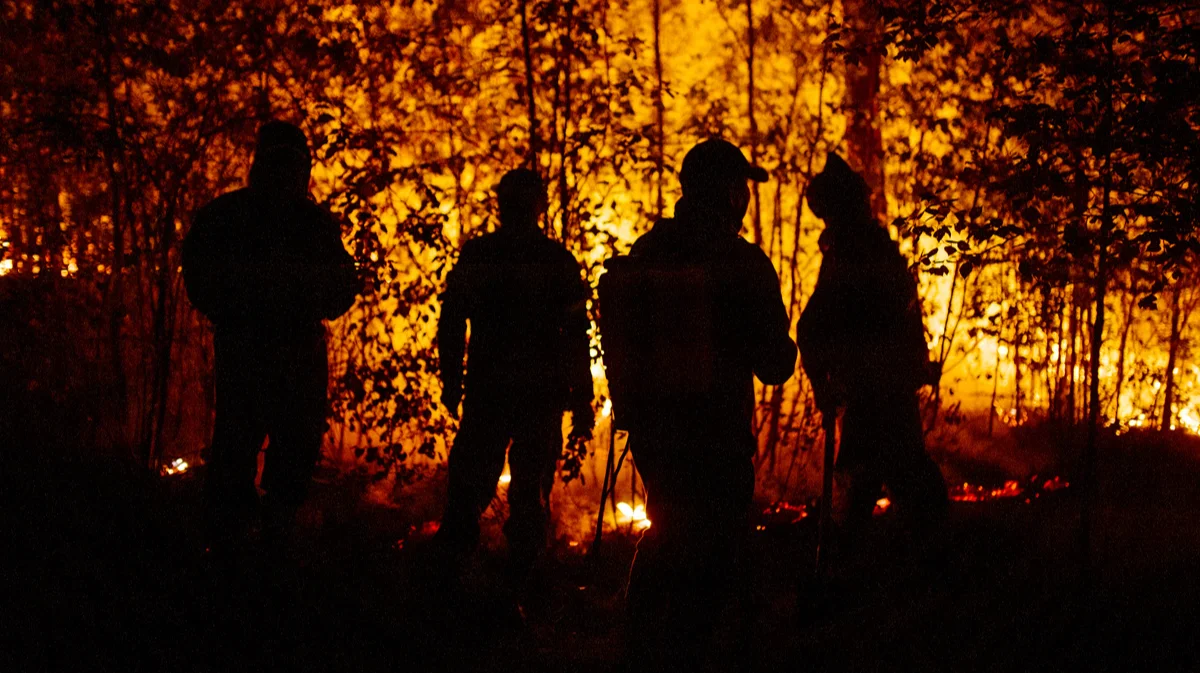
Forest fire extinguishing in Yakutia, August 8, 2021. Photo: Ivan Nikiforov / Anadolu Agency / TT / Scanpix / Leta
According to the situation for the evening of July 23, in Russia, almost 447 thousand hectares of forest were covered with fire, reports Avialeshokhran. Every day this figure is growing, the fire spreads on - and in the end, a square can burn out for the season, comparable to the large Russian region or the EU country.
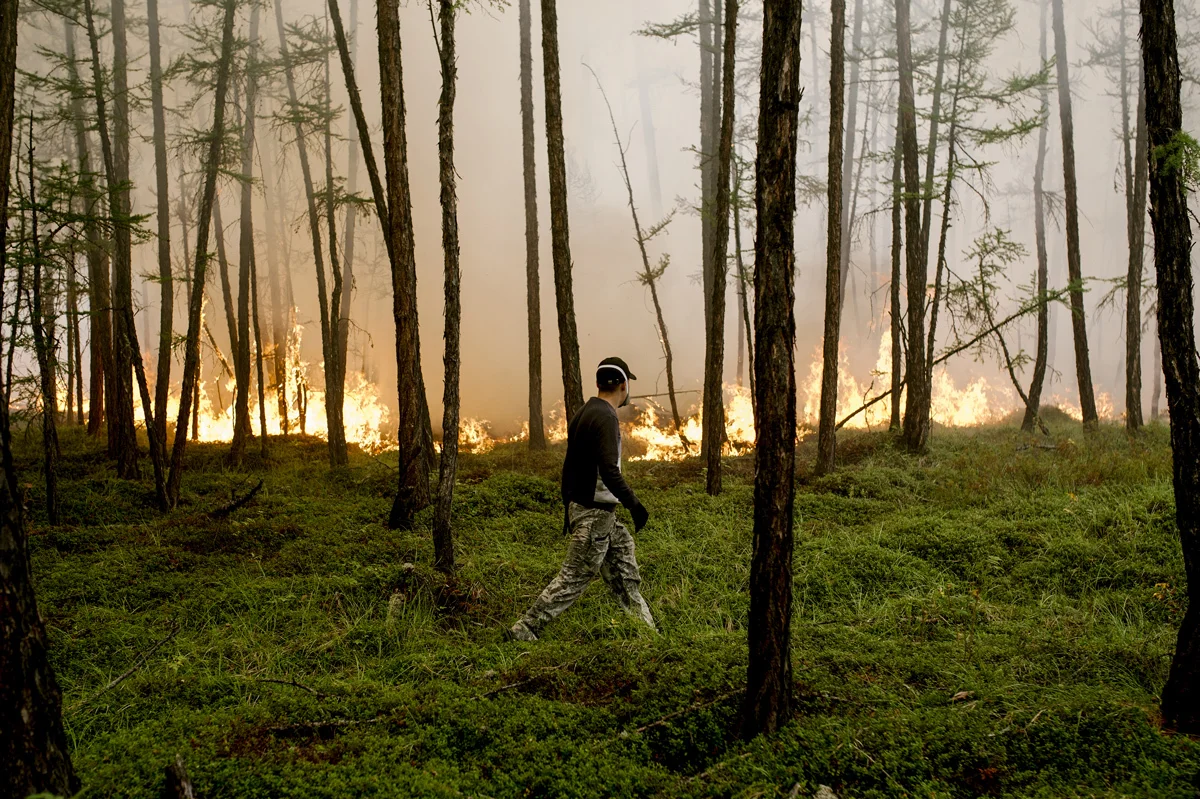
Every day, thousands of firefighters and hundreds of units of equipment are fighting with fire, but they manage to extinguish only a small part of the burning forests. There are not enough people and money to fight fire. From year to year, forests are burning in the south (Krasnodar Territory), in the Urals (Sverdlovsk Region and Khanty -Mansi Autonomous Okrug), but Siberia and the Far East usually suffer most of all. By the middle of this July, two absolute leaders were marked there - Yakutia and Transbaikalia, followed by the Irkutsk and Amur regions, Buryatia, Khabarovsk and Krasnoyarsk Territory. Novyevropa says what is happening in the regions and why it will not become better.
Yakutia: six rubles per hectare of forest
In 2021, the republic survived the strongest series of forest fires. According to Greenpeace (then still working in Russia, and in 2023 recognized as an “unwanted organization”), the total fire area amounted to 3.5 million hectares. The fires were so great that it was impossible to put them out purely technically. Experts probably say , this fire was one of the largest in 2021. Smoke reached the Urals, Sakhalin, Kazakhstan and Alaska. The main reason for the fires Greenpeace then called the activity of man. According to experts, up to 90% of all fires occurred through the fault of people. In addition, the deputy chairman of the government of Yakutia Dmitry Sadovnikov told Novaya Gazeta then, the region simply lacked money to protect the forest:
“We have the most wooded region in the country and the largest in area, comparable to the size of India. And the population is less than a million people. Of course, when you get 6 rubles 10 kopecks per hectare, it is very difficult to fight fire. ”
In 2022 and 2023, the element’s blow was easier, much less than the forest burned down, but it was not possible to completely avoid fires. And in the spring of 2024, the situation was repeated. In early May, the authorities recorded the first fires. On July 1, a federal emergency regime was introduced in the republic. According to the head of the region Aisen Nikolaev, this was done to more effectively fight forest fires. By mid -June, almost 100 thousand square kilometers (936 thousand hectares) burned , the local Ministry of Emergencies said. According to the Aviation -Supper, the situation improved for a short while, but by July 22, 54 fires have been operating in Yakutia, 354 thousand hectares of forest are covered by fire.
Transbaikalia: Governor causes precipitation
The next wave of forest fires this year Transbaikalia was predicted in the spring. In March, the deputy chief of the local State Emergencies Ministry Anton Markelov, during a press conference, said that the regional hydrometeorological center was waiting for hot and windy weather in April and May 2024, which actually guarantees the occurrence of forest fires. And so it happened: in early May, the cottage village (SNT) “Subsoil intelligence” in the Chita district caught fire. 30 houses burned, after which the fire spread to the nearest forest (170 hectares). In total, almost three hundred fires with an area of 198 thousand hectares were registered in May. Since June 3, the emergency mode has been operating in Transbaikalia. In July - and usually this month has the peak of forest fires - it became even worse, but the local authorities attracted 1,700 firefighters (joint grouping of federal and regional forces). Specialists from Khanty -Mansi Autonomous Okrug, EAO, Tovy, Altai, Karelia, Arkhangelsk, Sverdlovsk, Kirov and Murmansk regions arrived, and Governor Alexander Osipov relied on help, including the forces of nature:
“For July 13, 19 fires were liquidated. But the number of active remains high - 169. The weather is still dry, so along with federal forces we artificially cause precipitation. All forces and means are involved: both regional and federal. The main priority is the protection of settlements ",
-The head of the region reported in his telegram channel.
Irkutsk region: guests from Beijing
Irkutsk region is traditionally included in the top of fire hazardous regions. Forests burn here annually. This year, the first fires were registered on April 10. According to the authorities, several fires broke out simultaneously in four districts of the Irkutsk region due to the fault of local residents, but they managed to quickly put out. Since May, in most areas there has been a special fire regime, which limits the stay of people in the forest, under certain conditions for visiting the forest, you can get a fine of 40-50 thousand rubles. In addition, as in other regions, a regional emergency mode operates here.
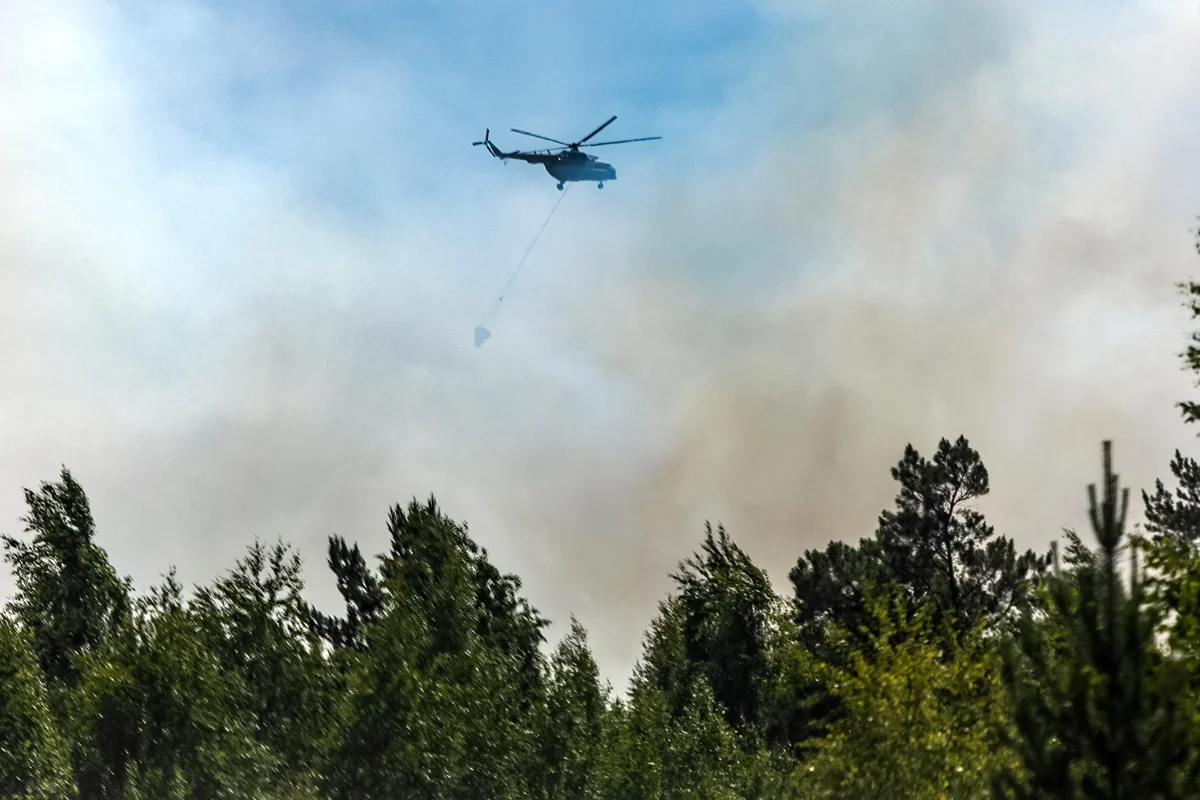
Almost a thousand people and more than a hundred units of equipment were attracted to extinguishing fires in the region. However, it does not do without difficulties: on June 30, when extinguishing a forest fire, the Mi-8 Angara airline helicopter almost crashed, the head of the region Igor Kobzev announced. According to local authorities, the helicopter made a “hard landing” 200 kilometers from the city of Bodaibo. On board were seven specialists of the Aviation Guide and three crew members, they all survived, but the helicopter could not continue the flight. The victims had to send another side. What happened next and whether the victim Mi-8 managed to fix, the governor did not tell.
But he told how the exchange of international experience is going on. At his invitation, the Minister of response to the Emergency Situations of the PRC Van Syansi flew to Irkutsk from Beijing. Kobzev told the Chinese official about the three -level systems for identifying forest fires, which was created in the region (ground, aviation and space monitoring), showed the technique purchased as part of the national project "Ecology", and said that the Chinese was especially interested in UAZ Patriot, designed for radiation and chemical intelligence.
Ural: negative growth
Forest fires are rampant in the Urals. Under the blow were the Sverdlovsk region and Khanty -Mansi Autonomous Okrug. At the same time, in the Sverdlovsk region, the situation is relatively calm, according to the Aviation -Service, in 42 areas there is a special fire regime, but there is no question of an emergency. But in the neighboring Khanty -Mansi Autonomous Okrug, the situation develops unpredictably. On July 19, the emergency regime was introduced in the Soviet district, a day later, the region reached fourth in the area of the burning forest, leaving behind the Khabarovsk and Krasnoyarsk Territory. According to the Aviation -Support, the fight against fire goes manually, since the main foci are in hard -to -reach and remote places.
Krasnodar Territory: The Romantic Flapsed
The south of Russia and the Krasnodar Territory in particular also encounter forest fires. This season, the main episode was the forest fire between the village of Abrau-Durso and the Durso Farm, where several recreation centers burned down. The fire covered 20 hectares of forest and quickly moved towards vacationers, who eventually had to be evacuated - only about 500 people. The Romantic camp site, in the area of which the fire began, completely burned down, two neighboring, “frigate” and “blue wave”, suffered. The Rosleskhoz said that the forest caught fire through the fault of local residents, promised to find and punish the perpetrators.
The forest is chopped - chips fly
A forest fire can flare up due to abandoned cigarette butt, and can be a reaction to climate change. Sometimes a combination of different factors can lead to fire. However, Greenpeace experts and leshoz experts say that the main causes of forest fires are a person’s violation of fire safety rules (42.5% of fires are associated with this phenomenon) and dry thunderstorms, that is, thunder and lightning without rain (they account for 34.5% of all cases). Most often, forests of Yakutia, Transbaikalia, Buryatia and the Amur Region suffer from dry thunderstorms, Rosleskhoz reports. In addition, an important factor in the spread of forest fires can be considered that local authorities are in no hurry to extinguish fire, because, according to the order of the Ministry of Natural Resources of Russia from 2015, a forest fire can not be extinguished if there are no threat to settlements and the cost of extinguishing fires is supposed to be higher than the predicted damage.
Having studied the data of the “forestry” about forest fires over the past five years, you can draw several more conclusions.
Firstly, the situation is affected by how much money is allocated to the region to protect forests and how effectively this money is disposed of. How many huntsuers operate, what technique they have. In the end, it is important how great the area of responsibility is, because the forest and taiga in Siberia are two different situations. Every year, Rosleskhoz publishes ratings in Russian regions, which clearly show where and how things are. On the map you can see where over the past five years the most powerful forest fires raged, where the most effectively controls forestry, in which illegal deforestation flourishes, and where, on the contrary, they actively restore forests.
According to Rosleskhoz, the least effectively forest is controlled by the Forest in Chukotka, Kamchatka, in the Jewish Autonomous Region, the Amur Region, the Khabarovsk Territory, Transbaikalia, Buryatia and Yakutia. It is easy to notice that almost half of the listed regions of the autsiders annually falls into the “burning top”. In Siberia, things are a little better, but in 2023, only three regions received the “average” mark here: Kuzbass, Altai Territory and the Irkutsk region. The remaining regions in the ranking are either not an assessment of “satisfactory” and lower.
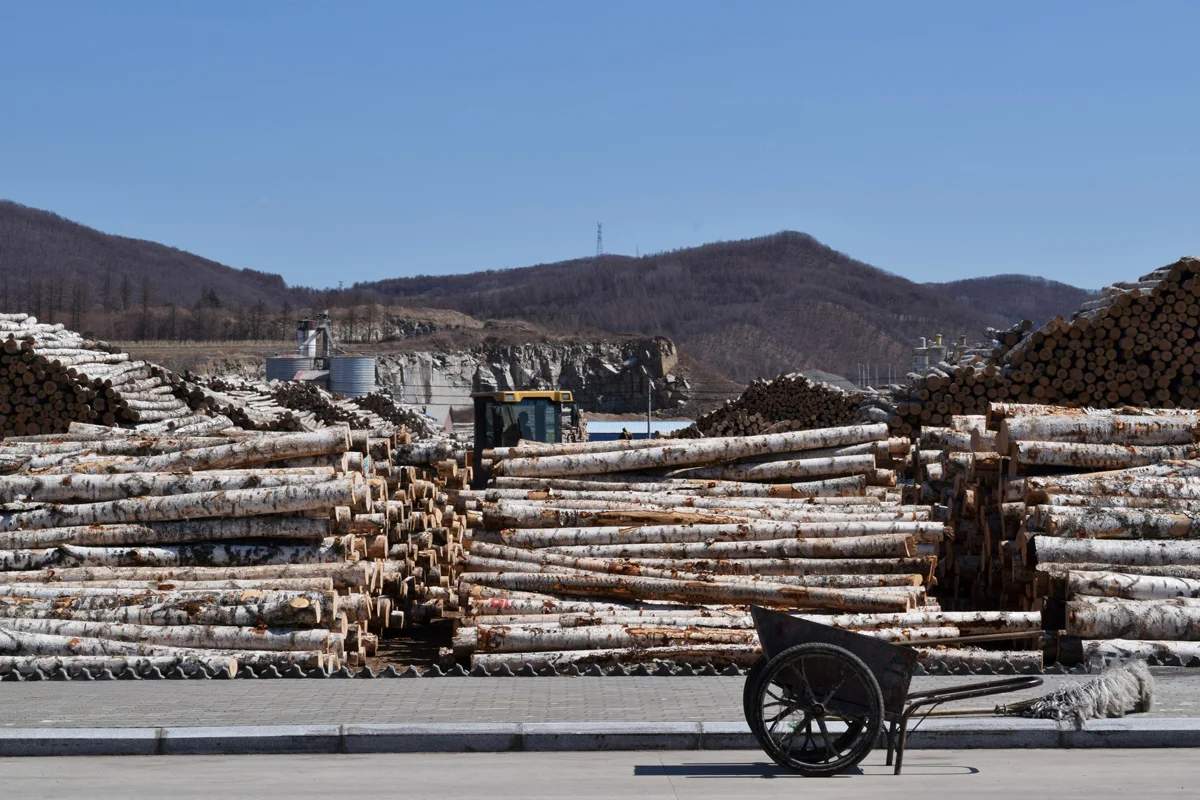
Living in Siberia, you can often hear a joke: if the forest caught fire somewhere, it means that it has already been sold to the Chinese. There is a version that forest fires specially arrange local businessmen to hide illegal cutting down.
In 2019, while as prime minister, Dmitry Medvedev instructed the Prosecutor General’s Office to check if there were forest fires in Siberia intentionally to hide traces of such a cut.
The results of the audit turned out to be contradictory: a week later, the representative of the Prosecutor General’s Office, Alexander Kurenna, told reporters that the department discovered the facts of intentional arson of forests in the Irkutsk region in order to conceal illegal deforestation. Then, in 2019, the Rosleskhoz and the State Duma of the Krasnoyarsk Territory also decided to check this version. As a result, the police found nothing significant in the Krasnoyarsk Territory. The Ministry of Internal Affairs came to the conclusion that the foci of fires were too far away, at a distance of hundreds of kilometers from roads and settlements, which means that you can get there only by air or on foot. According to the ministry, only one case of intentional arson was revealed and this is an “non -prolonged practice”. Following the Ministry of Internal Affairs on September 25, 2019, the acting head of Rosleskhoz, Mikhail Klinov, said that “the version [about intentional arson] did not find confirmation” and recorded - attention! - “There are only five” cases when fires of fires coincided with places where the forest was illegally cut down.
Probably, “black lumberjacks”, noticeing traces with the help of arson, are not the only perpetrators of the annual natural disaster. But at least three checks found that such a practice exists. In addition, if we turn to the Rosleskhoz data on the geography of illegal deforestation, we will see that most of the forest is illegally cut down in the Irkutsk region and the Krasnoyarsk Territory, the most strongly burning out regions of Siberia. In the case of the Far East, there is no such clear correlation, but annually burning Transbaikalia and Buryatia are also stably included in the top regions where unauthorized deforestation is common. At the same time, Yakutia, where forests burn the most, have medium -sized indicators for five years in a row, here they cut less than the forest here than in the neighboring Krasnoyarsk Territory, but more than in Kamchatka.
In 2019, when one of the strongest forest fires raged in Siberia and the Far East, the BBC Russian journalists who spoke with officials and businessmen found that there was another scheme for salary on fires. It works exactly the opposite: enterprising lumberjacks first set fire to the forest, usually as affordable as possible, near roads and cities, and then win the tender for sanitary cutting.
“After their arson, a lower fire is formed. It most often does not destroy wood, but can hit the root system of a tree and damage it. After such a fire, the authorities conduct an examination of these forests. Most often they decide on their cutting. <...> Then the tender, auction, the redemption of the right to cut down this forest begins. And the whole mechanism starts.
They set fire to what is profitable to cut down. It is one thing when you take an array, which is in the distance and the distance of the sortie, you exceed 150-200 km. Another thing is 10–20 km, not far from the roads ",
- Andrei Fartunin from the Association of the Forest Industry of Bashkortostan told the publication.
Enemies of Russia
Of course, arson for the purpose of making a profit is not the main reason for forest fires, but only one of the faces of the problem, both officials and independent experts are unanimously voted . Forests will burn without the help of “black lumberjacks”. So that every next summer does not turn into an environmental disaster, the forest must be guarded and comprehensively studied. To have a whole army of fire fighters, experts, researchers and volunteers, diverse transport, aviation and drones. Without the help of the Russian state, and sometimes contrary to it, the Greenpeace International Ecological Organization, which has been working in Russia since the nineties, tried to solve this problem. The activists of the organization fought with pollution of rivers and air, were the first to talk about climate change, promoted separate collection of garbage and even freed the wands and beluga from the “whale prison” to Primorye.
One of the brightest and most significant Greenpeace projects was the fight against forest fires . Many Greenpisovites, risking their lives, went to Siberia to extinguish the fire. At the same time, the organization’s experts achieved great success in studying environmental problems and finding their solutions. Even the bodies of the Russian authorities that used his recommendations and reports in their work recognized the high level of examination of the Russian Greenpeace. In Karelia, the volunteers managed to stop the cutting of valuable old -growing forests, in the Krasnoyarsk Territory - to prevent illegal cutting down, and in Transbaikalia - to achieve a ban on “preventive burning”. The results of thirty years of work can now be seen on an interactive map. As a result, a lot of projects arose under the Greenpeace patronage, which, according to some activists of the organization, in conjunction could easily replace the work of the whole Ministry of Nature. Greenpeace taught volunteers, technically and financially ensured their work. Thanks to this organization, a unique movement of firearies and volunteers for Russia and the world appeared.
“I liked the atmosphere created by Greenpeace in fire. At their events, I had the feeling that I was in another country. Unlike the Ministry of Emergencies, in our detachments there was no orderly militarized tone, there was human communication.
Greenpeace immediately prepared all volunteers as professionals, because the fires do not care whether you are a newcomer or not. Our groups in large fires differed from public structures to the attitude to business, preparation and equipment. It clung, we felt necessary, ” one of these volunteers who talked with Medusa recalled that time.
Everything changed in the spring of 2023, when Greenpeace suddenly became a threat to the Russian government. On May 19, the Prosecutor General’s Office announced that the organization “poses a threat to the basics of the constitutional system and security of the Russian Federation”, since “intervenes in the internal affairs of the state, interferes with the implementation of infrastructure and energy projects that benefits the country and, of course,“ is engaged in anti -Russian propaganda ”. The organization was recognized as “undesirable”, and many of its activists, including unique specialists, were forced to leave Russia. The decision of the Prosecutor General’s Office killed the organization.
“Greenpeace well managed to“ beat off ”various anti -infroregraduated bills with petitions. Now the last obstacles have been removed - no one else will raise a noise. Those who wanted to put their nose into the reserves and national parks will now go there with their interests, ” the activists say.