
Translated material
Soul under arrest
About the book of Vladimir Bukovsky "And the wind is returning"
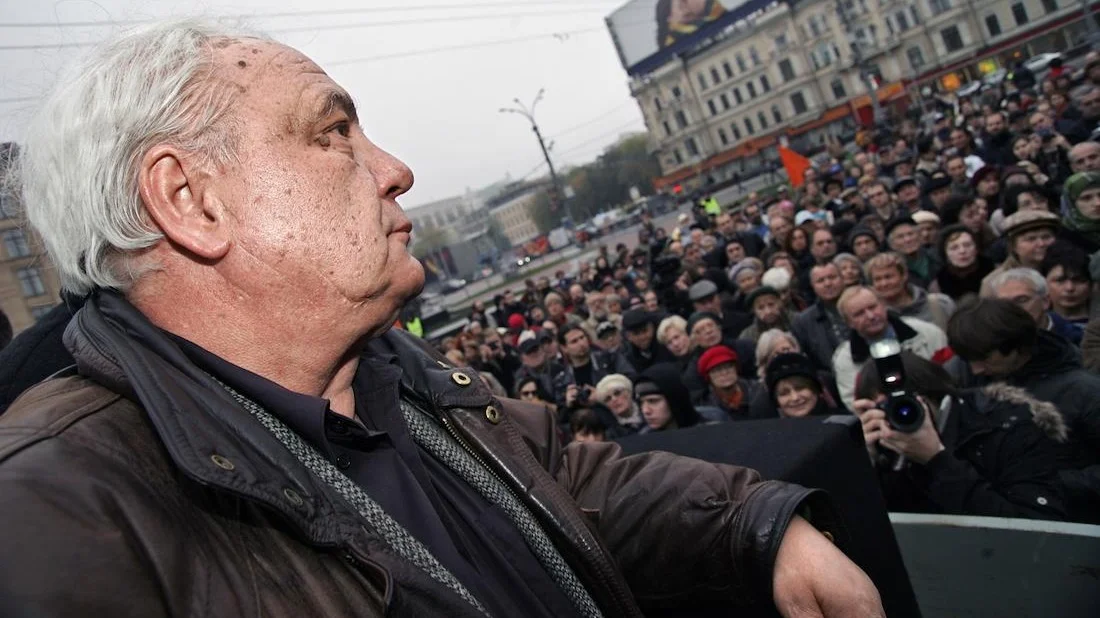
Vladimir Bukovsky. Photo: Andrey Mahonin / Kommersant
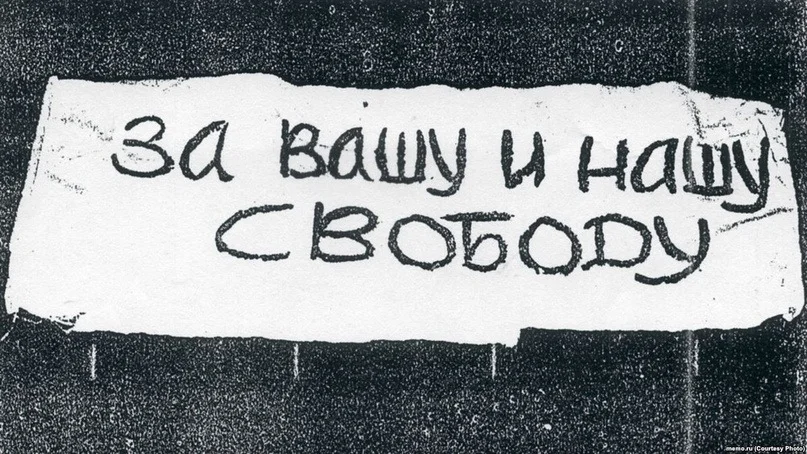
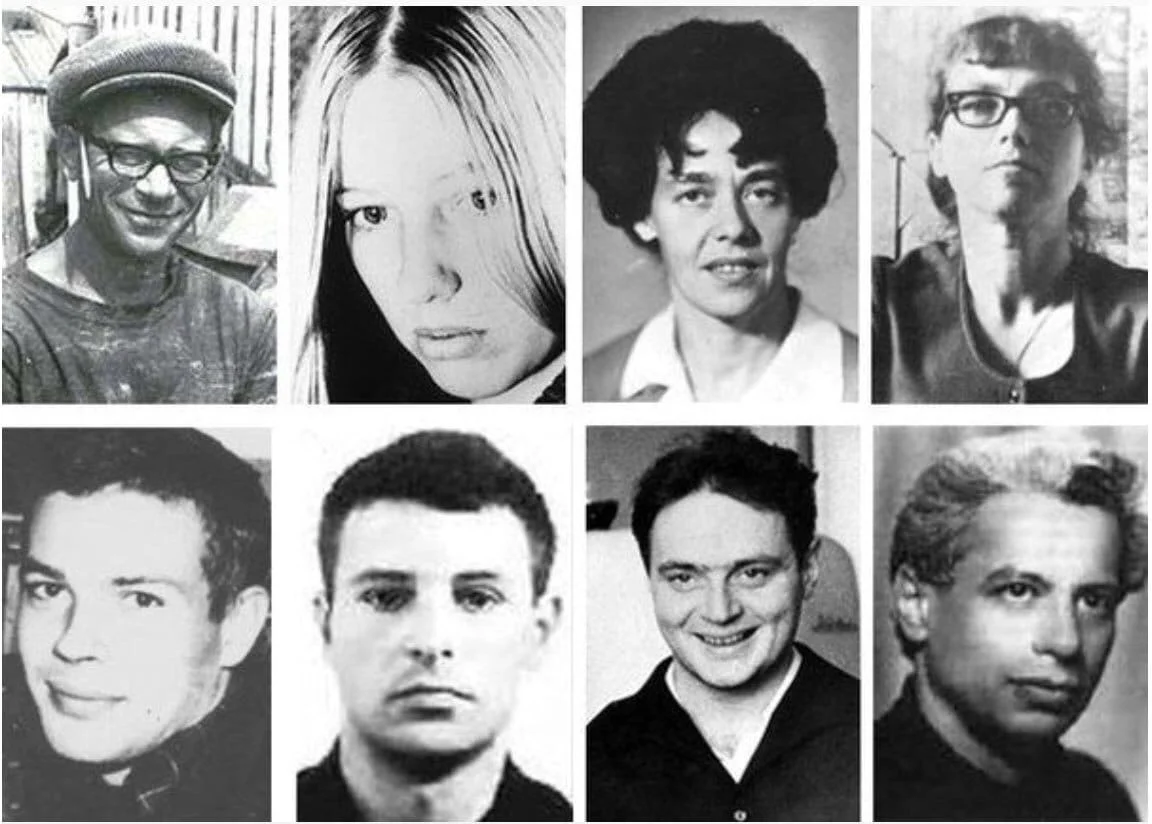
August 25 of the outgoing week is the anniversary of the exit to Red Square of eight dissidents. These eight people are Konstantin Babitsky, Tatyana Baeva, Larisa Bogoraz, Natalya Gorbanevskaya, Vadim Delone, Vladimir Dremluga, Pavel Litvinov, Viktor Finberg - as we recall, opposed the entry of troops into Czechoslovakia and for “ours and your freedom”. When in 2005, Vladimir Kara-Murza* shot a series about Soviet dissidents with a similar name (“They chose freedom”), this exit to the square became one of the main episodes in the film. And a few months ago, Kara-Murza himself, at the post-exchange press conference, often quoting Vladimir Bukovsky, talked about how today's dissidents exist in Russian prisons-and somewhere on Facebook, two photographs staged nearby flashed: Vladimir, showing the Russian passport, and the Black-Bely Bukovsky, showing the Soviet passport. So in children's magazines the task “Find ten differences” usually looks.
Until February 2022, I have, how, I suspect, most Russians had quite definite and quite peaceful plans for life: I was going to write a candidate about the little -studied press of dissidents.
On February, as it turned out, the plans were different: he showed that everything that was supposed to remain on the yellow pages from dusty archival shelves will have to be experienced on his own skin.
What was going to be history was not too unexpected, but still suddenly, became a manual for survival, a textbook on behavior and catechism. And that is why-because the wind returned again and we must somehow cope with this storm warning-we will re-read today the book of Vladimir Bukovsky of the same name, written as memories, and turned out to be a manual of human rights activist and political producer.
“And the wind returns ...” is memoirs about life in conclusion, but not only about it: it is about Soviet activism, and about Bukovsky’s childhood, and about the country in general. To be surprised at the coincidences of “now” and “then” has long been a bad form-and yet when you read the descriptions of the Vladimir colony, torture, methods of interrogation, and even more so the exchange procedures, you can’t do not beat yourself on your knee: these are today's words! These today's words repeat not only the details and not only the general picture, which we know in an interview with the released and in the letters of the sitting-they repeat and formulate the main goal of the Soviet-Russian prison. It turns out that the prison does not encroach on physical freedom and not even to freedom of thought - it encroaches on the soul, to its existence as such.
A prison for a person who has never been in it seems to be an abstract evil - it is clear that everything is bad there, but what exactly is bad, a happy representative of successful life conditions is unlikely to know. And Bukovsky describes - among many others - for example, the situation:
In prison, the distance between the iron rods of the beds was increased. Around the same time, the prisoners were forbidden to keep any printed products in the cell - and the combination of these facts was a terrible torture for them.
The connection between them can only understand the one whose ribs know how a thin mattress falls between the iron rods, under which the newspapers could be placed before - and how these rods dig into the exhausted body. This is not the worst description of prison torture in the book - we can read more terrible in the media. But, in my opinion, this description is the most indicative: the place where they even try to stealthily, where several centimeters between the rods, or the selected 50 grams of bread and 15 grams of fish are of great importance-this place does not strive to simply limit physical freedom, it seeks to completely divide.
We also know about what kind of methods this discontinuation is carried out from the words of today's sidelski - especially from the words of those who spent many hours alone. That was also Bukovsky - and in the book he described what this loneliness costs both the soul and the mind of the sitting. Here, for example, how he read books:
“From constant electric light, the eyelids begin to itch and become inflamed. You read the same phrase dozens of times, but you can’t understand it. With great efforts, you overcome the page, but only you turned it over - you no longer remember the sound. Return back, read twenty, thirty times the same, do not allow yourself to smoke until you master the head, do not allow yourself to think about, dream or be distracted, do not even let yourself go to the toilet - there is nothing more important for you than to fulfill what you have outlined today. And if the next day you don’t remember anything - take it and read again. And if you have finished the book, you can afford one day off, only one, because it begins to weaken in the second memory, you are scattering attention, and you again slowly immerse yourself, go under the water, as if drowning, deeper, deeper, until you start to ring in your ears, and color circles will not swim before your eyes. And it is still unknown whether you will emerge. ”
And yet, according to Bukovsky, it is most difficult to preserve in these conditions not a mind, but a soul.
If a person is exhausted and watches 24 hours a day and feels absolute unknown cruelty, the simplest and most reliable reflex of the soul - to turn off all the internal receptors, generally stop feeling and even more to sympathize.
Bukovsky, according to him, was helped by drawing: he drew the castle with a stump of coal, imagining how his friends gather in this reliable and impregnable castle, how he once let in and warms the frozen and tired traveler from the fireplace. Composition saved his life - both mental and spiritual.
A punitive psychiatry also logically came out of such a penitentiary system - the system of “treatment” of sincerely sick, that is, people with an unexpected conscience and human dignity. But both the psychiatric hospital and the diagnosis of sluggish schizophrenia invented specially for them - all this is not the only one and, probably, not even the main attribute of the then prison. Bukovsky’s book shows that the entire social system as a whole was penitentiary. This system, which sought to control the thought completely, acted exactly the same methods as the prison - only torture were measured not in centimeters between the rods and not in grams of bread, but, conditionally, in the number of Soviet slogans, red flags and portraits of Lenin into a square meter of living space. The state penetrated into all spheres of life: in everyday life, into biology textbooks - and in the marking of a pedestrian transition:
“Not far from our house there was a store where I often had to run for bread and sugar. The store was on the other side of the street, two hundred meters from the intersection, where the transition is indicated. Most people, in order to get to the store without violating the transition rules, had to go these 200 meters to the corner, and then another 200 meters - on the other side to the store. Naturally, everyone strove to cross the street opposite the store without making a hook. But it was here, hiding in an ambush, that the policeman was waiting for them and mercilessly fined them. And, apparently, he received a good income for the state, since no danger - to be fined or to get under the car - could make people go extra 400 meters. Not only we boys, but also adults, even old grandmothers in felt boots and with kirsis purse in the hands of a trot 'fled through this street under the whistle of a policeman. It seems to be easier: allow people to the transition, since it is more convenient for them. No, for decades, in my memory, a policeman stood there, collecting a tribute. <...>
Not to say that this changed the psychology of people or accustomed them to obedience, but everyone turned out to be guilty before the state, anyone could be punished. There was a typical philosophy of order, state power.
Say, allow people to do what they want and what will happen? "
This prison-state system, striving to control everything, did not leave freedom of either physical, mental, nor mental. Naturally, this gave rise to its ways to “bypass blocking” - Bukovsky ranked a Soviet joke to this. Now there are no jokes, as it is easy to notice, is not born - either because folk art has gone in a number and is spent on acceleration of YouTube, or because the state has learned mistakes and slightly adjusted the regime of supervision: now for those who do not want to be interested in politics and live as if nothing was happening, a rather wide neutral strip is left: cafes, cats in the tape and cats in the tape and cats in the tape and cats in the tape and cats in the tape and cats in the tape and cats in the tape and cats in the tape and cats in the tape and cats Entertainment industry. Such tactics noticeably weakens public tension - both the will and the mind, and the human soul does not become more freer, but he may not pay attention to this lack of freedom. But then, and now, an attempt to go beyond the limits of the small world of the family, your home, your interests into the world of politics and global categories like human rights in most cases means the prospect of more tangible restrictions. Now, as then, a person constantly faces a choice of two evils.
The first evil is a step towards citizenship and the betrayal of a family that wishes you long and free years, and to itself - integrity and safety. The second option: a step towards personal interests - and the betrayal of a profession or moral principles.
This choice is more attractive, that in addition to the convincing excuse “He had a family,” has a dozen more no less convincing - and all of them are listed in the Bukovsky’s book. For example: "Why am I, and where are others?" Or: "What can I alone?" (Option: “You won’t change your shoes”). Or: “For the sake of the main one, you should compromise” (this option is loved by theaters, publishers, writers and many cultural figures). Or: "It is necessary to serve the eternal, create enduring values, and the mouse fuss of protests tears away from this service." And one more thing: "We need to keep smart and talented for better times." And finally: "Russia is a country of slaves, nothing will change here."
In general, there are a lot of arguments in favor of choosing the second option - and they are all so convincing that he himself convinces himself to believe in the sincerity of his thoughts. But the fact is that when choosing from two evils, the correct option does not exist at all: both of them lead to the fact that the chosen one is done by the traitor - and loses his inner freedom. And this, perhaps, is the most cunning of all the methods of enslaving the soul that the state uses - not a person is arrested, but his soul.
What choice still needs to be made, Bukovsky does not directly say in his book-but with all possible clarity shows what happens in both cases. And he formulates his personal choice almost literally as Chekhov once did: you need to drop a slave out of himself by drop-of course, hoping that the wind will still change. And do not stop doing this even when the wind returns.
* Entered into the register of "foreign Agents".
** belongs to META prohibited in Russia.
QUOTE:
It is curious that with all the variety of books, research and monographs about socialism - political, economic, sociological, statistical and others - no one guessed to write research on the topic: the soul of a person under socialism. And without such a guide to the labyrinths of the Soviet soul, all other monographs are simply useless - moreover, the object is even more clouded. Ah, how difficult it is, probably, to understand this damn Russia from the outside! A mysterious country, a mysterious Russian soul!Judging by the newspapers, by books, by their films - what else to judge about Soviet life? “They are happy with everyone.” Well, they don’t have political freedoms, multi -partyism, and they are happy - the people and the party are one! After all, they have elections - not elections, the devil knows what it is: one candidate, and there is no one to choose from. And 99.9% participate in the elections, and 99.899% vote “for”. After all, they have a low living standing, they say, they say, there are not enough - but there are no strikes! They say that they are sealed with hunger for camps and prisons without any fault, they don’t let abroad, but you look at all the factories and villages of the rallies: “We unanimously approve of the policy of the party and government! We will answer the care of the party with a new increase in labor productivity! ”
<...>
Well, they, let us, say, boring literature - all about production and about plans, about meetings, but they read, buy books - that means they like it. They also have individual disadvantages - so they themselves recognize and criticize them. There was something before, some unjustified repressions, but now there wasn’t-they figured it out, condemned mistakes, released innocent. And they are still allowed abroad. Here are tourists, and athletes, and artists, and different delegations there - and they are happy with everyone, and come back. Well, it happens, one or two will run away, he won’t return-so, maybe this was bad, but the rest is good, the rest are happy? ..
Ask any Soviet man on the street, good or bad to him. And everyone will answer as written: well, better than in your West. Or maybe it’s really better? <...>
Or here's another explanation: maybe for them this life is better than ours and they are different, special people, they only need such a life, and they do not need our benefits and freedoms?
And these same dissidents are completely confusing. If everything is as bad as they say, such lawlessness and arbitrariness, so why are they still alive, some do not even sit? So, there is some kind of freedom, and some rights? Or is it just inspired and beneficial to the Soviet authorities? Or maybe the CIA is invented? And how many of them, these dissidents? After all, under some kind of petition of protest there were ten people. This is the chickens of laughter - in a country where 250 million.
Well, finally, if they really are really bad for them - why are there no uprisings, mass protests, demonstrations, strikes? And there is no more mass terror either? Well, they will put a person 10-15 per year there - not like in Chile or South Korea. And many, many puzzled questions that have no answer ...