
Translated material
Retreat
Harvard psychologist and author of many bestseller Stephen Pinker is a famous optimist. In his book The Better Angels of Oour Nature (2011) on 800 pages, he proves that the level of cruelty and the amount of violence in human society are reduced. In a recent article, Pinker argues about whether human nature requires to fight.
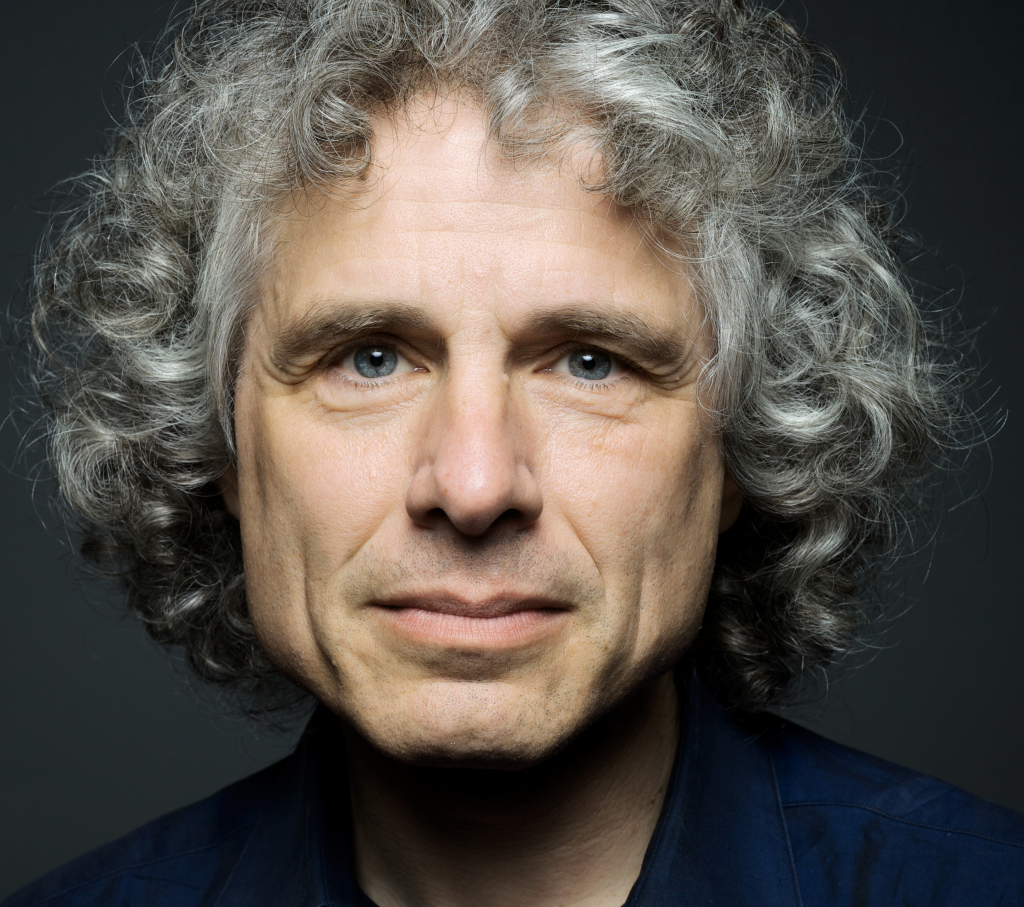
Stephen Pinker (C) Max S. Gerber
It looks like military conflicts are decline. Over the two -thirds of centuries that have passed since the end of World War II, the great powers and developed countries as a whole almost did not encounter each other on the battlefield - this situation has no precedent in history (Holsti 1986; Jervis 1988; Gaddis 1989; Mueller 1989, 2004, 2009, 2009, 2009, 2009, 2009; Keegand 1993; Payne 2004; Contrary to the forecasts of experts, the USA and the USSR, they did not start the third world war, and there were no armed conflicts between the great powers since the end of the Korean war in 1953. After the six hundred -year period, when the countries of Western Europe fought on average twice a year, since 1945 there was not a single war in this region. Moreover, about 40 richest countries of the world were not at all overflowing in armed conflicts. And here is another pleasant surprise: after the end of the Cold War in 1989, any type of military conflicts in the world became less (Human Security Centre 2005; Lacina, Gleditsch, Russett 2006; Human Security Report Project 2008; GLEDSCH 2008; Goldstein 2011; Human Security Report Project 2011, see: Pinker 2011, Ch. Interstate wars are extremely rare; It decreased-after a certain growth in the 1960-1990s-and the number of civil wars. The mortality rate from interstate and civil wars on a global scale is also sharply reduced: from 300 people to 100,000 inhabitants of the planet in the Second World War to almost 30 in the Korean war, a little more than 10 during the war in Vietnam, less than 10 in the 1970-1980s and less than one in the XXI century.
How seriously should you perceive such data? What is this a happy statistical fluctuation, an accidental combination of circumstances, which will certainly come to naught? Maybe we are talking about manipulations with the calculation of the number of wars themselves and their victims? Or are we experiencing a “calm” segment of the inevitable cycle-a lull in front of the storm, like on a break of San Andreas on the eve of a giant earthquake, or dry, where someone is about to throw an unprecedented cigarette butt? No one will give an exact answer to these questions. In this article, I will try to consider them through the prism of human nature.
Many observers are skeptical of the thesis about a decrease in the number and destructiveness of wars, because, according to them, the nature of man has not changed, and we are still characterized by an internal tendency to violence, which has constantly led to armed conflicts. There are sufficient evidence of our innate aggressiveness: we see them in the prevalence of aggression among primates and the presence of violence in all human societies - murders, rape, family violence, riots, attacks, civil strife. Moreover, there is good reason to believe that in the course of the evolution of our type of violence, certain genes, hormones, cerebral circuit and natural selection were pushed by us (for more details, see: Pinker 2011, chap. 2, 8, 9). Since 1945, only two generations of people have reached maturity, and of course, in such a short time, these factors could not acquire a “reverse sign” and reduce to zero the results of several million years of the evolution of hominids. Since our biological impulses have not disappeared to the war, supporters of this concept say, any “peaceful interlyudes” are transient. Those who believe that a decrease in the number of wars is not the result of arithmetic manipulations or a happy combination of circumstances, often reproaches in romanticism, idealism and utopianism. Indeed, some Russians prone to idealism believe that in human nature there are initially absent impulses to violence: they claim that we, people, are “hairless bonobos” (dwarf chimpanzes), filled with oxytocin and endowed with neurons of sympathy, giving us natural peace -loving.
I do not think that we are hairless chimpanzees, but I am convinced that the wars are really decam. Since I have repeatedly showed myself as a supporter of realism in the spirit of Hobbes, to whom it is not for me to say that a decrease in the number of wars is quite compatible with an unromanetic view of human nature. In the book “Clean Liszt” (Pinker 2002), I noted that as a result of natural selection, we acquired, among others, such properties as greed, fear, vengeance, rage, machism, traium and self -deception, which in itself can encourage our appearance to violence. Nevertheless, I will try to prove that this unpleasant look at the nature of man is absolutely compatible with the interpretation of a decrease in the number of wars as a real and possibly stable trend in our history. Here are the four reasons why the decrease in the number of wars is compatible with the realistic concept of human nature:
1. More unexpected things happened to us
A decrease in the level, and sometimes the disappearance of certain categories of violence is often found in the history of mankind. In my book “Good Angel in our nature” (Pinker 2011) and James Payne’s study “The History of Power” (Payne 2004), dozens of examples on this score are given. Here are some of them:
- In anarchist tribal societies, the level of mortality from wars was five times higher than in the first state formations.
- In all ancient civilizations, human sacrifices were regularly practiced, but now they have completely disappeared.
- For the period from the Middle Ages to the 20th century, the number of murders in Europe in relation to the population has decreased by at least 35 times.
- During the humanitarian revolution in the second half of the 18th century, torture was canceled in all major countries of the West as a type of criminal punishment.
- Once in Europe, hundreds of crimes were punished with the death penalty, including insignificant ones, such as the theft of cabbage or a negative review of the royal park. But in the XVIII century, they began to say to the death penalty only for the state treason and especially serious crimes against the individual, and in the 20th century it was canceled in all democratic countries of the West except the United States. And even in America, 17 out of 50 states abandoned the death penalty, and in the rest it (in relation to the population) is used immeasurably less often than in the XVIII century.
- The system of slave labor at one time was legalized around the world. But starting from the 18th century, the “abolitionist wave” swept through the planet, whose final point was the abolition of slavery in Mauritania in 1980.
- During the humanitarian revolution, witch hunt, persecution for religious beliefs, duels, bloody spectacles and debt prisons were also abolished.
- The courts of the Lynch over the African Americans took place in the United States 150 times a year. In the first half of the 20th century, their number decreased to zero.
- bodily punishments of children - both legalized slaps and flogging at school, and slap and slap in the family - in most Western countries have become rare cases, and in several countries of Western Europe are prohibited by law.
-Since the 1970s, the number of murders, rape, cases of domestic violence, mockery of children and crimes on the basis of intolerance has declined sharply (in some cases-by 80%).
Given these actual data on a decrease in the level of violence, the disputes about whether the human nature allows changes in this area, seem meaningless. The question is how this happens.
2. Human nature is multifaceted
People usually reduce the nature of man to a single essence, and then argue about what this essence consists of. Are we evil or noble, do we live according to Rousseau or Hobbes, are we or angels? In accordance with this way, it turns out: if we regularly practice violence, then we are an aggressive appearance, and if we are capable of peace, then pacifists by nature.
However, the human brain is an incredibly complex organ with numerous internal connections that differ in anatomical and chemical terms. Most psychologists believe that human nature is heterogeneous and consists of many intellects, modules, functions, organs, “drives” and other subsystems. Some of these subsystems include us to violence, others interfere with him.
Violence in people is due to at least four categories of motives, each of which is associated with the action of various neurobiological systems:
Operation-violence as a means of achieving the goal, that is, causing harm to a person if he becomes an obstacle to the realization of an actor. Among the examples can be called robbery, rape, conquest, expulsion or genocide of indigenous peoples, as well as the murder or premises of political or economic competitors.
Dominance is an individual motivation for advancement into a public hierarchy and turning into a “leader” and a corresponding group motivation for tribal, ethnic, racial, national and religious domination.
Reverseness is the conviction that a violation of moral standards deserves punishment.
Ideology - collective systems of beliefs distributed by the "viral route", education and coercion and providing for the utopian perspective. Among the examples can be called nationalism, fascism, Nazism, communism and religious radicalism. Since utopia is an ideal world, against those who stand in her way, the use of violence in any volume is permissible, in accordance with the saying, “you cannot cook eggs without breaking eggs”.
These negative impulses are opposed by good, human features:
Self -control - systems of relationships of the frontal lobes of the brain that allow us to anticipate the long -term consequences of our actions and impede our destructive acts.
Sympathy is the ability to feel the pain of another.
Morality is a system of norms and taboos based on the intuitive principles of justice in relation to other people, loyalty to the community, respect for legitimate authorities, maintaining purity and sinlessness. Morality can contribute to the introduction of justice standards and make some actions that are harmful to others. (Unfortunately, it can also become a cause of violence, serving as a substantiation of radical ideologies based on trabalism, puritanism and authoritarianism).
Reason - cognitive processes that give us the ability to objective, detached analysis.
Thus, real acts of violence depend on the interaction of these properties: human nature itself does not doom us to a constant level of violence. In particular, the decision to start a war can be provoked by any combination of factors that contribute to violence. If this decision is not crossed out by the motives that prevent violence, then the person who has adopted it should make an aggressive coalition, spurring the aggressive motives of his compatriots and neutralize peaceful ones. Thus, the transformation of war into reality depends on the construction of a number of psychological processes and neutralizing the restraining influence of other psychological processes distributed through social structures that connect many other people. And there is no reason to expect that the comparative power of these opposite influences should remain unchanged throughout the history of mankind.
3. Conditional components of human nature
Many components of human nature are conditional (subject to the influence of the environment), not hydraulic (homeostatic). The intuitive idea that the pause in the wars cannot be real is often based on the mental model, where the motivation for violence acts as a hydraulic traction. In the best case, it can be discharged or translated into another direction, but this motivation cannot be blocked to infinity. The hydraulic model of human motivation is deeply rooted in our perception of violence. Psychoanalysis, ethology and behaviorism (in the guise of weakening the intensity of attraction) give it “scientificity”; In addition, it fits into the framework of the cybernetic concept of homeostasis, where the feedback chain holds the system in constant balance, counteracting any imbalance. It also corresponds to our subjective experience: a person cannot endlessly do without food, water or sleep, and it is very difficult for him to restrain sexual desire, yawn, sharp urge to sneeze, scratch or celebrate need.
However, it would be a big mistake to consider all human reactions by homeostatic. In many ways, they are adapting, response or conditional in nature: they are determined by combinations of the influence of the environment, cognitive and emotional state. Take the evolutionarily determined fear of heights, snakes, imprisonment, deep water and spiders. Even if your phobia in relation to snakes is innate, you can live life without experiencing this fear - until you meet a real snake. Among other examples, you can give trembling, strong love or jealousy.
The motives leading to violence are also not always homeostatic. There is reason to believe that the impulse is gradually accumulating in us to harm someone, and it must be periodically “discharged”. Violence is associated with a significant risk of injury and even death, if the victim is defended, if she and her relatives decide to take revenge, or if she is provoked to proactive actions. According to the theory of natural selection, the mechanisms of adaptation change when the expected damage from them exceeds the expected benefit. It is not worth expecting a hydraulic call to violence, but it is possible from conditional, reacting to circumstances. Among these circumstances, one can name predation and operation, when it becomes possible to operate the victim without much risk; dominance, when the male ego of the individual is unexpectedly called into question before an important audience for him; Reverseness-the desire to punish someone and and thereby ultimately prevent insults or physical damage; Fury, when someone, who has for a long time threatened, suddenly finds himself in a vulnerable position. If these circumstances do not appear - for example, if a person leads an ordered, “bourgeois” life, not faced with serious threats and insults, any tendency to react to them will doze off, like fear of poisonous snakes. The same sensitivity to the changeable conditions of the environment can, under the corresponding combination of circumstances, prevent the political leaders from experiencing an impulse to involve their countries in the war.
4. Cognition - open generative system
Among the various psychological factors that can keep us from violence, one stands out: a cognitive apparatus that allows a person to think reasonably. Reason is a combinatorial system that can give rise to a gigantic amount of clear thoughts. Just as outs of tens of thousands of words in our vocabulary, the rules of the syntax are component by trillions of sentences, the cognitive process collects an even greater number of concepts from our mental repertoire in the immeasurably huge number of coherent thoughts (Pinker 1994; Pinker 1997; Pinker 1999). In this space, beliefs, history, religion, ideology, superstitions, as well as intuitive and formal theories that arise as a result of our thoughts and distributed using the language in our social networks are being adjusted, revised and combined. In the presence of proper social infrastructure - literacy, openness of discussions, mobility of people and ideas, general commitment to logical sequence and testing with experience - from this “noise” scientific discoveries, deep mathematical truths and useful inventions are born.
Just as our species, thanks to its cognitive potential, defeated the ulcers of Mora and Hunger, it is able to apply these abilities to curb the ulcers of wars. In the end, although shaking the fruits of military success is a powerful temptation, sooner or later people cannot but realize that over time the winners and defeated are changing places, and therefore it will be better for everyone if you can somehow agree to abandon the weapon simultaneously. The problem is how to force another to lower the weapon at the same time as you - after all, pacifism unilaterally leaves the country unprotected from aggression of still warlike neighbors.
There is no need to have a rich imagination to assume: the ingenuity and experience of mankind is gradually connecting to solving this problem, as at one time they pushed hunger and illness step by step. Here are some fruits of human knowledge, eliminating incentives for the war among leaders and peoples:
- The state, curbing the temptation of operational violence, since criminal punishment naughts the expected benefit from it. This, in turn, weakens the potential victim of temptation to deliver a preventive blow to potential aggressors, behave belligerently in order to keep them from the attack or avenge it.
— Ограничение полномочий государства, в том числе за счет демократического механизма, не позволяет властям допускать в отношении граждан больше насилия, чем необходимо для предотвращения преступлений.
— Инфраструктура коммерции, благодаря которой покупка вещей обходится дешевле, чем грабеж, а другие люди становятся ценнее живыми, чем мертвыми.
— Международное сообщество, способное пропагандировать нормы ненасильственного сотрудничества, представляющие собой более масштабные аналоги тех норм, что позволяют отдельным людям уживаться в быту и на работе.
— Межгосударственные организации, поощряющие коммерцию, разрешающие споры, разделяющие воюющие стороны, предотвращающие нарушения и карающие агрессию.
— Дозированная реакция на агрессию, включающая экономические санкции, международную изоляцию, символические декларации, тактику ненасильственного сопротивления и пропорциональные контрудары — в отличие от полномасштабного возмездия.
— Шаги по примирению — церемонии, памятники, комиссии по установлению исторической истины и другие официальные действия, подкрепляющие компромиссы между бывшими врагами, снижая у них импульсивное желание расквитаться по всем счетам.
— Гуманистические контридеологические принципы — концепции прав человека, братства людей, распространение сочувствия и осуждение войны, способные конкурировать на рынке идей с национализмом, милитаризмом, реваншизмом и утопическими идеологиями.
Эти и иные когнитивные инструменты, судя по всему, снижают вероятность того, что постоянные трения, характерные для взаимодействия между людьми, перерастут в военные конфликты (Russett, Oneal 2001; Long, Brecke 2003; Mueller 2004; Mueller 2010; Gleditsch 2008; Goldstein 2011; Human Security Report Project 2011). Многие из этих плодов человеческого разума фигурируют в теориях «либерального» или «кантианского» мира, и упоминание об этом мыслителе эпохи Просвещения здесь вполне уместно. Подобно другим столпам политической теории эпохи разума и Просвещения — например, Локку, Юму и Спинозе, — Кант размышлял и над благоприятными условиями для ненасилия, и над комбинаторными механизмами познания. Это сочетание интереса к политике и психологии, на мой взгляд, отнюдь не случайно.
Conclusion
Можно ли считать «убыль» войн устойчивым изменением в состоянии человека, а не временным затишьем или «капризом» статистики, покажет только время. Надеюсь, однако, что мне удалось устранить хотя бы один источник скептического отношения к реальности этого феномена: интуитивное представление о том, что склонность к насилию, заложенная в человеческой природе, делает эту «убыль» невозможной. Речь идет не только о том, что снижение уровня насилия несомненно уже происходило в истории человечества, но и о том, что оно вполне совместимо с несентиментальным взглядом на несовершенного человека. Современная концепция человеческой природы, основанная на когнитивной науке и эволюционной психологии, говорит о том, что наш вид, при всех своих изъянах, обладает способностью обуздать собственную склонность к жестокости. Человеческая природа не сводится к одному качеству или импульсу: это сложная система, состоящая из многих элементов и включающая механизмы, как способствующие насилию, так и препятствующие ему. Более того, механизмы, порождающие насилие, не являются непреодолимыми гидравлическими силами, а представляют собой условные реакции на конкретные обстоятельства, способные со временем меняться.
Один из механизмов, препятствующих насилию, — это открытая комбинаторная система, способная рождать бесконечное число идей. И среди плодов этих идей есть институты, снижающие вероятность войны.
Literature
Gaddis 1989
Gaddis JL The Long Peace. New York: Oxford University Press, 1989.
Gat 2006
Gat A. War in Human Civilization. Oxford: Oxford University Press, 2006.
Gleditsch 2008
Gleditsch NP The Liberal Moment Fifteen Years On // International Studies Quarterly. 2008. Vol. 52. № 4. P. 691–712.
Goldstein 2011
Goldstein JS Winning the War on War. New York: Dutton, 2011.
Holsti 1986
Holsti KJ The Horsemen of the Apocalypse // International Studies Quarterly. 1986. Vol. 30. № 4. P. 355–372.
Howard 1991
Howard M. The Lessons of History. New Haven, CT: Yale University Press, 1991.
Human Security Centre 2005
Human Security Report 2005. New York: Oxford University Press, 2005.
Human Security Report Project 2007
Human Security Brief 2007. Vancouver, BC: HSRP, 2007.
Human Security Report Project 2011
Human Security Report 2009/2010. New York: Human Security Report Project, 2011.
Jervis 1988
Jervis R. The Political Effects of Nuclear Weapons: A Comment // International Security. 1988. Vol. 13. № 2. P. 80–90.
Keegan 1993
Keegan J. A History of Warfare. New York: Vintage, 1993.
Lacina, Gleditsch, Russett 2006
Lacina B., Gleditsch NP, Russett B. The Declining Risk of Death in Battle // International Studies Quarterly. 2006. Vol. 50. № 3. P. 673–680.
Long, Brecke 2003
Long WJ, Brecke P. War and Reconciliation. Cambridge, MA: MIT Press, 2003.
Luard 1988
Luard E. The Blunted Sword. New York: New Amsterdam Books, 1988.
Mueller 1989
Mueller J. Retreat from Doomsday. New York: Basic Books, 1989.
Mueller 2004
Mueller J. The Remnants of War. Ithaca, NY: Cornell University Press, 2004.
Mueller 2009
Mueller J. War Has Almost Ceased to Exist // Political Science Quarterly. 2009. Vol. 124. № 2. P. 297–321.
Mueller 2010
Mueller J. Capitalism, Peace, and the Historical Movement of Ideas // International Interactions. 2010. Vol. 36. № 2. P. 169–184.
Payne 2004
Payne JL A History of Force. Sandpoint, ID: Lytton, 2004.
Pinker 1994
Pinker S. The Language Instinct. New York: HarperCollins, 1994.
Pinker 1997
Pinker S. How the Mind Works. New York: Norton, 1997.
Pinker 1999
Pinker S. Words and Rules. New York: HarperCollins, 1999.
Pinker 2002
Pinker S. The Blank Slate. New York: Viking, 2002.
Pinker 2011
Pinker S. The Better Angels of Our Nature. New York: Viking, 2011.
Ray 1989
Ray JL The Abolition of Slavery and the End of International War // International Organization. 1989. Vol. 43. № 3. P. 405–439.
Russett, Oneal 2001
Russett B., Oneal J. Triangulating Peace. New York: Norton, 2001.
Впервые: The Decline of War and Conceptions of Human Nature // Peace, Love, & Liberty: War Is Not Inevitable / Ed. by TG Palmer. Ottawa, Ill.: Jameson Books, Inc., 2014.