
Translated material
The Indians of the Kraiova Army
How Poland came up with red western
Indians in the USSR were popular. Soviet schoolchildren were read out by the books of Fenimore Cooper or the “red westerns” of Polish production. The literary critic Natalia Kurchatova tells the story of the most famous Polish Indian, Stanislav Sumplatovich.The theme of the picturesque life and struggle of the North American Indians with the colonialists, generously represented in literature and cinema, partially overshadowed and even supplanted in the minds of people of European civilization all other native topics: Iroquois, Mogikans and Khomchi became representatives of various archaic cultures - from the Aborigines of Australia to numerous peoples of the Black Continent and the Black Contin Siberian Aborigines, in the face of a narrowly understood civilization. Moreover, such a substitution began to occur both long before and in addition to Hollywood by the efforts of writers like Henry Longfello or Fenimore Cooper, and in the twentieth century for children and adolescents from the USSR and Eastern European countries, the whole and peculiar world of Red Western was created in its own way.
It is interesting that representatives of peoples with their own rich experience in the struggle for independence played the main role in its appearance: from the “main film indoor of the Warsaw Treaty countries”, Yugoslav Goiko Mitich, to the Polish Shauni, the Polish Shauni, and the somewhat less popular prose writer Alfred Shlylya, also a native of Poland.
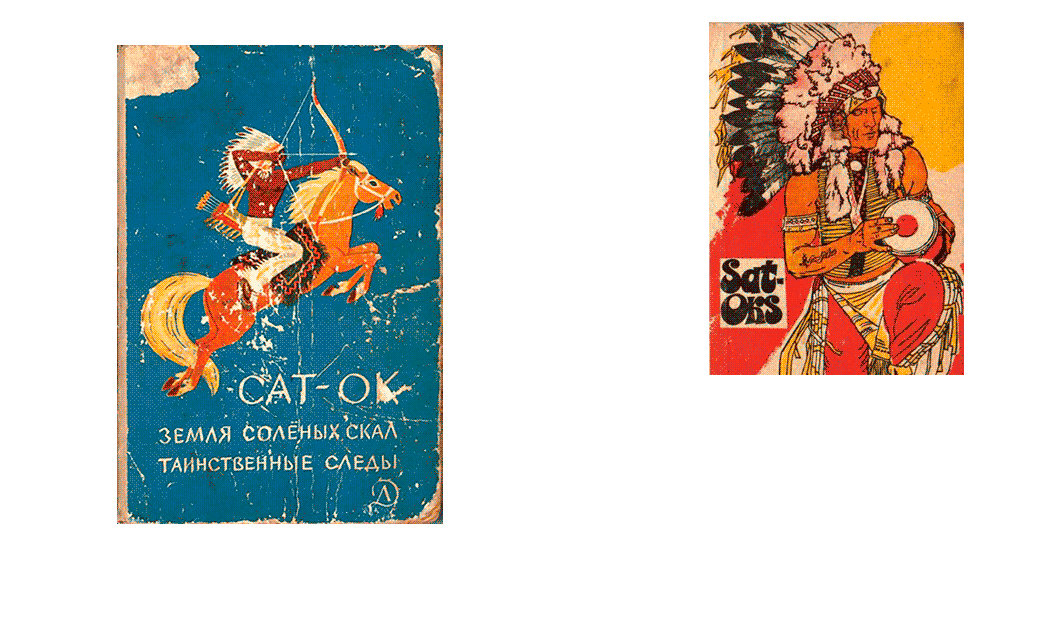
The popularization of this curious phenomenon of Indian literature with Polish roots in the USSR was facilitated not only by the translations of the “lands of salty rocks” of Sat-Oka or the Shklyarsky “golden mountains” (in collaboration with his wife Christina) about the Dakot Indians, but also by Bayopik Nikolai Vnukov “Listen to the Feature” about life about life about life about life about life about life about life about life about life about life about life about life about life about life about life about life about life Sat-Oka, on the one hand, is not inferior in the dignity of the creativity of the protagonist, on the other-he secured one of the outstanding literary hoaxes of the twentieth century in the minds of the army of readers.
It was from the book of Vnukov that the majority of Soviet schoolchildren learned the story of an amazing person: Satok, or a long feather, the son of an Indian leader, grew up in the forests of Canada, then got to the ground of his mother-in Poland, Gestapo was arrested during the war, became a hero of resistance, and then the author of wonderful children's books. And now, the reprints of the Indian novels of Sat-Oka and its biography are scattered instantly, and the parental forums and books of book lovers are full of enthusiastic reviews.
Indian in captivity Gestapo
Sat-ok translated from the language of Shauni means "long feather." Under the cover of a volume with the preface of Leo Kassil - two small stories: “Earth of salty rocks” and “mysterious traces”. Together with their heroes, the Soviet schoolboy traveled from the child to the “Young Wolf” from the Mungikons-Sit camp. And after the harsh initiation at the Tanu-Tukau festival, he became a hunter and a warrior, ready to protect his native land.
Or maybe you are not a Soviet schoolboy, but a student of a boarding school in anxious pre -war Poland, a country that, after several centuries, has gained independence that powerful neighbors sleep and see? In addition, do you feel left, almost forgotten, mom visits you occasionally, always busy with her business? And you are also dreamy and have already swallowed the “Song of Gayavat” and many other similar books - and simply everything that was found in the library of the boarding school. And instead of the walls of the official establishment, the endless forests of North America, mirror lakes and fast rivers, from which trout jump, as well as your Indian family - father (he, of course, a great leader), mother (his beloved wife), the courageous older brother and the best friend and the best friend with which you have already passed with silver lightning. There are many hunting trails and whose name is a frantic lynx!
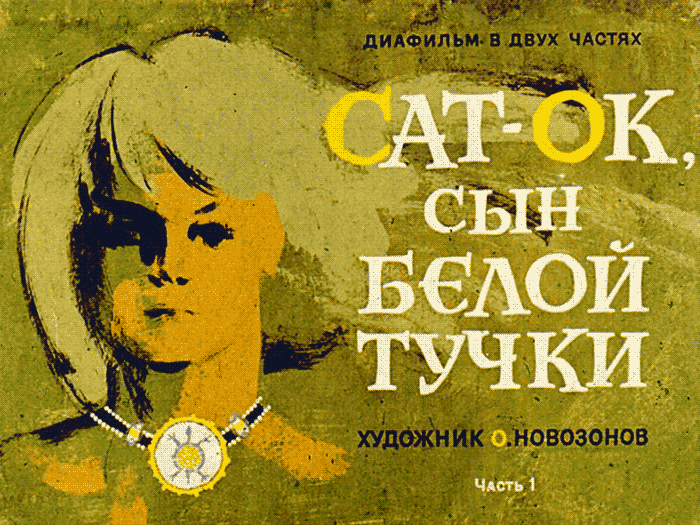
“Listen to the song of feathers”-this is the name of Nikolai Vnukov’s book about Sat-Oka, where the chapters on the fight against the Nazis in the Polish partisan detachment alternate with the episodes of Indian childhood and youth. In the Borkovitsky forests, under the Engeyuv, Sventokshi Voivodeship, South Poland, a strange lad frates, who drives a horse without a saddle, a machine gun prefers onions and arrows, and in the forest feels at home. The comrades in arms call him who is stem, some of the Cossack-for amazing riding skills, but he calls himself a satt from the land of Tolandi behind big salt water. How did the natural Indian hit the land of Poland, and even in such a dramatic time? Why does he have several names? In the end, why did his blond hair, according to the custom of the tribe, who were released to the shoulders, which in the dungeons of the Gestapo, pulled out the roots with the root of whole strands, which is why the comrades had to be laid by the Sat-oka sharpened spoon?
By children's consciousness, this whole amazing story with many unknown people was perceived with enthusiasm, horror and full faith. Only many years later, having become interested in a hero who randomly determined something at the very beginning of your life, you will learn that Vnukov’s excellently written book contains at least one serious untruth-a partisan detachment in which Sat-Ook fought did not belong to the proprietary and subsequently pro-Soviet guard, but to the Kraiova army, which obeyed the Polish government in the USSR and to the USSR and to the USSR She treated with wary hostility - however, having her own grounds. Moreover, like many participants in the “nationalist underground”, the quotation marks here are quite arbitrary, since the Krai army never hid his course and even produced ethnic cleansing of the Ukrainian population in response to the atrocities of the Bandera-Sat, after the victory, was repressed and spent several years already as a prisoner in socialist Poland, even the revolutionary biography of his mother did not help him. But where one lie, stretch, artistic fiction, there is, perhaps, the second and the third. Let's try to start from the beginning - that is, from the moment when Stanislav Suplatovich, the young subject of the kingdom of the Polish Russian Empire, is accused of storing forbidden literature and an encroachment on changing the existing system and sentenced to distant reference.
Stanislav, or White Cloud
“... Stanislav stopped on the shore of a frozen stream. The snow continued to blame large flakes, falling asleep the whole world. Nothing was visible ten steps. On a muddy gray background, snowflakes flashed with white dots. Sometimes, instead of falling down, they flew up, picked up by gusts of wind. Thousands of needles tingled their face. The skin on the cheeks was pulled away from frosty heat. She no longer felt her fingers on her feet ... ” - this is how Nikolai grandchildren describes the end of Stanislava Suplatovich’s journey through the north of the American continent and the beginning of her life in the Shauni tribe. But how was the fragile European one among the Canadian taiga, thousands of kilometers from the house?
The mother of Sat-Oka was born in the old town of Kelz at the foot of the Svenoksky mountains (the mountains of the Holy Cross), in Central Poland, around 1880. And Shauni met her wife from the tribe shortly before her thirty years in the forests of Canada, on the banks of the Great Bear Lake.
Little is known about the life of Stanislava Suplatovich before the arrest; We read by Nikolai Vnukov that Stanislav served as a teacher of Russian and Polish literature in the Celetsky female gymnasium, and also consisted of SCPIL-the social democracy of the Kingdom of Poland and Lithuania, the prominent figures of which were Rosa Luxembourg and Felix Dzerzhinsky. The party advocated the overthrow of tsarism and the establishment of political and economic freedoms, including the freedom of Poland from the power of the Russian Empire, and was quite radical-with the beginning of the 1905 revolution, terror began as a “tactical means”, and in 1906 joined the RSDLP on the rights of an independent organization.
At the beginning of 1906, Stanislav was arrested, during the search, the gendarmes found a small library of prohibited Marxist literature from a young teacher. “Refusal of cooperation with the investigation,” as they would say now, as well as the causing behavior in the process that took place in Warsaw, Stanislav made a protective speech that was considered propaganda, they aggravated the sentence, and the twenty -six -year -old girl was sent to the eternal settlement to Chukotka.
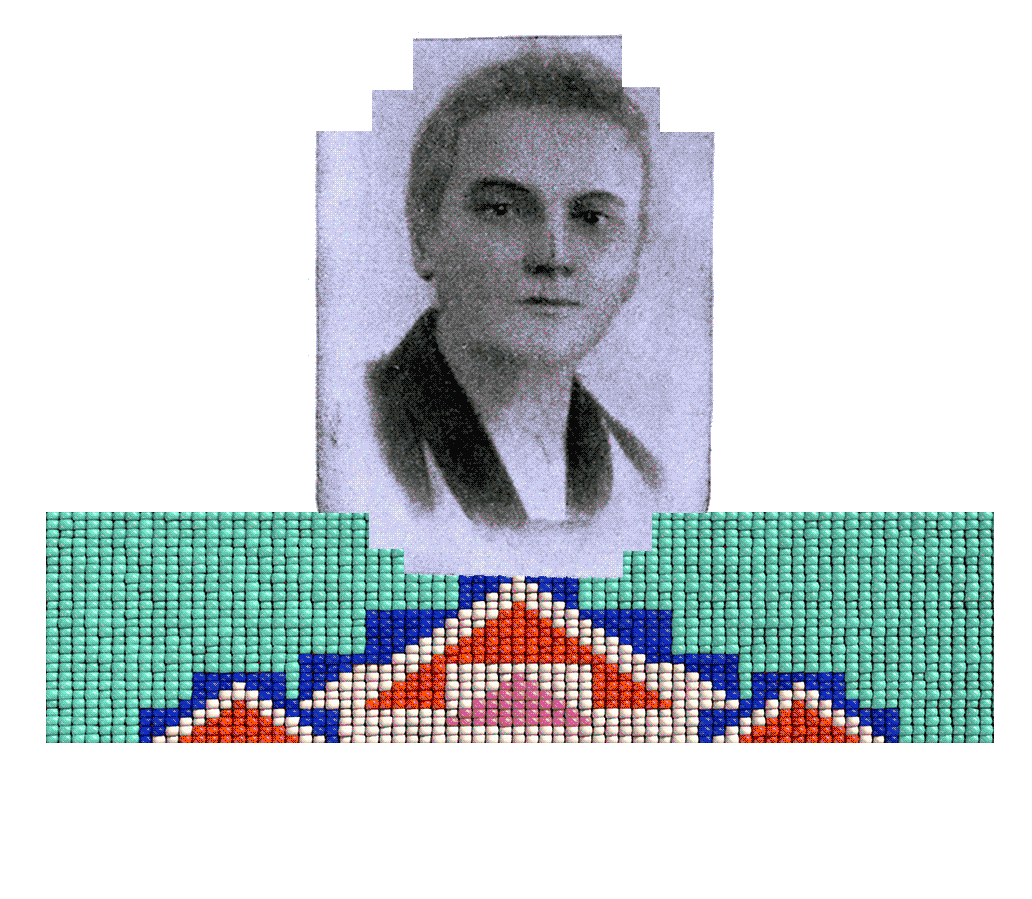 The alleged portrait of Stanislava Sulpatovich
As a settlement in all sources, the village of Lavrenty - the Chukchi fishing village on the southern shore of the Lavrenty Bay (not to be confused with the bay of St. Lawrence, in Canada). The name was given by the legendary captain James Cook, whose ship in 1778 entered the bay on the day of the celebration of this saint. The settlement of Stanislava in the village of Lavrenty is the first point of doubt for skeptics, because according to the generally accepted history, the settlement was founded ... in 1927, when the Soviet authorities opened the Chukchi cultural base here. Doubt? Yes. However, with one reservation - it would be strange to start the cultural base from scratch; So in the history of the village of Lavrenty it says: it is based on the territory of several small fishing villages.
And even here, literally on the edge of the Earth, a young woman finds her occupation - she begins to teach Chukchi children the Russian language and arithmetic. The board is the skin of the seals, with chalk - burnt sticks, instead of notebooks - pieces of hare skins. And Stanislav, unexpectedly finds a way here, close to her dreams of a fair structure of society, is a kind of primitive communism that does not know the concepts of “your” and “mine”. And bitterly notes how, under the influence of Russian, American and Norwegian industrialists, greed, illnesses, as well as a scourge of the indigenous peoples, alcohol penetrate this harsh prehistoric paradise. But most of all the proud and active Polish oppresses the consciousness that she is in prison - even if this dungeon has no walls and gratings, as well as isolation from comrades and revolutionary affairs. And soon she decides to run from the place of exile.
The shoots of “political” from the exile at the beginning of the 20th century were a daring enterprise, but quite traditional - throughout Siberia there were communes and artels of mutual assistance, numerous atonsense and shelters, even a passport bureau, which was in the hands of the Mensheviks and supplied the partners in fake documents, acted in Irkutsk at one time. The revolutionaries fled in one in groups: Inessa Armand managed to slip away from Mezen, Leo Trotsky fled from exile twice, both times pretending to the patients and leaving his scarecrow in bed instead, and Stalin managed to crank up this focus as much as five times.
True, in the case of Stanislava Suplatovich, the situation was complicated by the fact that on the edge of the geography, where it was abandoned, it seemed almost impossible to contact his comrades. Therefore, there was only one way out - to resort to the help of Aborigines. Stanislav knew that the Chukchi often move through the Bering Strait and purchase products and cartridges in American factories. So the direction of the escape was chosen - to the American continent, where she hoped to get to a large city, get into contact with local socialists and from there to sail on a steamer to Europe. The plan seems completely crazy, but probably nothing more than the life choice of a young beautiful woman - to go to the revolution, and then into an indefinite link for your beliefs.
A certain question among researchers raises the very opportunity to move through the Bering Strait on the ice. The fact is that despite the extremely harsh polar winters, the ice in the strait is rarely installed from and to: a strong current now and then hacks it, forming the areas of the shaking Kroshev, or even the spaces of open water, which, however, quickly fetters the burning frost, turning into black nilas - an ice, which cannot be skiing or sledges. However, in the recent period, the Bering Strait of the Strait was recorded in the winter-father and son of Shparo in 1998, and then the British Karl Bushby and American Dmitry Kifer in 2006, who were even fined for violation of the Russian border, as they missed the border control point in the Providence village. It can be assumed that the indigenous inhabitants of these places committed by modern travelers also made.
The Stanislava route ran through Bering Strait and the islands of Diomid, between which the line of dates changes - the Russian route Ratmanov and the American Kruzenshtern on Alaska, then to the Koyukuk River and along it to the Yukon Fort, then along the Yukon River to the Canadian border. Considering that the ultimate goal was at first the Port Princess Rupert on the Coast of the Pacific Ocean, Stanislav or its conductors from the Indian tribe of the Tlinks were greatly taken to the northeast. One way or another, by the beginning of 1908, after almost a year of the journey from the Bay of Lavrenty, Stanislav was in the vicinity of the Mackenzie River. One, left by the latter Indian guides, either by helplessness, or by harsh local laws prohibiting members of one tribe to enter the hunting area of another. There she met her Shauni, or, as the Sat-Oka said,-Shevanzov, a small nomadic tribe of the last Indian resistance, who limited themselves in contacts with white conquerors and hiding from them for many years in the forests of Canada, not wanting to go back to reservation.

Another riddle arises here: at first glance, it is completely incomprehensible how Shawnee (Shawnee) turned out to be in the north of Canada. This mighty tribe in time immemorial lived on the eastern coast and the Middle West of the current USA, under the pressure of the colonialists, migrated further to the West and became one of the tribes of the great plains, who were also called the Indians-centavles for perfectly mastered riding and successfully used these skills in wars with pale-faced ones. The legendary leader of Shauni was Tekums, or a falling star, which united different tribes at the time of the Anglo-American wars of the beginning of the 19th century; Sat-oh calls him his great-grandfather. By the beginning of the century, XX Shauni were defeated and, together with the majority of the Indian population of the East of the United States, were resettled in Oklahom, where three “federal” groups of this people with a total number of no more than fourteen thousand people have been registered to this day. Where did the small Shani tribe in Canada come from at a time when the Indian issue was closed throughout the territory of the North American continent - by reservation or unfriendly assimilation?
So, in the winter of 1908, the tribal council accepts a white woman lying unconscious in the typy of a young widow of Va-Pi-Tsi, like her unlimited guest. Shauni try not to have any contacts with white, with the exception of inevitable skirmishes with people of Vap-Nap-Ao-a white snake, the cruel sergeant of the royal horse and the character of the books of Sat-Oka. It seems that Stanislav Suplatovich, after all the ordeal, ran from one imprisonment to another: from the village of Chukchi on the banks of the ice bay to the Shauni forest camp on the banks of the Great Bear Lake, from where there is no road to the princes, or even for the ocean, to his native Poland. But for some reason, this does not oppress her at all, moreover-she finally feels in her place, in the community of spontaneous primitive communists, who share all the prey according to his needs, not forgetting the old people, widows and orphans, and also conduct a constant struggle with the world of Chistogan, including the power of weapons. Soon Stanislav Suplatovich receives the Indian name Ta-va-a white cloud, and then the first skin of Grisli, a huge gray bear. This is not a simple gift, it is a gift of love, and presented it (so far-secretly) by Leo-Karko-Oin-Maa himself, a high eagle, a harsh leader of a small tribe.
“... a warrior who comes out alone to battle with a gray bear and brings the skin to a woman’s typi is considered the groom of this woman if she accepts a gift. You accepted the gift of love, so. Did you know this custom? " In the time, the time due to chaste courtship is included in the typion of a high eagle, becomes his wife. They have three children-the son of Tanto, the daughter of Tinaget and the youngest, Sat-oh. He was born in 1920, his mother at that time is about forty years old, but she is still wonderful.
Behind the big salt water
Around 1936, Sat-Ok, his brother Tanto and the scumbag of a frantic lynx meet on the hunt of three strangers who entered into a dangerous battle with Grisli, one of them turns out to be a Polish immigrant in Canada named Andrzej. The mother of Sat-Oka spends a lot of time in conversations with a compatriot, slowly recalling her native language, and she also finds out that the dream of her youth came true-Poland gained independence. With the permission of the leader of the tribe and the father of the SAT-OK family under the name Stanislav SuPlatovich and his mother go to Poland on the eve of World War II.
The further story looks like this: upon the arrival of Stanislav, he settles in his hometown and gives his son to a boarding school for teaching the Polish language. After at least a year of stay in the boarding school, documented, Sat-OK is settled to work by mail, where it comes closer to the circle of communist youth. Сама пани Суплатович чувствует разочарование в польских реалиях, далеких от ее идеалов справедливого устройства общества, и вскоре входит в контакт с социалистами. А когда в 1939-м немецко-фашистские войска оккупируют Кельце, она устраивает в квартире, которую снимает вместе с сыном, тайник за фальшивой стенкой, где прячет преследуемых новым режимом сограждан-евреев.
Этот кусок жизни Станиславы и ее сына выглядит настолько невероятно для гостей из Канады, которых в индейских лесах ожидает семья, что Николай Внуков в своей биографической книге снова смешивает карты и поселяет Станиславу в гостиницу, а основанием для ее ареста называет купленные в подарок Высокому Орлу и Танто бельгийские ружья, а также давнее дело пани Суплатович, на основании которого она должна находиться в бессрочной ссылке.
Как бы то ни было, мать и сын оказываются в руках нацистов; Станислав-Сат-Ок называется индейцем, и его как «человека нечистой расы» отправляют в Освенцим. По дороге ему вместе с товарищем, поляком Яном Косовским, удается бежать: они выламывают несколько досок из пола теплушки и соскакивают с поезда на полном ходу. Так он оказывается в Борковицких лесах, в отряде (так у Внукова) капитана Красной Армии Савелия Францевича Лесниковского по прозвищу «капитан Ленька». И вот здесь в противоречие с версией биографа вступают не только здравый смысл, но и история с географией. Дело в том, что Сат-Ок, или Станислав Суплатович, был арестован в Кельце в 1940-м, скорее всего в том же году (фашисты в таких зловещих делах обычно времени не теряли) отправлен в Освенцим, находящийся на юго-западе от Кельце, в районе города Енджеюв бежал и оказался в партизанских лесах. Савелий же Лесниковский попал в окружение в августе 1941-го, а его партизанский отряд им. Чапаева действовал в Житомирской области, то есть почти в семистах километрах от Енджеюва, на территории Украины. И даже если предположить, что Лесниковский имел какие-то контакты с польским сопротивлением и Гвардией Людовой, подчиняться ее командирам он никак не мог, так как подчинялся, вообще говоря, разведотделу Первого Украинского фронта.
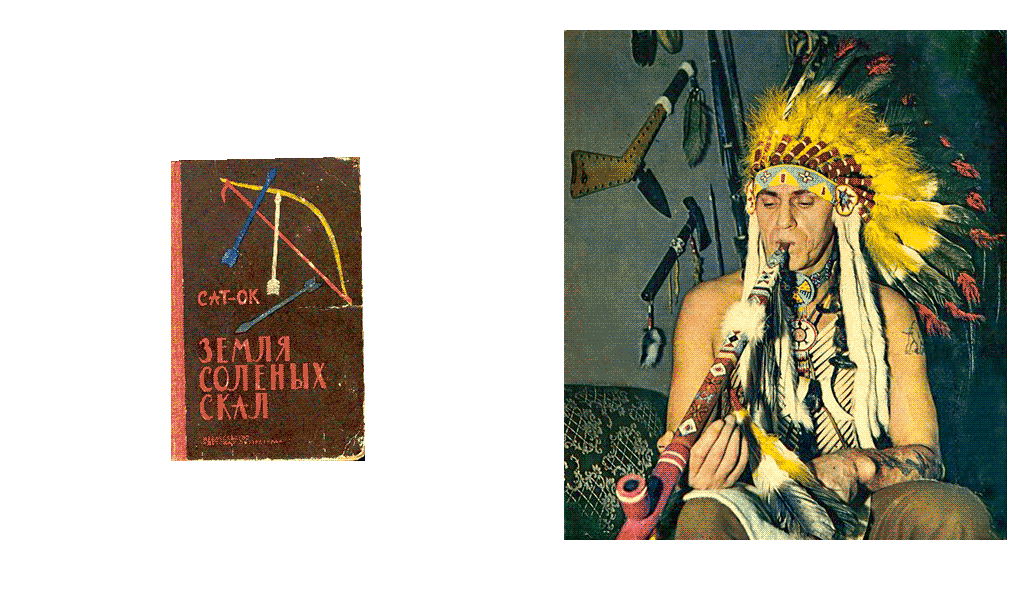
При этом участие Суплатовича в партизанском движении сомнению не подлежит, коль скоро он даже отсидел за пребывание в Армии Крайовой в советском лагере, да и в фильме 2005 года «Прирожденный воин» содержатся прижизненные интервью не только Станислава, но и его товарищей по партизанскому отряду.
После войны и нескольких лет, проведенных в заключении, Станислав Суплатович вступает матросом в торговый флот, женится и поселяется в Гданьске. И только в 1958 году выходит в свет его первая книга — «Земля Соленых скал», которую он подписывает индейским именем Сат-Ок — Длинное Перо. Нельзя не отметить литературный характер этого имени (или все-таки псевдонима?) — помимо «пера», испокон веков являющегося в европейской традиции символом поэтического творчества, прилагательное «длинный» прозрачно отсылает к имени автора «индейской Эдды», «Песни о Гайавате», созданной, как известно, совершенно бледнолицым потомком выходцев из Йоркшира — Генри Уодствортом Лонгфелло, чья фамилия может быть буквально переведена как «длинный парень». Так что же, все-таки мистификация?
Красный вестерн
В пользу версии о вдохновенной сказке говорит очень и очень многое, так что, судя по всему, придется вернуться к истории мальчика в интернате — не менее трогательной и поэтичной — и смириться с тем, что дело обстояло следующим образом: Станислава Суплатович не бежала из ссылки в Америку, а попросту уехала с поселения после революции или даже раньше, женщин в Российской Империи зачастую амнистировали по тем или иным поводам. Возможно, она и на Чукотке-то никогда не была: если активную участницу революционных событий Инессу Арманд сослали в Архангелогородскую губернию, то вряд ли рядовую польскую социалистку, даже не бомбистку, отправили дальше Вологды.
В 1920-м у нее родился сын, который воспитывался в интернате, — возможно, именно тогда, тоскуя по семейному теплу и зачитываясь книгами про индейцев, маленький Стась придумал себе индейскую семью: сурового и благородного отца Высокого Орла, мужественного старшего брата Танто, заботливую сестру Тинагет и лучшего друга и побратима Неистовую Рысь. А в годы войны мать и сын так или иначе оба имели отношение к Сопротивлению и были арестованы. Юношеское увлечение паренька индейской культурой помогло ему в партизанском отряде, а уже взрослым мужчиной, начав сочинять свои индейские повести, он решил продолжить игру про сына вождя и правнука прославленного Текумсе, защищавшего свою землю от жестоких завоевателей, — тем более что тема эта была особенно близка недавнему партизану, а затем и узнику лагеря в советской Польше.
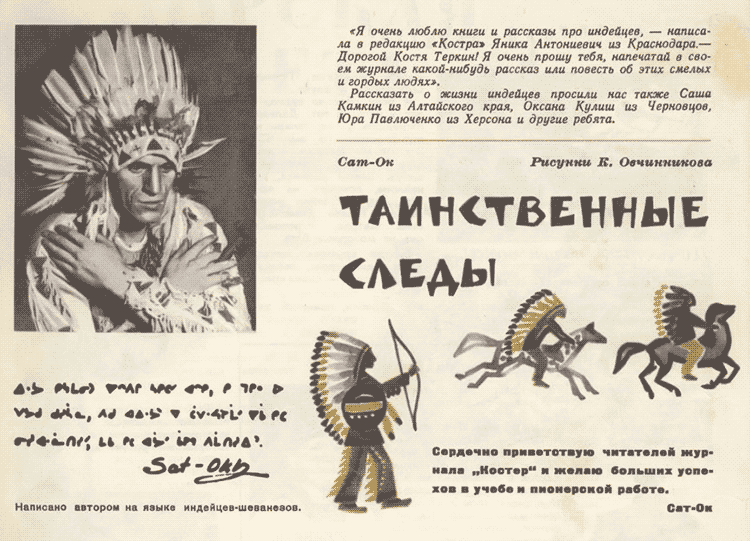
История могла так и остаться чисто литературной забавой, если бы не возникший в начале шестидесятых годов запрос на «красный вестерн», популярность в Восточной Европе фильмов с «главным индейцем стран Варшавского договора» Гойко Митичем и тому подобные дела. И тут уже подключились пропагандистские ресурсы социалистического блока — вплоть до выправки новых документов и создания беллетризованной биографии за авторством выдающегося детского писателя Николая Внукова. Благодаря литературному дарованию обоих — Суплатовича и Внукова — в СССР и Польше возник настоящий культ Сат-Ока, в Гданьске был открыт музей, проводились встречи с читателями, и любые нападки скептиков разбивались об энтузиазм многочисленных поклонников. С легкой руки Сат-Ока в Польше и Советском Союзе возникло и укрепилось движение индеанистов, существующее и поныне.
В пользу этой версии говорит и удивительно похожая история писателя Альфреда Шклярского — действительно родившегося в Америке сына польского иммигранта, вместе с семьей вернувшегося в независимую Польшу и принимавшего активное участие в Сопротивлении на стороне Армии Крайовой, в том числе и в ходе печальной известности Варшавского восстания. Что, впрочем, не помешало ему печататься в «Курьере варшавском», выходившем «под немцами». За участие в этом признанном коллаборационистским издании он и был после осужден на восемь лет, а после освобождения, как и Сат-Ок, стал детским писателем, автором цикла о приключениях Томека в экзотических краях, а также исторической трилогии о борьбе индейцев-дакота с белыми завоевателями (вместе с супругой Кристиной).
Нетрудно представить, что именно задевало обоих авторов в теме борьбы краснокожих с бледнолицыми оккупантами; куда любопытнее другое — какова же была уверенность в себе социалистической системы, что она умудрилась даже своих оппонентов поставить на столь ответственный участок культурно-идеологического фронта и, как ни крути, использовать их таланты на полную катушку. Причем, как в случае с Сат-Оком, не чураясь и совершенно фантастической, пусть и весьма артистичной, литературной мистификации.
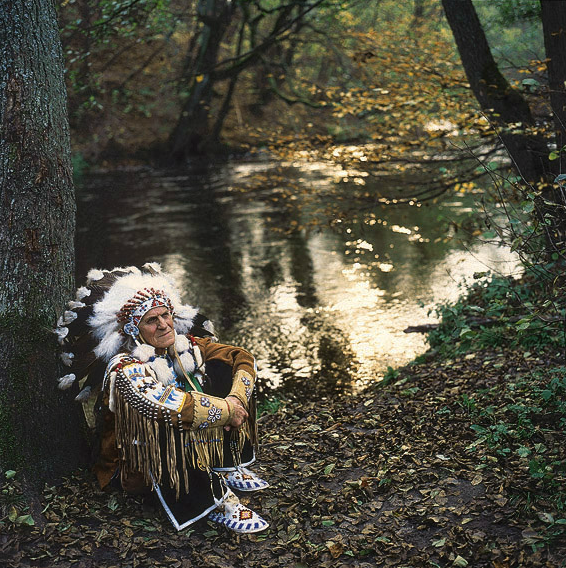 Польский индеец Сат-Ок