
Translated material
Sergey "Africa" Bugaev
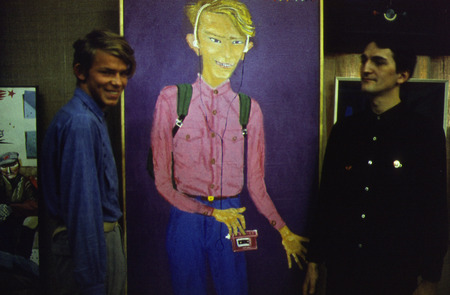
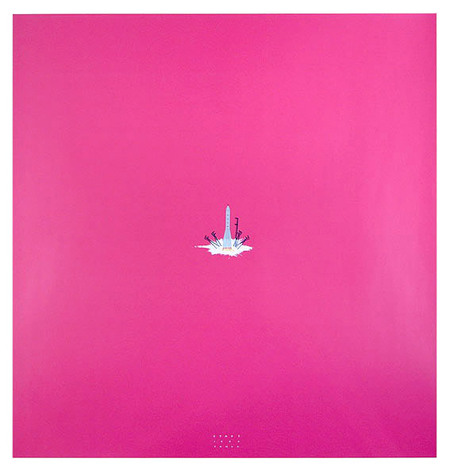
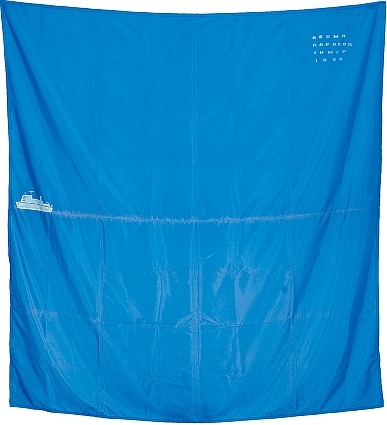
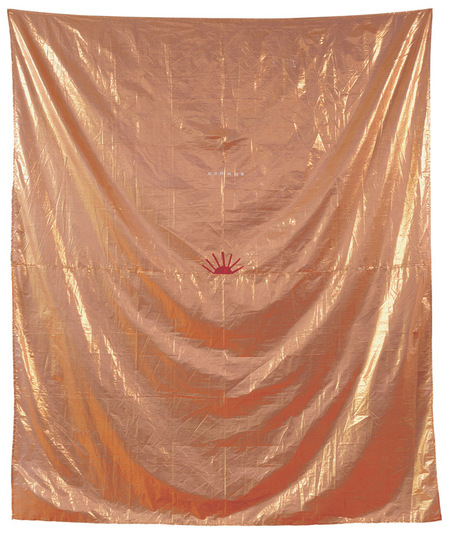
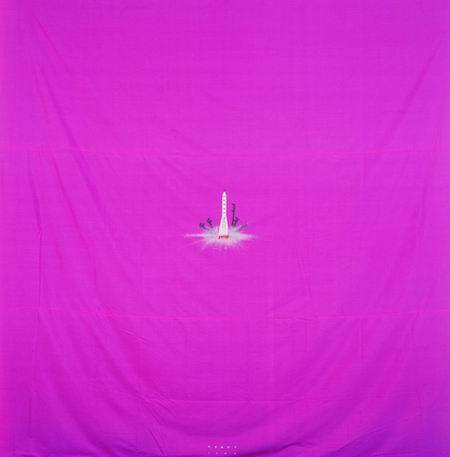
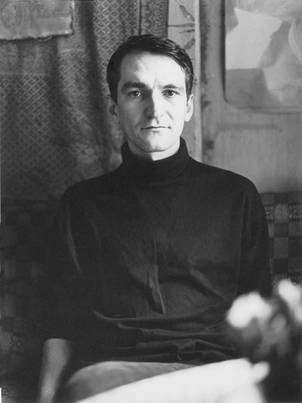
On September 24, in the Hermitage (and then the Russian Museum, the Gallery "Foods" and the Museum of the City Sculpture) , the series of exhibitions of the artist Timur Novikov was opened. On this day he would have turned 50 years old.
Without Novikov, it is difficult to fully imagine a number of cultural phenomena, such as Pop Mechanics, Kurekhin, the New Composers group, the first raves (Gagarin-Party) or the new Academy of elegant arts. And the “New Artists” association he created in the form of key figures of contemporary art in St. Petersburg: Oleg Kotelnikov, Andrei Medvedev, Sergey Bugaev-Africa and others. Even the famous Mitki asked the “new artists” to Timur Petrovich, only he did not let them in.
With one of the “new artists”, a close friend and ally of Timur Petrovich-Sergey Bugaev Africa, on the eve of the exhibition, we discussed the artistic reality of the last decade, desperately trying to keep the conversation in the direction of decency.
Is it possible to call the current series of exhibitions of Timur Petrovich a full -fledged retrospect?
Unfortunately, there is no retrospective here. We still do not have institutions who are ready to take on the responsible organization of such an exhibition that could be called a retrospective. This is a very large and expensive serious work, and our poor Russian museums in the country of billionaires are not able to afford to organize exhibitions on their own. Moreover, the task is complicated by the fact that we have such artists as Timur, there is not enough for us to rummage, argue and try to explain and reveal something.
However, this is not the first attempt to set the work of Novikov, and does this exposition have a background?
Initially, the exhibition in the Hermitage was very correctly conceived and had to reveal a lot. But due to the lack of state financing and mobility of museum workers, we did not quite receive what we wanted. The phenomenon of Timur is, among other things, at the beginning of the new geography of movement for Russian artists.
That is, in front of Timur we notice a generation of artists, such as Shemyakin, Kabakov, who go to the West and remain there to live there. But from some point, more calm trips of artists from Russia begin abroad in all directions. Everyone goes where they want, return and bring their experience that they acquire during these trips. Therefore, we wanted to consider Novikov as a figure that at the very beginning outlined the trajectory of this kind of movements not only to the West, but also to the east.
All this looked promising when Arkady Ippolitov and I (by the way, one of the best curators in the country) began to create an exhibition called “Timur’s space”. But the project was not fully implemented. To do this, we needed to go a lot of where to go: at least meet living people who saw Timur. Intercultural communication between peoples that are not interconnected is seen by us with a fundamentally important moment. Moreover, Timur is still very characteristic that he did not know the English language, but he managed to speak with people with those few words that he remembered.
In the name of the Hermitage exhibition, New York appears. Have you been a direct participant in the expansion of "new artists" in the USA?
We spent a month and a half in New York, and returned. The Americans were surprised at this: it seemed that any Russian came to the States to stay. We lived a little in Los Angeles, exhibited in Miami. When Timur arrived there, I was already stuck there, so some preparatory work was carried out for his arrival. I had connections that were transferred to him on a plate, and he successfully accumulated and developed them.
We had a well-thought-out program and several organizations (pop-mechanics, new artists, a club of Mayakovsky’s friends), and the “Left and Right Front” scheme under the auspices of the new Academy of Fine Arts created by Timur was developed. All this moved by a united front and acted efficiently. Novikov, as an ambassador of Russian art, perfectly coped with his mission.
"New Artists" caused a greater stiring outside the country?
In Russia, so that no one had illusions, there would never have such an interest in art that could be compared with the Western. Here, in general, one might say, some self -pounding situation in artistic life is traced. The activities of independent artists, as well as museums who pretend to be engaged in something, could be perceived ambiguously. Nevertheless, people in the West, who determined a lot in the art of the twentieth century, were very good to Timur.
One of them was a teacher at the Institute of Plastic Arts in Paris - the legendary curator Pontus Hulten, who was the first director of the Pompidu Center. This is an outstanding Swedish art historian and a personal friend of the best artists of the twentieth century. On the other hand, the director of the Kunsthalle Museum in Dusseldorf Jurgen Harthen, who made the personal exhibition of Timur in his museum, provided a certain support. We managed to find status in the art world, despite the fact that Leningrad artists moved contrary to the constant steps of our Moscow comrades ...
That is, you were at enmity with Moscow conceptualists of the eighties ???
Of course, we tried to be friends. But such a loud name “Moscow conceptualism” is a very heterogeneous environment, there are a lot of underwater currents and stones. They have their representative offices in certain Western countries, their connections in the same New York, well, Timur in this sense was such an object of jealousy for them. Timur himself laughed at the fact that a certain Moscow is standing out from the general world conceptualism.
With the same success, Portuguese, Namibian conceptualism can be considered. It is clear that no one wanted to f overcome with a certain secondary process, which had its original in the form of Western mainstream. In any case, Moscow conceptualism is a really very interesting and important phenomenon within our domestic cultural tradition. Many began to envy Timur then, because it seemed to them that he, as a person of another sexual orientation, is included in the parties on this topic. It seemed to the Moscow lads that it was supported by blue. Which, of course, is not true.
And where is the blue?
Why, it’s no secret to anyone that the art world of the West has some underwater trends and “mafia” groups that determine a lot in the artistic world. For example, in the world of art, the so -called “blue mafia” on a global scale has a very strong influence. These are the richest billionaire-college, museum directors, curators, writers, newspapers and magazines and so on.
But we, unlike Moscow, were definitely not involved in the “mafia”. We were open and accessible to the eye of each person. And Timur in this sense seemed to be a very important figure to people in front of which all the events of world art of the twentieth century lay on the plate, from which, in turn, they chose the most inveterate Warhols and Boysov. So Timur, despite the isolation of the Soviet artistic context from the Western, was very actively perceived outside of any ambiguous connotations, and would develop at a long time, if not its tragic untimely fate.
You both, by the way, spoke quite openly on this topic, and on the pages of the same “cabinet” in a joint interview with Novikov, you noticed that twenty centimeters are signed with an American homosexual culture. Is this not a provocation?
Well, in that context, I could afford this. For me personally, the issue of sexual orientation of a citizen of the 21st century is very secondary.
Then, we can say, there was still the twentieth century.
Nevertheless, it was clear that there are things that no one was going to tell anyone, especially in those political conditions where they more recently were frankly planted, and at times shot. Especially artists. Here to recall at least a wonderful film director ... What is he called, who shot the most beautiful films?
Tarkovsky!
No, Parajanov. Tarkovsky was not blue. So, Parajanova overtook that same Puritan punishment. Therefore, no one wanted to disclose any cards on the topic who consumes sexual energy in what way. Everyone consumes it as he wants, and this applies to a personal life, which should not concern bureaucrats and those who seek to draw conclusions. Personally, I can say that I am with great respect for all types of sexual minorities, especially girls.
Was the paintings of "new artists" sold? "
We had enough. But the sale of paintings was a secondary task. If now in contemporary art artists are like a star, then these were applicants for pussy from the state, getting into a psychiatric hospital or some other non-traditional decisions. That's the whole difference.
Since the beginning of the 90s, the most relevant impulses of art came from you; You were engaged in the synthesis of the Russian avant -garde with modern vibrations of artistic life. And what now, in your opinion, is relevant?
An relevant clear understanding of the boundaries of what you are doing, and the territory in which you are searching and conducting research. Contemporary art is an absolutely scientific scheme for the approach to understanding the inner world of a person. The tradition of "modern" is very short, compact and simple. It begins with Kandinsky, then there are a couple of stops, and in our country, the efforts of the Bolshevik renegades, all studies in the field of actual art cease - they begin in the United States. When this fountain is overlapped there in a purely market situation in the 90s, actual art manifests itself somewhere else, arises in Brazil or Argentina. That is, it is such a banner passing from hand to hand. In perestroika and we held it.
How do you imagine the further development of "new artists" if Timur Novikov had not gone anywhere?
We would engage in the same thing, but would occupy more distinct positions in the world artistic space. Timur and I were easier to move together, more effective and better. Now it’s hard for me to take so many actions alone. And, unfortunately, in our city, few people conduct social activities, especially international, and even more so not only in their interests, but in the interests, for example, Russian art as a whole, or the city of St. Petersburg as such. Meanwhile, many artists, correct and attentive, commit interesting and important research. Timur was actively engaged in public affairs; A vivid example is the new Academy of Extreme Arts created by him.
How did your friendship with Novikov influenced you?
This is a person who, first of all, made me regularly engage in art, taught me to the creative process. I set my life at the level of everyday life so that I simply could not help but engage in any creativity. Our interactions made me understand that the most important thing in art is not what you produce, but what way of life you lead. Not without his participation, I ended up in the context of the world art process, which I still observe and try to take part for.
And what are the observations?
Well, before our eyes, one of the most important cultural centers becomes Miami, the state of Florida. In St. Petersburg, we see the extinction of the trend of the formation of the cultural capital, and in Moscow a transformation of art into a fashionable entertainment complex. Vinzavod and all that Moscow has been famous recently, in my opinion, does not apply to any pathos and the possibility of registering some new types of reality that clearly take place among us. Moscow today is busy with two large processes (I do not want to offend any of the artists-artists), and in fact, artists there are ennobled the life of idle billionaires, and on the other hand, give the Western infrastructure of culture what they expect from Russia.
After all, the West is such a machine that forces everything to look like himself. Even Chinese artists now began to draw as European; Everyone immediately liked this in Europe, which was reflected at colossal prices for the pictures of the Chinese who switched to a new manner that was not characteristic of them, and which no one knew yesterday. So we must understand that art is generally in the industrial phase, and the part that we see as a superstructure serving contemporary art is just a free application to the structures of glamorism.
By the way: you played in the Rain season, the new film of the wonderful director Debizhev - what kind of role, and how are things going with the release of the film on large screens?
Thanks to this project, I was lucky to go to one of the most mysterious countries-Cambodia, to visit the most interesting architectural complex on the planet called Ankor-Vat-a colossal multi-kilometer Buddhist building.
In the film, I, however, have a small role. I play a person who is really existing in Cambodia, some Russian, who has a hotel called “The House of the Snake” there. It contains a crocodile farm, and 50 types of snakes live. I feed all these wonderful animals. And then the heroine for the ass bites the snake, and I save her. Then I take everyone out of the minefield, because Cambodia consists of 80% of the minefields.
Every morning in Cambodia, for a month, I started with the fact that I went around 30 cells with parrots, then 30 cells with snakes, fed them. I even had a fairly warm relationship with a spitting cobra, the exact opposite of such a serious snake as the royal cobra. Working with the shot was somewhat dragged on; Knowing Debizhev and his cinema, I suspect that it will not be easy for him to agree with the distributors dictating film production ...
The end of the first part of the interview
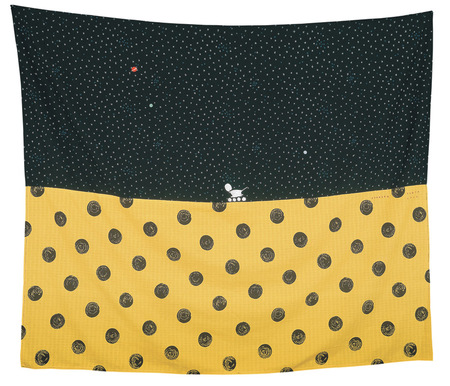
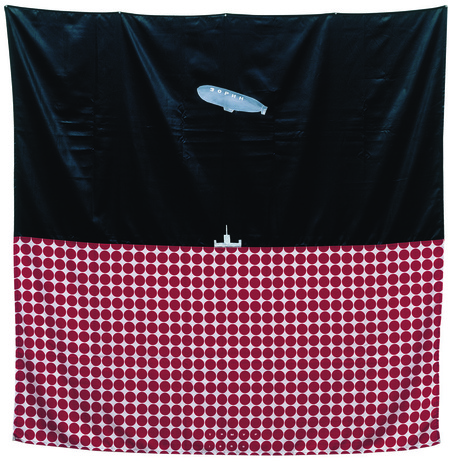
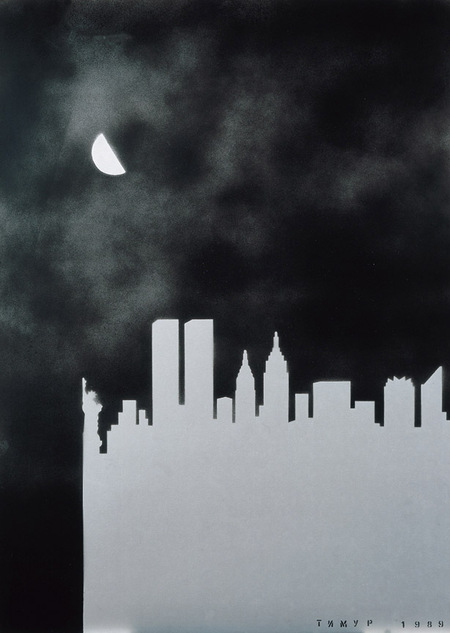
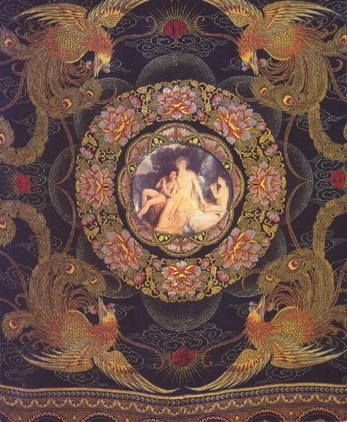
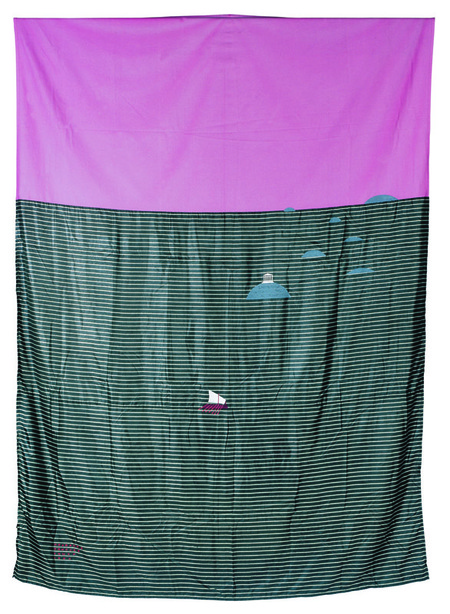
Illustrations from a catalog dedicated to the 50th anniversary of Timur Novikov (Hermitage).