
Translated material
Syndrome of a broken heart
“A broken heart” is by no means a figurative expression.
Cardiomyopathy Taksumo or stress cardiomyopathy - this is what doctors call this state. It occurs quite rarely and affects mainly women after menopause.
In the West, almost nothing was known about cardiomyopathy, while in Japan the disease has been known for ten years, and there stress cardiomyopathy is called “Taksumo” - from the name of the Octopus with a round bottom, which resembles a stopped heart.
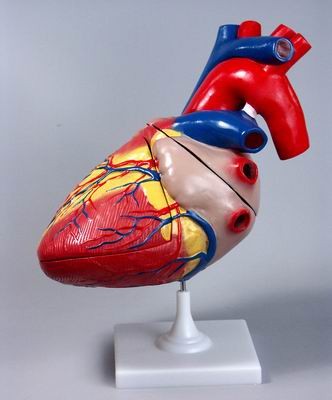
The symptoms of the "broken heart" syndrome are similar to manifestations of heart attack (sharp pain in the chest, breathing problems), but mortality from it is much lower. About 20% of patients with this diagnosis enter the ambulance departments in critical condition, but almost all of them survive. The problem is different: as a rare and poorly studied disease, a “broken heart syndrome” is difficult to diagnose and sometimes when the patient needs urgent treatment, the doctor simply does not have enough time for this. And since the disease is “masked” under the heart attack, the patient is treated, respectively. Meanwhile, many procedures included in the usual “post -infarction” set, patients with a broken heart are simply not needed. The causes of the disease are also not yet fully known. Doctors believe that the reason for impaired heart function may be a sharp surge of stress hormones, for example, adrenaline. However, this mechanism is not exactly studied due to the rarity of the disease. What doctors are sure of is that the syndrome is completely cured, if, of course, to be treated correctly.
As a rule, patients with this diagnosis are prescribed aspirin, beta-blockers, ACE inhibitors and statins, and the course of drug treatment lasts about a week. After that, doctors recommend not loading themselves and, if possible, protect themselves from stress, although their patients usually do not experience repeated seizures. According to statistics, only 3% of patients with a “broken heart syndrome” return to doctors with the same complaints.
By the way, recently British doctors made an interesting observation. Most cases of the “broken heart syndrome” occur for the spring and summer months. And this, by the way, is a trend in comparison with the seasonality of heart attacks - they just mainly occur in the winter and autumn. Therefore, scientists have concluded that the syndrome, contrary to common opinion, is neither a harbinger nor a form of heart attack and is not associated with blockage of the arteries, but with a violation of the function of the heart muscle.