
Translated material
What is a novel?
About the forgotten book of the literary critic Boris Griftsov
Disputes about what a novel is, what is the essence and what are the boundaries of this genre, have been underway for many decades and still have not subsided. The literary critic Boris Griftsov, author of the book Theory of Roman, did not arouse his answer to these questions, rather original, who did not cause much interest at that time or later. “Gorky” continues to turn up the forgotten history of domestic literary criticism: we have already talked about Vladimir Grib and Dmitry Svyatopolk-Mirsky , today the turn of Boris Alexandrovich.In everyday speech, we sometimes use the word “novel” as a synonym for a book in general, although we intuitively understand that it differs from a story or novels. Discussions about what should be considered a novel has been conducted among specialists for many decades, and they have not yet been expected to end. This may seem amazing, but the theory of the novel is a relatively young area of literary criticism, the history of which has a little over a hundred years.
In Russian, one of the first works on the theory of the novel, unpretentiously called the "theory of the novel", was published in 1927 by literary critic Boris Griftsov. Before moving on to the text itself, let's say a few words about the author’s biography. Griftsov can be attributed to the generation of people of the Silver Age. The translator Nikolai Lyubimov recalled that Griffsov experienced a great influence of symbolism and considered Bryusov his teacher. He began to print before the revolution. In 1911, Gritsov published the book “Three Thinkers”, dedicated to the philosophy of Vasily Rozanov, Dmitry Merezhkovsky and Leo Shestov. Another sphere of interests of Gritsov was an art history, he published several works about Greek and Italian art.
After the revolution, Gryptsov remained in Russia and in the 1920s began to work at the State Academy of Art Sciences (Gakhn), where then many intellectuals-“fellow travelers” gathered. In Gakhn, Griftsov was mainly engaged in literary criticism, specializing in French literature. He became one of the first Soviet researchers of the work of Marseille Proust, in the late 1920s he participated in the translation of the first volumes "in search of lost time."
Epos and Roman
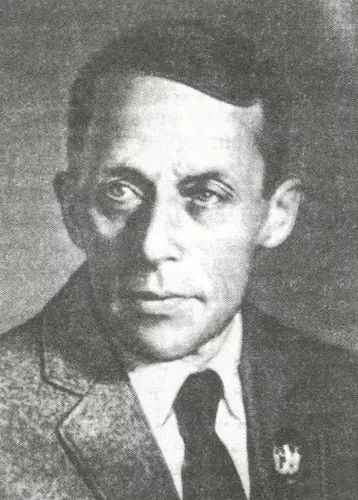 Boris Gryftsov
The theory of Roman was written by Griftsov in 1925-1926 and published in the publishing house Gakhn. In this small (a little more than 120 pages), he considers the history of the novel from antiquity to the first quarter of the 20th century. Like most literary theorists, griffles take examples mainly from canonical works, but makes it quite selectively. He almost does not mention German -speaking authors, but dwells in detail on the history of the French novel (Balzac, Flaubert, Hugo, Sand and Proust), which is not surprising, given his research interests.
The name of the book, apparently, refers to the "theory of the novel" by George Lukak, published in German in 1916. This work, which had a great influence on the development of literary theory, was known and studied in Russia. It is known that in the 1920s, Mikhail Bakhtin translated the “theory of the novel” into Russian, but never completed this work.
Gryntsov several times refers to Lukak and borrows from him the Hegelian opposition of the epic and novel. According to Grittsov, the novel replaces the epic and first appears in Greece in the era of Hellenism. The author sees the reason in the phenomena of the extravocation - during this period, the Greek culture ceases to exist in isolation and begins to spread around the world. The epic is the art of a “whole and closed world”, where everything has his own place, while the novel depicts a person who finds himself in an “incomprehensible and boundless world”. Gryptov notes that in the novel (not only ancient Greek) an important role is played by a change of plans, which is achieved, including using the image of travel.
Lukak believed that in his modern era, the reverse process is taking place, and the epic replaces the novel. He saw the expression of this epic trend in the works of Dostoevsky. Gryptov at the end of the book also writes that “humanity can return to the epic”, but does not specify when and under the influence of what social processes this should happen. At the same time, Dostoevsky Griffsov calls the founder of a modern novel and in this regard diverges with Lukac.
Grifftsov’s concept is interesting in that he does not consider the history of the novel as continuous. The novel appeared and disappeared into different eras and in different countries, "bloomed several times, but always sporadically and local." Giving away at one point in the world, he could be completely independent of the other, retaining all his “generic” features. On this basis, Gryptsov makes very unexpected statements. So, he claims that the novel is not characteristic of Russian literature, and calls Dostoevsky the only Russian novelist.
Even in the works of the same author, the novel can be adjacent to the epic. Gryptov calls Balzac “ the creator and liberator of the novel, who at the same time did not write a single real novel, could never dwell on the novel, striving for more, for the all -encompassing epic.” Here we approach the key question: what criteria should the work meet in order to be considered a novel?
Why shouldn't you trust the novels
In an attempt to understand what is the specifics of the novel, Gryptov addresses the works of the German philologist Erwin Roda, who claimed that the ancient novel is rooted in rhetorical exercises. The essence of such exercises was as follows: the rites were given an abstract problem situation, and they had to prove the correctness of one or another side of the conflict. If he spoke about the connection of the novel and rhetoric only in relation to antiquity, then Gryptov extends this principle to the entire history of the genre.
The composition of the novel, writes Gryptsov, is always built around “controllers”, the same problematic situation from rhetorical exercises. The novelist, like a rhetor, seeks to come up with the most confusing conflict situation so that readers are interested in following what is happening in the book. According to Griftsov, the novel differs from the epic in that it depicts not static paintings, but an action that develops due to the same “controllers”. They can be associated both with external circumstances (shipwreck or abduction), and with the spiritual throwing of one of the heroes.
Gryptsov notes the following trend in the development of the novel. If in the novels of the previous eras the heroes remained unchanged and the action developed due to external events, then over time, " the entire mental apparatus is a mobile, torn struggle at the most quiet and unremarkable moment of his life." The first to build a plot began to use Proust, and it is along this path, he believes Gryptsov that a modern novel has to go. Grifts highly appreciates “in search of lost time” and objects to those who consider this works only fictions. The Proust "gets a double control over: not only the heroes enter the struggle and the dispute between themselves, but also the perception of this dispute is also variable and full of their own struggle."
An indication of the rhetorical nature of the novel leads Griftsov to the conclusion about its ethical problematicity. The novel seeks to create the illusion of veracity, but even if he borrows plots and characters from real life, he invariably distorts them: “Any paintings that he gives are always in functional dependence on that mobile, restless, even in the very dry novel of the exciting, which refers to the supervisor to the nature of his nature. Controllers are always spectacular and must cause excitement. Is it true? Is it inevitable? "
The works that we are accustomed to attribute to the "high literature" in this regard do not differ fundamentally from the boulevard's reading. Griftsov writes that Dostoevsky "absolutely not intending to entertain or worry with idle emotions ... he constantly resorted to horrors, suddenness and riddles." He differed from the “vulgar novelists” in that for him these techniques did not have independent value, but worked to disclose the main conflict: “It is more important to indicate how the structure of the novel is generally, if for purposes, so different, you have to take the same techniques.”
It turns out that Roman seeks to manipulate readers' feelings, and it is in this, according to Gritsov, that his main danger is. Paradoxical, but as one of the evidence, he quotes Flaubert’s novel “Madame Bovary”, whose main character has destroyed the passion for love novels. Gryptsov, which is quite logical, does not use such categories as “realism” and “naturalism” - works depicting everyday life are based on the same principle “controllers” as the most fantastic novels in their plot.
Life after theory
Elena Galtsova writes in an article about Grittsov that his work about the novel "In the context of the theory of literature [of the] time ... looked quite marginally." Indeed, the “theory of the novel” was waiting for a cold technique. Reviewers noted “insufficiently wide coverage of the material in which French literature dominated”, although they recognized the value of the individual remarks of Griftsov. Isaac Nusinov on the pages of the magazine “Print and Revolution” reproached Gritsov for ignoring the works of modern Soviet authors: Ehrenburg, Pilnyak and Gladkov. The critic wrote that the “theory of the novel” suffers from the same disease as the works of other Gakhnovites - “longing for the past”. Nusinov’s note was released in 1929, when clouds were already gathering over the academy, and the ideological subtext of such attacks was obvious.
In 1930, Gakhn was disbanded. In the official autobiography, compiled in the late 1940s, Griffsov does not mention his work at the Academy-this was what many of his colleagues did, trying to avoid unnecessary problems. In the 1930s, Gritsov no longer returned to theoretical issues and was mainly engaged in translations from French. He translated the novels of Flaubert, Proust, Rollan and, together with his colleagues, prepared a twenty -volume collected of Balzac's works for the publication. In 1937, Gritsov published the monograph “How Balzac worked”, where, with reference to Engels, he spoke about the enduring significance of the French writer.
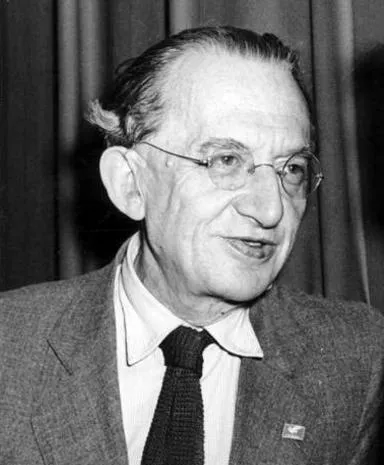 Georg Lukak
The irony lies in the fact that it is in the 1930s that the theory of the novel becomes one of the key topics for Soviet literary criticism. In discussions about the novel, a leading role was played by Georg Lukak, who lived at that time in Moscow. He adjusted his views of the period of the “theory of the novel”, but did not completely refuse them and still proved that in the modern era, an epic came to change the novel. Only now did he consider the transition to a non -class society the key to the return of the epic, in which the writer will again have the opportunity to portray life in its entirety.
It would seem that in such a situation, the “theory of Roman” Griftsov should no longer seem so insignificant. Moreover, in the second half of the 1930s, the radicals like Nusinov were defeated during the campaign against the “vulgar sociology”, and on the agenda there was “the development of literary inheritance”. But in reality, by this moment, Gritsov’s idea about the rhetorical nature of the novel became even more exotic for Soviet literary criticism than ten years ago. Balzac, Flobert and other novelists from the Western canon became their own for socialist culture precisely because they were declared “realists” who managed to truthfully depict reality even despite their not the most progressive worldview (we wrote about the adventures of Balzac in the USSR in one of the past notes ).
Mikhail Bakhtin, for whom the opposition of the epic and novel was also very important, referred to the “theory of the novel” in his works and agreed with some of the remarks of Gritsov about the ancient novel. Bakhtin recognized the influence of rhetoric on the development of the novel, but did not consider this property to be decisive for the genre. “Rhetoric, to the best of its deceit, seeks to cause fear or hope. This belongs to the essence of the rhetorical word (these affects were emphasized by ancient rhetoric). Art (genuine) and knowledge strive, on the contrary, to free from these feelings. On different paths, the tragedy frees the tragedy from them and laughter frees them from them, ”he wrote in an unpublished note of the 1940s. An indication of the deceitfulness of the rhetoric and the affect made by it brings Bakhtin closer to Griftsov, but then he takes the next step - towards laughter - and their paths diverge on this.
***
The theoretical heritage of the gahn is sometimes compared with the ruins , emphasizing the incompleteness of the project and its openness to the future. Griftsov’s “theory of Roman”, incomprehensible and unacceptable by contemporaries, also resembles a ruin. Can a new life arise among these ruins? In this place we put a point.