
Translated material
Real Tales of the Grimm brothers
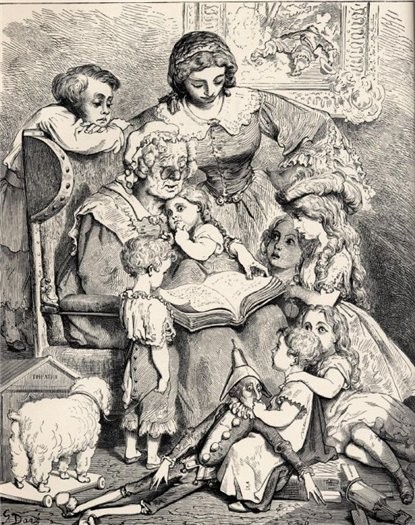
Teachers and psychologists often complain that folk tales are too cruel. If they only knew that parents were telling the offspring - how to say that? - Silly edited versions of magic stories. The originals were much more, uh ... naturalistic, or something ...
For example, we will take a fairy tale of the dead princess everyone from the diaper. Did you know that the beautiful girl was not awakened by the kiss of the brave prince? The Italian version of this story, dated 1636, says that the carriageable fellow raped the merchants sleeping with a dead dream and went nothing more than hesitated. Three bear-shawls actually abandoned the old woman to the spire of the St. Paul Cathedral; Zolushkin’s stepmother chopped off her daughters on a piece of foot, and as for the Snow White, let's say that the evil queen wanted not so much her heart as a gentle body ...
Many of you probably want to ask the same question: how could you tell such "fairy tales" to young children?! Folklorist scientists explain this phenomenon as follows: fairy tales are part of oral folk art, and adults told not only children, but also for adults that they themselves heard somewhere.
In addition, in ancient times, adults treated children not as babies, but as future adults who had to be prepared for adulthood. And yet, then, then the upbringing of the younger generation passed naturally - the children with their parents slept in the same room, mothers gave birth to their brothers and sisters in their presence, and even about the preparation of breakfasts, lunch and dinners from bloodied freshened carcasses and there is nothing to say ...
Today, few people know about two people who have made a huge contribution to the history of mankind, preserving the beautiful examples of "oral folk art" for future generations. No, this is not the brothers Grimm! One of them is the Italian Jambattist Bazile, who wrote the fairy tale of fairy tales (it contained fifty Sicilian fairy tales and was published in 1636).
The other is the Frenchman Charles Perrault. His book, containing eight fairy tales, was published in 1697. Seven of them became classics, and among them “Cinderella”, “Blue Bird”, “Sleeping Beauty”, “S-S-firing Boy”. So, let's put out the light, children, and dad will tell you a new fairy tale.
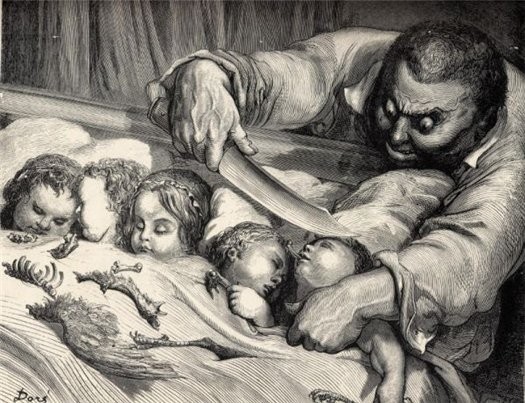
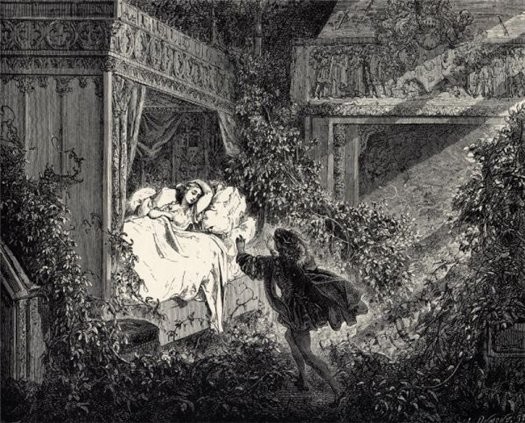
sleeping Beauty
Just gave birth to twins
When she was born, the witch predicted her terrible death - she will die from the injection of a poisoned spindle. Her father ordered to take away all the spindle from the palace, but the beauty - her name was waist - still pricked a spindle and fell dead. The king, her inconsolable father, planted his daughter's lifeless body on the throne upholstered by velvet and ordered to take the waist to their small house in the forest.
The house was locked and left to never return.
Once in those forests a foreign king hunted. At some point, his falcon burst out of his hands and flew away. The king galloped after him and stumbled upon a small house. Deciding that the falcon could fly inside, the gentleman climbed into the window of the house.
There was no falcon there. But he found a princess sitting on the throne.
Deciding that the girl fell asleep, the king began to wake her, but neither patting his cheeks, nor screams awakened the sleeping beauty. Being an inflamed beauty of the girl, the king, according to Basil, transferred her to bed and "collected the flowers of love." And then, leaving the beauty on the bed, he returned to his kingdom and forgot about the incident for a long time.
Nine months have passed. One fine day, the princess gave birth to twins - a boy and a girl who lay next to her and sucked her breasts. It is not known how much this would continue if one day the boy had not lost his mother’s chest and would not began to suck her finger - the same, pricked by a spindle.
The poisoned spike jumped out, and the princess woke up, finding herself in an abandoned house in complete loneliness, except for the adopted lovely babies from nowhere.
Meanwhile, the foreign king, suddenly remembering the sleeping girl and the "adventure", again gathered to hunt in those lands. Looking into an abandoned house, he found a beautiful trinity there. Having repented, the king told the beautiful princess about everything and even lingered there for several days. However, then he nevertheless left, however, promising the beauty to soon send for her and the children - during these few days they managed to love each other.
Returning home, the king could not forget about the meeting with the princess. Every night he left his royal bed, went into the garden and recalled the beautiful waist and her children - a boy named the Sun and a girl named Moon.
And his wife - that is, the queen, whom he somehow did not find time to tell about newborn - suspected something. At first she interrogated one of the royal falconers, and then intercepted the messenger with a letter from the king to the waist.
Meanwhile, the unsuspecting waist quickly gathered the twins and went to visit her lover. She did not know that the queen ordered to grab all three, kill the kids, prepare several dishes from them and give them to the king for lunch.
At dinner, when the king praised meat pies, the queen muttered all the time: "Mangi, Mangi, you eat his own!" The king was tired of listening to the murmur of his wife, and he abruptly cut her off: "Of course, I eat his own - after all, your dowry was worth a penny!"
But the evil queen was not enough. Blinded by a thirst for revenge, she ordered the princess herself to bring her and herself. “You are a vile creature!” Said the queen. “And I will kill you!” The princess sobbed and shouted that she was not to blame - after all, the king "broke her fort" while she was sleeping. But the queen was adamant. "Light a fire and throw it there!" she ordered the servants.
A desperate princess, a wall, asked to fulfill her last desire - she wanted to undress before her death. Her clothes were embroidered with gold and decorated with precious stones, so the greedy queen, thinking, agreed.
The princess undressed very slowly. Removing each item of her toilet, she emitted a loud and plaintive scream. And the king heard her. He burst into the dungeon, knocked the queen from his feet and demanded to return the twins.
"But you ate them yourself!" - said the evil queen. The king sobbed. He ordered the queen to burn in already divorced fire. Then the cook just came and admitted that he did not obey the order of the queen and left the twins alive, replacing them with a lamb. The joy of parents had no bounds! Having kissed the cooks and each other, they began to live and make good. And Bazile ends the fairy tale with the following moral: "Some are always lucky - even when they sleep."
Cinderella
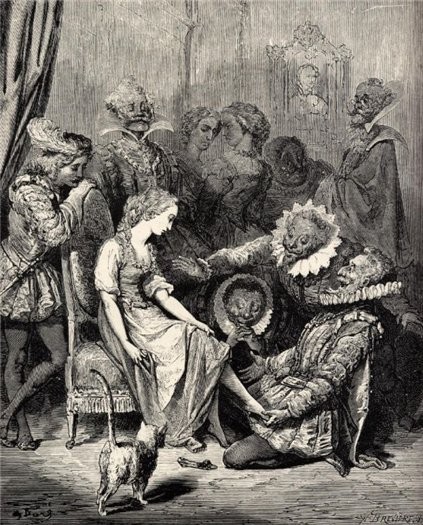
When the sisters tried on the shoe, they had to chop off their legs
The first European tale of Cinderella was described by the same basil - though that, the original, Cinderella did not lose the crystal shoe at all. The name of this little girl was Zezollah - abbreviated from Lucretsuria, and in childhood she showed a tendency to murder. Having conspired with her nanny, she ruined the evil stepmother, offering him to look at the chest of her mother. The greedy stepmother leaned over the chest, Zesollah lowered the lid with force - and broke her stepmother's neck.
Having buried the stepmother, Zezollah persuaded her father to marry the nanny. But the girl did not get better, because her life was poisoned by six nannies. She continued to wash, wash, clean the house and rake ash from furnaces and fireplaces. For this, she was called Cinderella.
But once Zezollah accidentally stumbled upon a magic tree that could fulfill his desires. It was only necessary to utter a spell: "O magical tree! Dressed itself and dress me!" Near this tree, Cinderella dressed up in beautiful dresses and went to balls. One day the king himself saw the girl and, of course, immediately fell in love. He sent his servant to find Zeisollah, but he could not find a girl. The ruler in love was angry and cried out: “I swear by the souls of my ancestors - if you do not find a beauty, then I will hang you with a stick and tang as many times as your hair in your vile beard!”
The servant, protecting his own ass, found Cinderella and, grabbing her, put him in her own wagon. But Zezollah shouted to the horses, and they rushed from the place. The servant fell.
It fell and something else belonging to Cinderella. The servant returned to the owner with an gained object in his hands. He jumped up, joyfully grabbed the object and began to cover it with kisses. What was it? Silk slate? Golden boot? Crystal shoe?
Not at all! It was Pianella - like a stilt of a halosh with a sole from a cork, it was such that women of Naples of the time of the Renaissance! These galoshes on a high platform protected long women's dresses from dirt and dust. The height of the platform usually reached 6-18 inches.
So, imagine the king, with the tenderness of the pressing object with the tenderness of the chest as this very Pianella, and not only pressing, but also a cooker of it, but that, they say, is not my fate, my love, then I will die in the color of years. But only I will find you anyway, my love, whatever it costs me! And the young king sent the messengers who traveled the whole kingdom and tried on each woman to Pianella found. So Cinderella was found.
The tale of Basile is full of romanticism and speaks of a somewhat strange form of a fetish - shoes. However, the North European versions of Cinderella are much more bloody.
Let's compare the Italian version with the Scandinavian and Norwegian. Take at least the third act. The prince ordered to spread one step of the palace porch with a resin, and the shoe of the local Cinderella - in these places, her name was ashen -putel - stuck to her. After that, the prince’s servants went all over the kingdom to look for the owner of such a small leg.
And so they got to the Cinderella. But besides the poor thing herself, two stepmother's daughter -in -law lived there! First, the eldest daughter tried on the shoe - locked in the bedroom, she pulled the shoe, but in vain - the thumb interrupted. Then her mother told her: "Take a knife and cut off a finger. When you become a queen, you no longer need to walk a lot!" The girl obeyed - the shoe climbed.
The delighted prince immediately put the beauty on the horse and galloped into the palace - to prepare for the wedding. But it wasn't there! When they drove past the grave of the Cinderella mother, the birds sitting on the trees sang loudly:
"Look back, look back!
Blood is dripping from the shoe
The shoe was small, and behind
Not your bride is sitting! "
The prince looked back and really saw the blood flowing from the girl’s shoe. Then he returned and gave the shoe to the second stepmother's daughter. And that one had too thick the heel - and the shoe did not climb again. Mother gave the second daughter the same advice. The girl took a sharp knife, cut off part of the heel and, hiding the pain, squeezed her leg into the shoe. The joyful prince put another bride on the horse and galloped in the castle. But ... the birds were on guard! Finally, the prince, returning to the same house, found his Cinderella, married her and healed himself in complete happiness. And envious girls were blinded and flogging - so that they would not go to the alien.
Yes, it was this version that served as the basis of a modern fairy tale - only publishers, regretting small kids, deleted even the slightest hints of blood from their option. By the way, the tale of Cinderella is one of the most popular fairy tales in the world. She has been living for 2500 years and during this time she received 700 versions. And the earliest version of the Cinderella was found in ancient Egypt - there, mothers told the children a story about the beautiful prostitute for the night, who bathed in the river, and at that time the eagle stole her sandalia and carried it to the pharaoh.
The sandual was so small and elegant that the pharaoh immediately declared a nationwide search. And, of course, when he found Fodoris - Cinderella - he immediately married her. I wonder what kind of Cinderella was the wife of the pharaoh? ..
Three bears
An old woman is broken to the bears in the house
She was an old ragged beggar, and it took almost a hundred years to turn the old woman into a small thief with blond curls (by the way, if we were talking about a young girl, did she really get into the house of bears? Maybe these were still three who rented one apartment of bachelors?!)))
In 1837, the English poet Robert Suzi published this fairy tale, "equipping" with its phrases, which since then all the parents have been able to: "Who has been sitting on my chair?!" "Who ate my porridge?" As Suzi wrote, the old woman broke into the house, ate porridge, sat on a chair, and then fell asleep. When the bears returned, she jumped out the window. "Whether she broke her neck, whether she froze in the forest, was arrested and rotted in prison, I do not know. But since then, three bears have never heard of that old woman."
The British can be proud - for many years this version of the fairy tale was considered the first. True, in 1951, in one of Toronto’s libraries, they found a book published in 1831 with the same fairy tale. It was written for her nephew by a certain Eleanor Moore.
The tale of Mrs. Moore is rather strange. According to her version, the old woman climbed into the house to three bears, because shortly before that they offended her. And in the end, when the three bears caught her, they slowly and thoroughly discussed what to do with her now:
"They threw her into the fire, but she did not burn; they threw her into the water, but she did not sink; then they took her and abandoned the Church of St. Paul to the spire - and if you carefully look, you will see that she is still there!"
The version of the fairy tale, edited by the poet Susy, existed for quite some time, until in 1918 someone changed the gray old woman to a little girl.