
Translated material
Ivan Ivanovich and Noev Ark
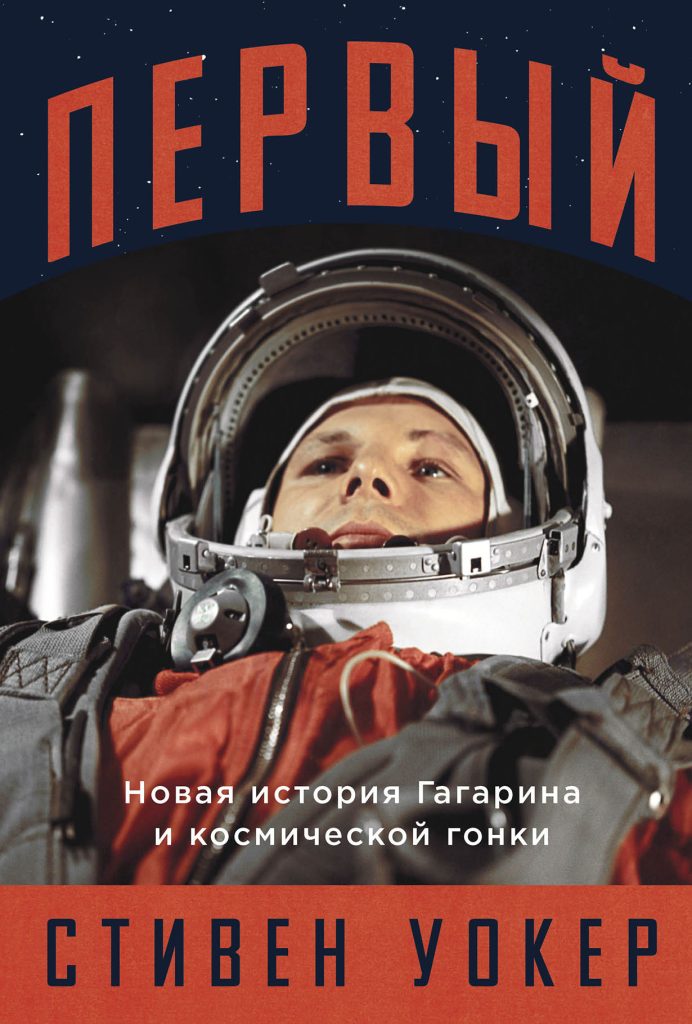
Fragment of Stephen Walker's book “First. New History of Gagarin and Space Race "
Before sending an astronaut number one to the orbit, Sergey Korolev and his employees launched rockets into space, the inhabitants of which were dogs, mice, sea pigs, snakes, microbes and a frighteningly reliable human mannequin named Ivan Ivanovich. Read about one such flight in an excerpt from Stephen Walker's book “First. The new story of Gagarin and the space race. "Starting from February 24, 2022, we were all in the face of the advancing barbarism, violence and lies. In this situation, it is extremely important to preserve at least the remnants of culture and support the values of humanism - including for the sake of the future of Russia. Therefore, the editorial office of Gorky will continue to talk about books, reminding our readers that the world remains in the world and fiction.
Stephen Walker. First. The new story of Gagarin and the space race. M.: Alpina Non-Fikshn, 2024. Translation from English Natalia Lisova, Scientific Editor Igor Lisov. Content
 In this first test flight, Ivan Ivanovich had fellow travelers. Under the orange spacesuit in the cavities on its chest and hips, mice, guinea pigs, microbes and various biological samples were located. Other animals and samples had to fly with him in a separate hermetic container inside the “East” - there it was supposed to place another 80 mice (40 white and 40 black), several more sea pigs, reptiles, plant seeds, human blood samples, human cancer cells, bacteria and yeast samples. In this separate container, a dog was supposed to fly - another wandering mongrel, which went through the same training course as the rest of the mongrels. This dog, nicknamed Chernushka, was brought at the cosmodrome by a plane from the Institute of Aviation and Space Medicine in Moscow, together with the coach Dr. Adily Kotovskaya, the doctor who was responsible for the classes of astronauts on the centrifuge. This kind of multitasking was ordinary in this institute, where the line between patients-loves and patients-sobaki was easily blurred.
Dr. Kotovskaya brought with her a second dog, luck, a mobile black and white mongrel. Luck was supposed to take part in the second test flight with a mannequin a little later, in March. Appearing with both dogs at the airport at the cosmodrome on a typically frosty February day, Kotovskaya was amazed to see that Korolev himself met her:
“I had some kind of thin beret and a very light coat. Korolev said, please, wait for me here and brought me his helmet, a fur helmet, his personal helmet, with a fur, his personal helmet. Apparently, he greatly cherished him. He said, do not freeze, wear it and wear it. This was our first meeting, and she struck me. "
Like Suvorov and everyone else, Kotovskaya, for the first time seeing Ivan Ivanovich, for a moment, dumbfounded from his terrible realism, rubberized skin, reminiscent of real, his full lips and "eyelashes in his eyes." Even the queen did not pass the impression that this doll made on everyone who saw it. One of the engineers recalled:
“It was well known to everyone that it was strictly forbidden to smoke on the test site, and, of course, the presence of a person reading fiction on it looked unnatural. As if contrary to these rules, one could often see “Ivan Ivanovich”, sitting in a chair with a book on his knees and a cigarette in the fingers of his hand, elegantly located on the armrest of the chair. “Ivan Ivanovich” looked in that situation is so natural that there was a case when Sergey Pavlovich Korolev took him for an ordinary tester and made a reprimand for a violation of the established order on the spacecraft, and then, having figured it out, laughed with everyone. ”
It was necessary to make another last addition to Ivan’s personality before he became ready to launch. The main task of this flight was to check the reliability of radio communications at the moment when Ivan would go on his journey around our planet. Therefore, along with mice, guinea pigs and microbes in another cavity, about the abdomen under the already swollen spacesuits of Ivan, a tape recorder was placed. His only task, as one of the East engineers admit, was the transfer of Russian folk songs on the radio of the famous Choir named after Pyatnitsky:
“The radio operators demanded a human voice as a control signal ... But what to write down? The easiest way is to digital account, as signalmen usually do, checking their lines. But imagine that some radio stations on Earth, by accidentally accepting the voice of a person from the Soviet satellite and without believing official messages, will be called all over the world that “the Russians secretly brought a person into orbit”! .. No, the score did not fit. Well then a song! Thinking, they came to the conclusion that the song is also impossible. They say that the Russian astronaut sang in orbit ... And I don’t remember who already suggested: “Let's write down the Pyatnitsky choir! .. It was very strange to look at the frozen figure with nothing with the not -expressing glass eyes, which sings perfectly in chorus!” ”
Now the completely equipped, dressed and ready-made Ivan and his vast retinue, the real “Noah's Ark”, as one of the senior medical workers said, were delivered to the R-7 waiting at the site No. 1, placed inside the “East” at the top and on March 9 at exactly 9:29 Moscow time were launched into the clear cold sky of the Kazakhstan steppe. A few minutes later, Vostok, along with a countless number of its inhabitants, successfully separated from the rocket to start their single -winged flight in the orbit of the Earth, and the Korolev and his team waited below when Ivan would pose.
* * *
One and a half thousand kilometers south of the Bering Strait, halfway between the Alaska and the Far East of the USSR, lies the tiny island of Shemya. This lonely piece of American territory - a little more than a fragment of a cliff in the ocean - was, and today it is, secret eyes and ears of America. Since the 1950s, a radio electronic intelligence station was based, the task of which was to track the launches of Soviet missiles in the midst of the Cold War.
From there they followed not only missiles, but also, after the launch of the “satellite-1”, the Soviet operations in space. When in August 1960 two dogs - a squirrel and an arrow - wound the turns around the ground, the station operators noticed something new. In the information transmitted from the spacecraft, something similar to a television signal appeared. A primitive broadcast in the 3 MHz range demanded a special decoding equipment to see the real “picture”, and it took some time, but after the images were finally highlighted by technical analysts of the CIA, two dogs could clearly be seen on them inside the capsule flying in orbit. And when on December 1 two more Soviet dogs went to orbit, the CIA analysts were able to process and see their images too. Like the first television images, they were rude and blurry, but the face and front paws of one of the passenger dogs could be distinguished clearly. Judging by the black and white spots in those few pictures that the CIA was declassified 34 years later, the analysts almost certainly saw a bee in front of her - she was destined to die during the explosion of the “hellish machine” in order to avoid landing within the USSR.
Considering that the Soviets, apparently, were close to the launch of a person into space, the CIA by the first launch of Ivan in March 1961 finalized monitoring equipment, and now the operators could demodulate a television signal and see the sent images almost in real time. Two sets of such equipment were made by order of the National Security Agency and installed on the island of Shemya and in Hawaii. And on the island of Shemya, where there was still the evening of March 8, 1961-the local time lagged behind Moskovsky at 13 hours-the operators noticed on their oscilloscopes a new television signal of a spacecraft, which was at that moment somewhere to the west of Alaska. This time they were able to see the image a few minutes after receiving it. There was a dog again, this time black. They saw Chernushka. Oddly enough, the declassified CIA documents even today, a few decades after that event, are silent about whether they also saw something similar to a fairly well -fed spaceship, singing Russian folk songs of a hundred votes, moreover with a closed mouth.
* * *
That morning, Nikolai Kamanin left the cosmodrome very early to fly 1300 km to the north in Kuibyshev - today it is called Samara - the city in the bend of the mighty Volga River, in the area where the landing of Ivan Ivanovich and Chernushka was expected. Kamanin now not only determined the regime of the training of astronauts, evaluated the results of their exams, participated in meetings of the State Commission that controls the Vostok program, and kept an illegal diary, but also coordinated the work of groups to search for and salvation of the descent apparatus, mannequin and accompanying animals - another example of Soviet multitasking. Vladimir Suvorov with the crew joined Kamanin. He was also Grozny Dr. Vladimir Yazdovsky from the Institute of Aviation and Cosmic Medicine and Arvid Pallo, who recently returned after his New Year's adventures related to the salvation of the dogs of Zhulka and Alpha in the Siberian taiga.
Pallo had the current adventure, it must have left the feeling of deja vu. The signals from the East sphere said that the descent device landed successfully and quite close to the planned point, about 260 km northeast of Kuibyshev. Ivan, who was supposed to automatically catapult at the last stage of the descent, should be sought somewhere nearby. But cold weather and snowstorm again promised to turn the search for both into a serious test.
The snow fell continuously and did not allow the place to reach the place by helicopter. Kamanin and his rescue team tried to overcome the last few kilometers on horses, but the horses were knitted in deep snowdrifts. Then they went on foot. By 16:00, 14 hours after departure from the cosmodrome and almost five hours after landing, they found Ivan lying on their backs in the middle of the snow plain next to the orange parachute. One of his legs was unnaturally tuned. He looked up into the sky, and again scared everyone with his unblinking eyes. Suvorov took him off.
““ Ivan Ivanovich ”is not damaged, but goosebumps run along the back when you watch how he lies motionless in the snow with the motionless gaze of these fake eyes and an inanimate face. He looks exactly like a real astronaut who died during landing. ”
Ivan was loaded into the sled and taken to the nearby village of Tokmak, and Kamanin moved around the field to the East. The instructions ordered to wait for the specialist’s helicopter to neutralize the side bomb, and only then get a container with a chernushka. But terrible weather did not give hope for the appearance of a helicopter before the next day. Kamanin was afraid that Chernushka, 80 mice, guinea pigs and all other animals would freeze to death. As the head of the rescue operation, this harsh, hardened pilot, Hero of the Soviet Union, decided to violate the rules and ordered to get animals and transfer them to a safe place. After that, the team trudged in the snow in Tokmak, where, as Kamanin wrote that evening:
“The village council gathered a large crowd of collective farmers and children - everyone was eager to see a dog, which in an hour and a half at an altitude of more than 200 km flew around the entire planet. While I was talking on the phone with Moscow, Vladimir Ivanovich Yazdovsky managed to show the villagers Chernushka and give them the shortest but very convincing lecture on the study of space. "
That the villagers themselves learned from the lecture of the formidable doctor, we will never know. Later that evening, the Soviet news agency TASS reported the news to the world, characterizing the flight as a triumph. The next morning, Pravda reported that the launch had reached its “main goal” that was consisted-this was said by open text-in “the development of the design of the satellite ship and the systems installed on it, providing the necessary conditions for a person’s flight”. Kamanin in his diary picked up the same topic. “Yes, another brilliant victory is won,” he wrote. “Everything is prepared for a person’s flight into space.” So, it seemed, and it was: as if this first of the two general rehearsals - flights with Ivan - actually passed without a bitch and a bitch, despite the mass of what could refuse. While the Queen’s Stavka seems to have made excuses. There was another training flight - and in just two weeks.
But, when Boris Chertok, one of the main specialists, Korolev in electronics, carefully studied post -flight data, he noticed something alarming in them. The Vostok actually consisted of two parts: the dash compartment, which included, in addition to other systems, the brake motor installation, and the sphere, or the descent apparatus in which the astronaut was located. After the motor installation brakes the spacecraft sufficiently for entering the atmosphere, its two sections should be automatically divided, after which the sphere begins to descend, and at the last stage of the descent the astronaut is ejected.
But in the flight of Ivan, two parts of the “East” were not properly divided. Instead, they entered the atmosphere connected by a thick cable harness, like two shoes with laces. At the same time, they rotated and could collide at any moment. “The final separation,” Chertok wrote many years later, “occurred only after the combustion of the cable material in the atmosphere.” If this did not happen, Chernushka and all other animals - or even an astronaut - could not return to the ground alive. But “in the bustle of preparation for the next start” no one paid much attention to this refusal. And no one did anything about this. Everyone was in a hurry.