
Translated material
Hitler's monsters and the dense pocket of Europe: Books of the Week
What to ask in book
Eric Kurlander. Hitler's monsters. The supernatural story of the Third Reich. St. Petersburg: Vladimir Dal, 2021. Translation from English and notes by A. Govorunov. Content
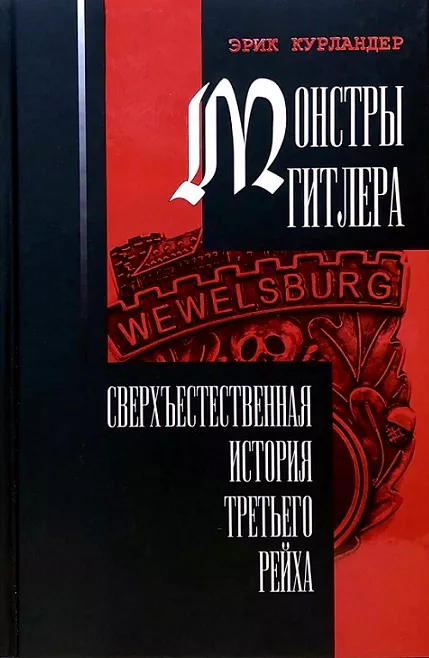 Not even a wagon is written about the connections of Nazism and occultism, but a whole composition of literature, where the standard of the hanging cranberries sets the “morning of magicians” Jacques Berezhier and Louis Vaul, and a solid academic study-the “occult roots of Nazism” by Nicholas Gudrika Crack. The relatively young American historian Eric Kurlander seeks if not to squeeze the last of the mentioned publications, then at least acts at the same level of study of the issue.
The work of Kurlander is significantly larger than the Book of Gudrick-Crack, the American deliberately avoids the plots that the British colleague perfectly illuminated, and disputes his conclusions, according to which Ariosophy did not affect the Nazi policy too much. On the contrary, the American claims, if we want to figure out what the Third Reich was, we will have to relate not only to Himmler fantasies about Hyperborea, but also to the Qatarian Gnosticism of Otto Ran, the Paleolithic visions of Herman Virta, the conflicts of the Irminsts of the Viligut school with the Armanists of the leaf school, as well as to the theory The doctrine of eternal ice and other exciting heresy. Curlander illuminates all these things and many other Curlardias, dry, without scandals, meticulously selecting sources.
The central concept of Kurlander is a “supernatural imaginary” (by analogy with the social imaginary Charles Taylor), that is, a complex complex of mental moves and practices, which was formed in specific historical conditions and became a condition for the possibility of no less specific actions of the Nazis in the field of politics and society. The Germans humiliated after the First World War generally felt extremely uncomfortable under the threat of dissolution in enemy trends. It was the “supernatural imaginary”, the agglomerate of anti -Modernist beliefs and modernist scentism, that provided the mechanisms with which the dangerous “others” (the Bolsheviks, Jews, the African Ruhr invaders, etc.) in the “monsters” - the very ones that appear in the name of the book, and then confront them.
“Under the influence of non -traditional studies of cancer, Sigmund Rasher Gisler instructed IWZ to work with Volksmedizin used by anthroposophy and life reform holistic and homeopathic methods, for which Hirta and May were also attracted. The mathematical department was arranged in the concentration camp of Skenhausen in 1944, and the botanical - at the beginning of 1945. "
Karin Cleman. Patriotism from below. "How is it possible for people to live so poorly in a rich country?" M.: New Literary Review, 2021. Content . Fragment
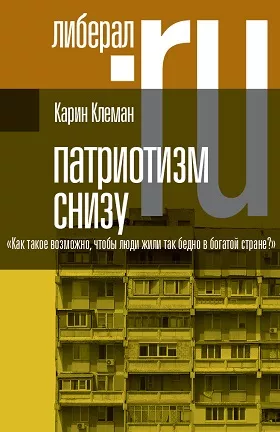 Observation of the news feed in Russia can plunge into the despondency of even the most persistent and “policy of non -interested” subjects. Thoughts that the “country” and “people are not the same” are turning away by themselves. The book of the Franco-Russian sociologist Karin Cleman can serve as an antidote here and a means to lightly ground reality.
The subject of research interest was lower patriotism - how dear Russians are experiencing and comprehending their involvement in a wide national community. The term “nationalism”, normative for Western scientists, the author does not use negative connotations due to its weighing for the Russian reader. At the same time, the sociologist notes that, unlike European countries, the same France, in Russia the nation is in the process of formation and, in particular, therefore its potential as a “precursor” of democracy has not yet been realized.
However, there are good prerequisites for this: according to the Cleman, collected in the country from St. Petersburg to Altai, there are very diverse forms of understanding of national solidarity in Russia, very different from the one that the so -called elites broadcast. Among the Russians (it was they, noteworthy, were the object of the study), “socio-critical patriotism” dominates, where the central experience is the question made in subtitles. The unbearable burnability of this issue is an indispensable condition and the forerunner of transformations of the country's political landscape.
“According to the results of the field study of the two quarters of Moscow, the researchers“ did not find at least some insurmountable hostility to “others”, indoctrinated by any xenophobic or racist theories. ”
Natalia Bichurina. Mountains, language and a little social magic. The experience of critical sociolinguistics. SPb.: EUSPB Publishing House, 2021. Content
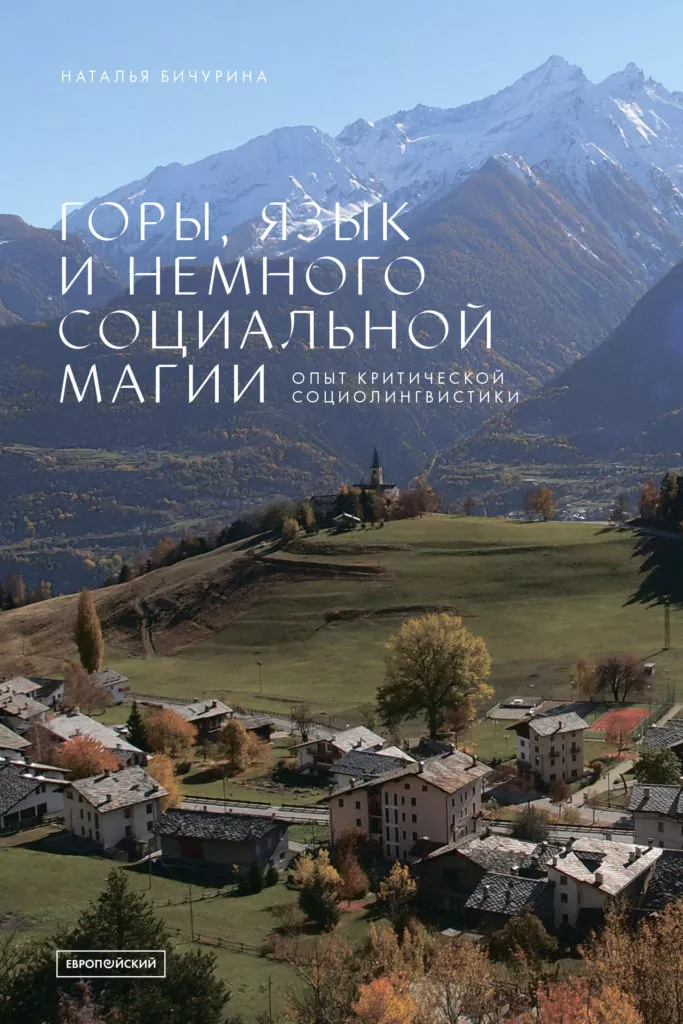 An inexperienced mind the birth of new languages can be represented by a kind of “experiment with a dripping bake” -an infrequent event that no one has seen with their own eyes. The sociolinguist Natalya Bichurina refutes this consideration, as well as problematizes the common thesis about the “death of languages”. Her monograph, which grew out of a long -term study, is devoted to the birth of the Francopolynsal language, which speaks in the Alpine region at the junction of three countries - Switzerland, France and Italy. In each of them, the author lived from year to three, plunging into the material.
Here the question arises, in fact, what kind of birth we are talking about, if the indications of the Franc Polyansal language, it is the Arpanian, can be traced in the documents of the VI century? The francopovansalsky, who turned out to be in the 20th century, was in the threat of disappearance, only now receives the legal status of the regional language, standard writing, entered into a school education, and its native speakers are recognized as a language minority. Bichurina considers from the prospect of critical sociolinguistics the processes that accompany this act of “social magic” - the introduction of a new thing into the reality of a reality - and first of all, how the people are experiencing the situation for whom the Armenian dear.
This is a charming, far from academic formalities, work at the junction of ethnography, history and philological analysis. A special flavor gives her many personal impressions of life in the rather dense pocket of Europe.
“In the Aosta Valley, with great food, they belong to those who are shown on TV, and Swiss forecasts look as the most reliable.”
We also had a selection of five books on how and why to save dying languages in Russia.
Gillian Porter. The economy of feelings. Russian literature of the era of Nicholas I. Boston, St. Petersburg: Academic Studies Press, Bibliors, 2021. Translation from English Olga Subborntseva. Content
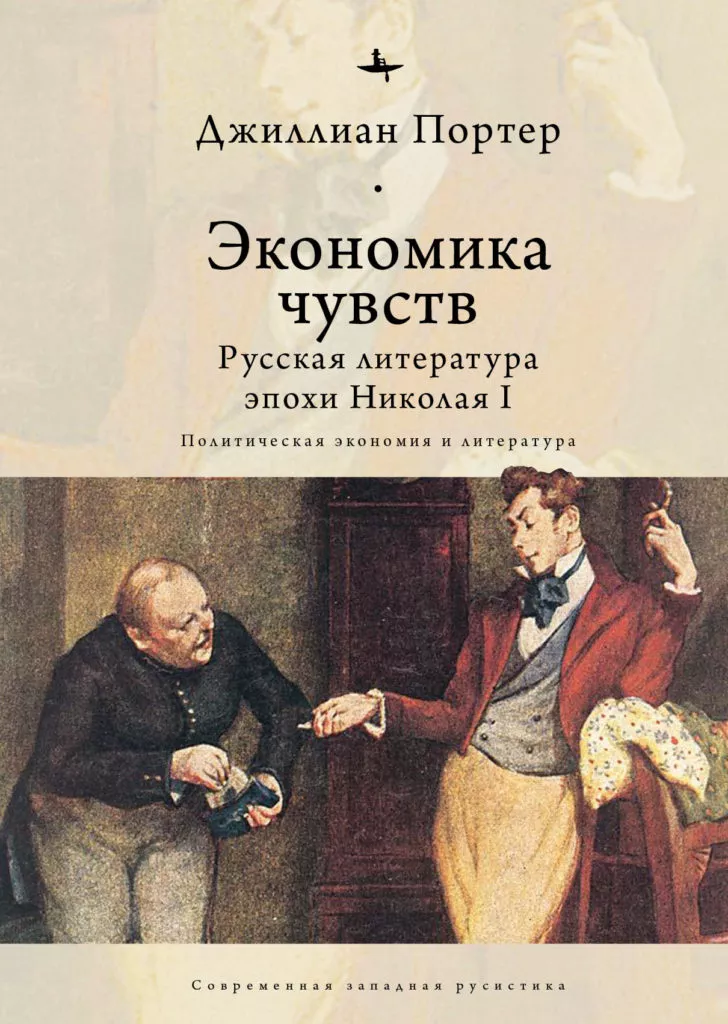 The American Gillian Porter studies an interesting topic: how changes in economic circumstances influenced Russian literature in the 1820-1850s, in particular, the imagery and image of feelings. The basic concept that the author operates is ambition, and it cannot be translated into Russian with all unambiguity as “ambition”. It is unfolded, we are talking about a passionate desire for social advancement and/or enrichment. At the beginning of the 19th century, it comes to the fore in the literature of France and then in a very peculiar way is absorbed in Russian literature after the Decembrist uprising.
The specifics of this reception are examined by a porter. In the interpretation of Gogol, Pushkin and Dostoevsky, this passion is primarily a ticket to a crazy house. In an unexpected confrontation, it is pre-capitalist heroes-scourge in the works of the same authors. However, in the changing economic conjuncture, the Black Sea are no longer undergoing moral condemnation; Through them, new values are questioned. Porter devotes a separate chapter to how the traditional hospitality economy is corroded - on the example of Dead Souls, which are presented by a series of unsuccessful noble tricks.
“In this expanded comparison [in Pushkin] money turns the old man into a young man, a secluded scene - into a love date, and filling the chest into a sexual act.”
Alice Rostorn. Design as a relationship. M.: Museum of Modern Art "Garage", 2021. Translation from English Maria Savostyanova. Content
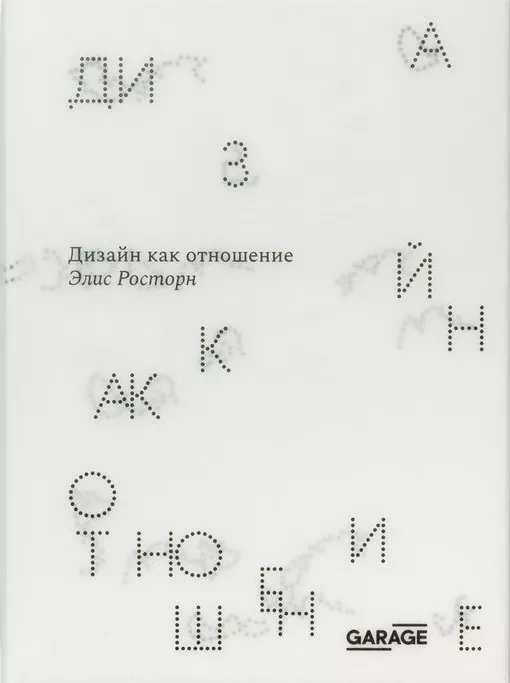 Design is a profession, design - styling tool, design - profit catalyst, design - the cause of the cluster of garbage in the Pacific Ocean. Here are just a few, we note, the not -so -wing beliefs that the Englishwoman Alice Rostorn displays in her book, known, among other things, as the director of the London Museum of Design. The definition that suits it is issued in the header of the book and belongs to the Hungarian artist Laszlo Mokhoy-Eve, and the term “attitude” was translated into Russian.
Promising to explain what, in fact, “design” means, Rostorn produces a beautiful nebula: “they say,“ this is an agent of transformations that interprets the changes (shifts) of any kind <...> in order to ultimately guarantee that they will influence us positively, and not negatively. ” From the book itself, which is based on the columns for the Frieze art journal, the nebula acquires slightly more sharp features, but does not lose enthusiasm.
The book can be understood as an attempt to affirm the prestige of a fashion profession, a motivating manual for students, as well as a rhetorical memo for meetings with business and government agencies. But “Design as a relationship” is also a collection of curious observations of the zigzags of material culture.
“Many of the most pleasant moments of working with digital devices are associated with touch and gestures - for example, the“ pull to renew ”maneuver, with which we update our mailboxes and Instagram tape.”