
Translated material
"You have HIV, you must leave"
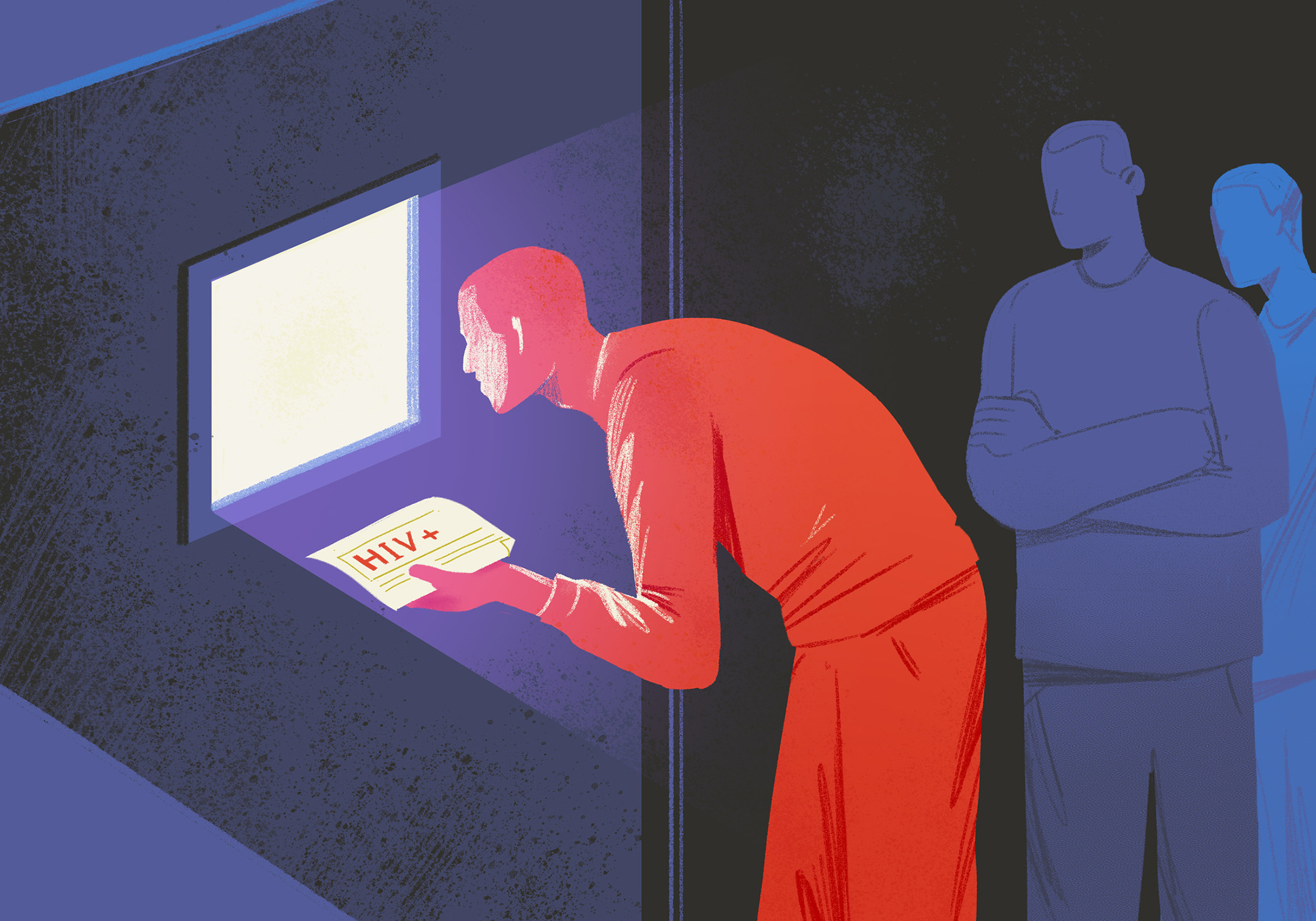
In Russia, a law that prohibits migrants with HIV infection in the country is still in force in Russia. This norm does not just legalize discrimination - it exposes the deadly danger of people who could receive treatment and live the most ordinary life
In the Kresta pre -trial detention center, the “feeder” opened - a hole through which the arrested is transmitted. The woman looked out in the window and shouted: "Ramis - who?"
Ramis went to the "feeder".
- Congratulations, you have HIV. Come on, sign. If you infect someone, imprisonment up to three years.
The woman left, the feeder closed. Ramis turned, looked at the cellmates:
-What was it?
Ramis arrived in St. Petersburg from Kyrgyzstan, worked as a driver. Ten years ago, he returned from work late at night, fell asleep at the wheel and hit the traffic accident. Ramis could not compensate for the damage for a broken car.
“The company took off the responsibility: I had to work for eight hours, and it came out thirteen,” says Ramis. -I was delayed due to the fact that the car had to be repaired. I could leave it [in a car service], but there was a product inside it, [therefore] I waited for repairs, I took the goods, and it happened on the way back.
For five months, Ramis spent in a pre-trial detention center, he was sentenced to two years in a penal colony. The man had a wife and son in his homeland.
All this time, Ramis did not receive antiretroviral (arv) therapy, despite the positive HIV status. Migrants in Russia do not have the right to this treatment, and in prisons, all the more there is no access to the necessary medicines. The man did not know anything about the disease, the cellmates already told him something about the virus.
Ramis was released in 2013. Of the documents, he only had a certificate of release. He was stopped immediately on the way from a colony to St. Petersburg, detained and sent to the center for those who are waiting for deportation.
There Ramis spent another six months, during which he became ill, tuberculosis of the lymph nodes developed. The man was taken to the hospital and again confirmed that he had HIV. After that, the deportation process accelerated: another court passed, and employees of the migration service took Ramis to the airport.
Ramis recalls that before the deportation they said directly to him:
- As we go to the airport, you take off the mask, do not talk about temperature or tuberculosis, otherwise you will be returned again, they will not be allowed into the plane.
-The doctor told me to return to my homeland, it was necessary to start taking ARV therapy, otherwise I would not have cured tuberculosis. I had to remove the mask and say that everything is fine with me, ”says Ramis. - As soon as they took off, my dizziness began. This five -hour flight seemed to me an eternity. Honestly, I thought I would die.
Come and get infected here
In Russia, there is a law under which migrants with HIV are refused treatment and deport them to their homeland. The norm appeared in the country in 1995 as a fight against the spread of the virus. Initially, the law was adopted in conditions when HIV has not yet been a widespread disease.
The authorities believed that the epidemic in Russia can be prevented if you limit the flow of people with HIV, says Daniil Kashnitsky, a junior researcher at the Social Policy Institute of Social Policy. But by the end of the nineties, HIV still spread throughout Russia, including due to the use of injection drugs, because people used common syringes.
Daniel emphasizes that now in countries where migrants most often come to Russia - Uzbekistan, Tajikistan, Ukraine, Kyrgyzstan and Moldova - the level of HIV spread is lower than in Russia.
-In Ukraine, it is slightly lower, and in other countries-significantly, four to five times. Today we are not talking about the fact that someone comes to Russia massively with HIV, but rather on the contrary: they come and here they are infected with HIV infection, ”says Kashnitsky. - This is evidenced by the data of epidemiological supervision among migrants who returned to Uzbekistan and Tajikistan. And again, this does not happen because they came to the country with the high prevalence of the disease, but because they have an increased risk of life.
Daniil attributes to the increased risk of life a gap with the family, the lack of help and older relatives who would follow those who left. As a result, migrants enter into sexual relations freely, they can begin to use drugs.
“I lived without my wife for three years,” says Ramis. - He led, as they say, random sexual intercourse. I had an HIV through the bed.
First you have to repay debts
Upon receipt or extension of the patent, as well as a residence permit in Russia, people need to hand over the HIV test. The procedure usually takes place in migration centers. There is a large stream of people, and if someone finds a virus, as a rule, no one consults it and explains nothing. They just say: "You have HIV, you must leave."
“This news as a bag hit a person on the head,” says Kashnitsky. - In rural areas of Tajikistan, for example, the average salary is $ 100, it is only enough for food. People, in order to come to Russia and pay for a patent, borrow money from relatives, friends, in banks. First you have to repay these debts, and then only start working in a plus for yourself.
Migrants who came to Russia to work, do not want to deceive the expectations of relatives. In addition, HIV is Stigma, so migrants last want to talk about the disease to their loved ones. Therefore, they hide their status and begin to work illegally, especially in Russia, the possibility of working in the gray area is still preserved.
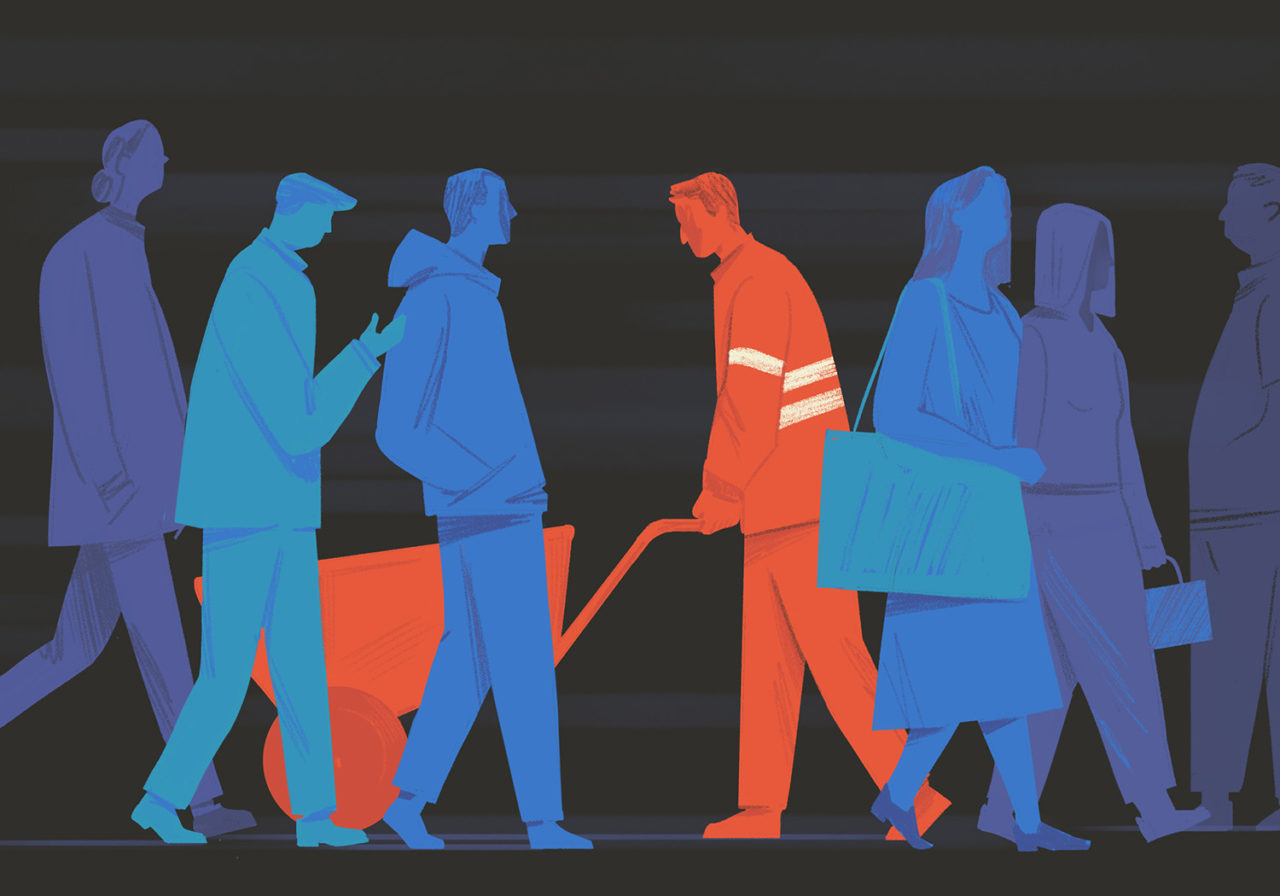 Illustration: Ksenia Gorshkova for TD
Thus, the ban on migrants with HIV is in Russia has many negative consequences. The person whose virus was identified is literally pushed into the illegal sphere. He not only does not receive the necessary treatment - remaining without a patent and a residence permit, the migrant is not protected by law, at any time risks losing his job and salaries, it becomes especially vulnerable to the police: if they stopped on the street, he will have to give a bribe.
Read also Just one of the chronic diseases. How to live with HIV?
Ilgiz decided to work in the gray zone. In 2019, he came to Moscow from Uzbekistan to work in his specialty. But it did not work out. Through the mobile application, Ilgiz met a young man who invited him to "work an escort."
- After he told me this, we quarreled with him, even came to the fight. But I needed to send a serious amount home, and it was impossible to achieve this in Moscow in Moscow.
Ilgiz went home and, as he says, "thought well." The apartment in which his parents lived was put up for auction for debts in utility bills. They were given sixty days to pay fines.
The young man returned to Moscow and agreed to work.
-I deceived myself, reassured that it was temporary, that I would come up with something and return back to a normal life. But I went into this more and more. I began to meet with serious, big people. They asked for evidence that I was healthy - every three months I was checked. And something suddenly prompted me that something was wrong with me.
The very bottom
In the State Medical Center, Ilgiz's fears were confirmed. The doctor told him that he had a huge viral load and he was sick with HIV.
- I decided: I have to kill yourself. He worked out different options: jump from the floor, hang himself, get poisoned, rush under the car. But I realized that I would bring more problems to my family than alive. It is very difficult to take out a corpse from Russia to their homeland.
The young man was not given psychological support in the medical center, but the specialist immediately began to insist that Ilgiz provide his passport data, convincing that he would not transfer them anywhere.
- I knew that as soon as I provide them, they deport me. I was not afraid of expulsion to my homeland, but the reason-because of HIV-I scared me. I did not want someone to find out about this, ”says Ilgiz. - I really cherish my parents, with such news I am afraid to shock them - they can even abandon me. I have not received anything in this life, the most expensive in it is my mother and dad, I cannot lose them.
Ilgiz did not reveal his personal data, did not talk about the disease to his relatives and remained working in Russia. But he decided to lead another way of life and tries not to return to the past.
In addition to difficulties with work, foreigners with HIV cannot receive education in Russia, even paid. Four years ago, Amir came to study in Tver from Uzbekistan. He was in the last year of the institute when he found out that he was sick.
Like Ilgiza, Amir no one consulted about the disease. Instead, the doctors began to insist that he needed to register - supposedly then he will be able to receive therapy for free, like other foreigners.
“Of course, this was a deception,” Amir is indignant. - Only after they took my data, they told me about deportation. The condition was then ... the very bottom. What is the deportation? I can’t quit my studies, I have already studied for a dentist for seven years. Plus, I belong to the MSM community (men who have sex with men. The term is accepted in organizations helping people with HIV. - Approx. TD ). The return back would end very poorly.
Amir learned about his status in January 2020. He still has not told anyone about this. The young man only wanted to tell a guy about this, who most likely infected him. But they did not see a year, and Amir could not find him and talk to him.
- In my homeland, everyone believes that only sinners are sick of HIV. I myself was brought up in such beliefs. They don’t know that there is therapy, that those who are treated are not infectious, everyone thinks that if you have HIV, then you are doomed. But now I have been living for a year, and everything is in order.
It just needs to be done, and all
Migrants with HIV, who remain illegally in Russia, have no access to planned medicine. They can only count on the emergency assistance of doctors.
Due to the fact that migrants cannot take ARV therapy, their immunity is reduced, the viral load is growing, complications begin. By the time they get to the hospital, they already need a long treatment that the Russian state is obliged to provide them.
But even with access to emergency medicine, difficulties may arise. In anticipation of deportation, Ramis spent several months at the time of temporary maintenance of foreign citizens, for a long time his temperature of forty degrees lasted. He began to treat tuberculosis only in Kyrgyzstan.
- For four months I was in the hospital. It was very bad without money. They did the operation there: without anesthesia - “without no hell” - they cut me.
Unprofitable discrimination
In the regional expert group for the health of migrants in the region, Veza was calculated that hospitalization and inpatient treatment of HIV migrants are more expensive than their provision of Arv therapy. So, the country spends more than 220 thousand rubles per person with an advanced case of HIV in the hospital, and the course of annual Arv therapy would cost about 85 thousand.
If Russia legalizes people with HIV, they will be able to return to their homeland, register in an AIDS center, get treatment and continue to work in Russia.
“We do not even demand today to lay a budget for the treatment of migrants with HIV - it is enough to remove the norm about the expulsion,” says Daniil Kashnitsky. -Doctors, officials for some reason believe that the abolition of deportation will necessarily entail an increase in expenses, but this is not so. At all, no one will suffer from this, and there will be many pluses. It just needs to be done, and that’s it.
Many countries canceled similar deportation norms 10-15 years ago. According to Daniil Kashnitsky, HIV is a pandemic and closing the boundaries does not help the fight against the spread of the virus. The European Court of Human Rights demanded that Russia are completely abandoning the discrimination of HIV-positive foreigners back in 2016, but during this time the legislation has not changed in any way.
 Illustration: Ksenia Gorshkova for TD
In April, the deputy of the State Duma Fedot Tumusov sent a bill for consideration by the Russian government, which proposes to cancel the mandatory deportation of migrants with HIV if they receive ARV therapy. The chairman of the board of the non -profit organization Humanitarian Project Denis Kamaldinov is sure that the initiative will improve the incidence situation.
- A person who takes therapy will not transfer the virus to others. This will partly solve the problem of prevention, says Kamaldinov. - If labor migrants are legally in the country, then the country needs them. This means that it is important to verify all the mechanisms of legalization of these people, regardless of HIV status.
According to Kamaldinov, if the countries from where the migrants come, they will agree to provide them with therapy, then it will be necessary to decide who will control the treatment. He believes that the treatment should be monitored in the healthcare system, and not in the migration service.
- It is important to calculate the capabilities of the healthcare system for the observation and maintenance of migrants or work out mechanisms that are associated with the fact that a person provides tests for local healthcare.
Tumusov hoped that the initiative would be successful:
- At least if you look at things objectively.
But in mid -July, a negative review of the bill came from the government. The recall (the editorial office is at the disposal) specifies that there are no legal grounds for providing migrants with therapy at the expense of foreign states. Bans of the entry and accommodation of foreign citizens and stateless persons with HIV, according to the document, are established "in order to prevent the spread of HIV infection in the Russian Federation." The exception is only people who have family members, children or parents who have citizenship or permanently residing in the territory of the Russian Federation.
Will never seek help
It is traditionally believed that HIV is common only in certain groups: among homosexuals, injectable drug users. The risk of infection they have is really higher, but, according to official figures, the main path of transferring the virus in Russia is sex of heterosexual partners. Due to prejudices about the spread of the virus, people with HIV do not take tests, do not know about their status, infect partners and exacerbate the pandemic. In 2019, 1,068,839 people living with HIV infection were registered in Russia.
According to Kashnitsky, there is no data that would say that among migrants, HIV spread trends differ. Throughout the region of the belief, the proportion of the sexual transmission route is growing and the share of HIV transmission is reduced when using injection drugs.
To combat the epidemic, every HIV-positive person should have access to ARV therapy. On average, in three months of treatment, the viral load is so reduced that a person cannot infect other people, even his sexual partner with unprotected sex.
According to the research platform “to be precise”, only 44% of people living with HIV received antiretroviral therapy in Russia in 2019. This is due to underfunding of AIDS centers, with obsolete treatment protocols, as well as stigma around the disease - people are afraid to seek help. Someone is worried that acquaintances will learn that difficulties at work may arise; Migrants are also afraid of expulsion from the country.
“Migrants with HIV will never seek help,” says Ramis. “They know: they are shining for a lifelong deportation.”
Visitors with HIV not only do not contact doctors, but also do not undergo official testing for the presence of a disease due to fear of expulsion. Therefore, there is no full epidemiological picture by the number of HIV-positive migrants. According to official figures, in 2019, HIV revealed in 97 thousand Russians and only 2 thousand visitors.
“Official testing data is the tip of the iceberg,” Daniil said. -We do not have the opportunity to believe that HIV-positive migrants represent at least any risk for Russians.
***
The zero viral load was achieved by all the heroes of this article. Ilgiz with the help of the fund contacted a doctor who painted a treatment plan for him, and he buys medicines in a pharmacy. Amir receives therapy in a non -profit organization. Both so far remain in Russia illegally. For six years, Ramis has been receiving medicines in the AIDS center of Kyrgyzstan.
“Deportation is wrong,” Ilgiz believes. - Each person is mistaken - you do not know what will happen tomorrow. So I did not know. I was sure not for a hundred, but a thousand percent that this would not happen to me, I was protected, took premature and post -contact therapy, took tests. But still fell ill. But the main thing - I know about my status and pass treatment.
Ramis did not see his wife and son two years after returning to his homeland - he only talked with them on the phone. He believed that with so many problems and HIV-positive status he can no longer have a family. Then Ramis began working in an organization that helps people with HIV and tuberculosis.
- Doctors from the center asked me why I did not call my wife and son to me. I laughed: “What are you chasing? I have so many problems. " And then he decided to call them. For another two years, under various pretexts, I had sex with my wife with a condom. Но потом понял, что с терапией могу иметь здорового ребенка и не заражу жену. Нашей дочери восемь месяцев.
Редактор — Владимир Шведов
ВИЧ здоровье мигранты