
Translated material
Babi Riot
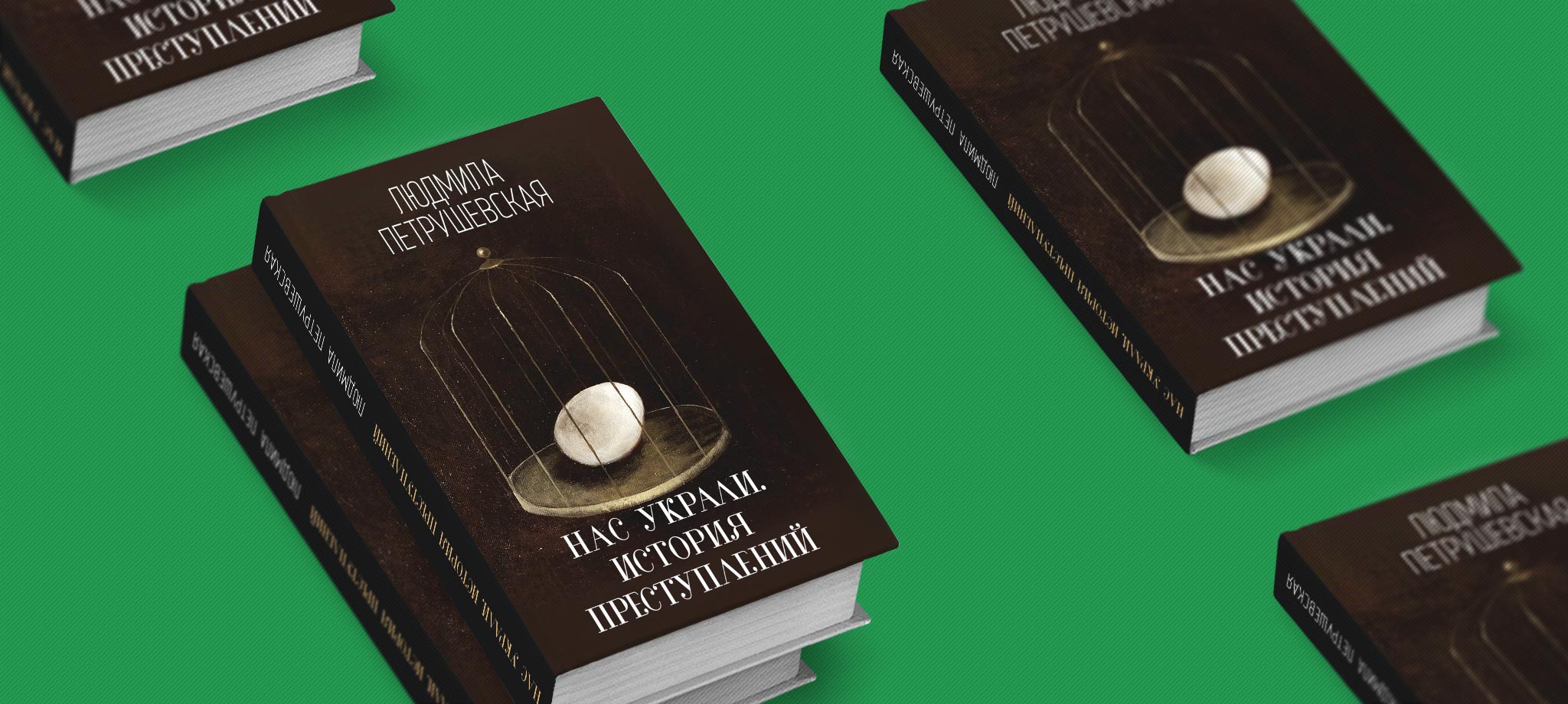
Lyudmila Petrushevskaya’s novel “We were stolen” shows what will happen when women take their fate in their hands
This year, Lyudmila Stefanovna Petrushevskaya turned eighty years old. Once a year - and sometimes more often - her new books come out. She regularly performs with her “songs”, a Kabar performance, the main character of which she herself becomes, an old woman, familiar to the whole country, if not in texts, then certainly according to the profile that she gave to the Norstein “hedgehog in the fog”. It seems that she is the hero of her own big novel, in which all her texts, songs, drawings, performances, her notes-memoirs on Facebook, her hats, finally, are finally woven. This novel is not just magnificent literature, but also the most optimistic text in modern Russian prose, the history of the triumph, you can’t say otherwise.
Post -Scriptum suffering
 Lyudmila Petrushevskaya photo: Publishing House "Eksmo"
And this is very important to speak, because in the minds of the mass reader Petrushevskaya is associated with suffering. She began to write in the 70s, and her main theme was the torment of a city resident-what to lie, a resident, a woman who went to prison in Russia forever reproducible in Russia: she is crippled by her mother and is terrified, as she carries the banner of this suffering through generation forward.
For several decades, Petrushevskaya turned out to be a forbidden writer, even Twardowski did not miss her into the New World. Most of all, her plays were not lucky, which the theater was so needed, looking for a voice and the image of modernity, but could not stay on stage-the legendary performance “Three Girls in Blue” Mark Zakharov in 1985 lived on the stage of Lenkom for exactly three days and was closed. And in the early 90s, when the texts of Petrushevskaya were finally printed, in 1992, when her first novel “Time Night” came out, all these texts, with all their greatness and all their horror, seemed to be a postscript of the past era: this is how monstrously we lived and, God forbid, we will never again.
Not marvelous and not new
“We were stolen. The history of crimes ”is the second novel by Lyudmila Petrushevskaya. He left in the summer of 2018, almost 25 years after the first. During this time, it became finally clear that, although it is as bad as before, we do not live, but the marvelous new world, perhaps, did not come either. And it seems that this novel allows you to understand what kind of world has come instead.
At the very beginning of this book, as in a fabulous detective, two fellows with the same surname and date of birth sit on the plane, but not very similar to each other. Two of the casket, not the same on the face, go to the father, whom they did not see and, perhaps, did not know, in the fictitious country of Montegasco. The father, however, is waiting for only one, and receives two: they turn their heads on the sides, laugh, and the driver, a simple conductor in a fairy tale, shows them the sights: “But the banker lives, a billionaire. With ten wives, everyone in the burns go to jewelry. ”
A fairy -tale country is a completely recognizable shelter of any morally unclean with money, including Russian rich people who are wanted in their homeland for economic crimes. But the path to this country lies from the same perestroika, whose singer Petrushevskaya once became, from the same darkness and unreasonable longing, and the fatty nomenclature in fur coats from Klyamm (this invention of Petrushevskaya will be worse than Karakul): “The Muerian drawing of the thinnest silk skin, an unborn lamb, taken from the dissected wreck of a living pregnant sheep”. It is clear that when you get into such a lady in a fur coat from unborn lambs, you can’t collect bones - all the more so as there are also two nomenclature ladies in fur coats. The stone that this braid is on is also the most fabulous: an orphan Alina, thrown out by a young stepmother from home, an excellent student from a phylaf and an abandoned bride - a short -legged Avtandil with a profile of Antio will leave her in the eighth month of pregnancy. But this is the very beginning of history.
Riot of characters against the plot
“We were stolen” - an affair with a famously twisted plot, but even more important, with an elegantly built architecture, a system of repetitions, reflections, mirrors. Here everything breaks up into two, and then more and more, as in a kaleidoscope: pregnant girls, their children, non -pound fathers, power mothers, KGB agents, black "Volga", fur coats, valuable appointments for bread, for which you can go for a forgery and worse. Well, children are in the center of history. The main event of the novel - the theft and substitution of the baby - is repeated here again and again, the children are painted, replaced, steal again, sold, and so on, until the unfortunate mother herself distinguishes her own from someone else. In the dizziness of these crimes, one cannot fail to notice the main thing: that the most defenseless, that is, women and children become victims. Especially children.
It was always the same: the classic hero, more precisely, the heroine of Petrushevskaya, is a woman, brought to an extreme degree of despair. The writer always knew how to hear and write down this despair, show the very edge of the abyss that they called, and now they continue to count, “black -legged”. But now her heroines refuse to stay on the edge, they no longer have a place here. This is a real riot of characters against the plot. Babi Riot, which does not do without magic: at the most terrible moment to find words and a way to protect yourself. The housekeeper, who stopped the harassment of the owner, the poor wife, who rebelled against the rapist, this focus is repeated in the new books of Petrushevskaya again and again, only in the novel “We were stolen” at least five times, and can not get tired of the reader. In the very name of the novel, some passiveness is laid down, here they really steal the same babies again and again. Only the heroes of Petrushevskaya refuse to be victims. It is difficult to convey how happy these magic finals are every time: the pensioner does not take the apartment from the pensioner, the children will not be stolen from the mother, the evil husband will not offend his wife, everything does not just end well, but ends well a hundred times in a row, as if these magical finals themselves, even comic in something, can affect the wrong magical reality. Even the style of Petrushevskaya, intentionally vernacular, naive, fabulous, sounds like a magical conspiracy.
There is no other such
All this makes Petrushevskaya directly relevant, maybe the most relevant Russian writer of the #Metoo era. Moreover, it is not faked by time, but creatively rethinks it: the right of women to their own history, to protest, leads to her victories. The novel “We was stolen” as if this new trend in the work of Lyudmila Stefanovna to his victorious peak: this cunningly twisted, like a spring, a detective story with a whole crowd of characters, scattering, scattering bad and bringing good things to the victory. As if in the “Soviet period of the Soviet period”, black “Volga”, fox fur coats, nomenclature workers and other time signs flash in front of the reader. They somehow imperceptibly flow into the signs of perestroika, with its corrupt police officers and a mess of privatization, and then to the signs of our time, with its new Russian rich people who have been leaning on old stolen money. All this historical phantasmagoria in the novel is only a background. But it is amazing how much he, in principle, does not change. Of course, Petrushevskaya sometimes has to explain some realities of time, but these comments only emphasize how organically the wild Soviet life flowed into an equally wild post-Soviet one, how inextricably they are connected. It is as if a direct indication that times in Russia will never change - but we can change ourselves. And not only visiting the fairy tale.
And here it is impossible not to note how organically all the texts of Lyudmila Petrushevskaya, whether it is an interview, memoirs on social networks or a story in a collection, form a single statement in a certain opus. And the main theme of this statement is victory. In one of the last posts, the writer tells how she was not afraid to speak with her Kabar songs in front of a thousands of crowds, waiting for Shevchuk at a rock festival. And so she freezes, raising her fingers in a victorious gesture, and she is not afraid of anything at all: neither that is stirring, nor that they will not understand. I would like to hope that they will still understand. We have no other such.
Women Books Psychology Russia