
Translated material
Ask the thirteenth
"Gorky" in "Labyrinth": Do not miss these books
Acquaintance with sociology, memoirs of the Muse, the history of the century through the history of the family and the abnormal novel: meet the next issue of the “Gorky” section in Labyrinth. ” Today we will talk about the books written by Alexei Levinson, Bella Chagall, Min Jin Lee and Christian Krakht. 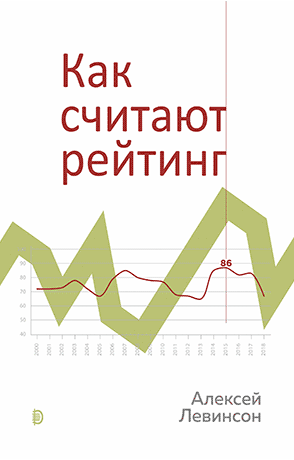 Alexey Levinson. According to the rating. Minsk: Discourse, 2018
Alexei Levinson is the head of the department of sociocultural research “Levada Center”, related to this organization almost from the moment of its formation. Levinson teaches, writes permanent columns in the “inviolable reserve”, on YouTube you can find a lot of records where he talks about the role of sociology in conflicting Russian realities. But the most important thing is that these realities are not scared and Levinson does not at all believe that he is engaged in useless business. Polls, according to him, will not provide us with the “desired” regime, but at least they will tell the society in what mode it is now.
The book is small, but the author approaches the topic from different angles, managing to tell and where public surveys came from, and how they are conducted today, and what they mean (how to interpret) their results. This is, of course, not “introduction into the subject” - rather, acquaintance with the profession, such a short tour of the small, but very important plant, whose products no one ever touched with his hands.
In the book you can distinguish about three main plots. The first is historical. Probably, Levinson recalls more for the submission when pons inoproops first appeared (the very beginning of the XIX century in the USA), not without a reproach that in Russia at that time there were completely different things on the agenda; It is more interesting to both him and readers of the Soviet period, especially the moment of Gorbachev’s perestroika, when we also thought about the importance of direct conversation with ordinary citizens.
The second plot is technological, here the survey procedure here (which are different: survey, live interviews or by phone) is analyzed in detail. How they collect a sample for the next survey - in other words, as in answers 1,600 people can be an idea of the whole country; Who exactly is asked on the eczitpoles (it turns out, not everyone, but only every seventh or thirteenth, while “if there are two, see who you like more and take the other”); Why the voice of a conditional grandmother “weighs” as much as the clerk following the current news.
And the third plot, the most probably necessary, is dedicated to what the results of surveys conducted weekly are actually mean. You really will not always understand this, given that the most often the respondents ask a rather general question, in response to which could be discussed for a long time. On this topic, the most substantial chapter is the last (which “instead of the afterword”), which says about Putin’s rating and what they mean when they write that a certain percentage of residents “approves” his activities. What exactly they approve and, most importantly, why - this is real sociology, perhaps.
Buy on Labyrinth.ru
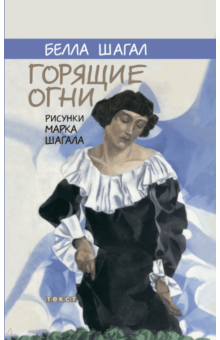 Bella Chagall. Light lights. M.: Text, 2018. Translation from French Natalia Mavelvich
Bella Shagal (Rosenfeld) is the wife of a great artist, whom he captured not only in his most famous picture “over the city”, but also on many others. She became a constant muse for him, and he for her - an eternal subject of admiration; She followed him in crossings, helped, and he entered her forever in the history of art as his main character. Unfortunately, for the general public, she remained that very heroine; Those who study the history of the Jewish nation and on this topic collect countless artifacts, it is also known as the author of memoirs about their childhood.
In 1935, Bella and Mark were visited by Jewish ghetto in Vilna and Warsaw. Apparently, from some subconscious feeling (or even forebodings), due to the desire to preserve herself and her national culture, Bella takes up memoirs, in which she with straightforward innocence and, perhaps, describes the Jewish childhood in Vitebsk with excessive meticulism. After reading the text so saturated with the Jewish context, you begin to understand why all this must be recorded.
Actors - parents of Bella, nannies and teachers, church ministers and parishioners, neighbors and friends; It seems that literally everyone who was in the view of the little girl Basi came here, and it is even surprising that adult Bella did not “analyze” each of the characters and divide them into important and not very. Although the narrative is designed artistically, the author’s primary goal is still the museum preservation of their names and the way of life with which they lived. There is something to maintain: the childhood of the heroine, and youth, was entirely in pre -revolutionary times. And although she herself felt her nationality, she did not follow all religious rules too strictly, her family nevertheless celebrated the necessary holidays and was a completely traditional Jewish family.
Buy on Labyrinth.ru
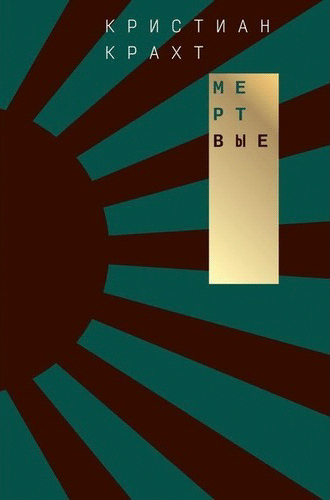 Christian Krakht. Dead. M.: AD Margin Press, 2018. Translation from German Tatyana Baskakova
There are films that, by a strange coincidence, come across fragments: we have seen them more than once, but always - only from the middle or individual (and the same) pieces. View such a film completely, from beginning to end, over time becomes almost the subject of excitement. Similar sensations - as if accidentally viewed or read completely different parts of the same story - are also caused by Kramt’s books, but there is simply no such original, where these parts are finally formed in a “normal” narrative and everything falls into place.
In the "dead" too. The nominal main characters act according to the formal plot, which, however, is scattered during the narrative, and individual scenes seem to be torn from different books-moreover, familiar characters somehow found themselves in them. This is like a game in association, when the author offers cards with a poor set of material characteristics - a steamer, a gun, Charlie Chaplin - to immediately play a scene, directly opposite to the associations that came to our minds. The whole book is a viewing of cards, and in order to collect a logical chain from them, you need to either peer into the smallest details, which will become the binding links of the whole history, or come to terms with the fact that there is no story.
The formal plot looks like this: in the 1930s, a young, but in the soul “aging” the Swiss director goes to Japan-not only to make a film on behalf of, but simply dispel the crisis in which he found himself. The German film company sends a hero there, simply because he is not a pity - you never know what in this Japan can be happened. A letter with a request for the director’s arrival at the film company is written by an employee of the Japanese Ministry of Culture, who thus wants to raise Japanese cinema to a new level. He turns to the Germans, since since childhood he was deeply interested in German culture and unnoticed for himself began to work for the German Empire. The bride of the “aging” director, oddly enough, has long been waiting for him in Japan, however, having already managed to put his eyes on an attractive official. In a word, Krakht, the irony of which oozes here almost from each page, as if mocking the very idea of the plot, breaking and turning it out as a foamine doll (and the fact that the book is written according to the scheme of the organization of the performance in the Japanese theater but does not help us much).
Krakht is one of those authors who are bored to call a spade a spade; Of those who do not put their thoughts in words, but finds sensual or visual analogues for them; of those for whom the state of the hero is much more important than his actions; Of those who eventually turn homegrown reader associations against themselves. The main local state is “silent melancholy”. It is she who pushes the heroes to “pathetic gestures” in spite of herself and everyone around, and then plunges into a relaxed contemplation of a beautiful garden, she turns any scene into a bunch of absurdity, makes her peeping into the color of the skin of her fingertips, finally, she leads the heroes to imminent death. If there is some kind of “axis” held between the two continents, then this is a terribly tense string-garnet, where universal ordering, all-human search for meaning and unfulfilled aesthetic pleasure converge.
If you do not find the meaning, by the way, you can help you help the afterword of the translator, offering several more options for reading the ingenious text.
Buy on Labyrinth.ru
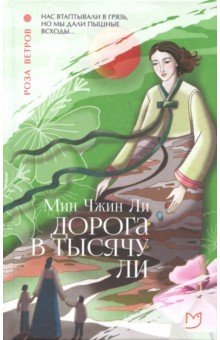 Min Jin Lee. The road is a thousand Lee. SPb.: Arkady, 2018. Translation from English Olga Chumicheva
In a small and barely cope with debts, the boarding house, which Changin holds alone with his daughter Songja, comes a stranger, whose father allegedly already stayed here several years ago. Changin remembers that guest (as perhaps all), but at first it does not attach any meaning to this and accepts the guest with ordinary cordiality. , Because of the poverty of her family, she once married a man with a hare lip and a curved leg, lost three children and, it seems, had already seen too many, and therefore just lives without looking at a time-although she is only 37. However, this visit is re-launched a long-abandoned but still working mechanism.
The novel of the Korean writer (written, however, in the USA) begins at the end of the 19th century and talks about all the main upheavals experienced by the Korean Peninsula in the twentieth century. The most painful historical episode, of course, is the occupation of the country by the Japanese; Several generations of heroes never lived in Free Korea at all. For years, the accumulated resentment leaves an imprint on the mood of the minds - if we talk about men; Women, accustomed to their rather modest role, continue to take care of preserving the house, family and descendants. There is such a genre - the history of the century through the history of the family, and vice versa. This is just the same case. Given how little we know about Korea (like her neighbors - China and Japan), this reading is almost encyclopedic.
Buy on Labyrinth.ru