
Translated material
"Wild Field"
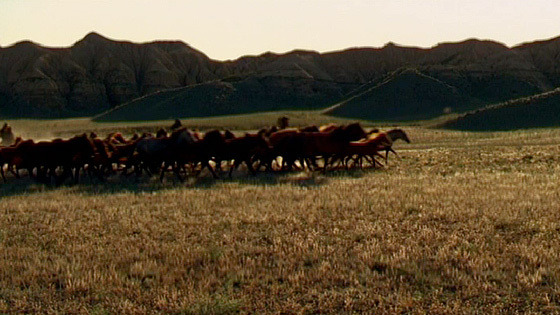
The wild field is the historical name of the undertaken and weakly populated Black Sea and Azov South Russian steppes. Perhaps it was these places that seemed to Peter Lutsik and Alexei Samorobava when they wrote a script for the film, which they did not have time to shoot during his lifetime. The text lay for eight years, moving from hand to hand until Mikhail Kalatosishvili took up for him - screenwriter, director and producer of the film "Wild Field".
Far, far, somewhere in the southern dry steppes people live. There are very few of them. They themselves do not know how and why they ended up where there are no electricity, gas, roads, and the only one for the entire village of Dr. Mitya ( Oleg Dolin ) has absolutely no medicine. It will be brought a drunkard who gathered to die after a forty -day binge, then a man will drag his sick cow. But there is still nothing to treat, there is a zylenka and bandages, plus everything that falls by the arm. But oddly enough, people do not die. They sometimes revive in those places in the morning after the lightning strike, having leaned in the ground with their heads sticking out of the ground. It happens, and the policeman Ryabov ( Roman Madyanov ) will jump on a horse. It can just jump, or maybe with a pair of wounded. Mitya has a bride ( Stoyanovich ), there are no letters from her, but she promised to come.
It is known that the script takes only twenty -six pages, perhaps this would not be quite enough for a full -length picture. Some monotony and unsaturation of what was happening, in my opinion, benefited the film for the benefit. The sluggish rhythm fits perfectly into the plot. It is difficult to imagine what other way the scarcity of these steppes could be expressed, the doom of existence in these places and against this background to emphasize the optimism of the inhabitants and their incredible desire to survive. The heroes are pouring with jokes, rather cause not even a smile, but a smirk, because well, it’s not funny, but rather sad. Many films were shot about holy fools, about people living in the outback, and, on the one hand, this is our flavor, and on the other, our reality.
A pleasant surprise was the fact that Kalatosishvili managed to make a very slender film in style. He created a space that with all his attributes does not cause suspicion. And the Soviet song in the Niva car, and the policeman on the horse, and “Don Quixote” on the shelf - everything is surprisingly knitting with each other. Unless Oleg Dolin (Dr. Mitya) seems sometimes very tidy in bright jeans and relatively fresh sneakers. But they don’t tell us how miraculously his hero found himself in this place and how long he has been there. In fact, the whole film looks like an episode from the life of the protagonist. It is in the frame the main part of the screen time and it bothers a little. Fortunately, the final of the film justifies such a close attention to the figure of the notorious doctor and is just the depth that only cinema is able to give out. And a variety of thoughts about the past, present and future are climbing into my head ...
http://www.kino-teatr.ru/kino/art/artkino/1030/
Dmitry Pustovoitov for www.kino-teatr.ru