
Translated material
Venice from A to Z
Venice is a small town huddled on several islands of the Adriatic Sea, consisting of three windows tightly pressed to each other. And at the same time, this is one of the most important cities in Europe, once a thunderstorm of the seas, the city of merchants and artists, which was simply called La Dominante - "ruler" and La Serenissima - "brilliant". In this post we talk about people, events and places of the city and represent 10 integral details that make up the bright and original mosaic of Venice.
Biennale of contemporary art
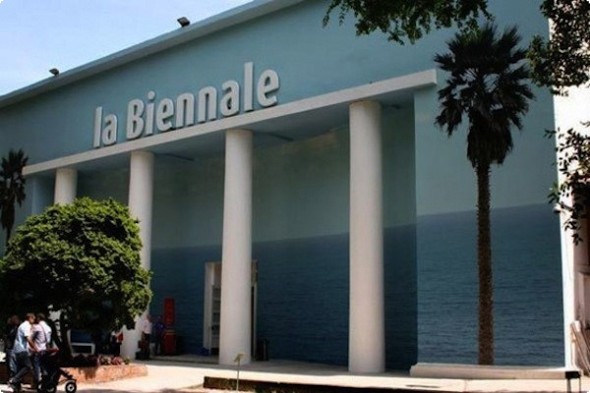
The Venetian Biennale has been held for almost 120 years, and at the very beginning the event was focused on Italian applied art. But by the First World War, Biennale became international: it was from that time that the time of the appearance of the largest national pavilions - American, British, French, German, Italian and Canadian. During the break between the two world wars, the Venice Biennale became a platform for expressing artists-artists, and in 1974, the Venetian Biennale (like the same film festival) appeared golden lions as the main awards that led the old former Grand Prix.
The International Venice Art Biennale holds on three pillars-the main program compiled by the chosen curator and the united general, to the best of the conventional theme, national pavilions representing the subjective choice of participating countries, and parallel events located throughout the city, carefully examined and approved by the Biennale directoral.
Gondola
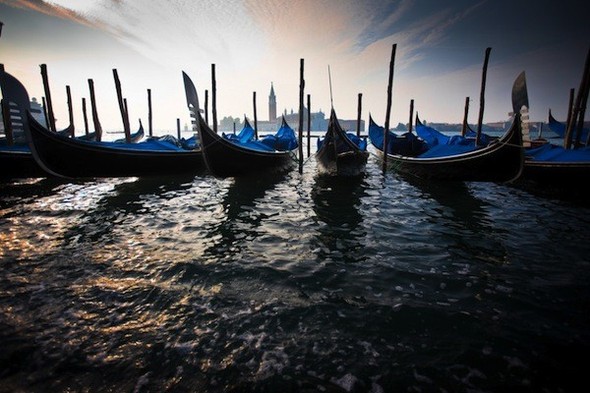
Even in the third millennium, Venice remains the only city in the world where there is not a single vehicle except the gondola, it is impossible to see even cyclists on its territory, not to mention any other wheeled vehicle. Back in the 17th century, the Stolnika, who visited the Venetian Republic from Russia, P. Tolstoy described the situation in the city: "There is no cattle in Venice, there are no strollers, nor loaded carts, no horses, nor luxurious carriages in the city. The Venetians do not even know what the sledges are."
Mirrors
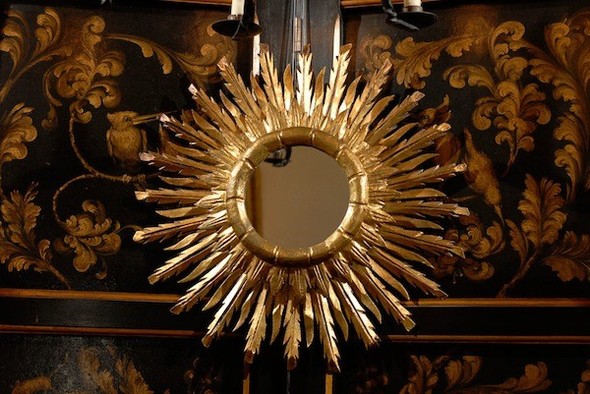
The technology of manufacturing mirrors was opened in the XII century. It was developed in Holland, then in Flanders. In the German city of Nuremberg, the first mirror workshop earned in 1373. But Venetian mirrors conquered the medieval world. In XIV
The century is the island of Murano. They moved the glass and the subm anile that this would protect Venice from fires. In fact, thus thoroughly hid the secrets of glassy, and the masters, although they encouraged, were practically isolated from the outside world: they were too great from the monopoly.
Casanova
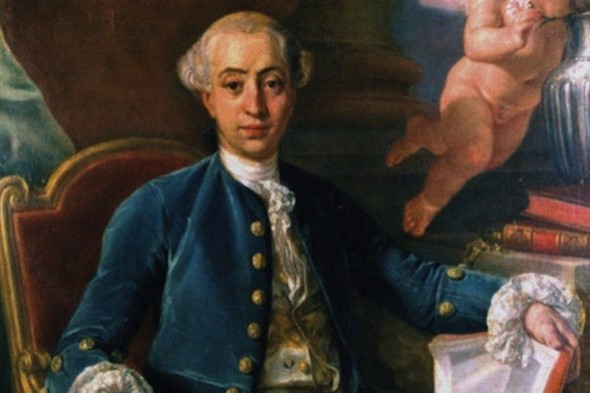
Casanova, who went down in history as a kind of sexual giant, the Venetian Don Juan and the Great Coverman, was just a failed writer, as well as a gelator who worked with the Venetian government. It is Kasanov that belongs to the invention of the game in the lotto, one of the ways to earn extra money for the government always stared for the money. In prison, he sat not at all for his alcan feats, but because he was a scammer and spy, he, as often happens, worked on two fronts, and when it was discovered that he disclosed state secrets, he was planted in Pimbebi, the famous prison located in the Dogee Palace. And he did not fled from prison at all, as he claims in his book, but after some time he was released with an order to leave the city.
Carnival
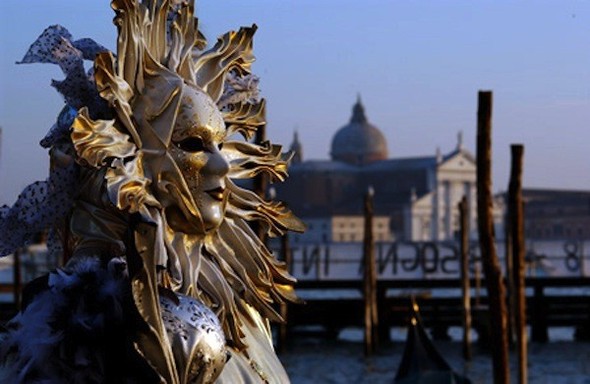
The Venetian carnival is annual, begins 40 days before Easter and ends with Shrovetide, the day before repentance. The Venetian carnival is famous for its parties, outfits, extravagance and, of course, masks. The schools during the carnival, which lasts from Thursday to Tuesday, close, but before closing on Wednesday, children must certainly come in costumes, and here, I must say, the Venetians show a huge fantasy, dressing up their kids with Ilvas, and tigers, and characters from cartoons, and medieval knights in complete ammunition.
Cafe "Florian"
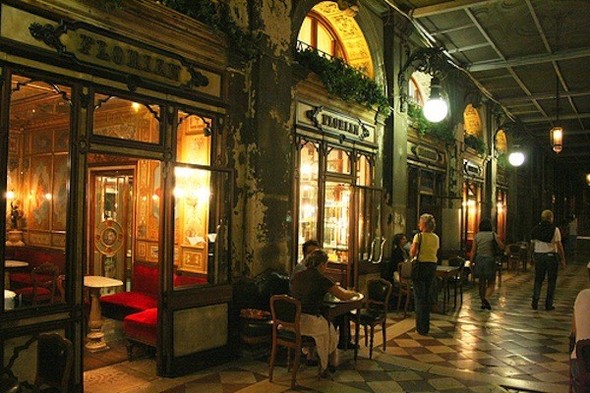
The Florian cafe, which became one of the symbols of Venice, was discovered in 1720. This is the oldest cafe not only in Venice, but also in Europe. There were Lordbairon, Casanova, Russo, Hemingway, Brodsky.
Floods
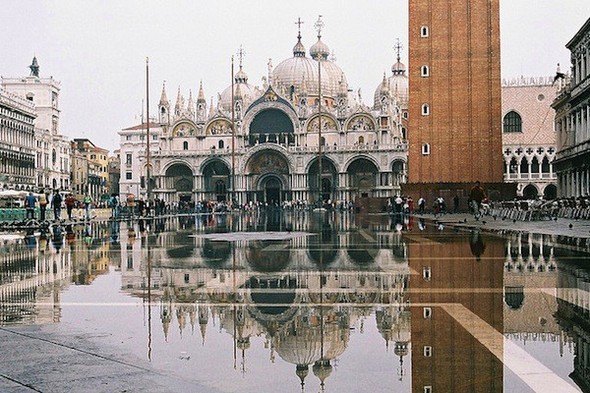
As you know, in Venice, a city standing on the water and in the middle of the water, there are often floods, and San Marco Square is one of the lowest places in the city, it floods it very often. As soon as the minimum Acqua alta occurs (this is the name of the flood in Venice) - and the area completely goes under water.
Paviment
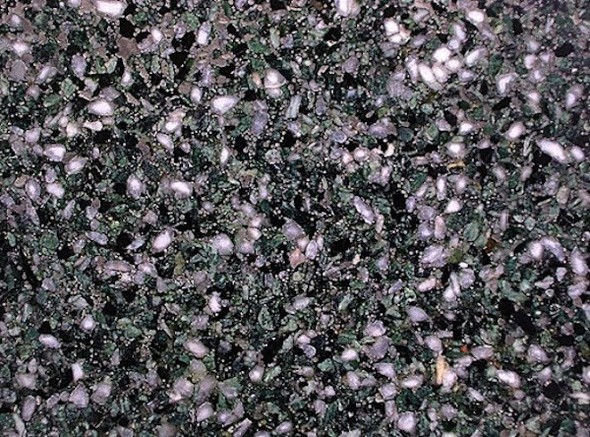
The value of the Venetian pavment is determined by the size of marble crumbs - the smaller the baby, the more valuable the coating, and the color - certain types of marble, as, for example, pink or red -coral, are more valuable and rare than others. A significant role, of course, is played by age - the more ancient marble, the more valuable it is. Many coatings are so beautiful that the drawings of expensive oriental fabrics or Persian carpets are reminiscent.
Fabricel
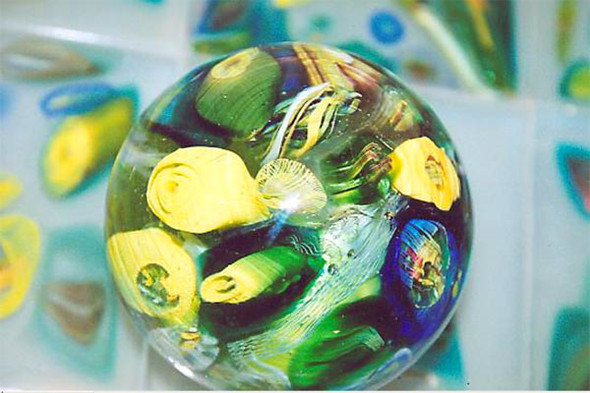
Wir iron as organized fishing arose in Venice in the eighteenth century. The earliest glass products were bottles for various church needs, wine or oils, dining rooms and other purely utilitarian products. By the middle of the 15th century, in the production of glass on the island there is a radical change: the hereditary glass of Angelo Barovier (the first mention of the name Barovier dates back to the XIII century) inventing Crystal - “Cristallo” - a particularly transparent glass, glorified the Venetian glass for the whole world. The oldest product made of Venetian glass - a glass of green glass in the uniform of the cheaps with a golden border - dates back to the end of the 15th century.
Plaster
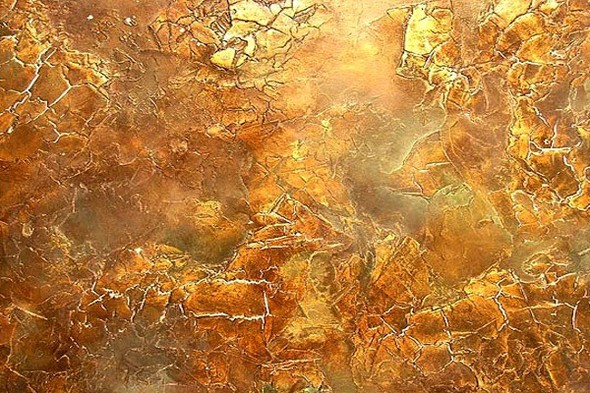
Venetian plaster has a rich history. She appeared in ancient Rome several thousand years ago. During the processing of stones, a large amount of dust, chips and marble crumbs were obtained. Once, one inventor, presumably by the name of Klimenty, decided to mix the resulting waste with extinguished lime. So the prototype of the modern "Venetian" arose. The method of its application has practically not changed over many years, already at that time Venetian plaster was applied in several layers on the walls of the palace - this is how they are doing this now.
It is now possible to fully feel the spirit of Venice without leaving St. Petersburg. It is enough to go to the Vasilyevsky Island to the Museum and Gallery of Modern Art of Erart. Here, until June 17, an exhibition of sculptor Dzhanmaria Potentz “Venetian rhythms” takes place, on which everyone can hear the eternal noise echoes and feel the romantic melancholy of the Primorsky Venice.
Details about the exhibition and artist Dzhanmaria Potets