
Translated material
Ring of Kladda
Not a single souvenir and jewelry store in Dublin can do without a wide range of cowdock rings. Previously, this ring was a national engagement ring in Ireland to this day many people use it as engagement. This ring is a symbol of love, friendship and fidelity. Many legends and speculation are connected with it. I want to tell one most common legend about how it appeared. The legend originates in the 16th century.
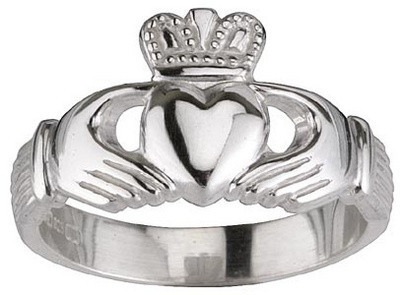
So, in the small fishing village of Kladda in the west of Ireland (now - a suburb of Geneya) in 1660-1737 there lived a certain Richard Joyce.
He left his native lands, going to work in the West India. Upon his return, Richard was going to marry his lover, but on the way in Kladda his ship was captured by Algerian pirates, Richard Joyce himself was captured and sold into slavery of the Jeweler. The slave quickly mastered the craft of his master and soon mastered him perfectly. Humiting in his distant bride, he created a unique ring. Two hands hold the crowned heart, the heart symbolizes love, hands - friendship and crown - fidelity. This ring expressed a desire for love and friendship to dominately rule. Eight years later, he was released. He returned to his native Ireland and his great joy, her heart remained with him, and they never separated again. Later, this ring became known as the Kladdem ring.
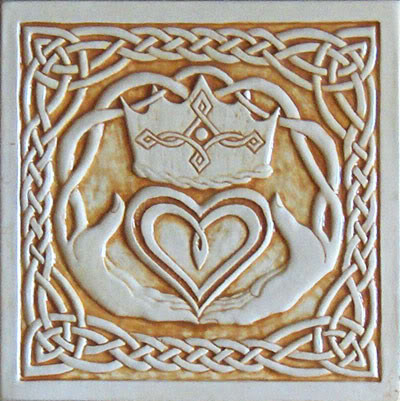
There is a version about the value of a ring based on Celtic mythology: the crown symbolizes Beathaiile, the left arm is Manu, the mother of the Irish people, and the right hand is Dagda Mór, the omnipotent father of the gods. The heart means humanity.
Kladd rings are worn as a sign of friendship or betrothal. At the same time, there are the following nuances:
- If the ring is worn to the right hand and the heart is turned in the direction from its owner (that is, to the fingertips), then this suggests that the owner of the Loemad ring is in search of his love.
- If the ring is worn on the right hand and the heart is turned to the owner of the ring, then this suggests that the owner of the ring is in a love relationship.
- The ring on the left hand with the heart facing its owner is considered wedding.
- Later, the fourth way to wear the ring appeared on the left hand, with the heart from the carrier. So he is worn, according to various sources, during the wedding ceremony (as a sign that the hearts of the bride and groom are directed to each other), engaged, widowed and divorced.
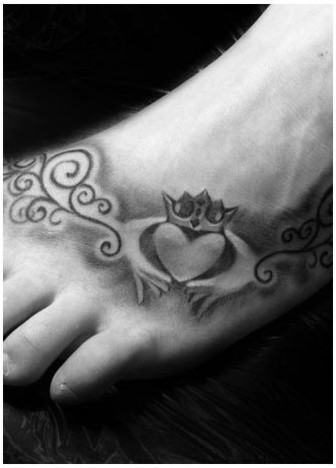
By tradition, the Kladdamsky ring from generation to generation is passed down from grandmother to granddaughter or from mother to daughter.
Interesting fact:
After September 11, 2001, about 200 Kladd rings were found on the ruins of the twin towers in New York.