
Translated material
Mom can
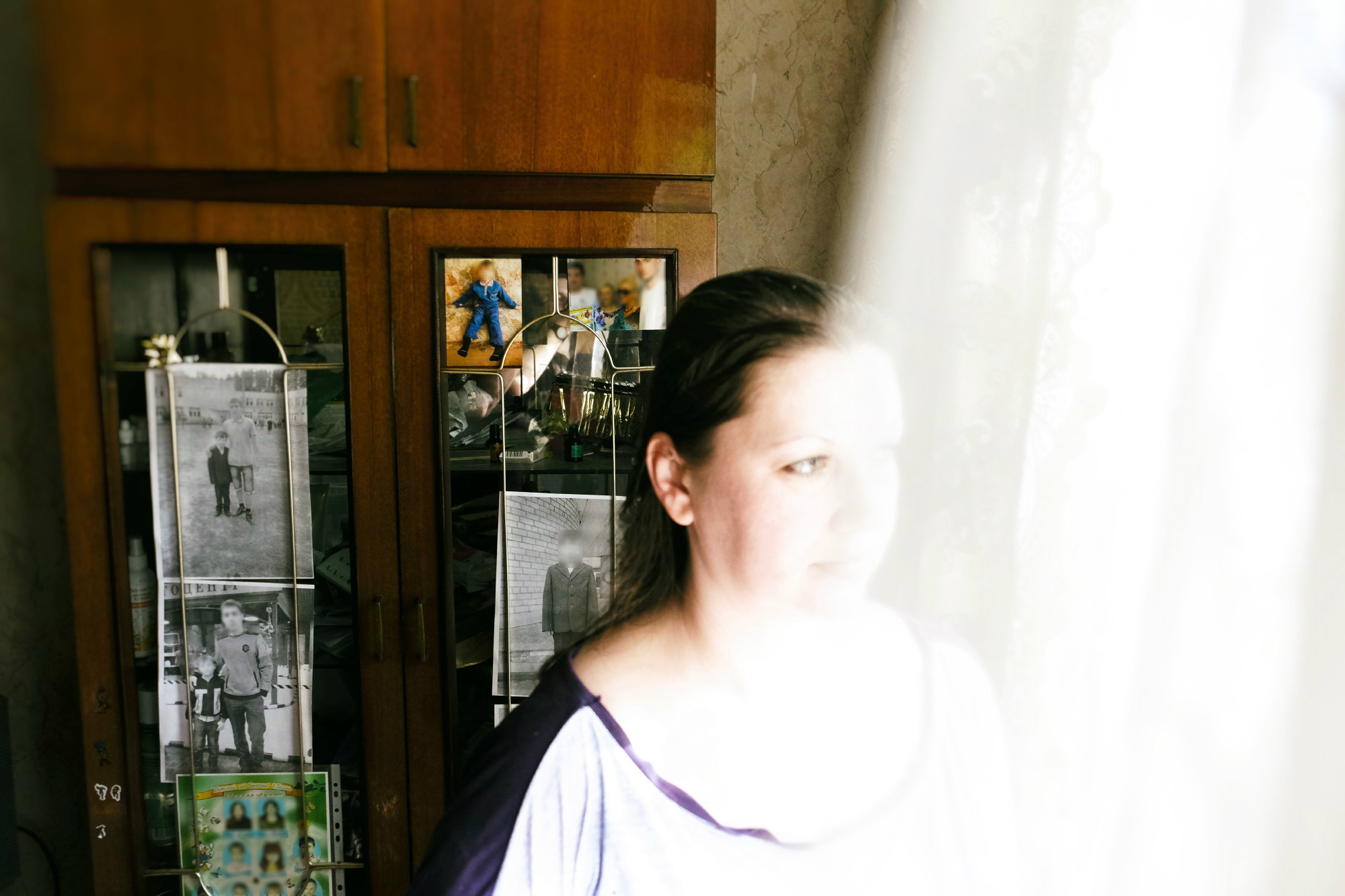
Inga has two sons. She was deprived of parental rights twice. But she found the strength to change her life - thanks to the support of completely strangers
We help do not spill water collected 1 191 131 r required 1,188,410 rThe collection of funds is over
Vitka and pterodactyl
The eleven -year -old Vitka sits side by side with an Inga and rummages in a smartphone. Suddenly raises his head and holds out the apparatus to his mother:
- Mom, look, what a tyrannosaurus we painted with the whole class! Here I have stopped writing a felt -tip pen - you see? .. But it turned out cool, mom, tell me?
“Yes, Vit, it turned out well,” Inga answers the son.
Squinting, she examines the black and white drawing of a prehistoric beast with a grinning mouth and a sharp tail. Five minutes later, Vitka quickly runs into the yard - there are friends and football awaits him. And Inga says:
“Vitya, when he was still very small and did not even know how to read, he loved to look at the textbooks of his older brother, according to biology and geography. He began to speak like everyone else: “Mom”, “Give”. And then he suddenly gave out: “Ptyuridactyl”. My beloved, says, dinosaur. He liked the word - and what only can it like? .. "
Speaking of a son, Inga is always surprised. As if he does not believe her eyes again and again - Vitka is nearby, although she took him from the boarding school three years ago.
Such a reason
If you write down the history of Inga briefly, as for a report, you will turn out mean lines: “I drank. I did not follow the children. Did not work. I lived in unsanitary conditions. I could not do it. "
The main word here will be “drank”. This is one of the reasons because of which parents and children, according to guardianship officers, cannot live together. One of the reasons why children fall into orphanages with a living mother, if other relatives refuse to take care of them. One of the reasons why the person who took the child finally gets to where there are no children, nor parents, no human appearance. Especially if he himself waved his hand and does not know how to ask for help. Or does not know who.
Inga had every chance not to get out. But she was able to. She needed to help a little - and there were people who held out her hand, for whom she grabbed with her last forces.
... She has a tired look. A few hours ago, she returned from daily duty at a gas station, where she works as a cleaner and washes the floors in a cafe and a store. She would have to sleep now next to the cat, which curled up on the bed in a tiny rented apartment with old varied wallpaper. But she is asked to remember what she wants to forget about.
Inga and her sons live in a small village, where everyone knows each other. She does not want to talk about her past problem - about alcohol. Talking about himself, he tries to go around sharp corners. Ashamed.
No tenderness in the word "roommate"
Why does someone cope with the circumstances, but someone-no? Maybe sometimes there are too many circumstances for one person? .. Inge was not very lucky with them from the very beginning.
Since childhood, she picked up between her grandmother, mother and second family family. This triangle seemed to end after graduation - then Inga moved to her mother, who moved from the south of Russia to a small village in the Smolensk region.
Mother worked in a cafe on the highway - and once brought home guests, two brothers. One of them took Inga with him to Smolensk. She was only eighteen, and she fell in love with the black eyes of a thirty -six -year -old boyfriend, believed in promises of a beautiful life. They say he had another family.
At nineteen, she gave birth to a son, Artem. She lived with the roommate for several years, without working and almost without leaving home, and then ran away. The roommate - this is how Inga calls the father of her eldest son. No tenderness, no feelings - a statement of fact, as in court.
From that moment, the roommate did not appear in her life until Artem became completely adult.
The son grew up a courtyard guy, all days disappeared on the street, and Inga worked - either a waitress in a roadside cafe, then a saleswoman in a store, then a cleaner. In a small village with work, it is difficult, especially if there is no specialty, the child is in the hands and you live in the “odnushka” along with the mother, the relationship with which does not add up in any way.
Especially if you have another child. Also not from a legal husband.
Especially if you drink - and it seems that it becomes easier. And when you already drink, there is no one to hope for: there is no systemic psychological, social and narcological assistance in the village, only relatives can interfere with the bottom, but not everyone is lucky.
Four happy days
There were very few happy days in Ingina. Four.
The first - when unexpectedly for herself, wrote a graduation for four and five. The second is when Artem was born. The third - when Vitka was born. The fourth - when she returned it.
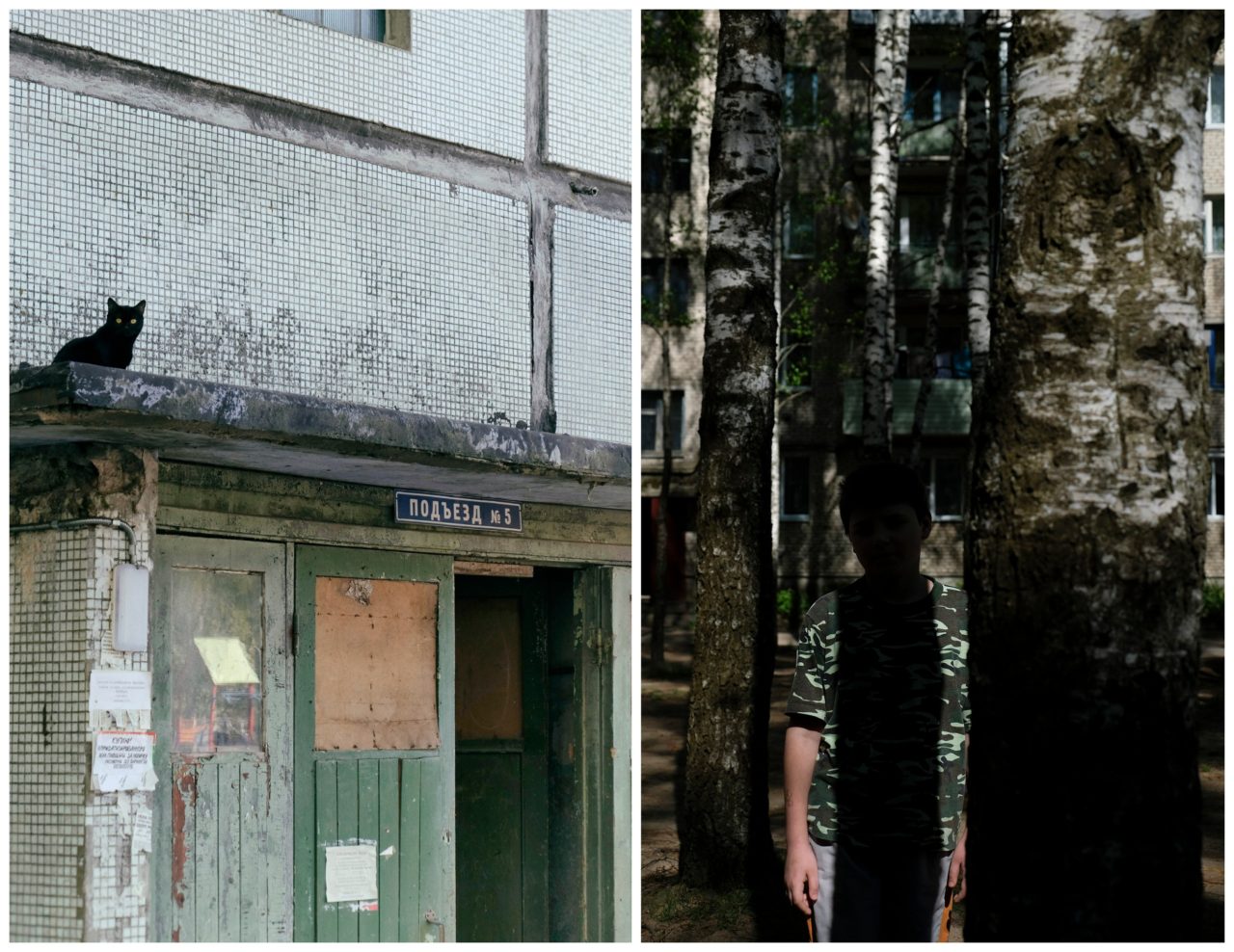 On the left: the entrance of the house where Inga lives.
Right: Inga's son Vitya photo: Mikhail Grebenshchikov for TD
But first, Ingu was deprived of parental rights to Artem, who was considered a difficult teenager. He was taken under the guardianship of Inga.
Once he and his daughter were terribly quarreling - and Inge had to leave the house with Vitka, the grandmother of the younger grandson took bayonets. At that moment, Inga did not work anywhere and could not rent an apartment - she settled with her son with a friend in a hibark without amenities and repair. There were companies there.
When the second court began over the Inga to deprive parental rights - to remove Vitka, she remembered everything: that she forgot to pick him up from kindergarten, and that she came for him as a sink, and that she lived with him, it is not clear what.
“They told me that I am a bad mother, that I could not cope,” she recalls through power. - But I tried. Vitin's father helped us with money when I did not work. I cooked and cleaned, and Vitya was always clean and slept on clean, really! .. "
Mother and son were very attached to each other. The day when he was taken to the orphanage, Inga remembers very well. But he talks more willingly about another day - when she took him home. Two years later. He tells and looks up. Tears are water, they are not believed.
“When I was driving after him, he all the way - three hours - it called me:“ Mom, where are you? ”,“ Mom, well, when will you come? ”,“ Mom, where are you going? ”” ”
While Vitka was in an orphanage, Inga, when she could, visited him. He waited for her to take him - and waited.
Mom’s victory
“This is a real victory of her mother - she managed to return the child, she was able to change her life, she coped,” says Christina, a social teacher of the Charitable Foundation “Our Children” in Smolensk.
It was Christina and her colleague Paul that helped to return to Inge parental rights and take Vitka from the orphanage. They helped her to collect documents for the court, to look for housing, they were constantly in touch, came and called, carried her to her son, and they themselves came to Inga, learning about her situation from employees of the orphanage.
“The first year after Vitya was taken, nothing moved from Inga. Although she was told: to return it, I need work and housing, ”says Christina. - When we came to her, she seemed to be glad and agreed to everything, but still she was in no hurry to collect documents for the court. Inga already had work, but she still lived in the house of her friend. Sometimes we forced her drunk - and sometimes it seemed that on her part would end with promises. ”
The impetus for these changes was information from the orphanage: they want to adopt Vitka and take it to another region. Inga seemed to woke up - and began to ask for guardianship not to allow adoption. There we went to meet - the woman was given another chance.
And she used it.
“She turned on the conscious concern for the child,” says Christina. - I remember once Vitya fell ill, still in an orphanage. Inga cut off my phone - everything asked what he needed medicine, how to convey them, what is with him and whether everything would be in order. ”
There are no other people's children
In the Smolensk region and several other regions of Russia, the Charity Foundation “Our Children” implements the program “Do not spill water” - it is aimed at ensuring that the connection is maintained between parents and seized children. Not least - emotional: when making a decision on seizure, guardianship authorities and then the court evaluate material well -being, purity and prosperity in the house, but the relations of parents and children are usually not taken into account. But it is the emotional connection for the development of the child that is the most important. When losing it, it is impossible to make up for an orphanage, and with great difficulty and without guarantees - in a foster family. And to find a job, teach parents to manage the household - with these families, on the contrary, to help much easier.
The experts of the Fund are primarily striving to encourage the parents themselves to change in life. Material assistance is rarely provided and only in cases where without it the goal - the return or preservation of children in the family - will not be achieved.
Employees working under the “Do not spill water” program look: if the family can be connected again, if parents are ready to work for this, then the fund is looking for ways to help them - as in the case of Inga.
How would her life be without the support so necessary for her from “our children”? Maybe Vitka would still live in an orphanage or have been adopted. Maybe Inga herself would finally wave her hand. But now Inga and Vitka are together. Inga's eldest son, Artem, has already served in the army and behaves like an independent adult - works and supports his mother and brother.
This became a reality because Inge helped. Let's support the “Children” fund and their program “Do not spill water” - it works for our donations. Any amount - 100, 300, 500 rubles - will help the fund exist, and families - reunite.
All the names of the heroes are changed
Do you want us to send the best texts of “such cases” to you by e -mail? Subscribe to our weekly newsletter!