
Translated material
3D printing will help treat cancer
Scientists of the University of Philadelphia. Drexel managed to print volumetric samples of cancer tumors on a 3D printer. This technology will greatly facilitate laboratory tests and testing of anti -cancer drugs.
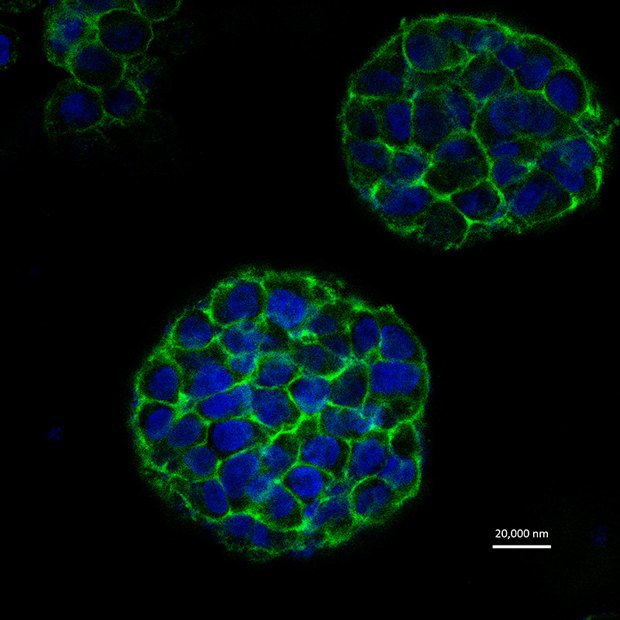
Until now, testing began with two -dimensional samples in Petri's cup, then switched to volumetric samples, and only then began to study the drug on experimental experiences. Thanks to 3D printing, testing can be started immediately with volumetric samples, which should accelerate the testing of drugs.
The seal is used using healthy and infected biomaterial, which is superimposed on each other. The resolution of such a print is much higher than that of tissue samples taken from living organisms: a printed cell can be 10 times more ordinary.
The difference between testing two-dimensional samples in the Petri cup and printed on a 3D printer is huge: drugs that act well on the plane will not necessarily be so effective in three-dimensional space-and this is the money and time spent on research. Another potential way to use this method can be an individual printing of organs from living cells synthesized in the laboratory.