
Translated material
Birds and dreams
Alexander Sekatsky - About the novel by Roman Mikhailov "Anti -Playwinar"
The philosopher and writer Alexander Sekatsky proposes to consider the text of the novel by Mikhailov as a vehicle or a set of cartographic tools, through which you can get into other spaces - closed and inaccessible. In this reading, “Anti -Playwinar” turns out to be proof from the contrary and indicates that we live if not in the best, then not in the most dangerous of the possible worlds.Roman Mikhailov. Antiwinaginar. M.: Common Place, 2021
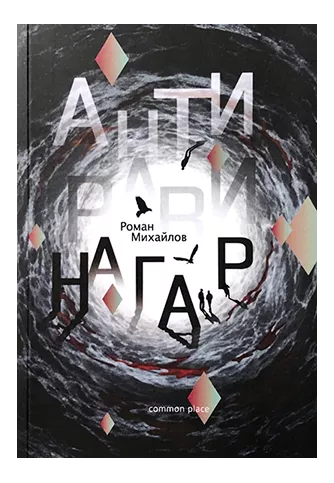 In a sense, we have a fairy tale of wanderings or even travel notes-but in a very strange sense. In one of Mikhailov’s previous novels, in fact, in Ravinagar, who received a well-deserved recognition of readers, the enchanting panorama of lands, eras, legends, mathematical calculations, psychiatric observations appears. Here, the trajectory of displacements is minimized and compressed: it seems that the hero goes out into the yard every now and then, rises and descends the stairs, goes to the windowsill, looks out the window, falls asleep somewhere-but in a dream the same movements are found. There are still cellars, streets, wastelands, from time to time the hero rides on the train and leaves him and after another joyless meeting (or a series of meetings), he still finds himself at the windowsill, looks out the window and sees something there. Here is a characteristic passage:
“Once the day lasted in the mode of frozen fragments and a gentle look down. And at night he woke up from the sensation of the strongest severity of closed eyes. "
Soon, however, it becomes clear that the stairs-dummies-patronesses are most likely just portals, which were carried into our everyday world, or, if you like, the jumpers that connect us with the spaces of a different dimension, power, fullness, but most importantly, a fundamentally different story of events, or, as phenomenologists sometimes express, special thematization of presence. The mathematical topology has and operates with many parameters for describing and characterizing the spaces, but who, if not Roman Mikhailov, a world -class mathematician, can feel so sharply to the failure and approximation of the existing means of fixation, when it is necessary to track really non -trivial worlds - and the book contains characteristics of artistic accuracy as the only available means of setting and deductions of one or another world:
“Wool covers the space itself, it is all in small hair and sweat. The space is like a twisted glove with dangling fingers inside yourself. ”
In my opinion, the “Anti -Radinagar” presents the excellent sketches of a certain topology of the future, a kind of world identifiers: if they are in stock, then for the tale of wanderings, the volume of general and expanded for all space is really not so important. What can we say about the methods of setting space, here both physics and metaphysics take only the first steps. Mikhailov, among other things, monitors this method:
“The choir was on the left. At first I did not hear the singing at all, it seemed that everything was happening in silence, and then realized that this silence was sung. The choir, apparently, is large, three dozen, but it’s hard to say for sure, from there only a ledge was revealed, on which the extreme of the singers stood. They sang and were absorbed by singing. And not a rumble, and not a ringing background, but some kind of quiet long breathing, that makes the space alive-and this came from the choir. "
If Gayavata, the hero of Henry Longfello, “made a boat with singing” - and he succeeded - then to fulfill the thickening of silence with choral singing, where the singers act as construction forests - why not? Then the forests are removed (in this case, they are absorbed by their own singing), and now we have a sophisticated space ... and who knows how hospitable and long -term it is.
I would like to dwell some more details on topological displacements and other effects, especially since this is an through theme of the author.
Roman Mikhailov in Ravinagar describes the case of a young woman whose essence is as follows. A woman, a patient of a psychiatric hospital, suffers from an unusual, very outlandish sleep disturbance. It's by no means talking about simple insomnia and not about lunatism: every night she falls asleep and sleeps until the morning. At the same time, her whole dream is a continuous dream, every time the same thing. She finds herself in the room, on the bed, and is forced to spend all night in this room without closing her eyes. That is, her dream is that she is in a certain room and cannot fall asleep. There is almost nothing in the room (the details of the situation are not specified, so the patient speaks of the unbearable of such a pastime).
The disorder, of course, is quite strange, but in itself it does not at all look requiring hospitalization. If not for one detail. The young woman, describing her everyday suffering, refers to the extreme poverty of the situation and to the fact that nothing changes in the room, and suddenly adds in passing: “Yes, there is another horse in this room, but you won’t talk to her ...”
After such a “minor supplement”, the woman’s belonging to patients clinic immediately ceases to be surprising. The case, as they say, promising and worthy of the most thoughtful study. The woman “remembered” about the horse, as it were, could not have remembered, not to mention this “additional circumstance”. Perhaps the doctor, who sympathetically asking her about the room, remarked: “Yes, if there was at least some cat, it would not be so dreary ...” And then only the patient could say: “Yes, but there is no cat, only a horse, and you won’t talk to her ...”
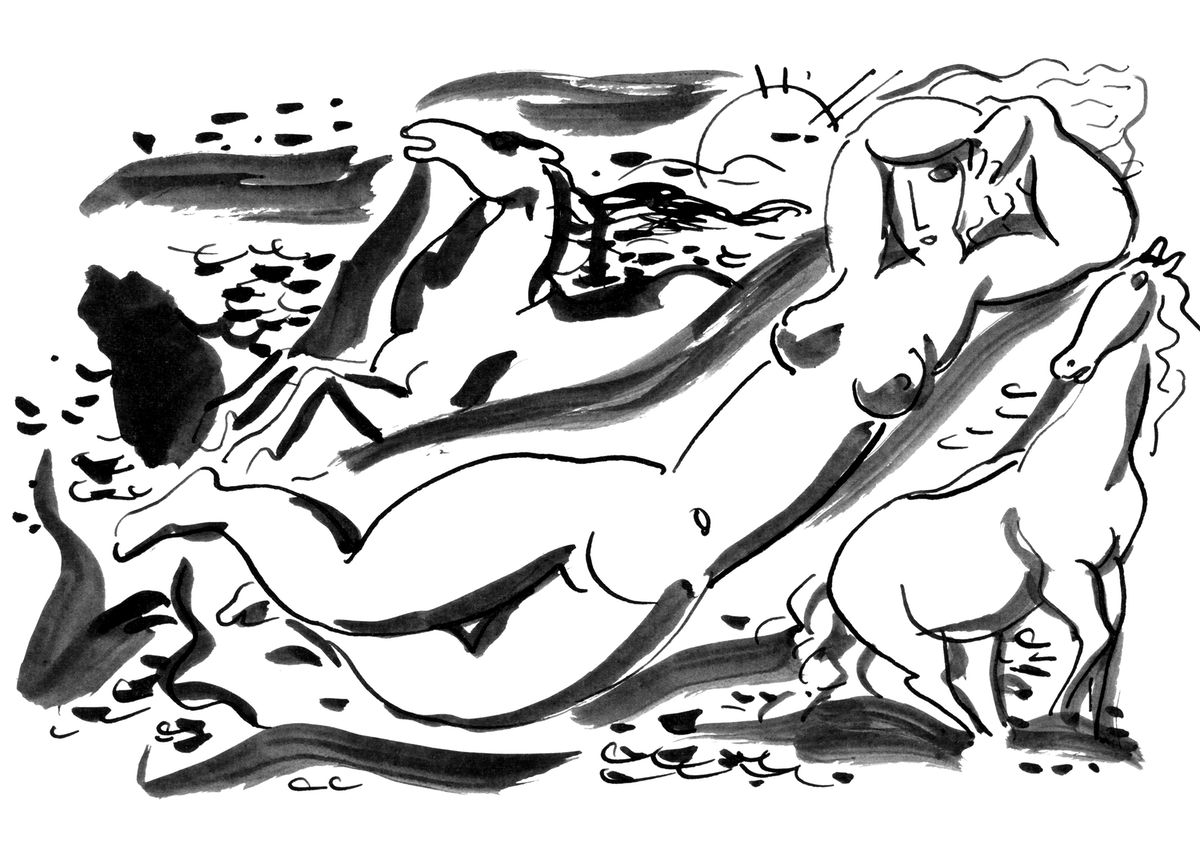 In the afternoon, the woman is completely normal, the night (daily) conclusion in the room causes suffering, and only the horse - the horse does not climb into any gate.
Well, if they hadn’t asked about the horse and she would not have surfaced? If a woman somehow got into a prison night room, and skillful psychologists would help her to smuggled the book and the world inside the closed space incomparably increased in volume?
If you think about this thought properly, it will turn out approximately the following. Madness is not an integral characteristic of a personality, it, in fact, is locally (there is a hearth), although the consequences can be universal, that is, related to the loss of sanity. And it turns out that this psychiatric truth was expressed by none other than Hamlet: "I am insane only with Nord-Nord-Vesta." For example, when a horse, enclosed somewhere in a dungeon of dreams, suddenly comes to the forefront.
The whole question, perhaps, is whether this fatal horse will remain in its stall, will the curly curl remain only a curl? If the case does not appear to get stuck in this local space and the “taciturn horse” will remain in his mental stall, if the Nord-Nord-west never smells or its gusts will be too weak, you see, we will live in complete sanity, in a state of normal adaptability to the world. And then we must admit that the majority is lucky in this, since this is how the world works.
Well, it turns out that the question of madness is largely a topological question. And Hamlet should be considered the forerunner of topological psychiatry - it is worth reflecting on the conclusions arising from here.
That is, speaking simplified, recognized thinkers, scientists and philosophers are those who are lucky. It was lucky that their personal cockroaches or horses in the rooms were legalized obsessions, and patients of psychiatric clinics are those who were not lucky in this regard. However, it is possible that in former times, when the topology (the reality of the mental one) was different, the alignment of leaders and marginals at the command heights of sociality was another. There could be the current inhabitants of the psychiatric hospital, and especially those who are forced to carefully hide their horses.
Then it is the topological scanning that it is best represented by reality. In our mental or, better to say, human reality, a secret room with a horse is one of the tiny curtailed spaces, in the form of a “bundle” they do not threaten and do not show themselves in any way. But if suddenly a fixation and subsequent deployment occur, the habitat will change radically, become unrecognizable, the inhabitants of this world of “distorted topology” for observers from the previous environment will become subjects of insanity.
A creature living in a different topology becomes unpredictable, because many of its reactions are aimed at the fact that in our world it is not represented in any way. Here the woman combs the mane of a horse, still breaking into the world of wakefulness, the observer notes to herself: where does she look and why she brings her hands so strange when I speak with her? She is surprised less than I don’t see this, she’s already used to it, but in return she is guided by the folds of the area that are so important for moving and habitat in this, one might say, abandoned world.
Such is a very plausible picture, and if you look closely at it, it immediately turns out that the transformation of the transformation is different. The expansion of rolled spaces (personal ideas) is the most radical case. Much more routine are such topological transformations that are the loss of individual dimensions of both mental reality and reality.
Suppose morally insane people. Not those who sometimes do immoral acts and are not too considered remorse, but those who have no problems with morality at all in the absence of at least any reliable guidelines of the corresponding measurement. Such characters do not see moral conflicts in the same way as they do not see the horse in the room. The rest of Human Reality’s inhabitants suffering from all such falls should seem people with a shift, possibly communicating with ghosts. And these ghosts are almost a whole herd.
At heart, “falling out” (falling out of multidimensional moral and psychic reality) consider the horsemen of the ghostly horses abnormal or hypocrites (and in this case they are sometimes right). Due to its prevalence, the topology of the footprints (the world in which they live in reality) does not violate the overall adaptability, that is, creatures of less dimension do not destroy reality. It is not difficult to imagine this procedure for imitation of a powerful measurement in their reliability, because the interlocutors of a young woman may well pretend that they see both a room and a horse in her, are considered to be this in their behavior, and then, stepping aside, twisting a finger at the temple. And if she were the queen, the empress, the mistress of the sea, then everyone would like the health of her personal horse.
But when falling out together, they do not waste time tracking the movement of imaginary horses, they exchange something significant, material, for example, share the loot, and therefore feel like the masters of the world-but they make mistakes. They are mistaken in the scale of a large, but accessible to man of the universe, are mistaken in terms of the completeness of the presence that is closed to them. But from the point of view of the monomeric world that has fallen to them, of course, they are right, they are better adapted to him who have additional extensions and burden.
It should be emphasized here that from the standpoint of the purely topological total area of lost territories in the case of, say, hopeless unicellular redness can be more than the one that is trampled by a horse, but adaptive strategies are not violated, since nothing is deployed in return, and the world of monetary circulation remains open.
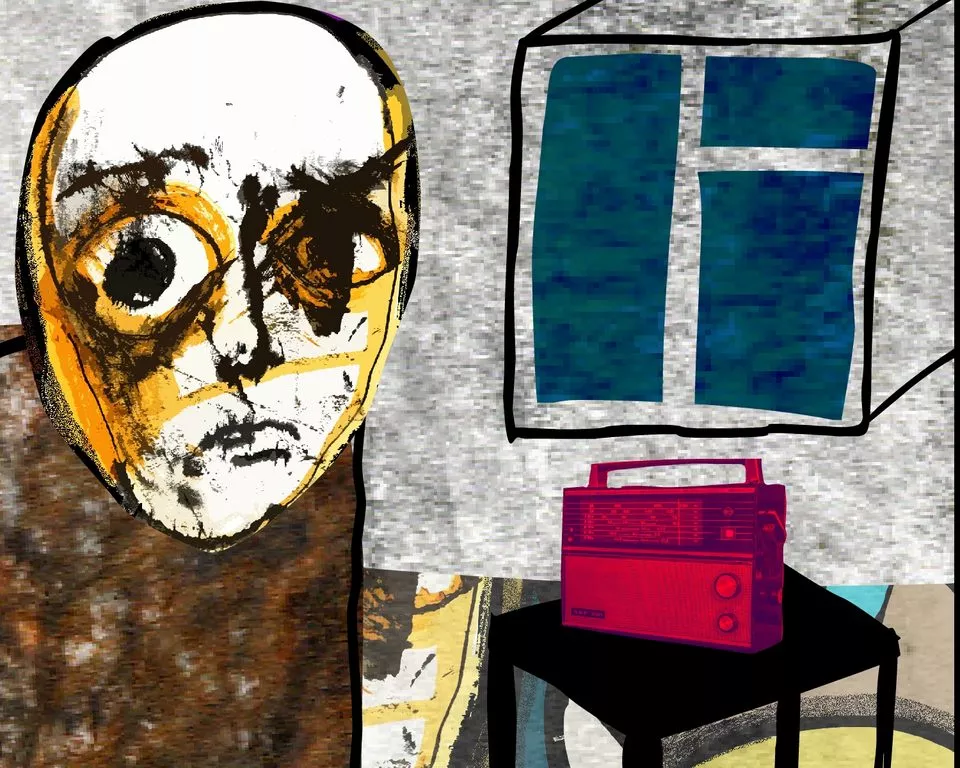 In the new book of Roman Mikhailov, the emphasis is placed on intermediaries and codes of access to entire clusters of worlds, hanging literally nearby, but sometimes hidden more reliable than Kashcheeva death. It is difficult to say how many layers the neighboring spaces overlap. Here the inertia itself is too human, forcing to see around only what they showed you and continue to show. And the fact that these worlds open, as a rule, to a single observer and are therefore almost unsuitable for communication, do not constitute a common subject of conversation. And here:
“According to V., the panopticum inserts patches into the consciousness of a person who does not allow him to get to the real structure of the world. These patches can be the sensations of freedom, true nature, purity and love. For the completeness of blocking the patch, they are supplied with clippings of real feelings. ”
Indeed, if freedom is here, like the purity of love, not to mention the “so -so confidence” (Hegel) - then what, in fact, to do there, usually dangerous and terrible dimensions there? By the way, one of the most reliable ways of concealment is the principle of fiction itself, the presence of a specially designated room, where you can easily talk with a horse and see a reality seen, for example, with a kafka with impunity. But, as already noted, the transfer of the “features” of this room to the neighboring compartments of the public space is an illegal topological operation, suppressed by the “orderlies”, including literally.
Carriers-carriers are disguised, of course. In Mikhailov, this is primarily birds, our usual symbols of flight, soaring, symbols of the world (pigeons), symbols of love (swans), symbols of anything, but not infernality and otherworldly. This branch of intuition is blocked, although in world mythology there are some places of its insight. There are in art - however, they are not found so often: Daphne Du Morye, Hitchcock, Pelevin. In Antiwinagar, this is one of the through motives:
"M. E. said that he does not like birds, that they are like small dinosaurs. If you bring their faces and bodies closer, you can get horrified from the sensation of another. Especially if the bird begins to scream, revealing your beak at you, peering or screwing up, perceiving you as a space that you can enter. ”
I would like to compare with Pelevin, in whom the intuition of the essence of birds is perfectly written out in "love for three tsuckerbrines." Here is one of their carefully hidden secrets:
“I understand that the risk of confusing the reader, but the birds themselves are victims of the same ancient tragedy. They are actually not birds. Their naked bodies are more like worms or soft snakes. They are very tiny. And bird plumage, paws and beaks are a kind of armor that they wear without removing. The machine replacing them with the body. "
The wanderings and penetrations proposed by Roman Mikhailov are surprisingly reliable, but they fully confirm the idea that closed and inaccessible spaces for us for the most part ominous, are gloomy, painful, it is difficult to get out without damaging the skins, and this is evidence from the contrary to the thesis that we live in the best of the best worlds. Or, at least in the world not the worst, well equipped - we, first of all, live in the neutralized world, occasionally falling out of it and trying to forget the loss. The evidence of luxurious expansion of consciousness is either strongly exaggerated, or extremely local in relation to all the multi -vesting worlds. The information provided by Roman Mikhailov, in my opinion, is much more genuine than the dreams of Swedenborg, which is also quoted several times.
But then - why? Presumably, the answer is: firstly, if there is a space in which we are able to enter, then this must be done at least to someone. Secondly, you can always find something for which it was worth wandering.
“The pale lamp is covered with a midge - small movable dots. Insects are slightly torn off the surface, move, sit on neighboring places. And under the lamp, darkness, its light is enough only to cover itself, it hangs like a tired, burning piece of the past. ”
There are a lot of such evidence, real pearls in the Antiwinagar. In essence, the book is intended for catchers of such pearls.