
Translated material
The world through the eyes of Barnes
Alexey Polyarinov talks about six key topics in the works of Julian Barnes
The translator Alexei Polyarinov compiled a Barnes mini-guide, choosing and analyzing the six most important and characteristic novels.Julian Barnes is one of the most inventive writers in the history of literature. This is exactly the case when the author cannot find two similar novels. Each of his next book is always an unexpected look at the usual things.
There is such a type of spiders - the pattern on their abdomen perfectly repeats the pattern of wings of the butterfly: what is like an excess, useless beauty, in fact a bait, a tool for hunting. The novels of Julian Barnes look approximately the same - the classic concept always lies at the basis: in Metrolend - the novel of education, “Floreter Parrot” is a biography, in “The History of the World of 10 ½ chapters” - a historical chronicle, in “How everything was” - a love novel. The whole thing is that Barnes writes them, as it were, on the contrary, inside out, and his chosen form is always a deception: as a result, the author of the Flobert’s biography will be his own character, and the book with the name “History of the World ...” will be closer to the end that there is no story, there is only a plot, a mixture of a fictional with a real one: “You come up with a fiction, so that you do not know the facts, which you do not know, or you don’t know about which or you do not know the facts or about which you do not know. which you do not want to accept. Take a few genuine facts and build a new plot on them. ”
In other words, any standard, hackneyed plot Barnes as if disassembles the components and then leads again, trying to find new voids and moves previously unknown in it. So antiques work with a broken and commissioned collection furniture, combining new elements with fragments of old, rare.
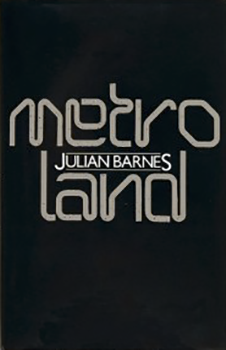
Metrolend (1980) / Family happiness. (Translation by T. Otidaeva)
London, 1963. Two school friends, Chris and Tony, are young rebels. They are at the age when it seems that cynicism and sarcasm are cool. In the eyes of the pretense of longing, in his hands a volume of poems by Arthur Rimbo, in the head of hundreds of thoughts, mainly about the female chest, but also about art too. They consider their parents to be losers and typical bourgeois and quietly despise them, but despise like a ponaroshka, simply because “angry youth” should be hatred for the elders.
Metroland is Julian Barnes's debut novel, but one of his most important leitmotifs appears here: the deconstruction of the concept of “history” and love as the only way from this “story” is to be defended (later it will be revealed in the “world history of 10 ½ chapters”).
Everyone knows a hackneyed metaphor for rebirth - a nondescript caterpillar turns into a bright butterfly. The problem is that in life we usually observe the reverse process: huge ambitions of youth gradually pupate into a static adult family life. This is exactly what is happening in Metroland: the novel about youthful maximalism in the middle makes a sharp turn - rebellion gives way to conformism, the poems of Arthur Rimbao and romantic walks on the Montmartre are a thing of the past, and in the present - the house in the suburbs, the wife, the daughter, the mortgage and non -powdery work in the advertising agency from 9 to 17.
But not everything is so simple.
Barnes fills the history of growing up, raising feelings in Tolstoye motifs. The family here, unlike many other classical novels, is by no means a synonym for boredom and ruined life (in such cases we love Kuprin: “A man in a marriage is like a fly who has sat on sticky paper: it’s sweet, and boring, and you can’t fly away”) - just the opposite, the main character, Christopher, is happy in marriage.
“Some people say that happiness is boring. But not for me. Some claims that all happy people are the same. Even if it is, what's the difference?! "
Barnes asks very interesting questions: why did family happiness be overboard high poetry/literature? At what point did family life become synonymous with boredom, hypocrisy, beer belly and stupid complacency? When, at what point in literature did the fashion arose to ridicule people who are not very beaten by life and not prone to protracted depression? At what point did the healthy relations between people become uninteresting in writers?
Writing about happiness is really incredibly difficult (offhand you can recall the “old -world landowners” and Tolstoy to “Anna Karenina”; perhaps “gift” and “memory” and “memory” of Nabokov, but it is sometimes difficult to distinguish happiness from narcissism). The story taught us the fact that the most interesting stories are involved in jealousy, greed and death (“if not everyone died at the end, then this is not the end”), and we extract the most valuable lessons (or, more often, do not extract) from betrayals, defeats and disasters. Happiness by nature is static and self -sufficient, he does not need beautiful metaphors and loud words, it does not need them, and therefore it is bad material for the novel.
So, Metrolend, in a sense, a challenge to established ideas about the role of happiness in Western literature, Barnes writes Roman-Lovushka: the reader expects from him the usual postmodern ridicule addressed to the hero-seven-winged hero, and he-he stands on his defense.
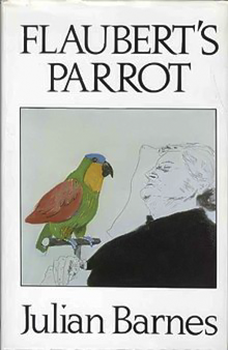
“Flobert Parrot” (1984) / Biography (translation by V. Sonkin and A. Borisenko)
In the preface to the English publication, Julian Barnes told the story of this novel. The writer traveled around France and in one of the museums stumbled upon a scarecrow of a parrot - the very one that Gustave Flaubert kept on his desktop when he composed a "simple soul."
And everything would be nothing, but, having looked at the next museum, Barnes ... again he saw a stuffed parrot - and, of course, the caretaker assured him that it was their scarecrow that was present. And then, the first - a vile fake.
This is how the curiosity served as a starting point for one of the best pseudobiographic novels of the twentieth century.
Reading this book, it is very important to remember two things:
a) it is based on a serious copyright study, and
b) Julian Barnes hates "serious copyright research."
Therefore, he desperately tries to maintain a distance: he does not write a Flaubert biography, his goal in another is to trace the course of the thought of the biographer, collecting information about the great writer. He is looking for answers to questions: what makes people hunt for the things of a long -dead writer? Why do they lack his books? Why do they always need more? Where are the roots of this obsession? Hence the novel there are so many quotes and extracts from the letters of G.F., so many campaigns in museums, in squares and in places of the former glory of the great realist. And in general, this whole book is one large poke under the ribs to all lovers to rummage in other people's things and dig literary graves. The passion for the collection of “sacred junk” is wittily reflected in the title: “Flaubert’s parrot” is a simple stuffed animal, eaten by a moth, which the writer fans endowed with sacred status and are now worshiped as living.
And, by the way, the main character of the book, Jeffrey Braytaite, is also a very remarkable personality: a doctor, a loser and a cuckold; His whole life, in fact, is cast from the French novel of the nineteenth century. Try to guess which one?
I give a hint: it begins on the “g”, it ends on the “Office of Bovary”.
And what? Doesn't life imitate art?
Probably, only Barnes could have thought of that - to make the Flaubert biographer one of the Flobertov characters.
“You can determine the fishing network in two ways, depending on the point of view. Most likely, you will say that this is a cellular tackle for fishing. But it is possible, without causing special damage to logic, to turn the image and determine the network as the jacket-exploscograph once made: he called the network a combination of holes fastened with a rope.
The same can be done with a biography. The network is filled, the biographer pulls it; Then it sorts, throws, puts, cuts and sells. However, think about what did not fall into his catch: after all, probably a lot of things slipped away. Here on the shelf is a biography: thick and respectable, bourgeois smug. Life for Shilling - and you will learn all the facts, for ten pounds, hypotheses will also be added to this. But think about everything that remains unknown, which forever disappeared with the last breath of the hero of the biography. After all, the most skilled biographer runs the risk of staying in fools if his subject, seeing the approach of a biography, decides to make fun of him. ”
***
Having already read and postpone the book, you still wonder - why exactly the Flobert Parrot? Jokes jokes, but there are so many options, why put the image of a stuffed into the name of the novel?
And very simple: then that this book itself is a scarecrow. Scarecrow biographies. And Barnes here, as a literary taxidermist, took a dead genre, gutted it and filled it with new contents. In other words - rethought.
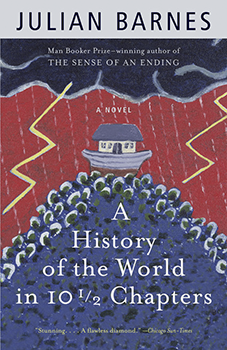
“The History of the World in 10 ½ chapters” (1989) / Historical Chronicle (translation by V. Babkov)
“The History of the World ...” is the voice of a smart skeptic reading the Bible, and even more - this is, perhaps, the only one of its kind of the Bible of agnosticism. The book, which is slowly and methodically, like a warrior beetle, undermines the foundations of history and religious dogmas, ridicuating fanaticism and blind faith.
Each chapter here is also a style exercise. Barnes seems to challenge literature; He seems to have set a goal - to create a book, using all the possible styles and techniques of writing, and his method in this case works perfectly for the main idea: to force us readers, to look at the story differently, at an unexpected angle, not as a strict encyclopedia dressed in a leather binding, where all events are divided into paragraphs and numbered, but as a chaotic set of rumors and premises, premises and premises. told by random witnesses (how can one not recall the saying “Like an eyewitness”?).
"Story? Just an echo of voices in darkness. We lie here in the hospital bed of the present (what are the glorious, clean sheets we have), and a dropper gurgles nearby, which feeds us with a solution of daily news. We believe that we know who we are, although we do not know why we have come here and how long we will have to stay here. And, waving in his bandages, suffering from uncertainty - aren't we voluntary patients? - We compose. We come up with our story in order to circumvent the facts that we do not know or do not want to accept ... "
Nevertheless, “History of the World ...” is not just a postmodern fun. The architecture of the novel is much more complicated and interesting, because Barnes is not limited to the satire and denial of everything and everything - "I do not believe, it was not, impossible." Among other things, he clearly illustrates a simple thought: time is not the best indicator of the dignity of the idea, but the established moral standards can be as erroneous as new trends, and often much more cruel. In these contradictions, Barnes tries to find a landmark, according to which people would not have to be divided into “pure” and “unclean”, “faithful” and “infidels”.
Like any thinking person, he cannot live without answers, but standard excuses do not suit him:
Commandments? - How many people died for the sake of compliance?
Paradise? - Oh, do not laugh me: the most boring place in the world!
“History of the world ...”, as it were, reflection from the contrary, the search for meaning outside the trimmed and approved by Christianity (and in general - dogmas) of paths. And another attempt to describe the feeling that people experience when they suddenly realize that they are not immortal; And therefore, the motive of a lonely ship in the open sea is a key topic - where are we sailing? Is there land there at all, beyond the horizon? And if there is, will her inhabitants be glad to us? And do we have enough strength and, most importantly, the courage to reach the shore and step on it?
But completely the novel is revealed closer to the end when, following the eight plots involved in savagery and cowardice, suddenly, as if as a contrast shower, an “Intermedia” follows - an essay about love: we observe a stream of a character’s consciousness, who woke up next to his beloved woman at night. And the author puts this idyll on a par with stories about terrorists, shipwrecks and the Inquisition. Love for no reason bursts into the book (and yes, the mysterious ½ chapter from the name is the chapter about love), so Barnes first formulates the most important thought for himself: the story for him is a huge emptiness that has overgrown dogmas and myths, and if something can be opposed to it, this is the present; And what else but love gives a person a sense of real?
And so it turns out: even in the novel, which everyone is rightfully called the top of English postmodernism, there is a secluded place, free from parodies, irony and deconstruction - small, only half of the chapter. But this is enough for a good romance to become great.
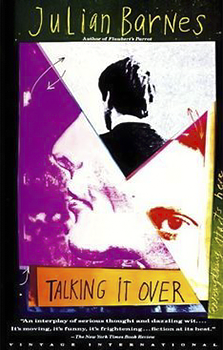
“How was it” (1991) / Objectivity (translation by I. Bernstein)
In the novel by Donna Tartt “Schegol” there is a character of Hobi, he collects pieces of furniture, combining new elements with fragments of old chairs, chests of drawers, wardrobes etc. He himself calls them “substitutions”: any furniture under his arm turns into “partially antique”, automatically gains value.
“Museum -quality things now and then got into the store, but so broken or damaged that they could no longer be saved; Hobi grieved over these elegant old remains, for him it was a matter of honor to preserve everything that could be preserved (here-a couple of violets, there-elegantly curved legs), and then, with his carpentry and carpentry talent, re-re-re-recover them in the lovely young children of Frankenstein, which, they used to go frankly fantasy, but it happened, and it happened, and it happened, and it happened. So historically true that they were no different from the original. ”
It is precisely the impression, if you continue the metaphor, Barnes novels are made. He takes the genre/plot, which is dusting on the landfill, separates elements from it, which are not entirely hopeless and can come in handy, and collects a new plot from them, almost no different from the original/original.
The defining word here is "almost."
The novel “How everything was” - just such a “brainchild of Frankenstein” (with sutures sticking out), a creature of double nature. A long -familiar conflict here is served through a non -linear narrative, and the love line bends into the parabola. There are three heroes: Stuart, Roger and Jil - and each of them gives the word. They take turns telling the same story, and, of course, their versions carefully contradict each other.
Only towards the end will the reader understand that all this hype is not at all in order to identify a liar. Just the opposite - none of the heroes lies, everything is much more complicated (or easier - how to look): with its text, Barnes, as it were, casts doubt on the very concept of objectivity. And really, how do we know how it was? Even if eyewitnesses of events cannot find common points.
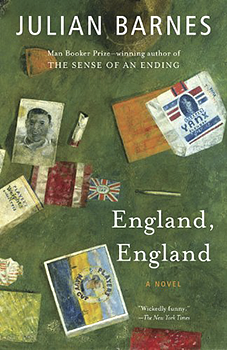
"England, England" (1998) / postmodernism (translation by S. Silakova),
The plot of “England, England” is based on one simple assumption: what if you take the best that Britain gave the world, everything that embodies its spirit, say, the Tauer bridge, dubblers, Robin Hood, and transport to the new island to establish something like a park of attractions with a national color?
This is what the silly billionaire Jack Pitman wants to do. Its goal is to create a “reduced, improved version of England” on a small piece of land. For tourists. The slogan of the company is “to see England as you always imagined it, only a cleaner, comfortable, friendly - in a word, less chaotic.”
***
There is a well -known joke: “A postmodernist is a clown that has painted a circus rope in the arena and walks along it, holding portraits of the Great Copper -Rating in his hands.”
The wording is excellent, but not exhaustive. Barnes goes further-he writes a whole novel about clowns who imagines themselves to be a canine, because “England, England” is about this: about people who openly sell fakes of historical facts, convincing the customers that the original is strongly overvalued and generally not fashionable, we conducted research and blah blah blah-blla ...
The very idea is to buy an island and build a copy of real England on it - a parasitic and absolutely postmodernist in essence. The project “England, England” is a state, which is entirely consisting of references, ommes, simulacra; The authors of the project collect all the most popular cultural stereotypes on a small piece of land; And even more-in England there is no time, there is no story, it is abolished, all events here occur simultaneously, at the request of the client.
- Want to visit the Sherwood forest and see Robin Hood? Please! Our experts were specially brought for you from Saudi Arabia and landed a whole oak grove here, and then - a cave, the walls of which were specially processed with jack hammers to give them a believable, authentic relief.
- Big Ben? Tower? Trafalgar Square? No problem - reduced copies are waiting for you on a scale of one to two; And most importantly - no queues and traffic jams! Because we care about you!
- See the Battle of Hastings? One moment: the crowds of the mummers will now recreate it specifically for you! Lithers of cranberry juice, professional and plausible dying screams and convulsions are attached. For a fee, you can even lead the offensive!
Barnes carefully catalogs all possible stereotypes about Britain (for some reason I forgot about Holmes) and collects them in one place built on stamps and references to “glorious traditions”. Already in itself this (Anti) utopia looks like an impressive and hysterically funny farce in the style of Terry Gilliam. Но Барнсу мало, он продолжает фантазировать и сталкивает две Англии лбами: оригинал и копия выясняют отношения, концепт уровня «Чудовища Франкенштейна» (еще одна культурная отсылка, на этот раз к Мэри Шелли) — монстр, сшитый из отдельных частей, поднимает руку на создателя...
Противовесом этого сюжета (назовем его: Барнс vs. постмодернизм) в романе служит история главной героини Марты Кокрейн. Марта — барышня с тяжелым детством (провинциальная школа с религиозным уклоном и сбежавший из семьи отец, куча комплексов). Она умна, в меру цинична и одинока. Она член команды Джека Питмена и вместе с ним она строит эту «империю копий», но тут — происходит нечто неожиданное: в жизнь Марты врывается настоящее. Настоящие чувства.
Два этих сюжетных ядра — поддельная История (строительство Англии-Англии) против жажды настоящего (труды и дни Марты Кокрейн) — любимая тема Джулиана Барнса еще со времен «Истории мира в 10 ½ главах». «Можно ли возродить простодушие? Или это все равно будет искусственный продукт, ветка, привитая к древнему недоверию?» Этот вопрос — ключ к роману. Ведь, если отсечь все лишнее, «Англия, Англия» — книга именно об этом: о тоске по настоящему. О тоске по подлинности в мире, где всем на все наплевать.
А главный антагонист здесь вовсе не одиозный миллиардер Джек Питман, главный антагонист здесь цинизм.
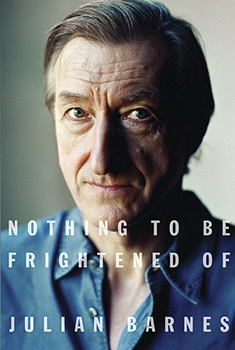
«Нечего бояться» (2008) / Смерть (Перевод С. Полотовского, Д Симановского)
В романе НоВайолет Булавайо «We need new names» есть сильная сцена: главные герои, дети 10-11 лет, хоронят своего друга. И один из них, глядя в могилу, спрашивает:
— Как ты думаешь, каково это — умирать?
- How do I know? - says the other. — Я ни разу не умирал.
Этот диалог мог бы служить эпиграфом к книге Барнса «Нечего бояться». Потому что написать такое мог только человек, который умирал. And more than once.
«Нечего бояться» — причудливая мозаика из автобиографических рассказов и философских эссе об истории самого сильного и самого человеческого страха — страха смерти. Текст у Барнса получился тяжелый и холодный, как сырой грунт. Нет, разумеется, писатель как всегда остроумен и лаконичен, но именно эта книга, в отличие от прочих, пронизана каким-то тусклым, безнадежным одиночеством. В 2008 году от рака в течение двух месяцев после постановки диагноза умерла жена Барнса, Пэт Кавана; спустя пять лет, в 2013-м, он напишет книгу «Уровни жизни», в которой расскажет, как справлялся с потерей близкого человека. «Нечего бояться» можно считать в некотором роде прологом к «Уровням…». Барнса не интересуют позолоченные, игрушечные теории о «загробной жизни» (религия для него не более чем вредная привычка), он не ищет утешения или прощения, нет, он мыслит в ином направлении: как истинный homo legens, ответы он пытается найти в первую очередь в литературе, в воспоминаниях своих предшественников: Флобера, Руссо, Ренара, Тургенева, Шостаковича и многих других — он комментирует их дневники, спорит с ними, прокладывает их своими размышлениями и сценами из собственной жизни.
Барнс всегда славился незаурядной фантазией. В его библиографии есть рассказ о судебном процессе над личинками жука-древоточца («История мира в 10 ½ главах» — именно из ее последней главы, кстати, растут ноги у «Нечего бояться», и читать две эти книги, пожалуй, следует в связке). И вот, когда, казалось бы, ничего более изощренного придумать уже невозможно, он пишет книгу, которая, начавшись как обыкновенная автобиография, в процессе превращается в… ворчание из могилы, в книгу, в которой автор то и дело обращается к тем, кто будет жить после него, к тем, кто придет (или не придет) взглянуть на его надгробный камень, к тем, кто прочтет (или не прочтет) его эпитафию.
«Когда вы будете читать это предложение, я, возможно, уже умру. В таком случае никакие претензии насчет книги не принимаются. С другой стороны, мы сейчас оба можем быть живы (вы — по определению), но что, если вы умрете раньше, чем я? Вы об этом думали? Извините, что напомнил, но такая возможность существует, по крайней мере, еще несколько лет. Что ж, мои соболезнования родным и близким. … И по-прежнему существует такой вариант, что я умру в середине написания этой книги. Что будет обидно нам обоим — если только вы не собирались в любом случае бросить ее ровно там, где обрывается повествование. Я могу умереть в середине предложения. Возможно даже в середине сло
Kidding".