
Translated material
Tokvil and Choven
Five books to understand France
On May 7, the France was held in the presidential election. Readers of the Russian media have already been covered by a traditional wave of analysts from various experts, and for those who prefer to form an attitude towards what is happening on their own, Gorky asked the translator and literary critic Vera Milchina to make a list of books that will help to understand the basics of French history and politics.Alexis de Tokvil. Old order and revolution. M., 1997. Translation by M. Fedorova
 The French revolution, which began in 1789 with the capture of the Bastille, is an event whose importance for the history of France, as they say, cannot be overestimated. Naturally, they began to write about her very soon - both in numerous memoirs and in historical works. But the author of the book “Old Order and Revolution” (1856) is not engaged in the presentation of events, but by a conceptual analysis of the reasons for which the revolution became possible. He is not interested in how , but why it happened. As a matter of fact, it does not come to the book of the book itself - we are talking about previous eras. For Russian -speaking readers in this book, one chapter is of particular interest: “How did the writers become the most influential politicians in France in the middle of the 18th century and what did this led to?” In the absolutist state, which was pre -revolutionary France, no one except officials had access to the government, and people who were deprived of political experience willingly listened to abstract theories composed in accordance with the requirements of the mind, but divorced from reality. The theories are noble, but their embodiment in practice did not lead to freedom, but to the even greater strengthening of the central, despotic power. We are used to believe that only Russia was replaced by the literary -centric country, where writers replaced politicians, philosophers, and sociologists in the 19th century. Reading Tokville helps to adjust this faith in our exclusivity. Incidentally, Tokvil similarly adjusted claims to the exclusivity that had his compatriots. In his book, he, the author of the famous work “Democracy in America” (1835–1840), recalls that the universal equality was the first to be the French creators of the Declaration of Human Rights in 1789, but the American founding fathers.
Roger Shaktier. The cultural sources of the French Revolution. M., 2001. Translation by O. Greenberg
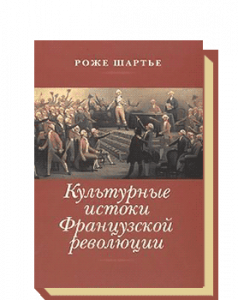 The ideas of Tuquilus were continued in the writings of scientists of the twentieth century. In 1933, Daniel Morne published the book “Intellectual Sources of the French Revolution” with the main thesis - “The French Revolution basically predetermined ideas”. In other words, the works of philosopher-enlightenment, spreading wider and wider, prepared the French revolution. As Gavrosh sang in the novel “Outsed”, all this is through Voltaire’s fault, all this through the fault of Russo. The historian of the book and reading Roger Shaktier asks the question: is this true idea that this has become true? Is there such a reading of history in which the entire XVIII century is considered in the light of his inevitable finale - revolution? Perhaps it implies a cartier, the point is not that the enlightenment gave rise to the revolution, but that the revolution “invented” the enlightenment and built its ideal image, in order to prove its legal and noble origin, justify itself and shift responsibility to its ancestors? "Can books make a revolution?" - This is the name of one of the chapters of the book of Shartier. The answer is: on their own, by its content - no, cannot. But yes, they can, if we consider reading books within the framework of a new, desacralizing thinking that has developed during the 18th century, is critical thinking, alien blindly obedience to authorities.
Bronislav Bachko. How to get out of terror? Thermidor and revolution. M., 2006. Translation by D. Bovekin
 The books of Tokville and Shaktier about where the French revolution came from. Bronislav Bachko (1924–2016) reflects on something else: how the French tried to end the revolution. Bachko is a native of Poland, in the first post -war years, a member of Porp and a convinced Marxist, then revised his views accused by the authorities of communist Poland of “revisionism and Zionism” and got the opportunity to continue work only in exile. For him, the problems of “leaving terror” were by no means a purely theoretical character; He outlined communist illusions in his own consciousness, and he could have experienced, one might say, his inner termidor. Bachko shows how much more difficult to change the consciousness of people than the laws adopted by these people. In June 1794, French deputies adopt a law that allows the accused to say without preliminary interrogations, without listening to witnesses, without the participation of defenders. After a month and a half, the Termidorian coup, which is putting the end of the Jacobin dictatorship, takes place - and the same deputies enthusiastically welcome the abolition of this law. The overthrow of Robespierre changed the laws, but did not change either the thinking or the language of those who destroyed it (up to the point that the rumor immediately spread in Paris, according to which Robespierre overthrew because he wanted to become a king!). In order to “get out of terror”, it is necessary to finally break with the “terrorist discourse”, which is based on the constant search for suspicious and conspirators, to end the system in which every friend and associate can be declared an enemy, since “enemies” are interchangeable: according to the model of old, already exposed, new ones are constantly created and denounced.
Gerard de Puimizh. Shoven, a soldier soldier. Translation by V. Milchina. M., 1999
 Everyone knows the word "chauvinism", but not everyone knows its origin. For a long time it was believed that this word had occurred from the name of the real man Nikola Shoven, a soldier of the Napoleonic army, a surface patriot. The merit of Gerard de Puimezh was that he showed - there was no real shoven in the world. Shovene was born from the spirit of French literature, and he was born a hero not positive, but almost negative. The original Shovene is the hero of the popular vaudeville, a village simpleton who has recently become a soldier, a cowardly bachelor who loves to speculate about national greatness, but constantly gets into trouble. However, after the defeat of Napoleon, the French were so long eager to rehabilitate themselves that gradually Chuven “matured” and transformed. And he arose, as Puimizh shows, by no means from scratch. The belief that the well -being of France is based on “ordinary people” who, with equal success, they wield both a plow and a saber (and/or a gun) and which are alien to both high -luminous theories and the bourgeois passion for accumulation - this belief has very deep roots. Deep-and terrible, as it turns out that the public purpose of Shoveen, a soldier-landfill, is to fall for the fatherland and fertilize his own soil, that very soil, which at the end of the 19th century formed the basis of French nationalism. The myth of Shovene is the dream of a “unified and indivisible” village France with a single people and a single, all satisfying power. But, as the history of France of the 20th and XXI centuries testifies, this dream has remained a dream.
Philip Aryes. Time of history. M., 2011. Translation by M. Neklyudova
 Philip Aryes (1914–1984) grew, in his own expression, in the royalist "oasis". His environment was the "heirs of Shoven." But Aryes did not stay with them for life - the book opens an autobiographical essay that tells about this gap. Aryes's work is very French not only because it explains how historical narratives in the Middle Ages were built differently in France, in the 17th century or in the XIX century, but also because in the author’s own history there are two constantly rival France. One is France conservative and nationalist, the other is France of liberal intellectuals. And the conversation about the types of historical analysis Aryes leads, remembering this duality. Among the varieties of history described by Aryes, the “scientific” story, the history of Marxist and conservative, and, finally, the story that he calls “existential”. The flaws of “scientific history”, “carefully fenced off from the present” and, which is interested in “Facts”, which is interested in first of all, defines this: “When I think about my time, what is happening around me, I have no need to detail the elements - facts - this story. I feel perfectly and directly that this time exists, that it has an important, essential reality for me, although I do not know half of the facts that tomorrow's historian will consider necessary for her exhaustive reconstruction. ” History does not come down to a series of facts. But it can not be explained either by the movement of huge masses (Marxism), nor the properties of a “person in general”, which does not depend on the customs of a particular era (conservative history). The story “existential” remains: in this case, the historian studies the mental structures of people of past eras, while not hiding his belonging to the modern world. This story, which was developed by Mark Blok, Lucien Fevre and other representatives of the Annals school, Aryes clearly gives preference. And on its principles, the five -volume “History of Private Life” prepared under its general editors (1985–1987; the Russian translation of the first three volumes was published in the publishing house “New Literary Review” in 2014-2016). Private life is mainly investigated by French, but the fifth, last, Tom ends with the head of foreign samples, and English and American historians took part in the book - a manifestation of national openness, which was probably not approved by Shovene.