
Translated material
The alphabet of the revolution. Part One
1917: from anarchists to Nicholas II
Gorky continues to celebrate the centenary of the Russian Revolution. We compiled the alphabet of the key phenomena of 1917: the female death battalion, the July uprising, revolutionary sailors, as well as other people and events in the quotes of contemporaries and modern research.
A - anarchists
Ten days before the October Revolution, at a meeting of the St. Petersburg Committee of the RSDLP (b), the Bolsheviks discussed pressing problems: the upcoming armed performance and seizure of power. The main discussion turned around the question of the readiness of the workers of the Petrograd factories for decisive action. Activists complained of passivity of most of the proletariat. Agitation in factories was carried out continuously, factory rallies gathered several thousand people. But in the effort to sag the workers, the Bolsheviks were not alone: several participants in the meeting drew attention to the significantly increased campaign activities of the anarchists. The famous Putilov factory was especially noted, and anarchists actively participated in the creation of the factory committees. These forms of working self -government, as well as the advice in their original form, invariably attracted the attention of the anarchists who opposed the centralization of power.
The February Revolution, which proclaimed a series of civil freedoms, as well as an amnesty pursued by the royal regime, contributed to the return of many political emigrants to Russia. So in Petrograd in full force, the editors of the anarchist newspaper Voice of Labor, founded in 1911 in New York, settled in Petrograd. The Voice of Labor under the leadership of Vsevolod Volin became the most influential anarchist publication of the period of the Russian revolution. Having come to power, the Bolsheviks launched a large -scale struggle with print publications of a counter -revolutionary orientation. The anarchist "voice of labor", which sharply criticized the policy of the Bolsheviks, inevitably fell into the list of counter -revolutionaries.
Nevertheless, among the anarchists were those who were cooperation with the Bolsheviks, since in 1917 they were the most radical and decisively tuned wing of the left movement. Thus, some anarchists considered them as an effective tool for destroying the state system, and the Bolshevik revolution itself as a transitional stage on the way to an invigorate society. A lot of anarchists participated in the assault on the Winter Palace. Anarchist Fedor Devilov was part of the Petrograd Military Revolutionary Committee, which directly led the course of the uprising. Subsequently, he became a Chekist.
Literature on the topic: Volin V. M. Unknown revolution. 1917–1921. NPC "Praxis", 2005
 B - Bolsheviks
After the July uprising of 1917 in Petrograd (see below), in which anarchists and the Bolsheviks played a leading role, several hundred supporters of the RSDLP (b) were arrested - they were released only in early September. The Bolsheviks laid the main hopes on workers and soldiers, so they concentrated campaigning at Petrograd factories and barracks. Then the Bolsheviks received the majority in the Petrograd Council of Workers and Soldiers' Deputies - the only authority representing the real opposition to the Provisional Government.
The popularity of the Bolsheviks is evidenced by a fragment from the memoirs of American journalist Albert Rice Williams:
“We were next to a poorly dressed worker who is also clearly tired of speeches.
“Ask him if you are right that no one except the Bolsheviks now wants to work,” Rid said. This was characteristic of him - he loved to check everything heard by the words of the workers.
I tried to stop the Russian. He was impassive, but gazed at us from head to toe. Reid added a few words from his meager reserve of the Russian language.
His pronunciation was more monstrous than mine in order not to say anymore. The worker again looked at two strange young people, spat out the husk from the seeds, shook his head and slowly said:
“I don’t understand what you are asking.” This is not my government. Maybe this is your war, but not mine. You are bourgeois, - he said so, bourgeois, - and I am a worker.
And he went away.
Reid was delighted. He said that one last sentence would be enough. All intellectual Socialist -Revolutionaries and Mensheviks should have been forgotten. The story will pass by them. ”
Literature on the topic: St. Petersburg Committee of the RSDLP (b) in 1917. Protocols and materials of meetings. SPb.: Belveder, 2003
 B - Provisional Government
The highest legislative and executive authority that arose in the first days after the fall of the autocracy in Russia. Large -scale dissatisfaction with the policy of the Provisional Government, which was in the permanent crisis, gave the impetus of the October Revolution, after which many of its members were arrested.
In the memory of wide layers, the temporary government did not leave significant traces. The only thing that may remind us of its activities today is the coins of the Bank of Russia, on which since the 1990s the emblem of the Russian Republic has been located. It, as well as on the seal of the Provisional Government, depicts a double -headed eagle without attributes of tsarist power. The drawing for the emblem was performed by the artist Ivan Bilibin, and approved the chairman of the Provisional Government. However, at present, the Bank of Russia has established the release of coins, on which the double -headed eagle is again depicted with the crown, scepter and power.
Literature on the topic: Magazines of meetings of the Provisional Government. In 4 volumes. M.: Rosspen, 2001–2004
 G - Civil War
The beginning of the Civil War, in fact, can be considered the first days of the October Revolution, during which active hostilities unfolded both in Petrograd and in Moscow.
In the book of American journalist John Reed “Ten Days that shocked the world” it is described as during a meeting of the second All -Russian Congress of the Councils of Workers and Soldiers' Deputies, held in the evening of October 25, just during the assault on the Winter Palace, “... a new noise was heard, more severe than the noise of the crowd, persistent noise - a deaf thunder of guns. Everyone nervously turned to the dark windows, and some trembling flashed at the meeting. Martov asked for words and cherished: “The Civil War began, comrades! The first issue of our first issue should be a peaceful resolution of the crisis. And fundamentally and tactically, we are obliged to hastily discuss the ways to prevent the civil war. They shoot our brothers on the street!”
On October 29 (November 11), 1917, a rebellion of junkers broke out in Petrograd, during which about two hundred people died. At the same time, General Peter Krasnov tried to break through to Petrograd with the faithful Cossack units. In addition to the Red Guards, soldiers and sailors who were directly involved in the battles with the Cossacks of Krasnov, several thousand volunteers from among the townspeople went to the construction of barricades and trenches on the approaches to Petrograd.
October events in Moscow unfolded even more actively. In the battles between supporters and opponents of the Bolsheviks, about a thousand people died, the buildings of the Moscow Kremlin were damaged by artillery fire.
One of the latest episodes of the Civil War includes the battles of the Siberian volunteer squad Anatoly Pepelyaev, who surrendered to the Red Army in June 1923. These events are perfectly described in the documentary novel by Leonid Yuzefovich “Winter Road”, which received the National Bestseller and Big Book Prize in 2016. For many opponents of the Bolsheviks, the civil war did not end with the final establishment of Soviet power. The above, Peter Krasnov, along with other former White Guards during the Second World War, actively supported the Wehrmacht. They explained their actions by conducting war "not against Russia, but against the Communists."
Literature on the topic: Antonov-Ovseenko V. Notes about the Civil War. M.: Kuchkovo Field, 2016
 D - decrees of Soviet power
The first decrees of Soviet power were adopted by the second All -Russian Congress of Soviets of Workers and Soldiers' Deputies, in which the Bolsheviks (more than half of the delegates), Socialist -Revolutionaries, Mensheviks and other socialists took part. The congress was opened on the evening of October 25, when the rebels had already controlled Petrograd, but the Winter Palace was not yet taken. Only at three in the morning Lev Kamenev announced the fall of the Winter Palace, after which the congress accepted the appeal “to workers, soldiers and peasants”, containing theses of the first decrees - the decree on the world and the land decree - accepted by the same congress a few hours later. The first proclaimed the goal of the new government the conclusion of the “fair, democratic world” “all the warring peoples and their governments”, the second announced the confiscation of all landowner lands, and also canceled the right of private ownership of land.
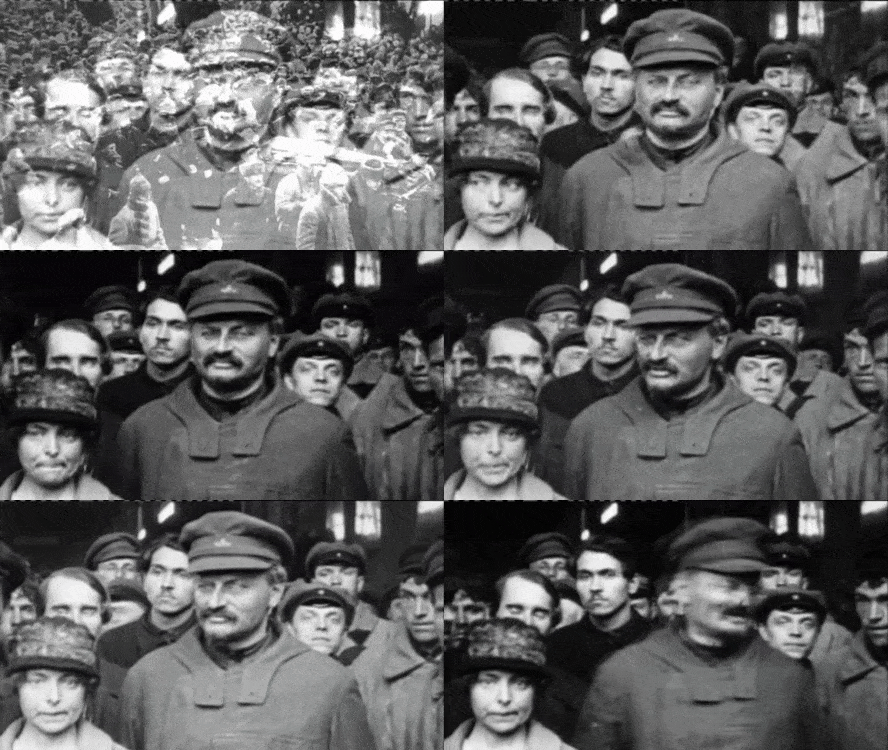
These were the first legislative acts of Soviet power. Lev Trotsky in his memoirs described the process of adopting new laws in the first days after the revolution:
“The young sailor, called the secretary of Lenin, continuously ran, transferring Lenin notes to me with two- and three-time emphasizing the most significant words and with the final issue-realm. Often, notes were accompanied by decrees projects that required hasty reviews. The archives of the Council of People's Commissars contain a considerable number of documents of that time written by part of Lenin, part of me, the texts of Lenin with my amendments or my sentences with the additions of Lenin.
The decrees had in the first period more propaganda than administrative significance. Lenin was in a hurry to tell the people what new power is, what it wants and how to fulfill its goals. He moved from the question to the question, convened small meetings with excellent indefatigability, ordered certificates to specialists and rummaged in the books himself. I helped him.
There is no need to say that a lot of mistakes and contradictions were allowed in the fever of legislative creativity. But in general, the Leninist decrees of the Smolny era, that is, the most stormy and chaotic period of the revolution, will forever enter history as the proclamation of a new world. Not only sociologists and historians, but the legislators of the future will be addressed to this source more than once. ”
Literature on the topic: Decrees of Soviet power. Volume 1. M.: State Publishing House of Political Literature, 1957
 E - heresies and sects
At the end of June 1917, during a relative lull in the political life of the country, Vladimir Lenin visited the country of Vladimir Bonch-Bruevich, a famous social democrat and specialist in Russian sects. In his memoirs, Bonch-Bruevich noted Lenin's interest in this period in extra-church folk religious communities:
“... He became interested in dozens of letters that I received with an opportunity from Petrograd and which I carefully read. These were all the letters of the sectarians from the various ends of Russia, especially from the Testament and the North Caucasus, in which I was in detail about the parties, about which parties to vote in the Constituent Assembly, how should I relate to newspaper messages about Lenin, to which the party I myself belong, etc., etc. This political correspondence, proceeding from the most folk depths, villages, towns, villages, hutov and farm and hutov and farm and hutov and far county town, extremely interested Vladimir Ilyich. He carefully examined letters, read and re -read them, drew attention to their common syllable, calculated grammatical errors, captured the features of the language - local expressions, a mixture of the Russian language with Ukrainian, and fell asleep with dozens of questions: do I personally know these people? Whom I know? Where and under what circumstances did you meet? What are they? What is their farm, craft? What is their family life, way of life? How many are there? Which sect belong to and how does one sect differ from another? What are their social roots? I barely managed to answer this and, knowing that Vladimir Ilyich could not satisfy superficial answers at all, immediately indicated to him the main literature of the subject, both printed and manuscript, according to various sects, economic and all sorts of other examinations, briefly summarizing all these materials.
Vladimir Ilyich listened to all this with the greatest interest and ordered me to send me to his brochure about the parties of the sectarians, which I exactly fulfilled. In letters, he persistently asked the sectarians in the most attentive way to read everything sent and to answer me - for his part he promised to answer them all their letters and in no case lose connection with them.
Of course, I immediately answered the received letters and showed two or three answers to Vladimir Ilyich. He approved them and told me:
- I have already told you repeatedly and I repeat again: you need to write brochures for the wide masses. You write very popular and simple, good Russian ... "
Details about the mutual influence of folk heresies and intelligentsia in the first quarter of the 20th century can be found in the popular book of Alexander Etkind “Hlyst” (M.: New Literary Review, 2013)
 F - female death battalion
Women's death battalions were created by the Provisional Government in the summer of 1917. During the October events, they had an unenviable fate: they defended the Winter Palace. After the residence of the Provisional Government was stormed, various rumors were actively distributed according to Petrograd about the future fate of the winter defenders, including their mass executions and rape. This is how Maria Leontyevna Bochkareva describes these events, on whose initiative the female battalion was created:
“The commanders were killed, if they didn’t even shoot us, they will completely disband the battalion, and the front is not to be seen as their ears. Is it worth living after that? For the first time, the thought of suicide crept into the head. I suspected that the same thought also took possession of Bazhenova. Everyone else more or less calmly expected their fate. I do not presume, of course, to judge what was happening in their souls. Only B., with a white, skewed face with a horror, spoke in an interrupted voice:
-There are a shoot us-a-ah ...
- And you thought they would be stolen on the head? -there was someone's calm voice with Nar. - Comrades, you knew what you were going to when they signed up in the battalion. If you cherish your life so, you had to go to the oath. You know, there is a Ukrainian proverb “Bachili Eying Sho dome, so Yishta I wanted” (“They saw the eyes that they bought and eat, even if they had to get out”). Now retreat late!
The mood of the soldiers gradually changed, threats began, abuse. They were heated and no longer hid their intentions to deal with us like women. What could we do, unarmed, against many times exceeding us the number of bastards? If weapons, many would prefer death by violence. We hid. The conversations fell silent. Nerves are tense to the last limit. It seemed that another moment, and we would find ourselves in the power of angry males.
- Comrades! - Suddenly a loud voice came. Two soldiers squeezed to the door through the crowd - members of the regimental committee, with a dressing on the sleeve. - Comrades, tomorrow we will figure out how volunteers hit the palace. Now I ask everyone to disperse! The appearance of committees acted sobering up for soldiers. They began to reluctantly disperse. ”
Literature on the topic: Volunteers. M.: Russian Path, 2014
 H - land issue
The peasants responded to the February revolution with massive self -seizures of landowner lands. Menshevik Nikolai Sukhanov recalled:
“... the man began to act himself. They divide and smell the lands, cut and steal cattle, smash and burn the estates, break and capture guns, plunder and destroy stocks, chop forests and gardens, and repair murders and violence. This is no longer “excesses”, as it was in May and in June. This is a mass phenomenon, these are waves that rise and spread throughout the country. And again, random news for these weeks: Chisinau, Tambov, Taganrog, Saratov, Odessa, Zhytomyr, Kyiv, Voronezh, Samara, Chernihiv, Penza, Nizhny Novgorod ... “Buried up to 25 estates”, “The detachment arrived from Moscow”, “Forests and crops are destroyed”, “The troops were sent for calming”, “The old is destroyed by the old Furniture ”,“ losses are calculated by millions ”,“ there is a livestock extermination ”,“ a valuable library is burned ”,“ the pogrom movement grows, throwing it into other counties ”... and so on without end”.
American journalist Albert Rice Williams on the eve of the October Revolution went on a trip to Russian villages:
“... I noticed that it would be interesting to know what the peasants think about Lenin. At least, this would give a certain idea of whether the moderate socialists are right, accusing Lenin for the seizure of land, fires and destruction that took place in the villages. (Naturally, Milyukov was at the forefront of the choir of votes, attributing all the disasters in the rural areas of the advice of Lenin.) Only the voice of Lenin told the peasants: “Go and take the land”. And he added: “Do this in an organized manner, in accordance with the decision of the majority of the peasantry in the village, volost, county or province - and despite the fact that one will be sowing, local committees appointed for this purpose (distribution of land) will be allocated; and remember: it should be not private land, but the property of the whole people. A more fair distribution, the region behind the region, can only be performed by state power and must be made by state power and should wait for the constituent power Meetings ".
As I said, in Petrograd, Lenin was accused of uprisings that flashed in the village. Вот что я хотел узнать: а слышали ли вообще его когда-нибудь крестьяне?».
Литература по теме: Кабанов В. Аграрная революция в России // Вопросы истории, № 11, 1989
 И — Июльские дни
События 3–5 (16–18 по новому стилю) июля 1917 года впоследствии называли репетицией Октябрьской революции. Непосредственным толчком к волнениям принято считать очередной правительственный кризис, связанный с уходом со своих постов 2 июля нескольких министров Временного правительства. Уже днем 4 июля площадь у Таврического дворца была заполнена многотысячной радикально настроенной вооруженной толпой. Здесь под лозунгами «Долой Временное правительство!» и «Вся власть Советам!» собрались солдаты 1-го Пулеметного полка, кронштадтские матросы, рабочие петроградских заводов, а также анархисты и рядовые большевики (руководство РСДРП(б) не поддержало выступления). Поскольку действия восставших не были скоординированы и во многом носили спонтанный характер, верным Временному правительству воинским частям не потребовалось много времени, чтобы подавить выступление. Жертвами боестолкновений в разных частях города стали десятки людей с обеих сторон. После подавления восстания Временное правительство обрушило на партию большевиков беспрецедентные репрессии, а Ленин вынужден был уйти в подполье вплоть до 24 октября (6 ноября) 1917 года.
Непростой вывод из июльский событий сделал писатель Максим Горький. Он писал жене:
«Но — самое главное и самое худшее — толпа, обыватель и тот „рабочий”, тот солдат, который действовал 3-го и 4-го. Это — сволочь, трусливая, безмозглая, не имеющая ни капли, ни тени уважения к себе, не понимающая, зачем она вылезла на улицу, что ей надо, кто ее ведет и куда? Видела бы ты, как целые роты солдат при первом же выстреле бросали винтовки, знамена и били башками окна магазинов, двери, залезая во всякую щель! Это — революционная армия, революционный свободный народ!»
Литература по теме: Рабинович А. Кровавые дни. Июльское восстание 1917 года в Петрограде. М.: Республика, 1992
 К — Керенский
После июльского восстания председателем Временного правительства становится Александр Керенский. Став к осени верховным главнокомандующим, Керенский, по сути, сконцентрировал власть в своих руках, за что получил ироническое прозвище «Александр IV». Однако, как известно, надолго удержать власть в своих руках он не смог. Широкое распространение получила версия, что накануне Октябрьской революции Керенский бежал из Зимнего дворца в женском платье. Сам Керенский утверждал, что уехал из Петрограда на своей машине в сопровождении автомобиля американского посла, любезно предоставленного ему заокеанскими дипломатами. По другой версии посольский автомобиль был захвачен силой. Факт беспрепятственного отъезда Керенского из фактически находившегося под контролем большевиков Петрограда за несколько часов до штурма Зимнего дворца, а также свободное его передвижение через расставленные по городу блокпосты, говорит о том, что революционная дисциплина в рядах восставших была не так хороша, как об этом говорится в советской историографии.
Литература по теме: Колоницкий Б. «Товарищ Керенский»: антимонархическая революция и формирование культа «вождя народа». M.: New Literary Review, 2017
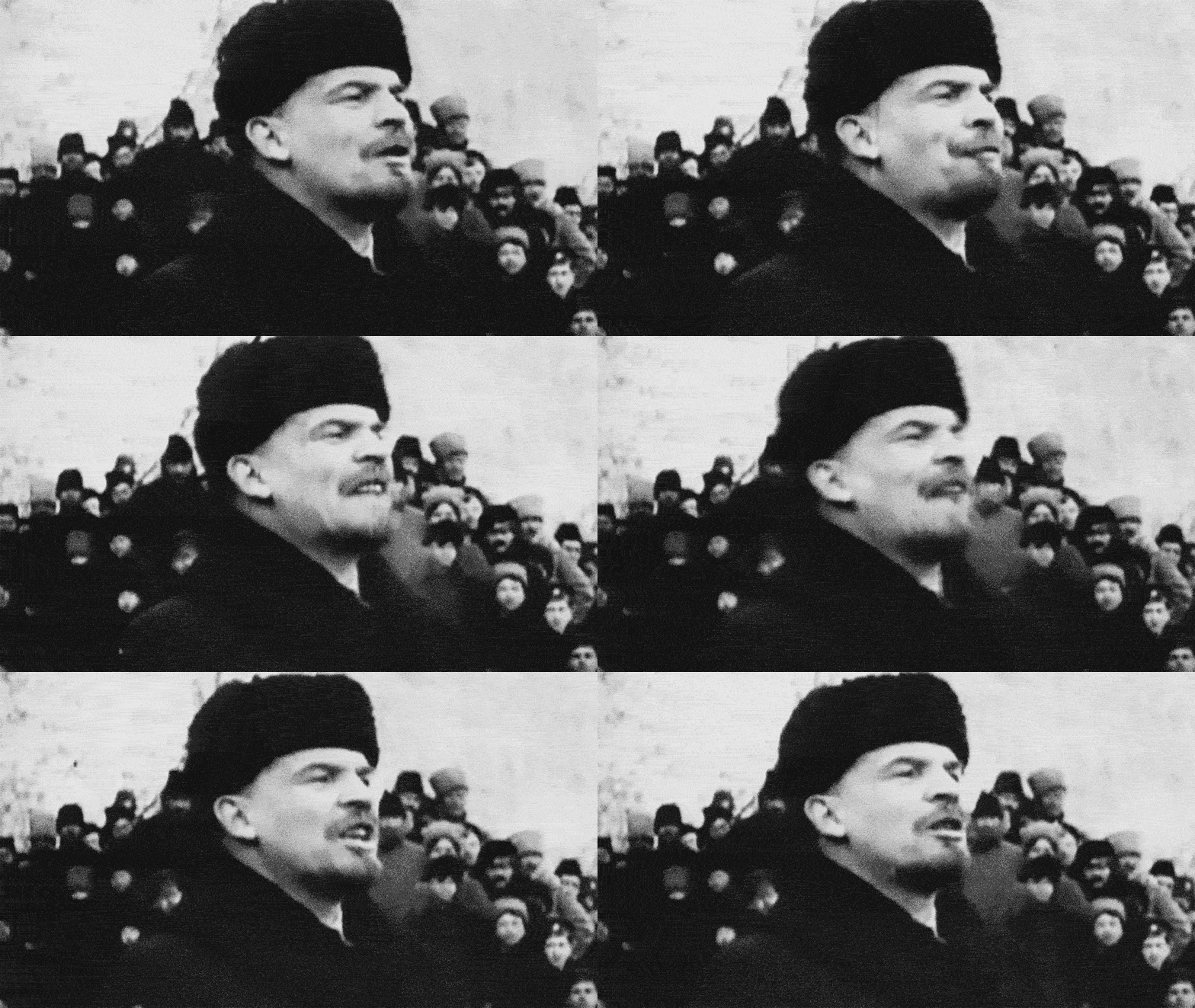
 Л — Ленин
Атаман Петр Краснов в своих воспоминаниях о боях под Петроградом в октябре 1917 года описывает любопытный случай. 1 ноября в гатчинский штаб казаков для переговоров о перемирии прибыл матрос Павел Дыбенко. «Громадного роста, красавец-мужчина с вьющимися черными кудрями, черными усами и юной бородкой, с большими темными глазами, белолицый, румяный, заразительно веселый, сверкающий белыми зубами, с готовой шуткой на смеющемся рте, физически силач, позирующий на благородство, он очаровал в несколько минут не только казаков, но и многих офицеров.
— Давайте нам Керенского, а мы вам Ленина предоставим, хотите ухо на ухо поменяем! — говорил он смеясь.
Казаки верили ему. Они пришли ко мне и сказали, что требуют обмена Керенского на Ленина, которого они тут же у дворца повесят».
Другой случай описан эсером Семеном Ан-ским. 30 октября в три часа ночи на совещание социалистических партий по предотвращению кровопролития ворвалась группа рабочих Путиловского завода. Молодой представитель пролетариата выступил перед собравшимися делегатами с речью:
«Вот уже неделя, как продолжается кровопролитие между обоими революционными лагерями. Преступная гражданская война! Мы требуем, чтобы ей немедленно был положен конец! Enough! Вы уже два дня заседаете, обсуждая вопрос о соглашении, но похоже на то, что вы вовсе не торопитесь. Мы не можем допустить дальнейшего продолжения гражданской войны. К черту Ленина и Чернова! Повесить их обоих!.. Мы говорим вам: положите конец разрухе. Иначе мы с вами рассчитаемся сами!»
Одним словом, вождь мирового пролетариата далеко не у всех революционно настроенных граждан вызывал трепетный восторг.
Выше мы уже отмечали, что Ленин всего за несколько часов до развязки Октябрьской революции вышел из подполья и открыто появился в Смольном. Фактически восстание прошло без его непосредственного участия.
После развала Советского Союза в массовом сознании на смену культа «самого человечного человека» пришли образы гриба, плесени и липового меда. Сегодня можно составить себе более-менее объективное представление о Владимире Ильиче по недавно изданным книгам историка Владлена Логинова и журналиста Льва Данилкина.
 М — Матросы
Крейсер «Аврора» — легендарный символ Октябрьской революции. Не менее важен образ матроса как бескомпромиссного революционера. Одно только упоминание о матросах в 1917 году наводило неподдельный ужас на современников, не испытывавших симпатий к Революции:
"«Говорят, что в Одессу присланы петербургские матросы, беспощаднейшие звери» (Иван Бунин, «Окаянные дни»).
«Вдруг под напором громадная дверь с треском распахнулась и ворвалась толпа. Впереди матросы с выставленными громадными наганами, за ними солдаты. Видя, что мы не оказываем сопротивления, нас окружают и ведут к выходу. На лестнице между солдатами и матросами завязался горячий спор. „Нет, мы их захватили; ведите в наши казармы!” — орали солдаты. Какое счастье, что взяли перевес солдаты! Трудно передать, с какой жестокостью обращались матросы с пленными. Вряд ли кто-либо из нас остался в живых» (Мария Бочарникова, «В Женском батальоне смерти»).
В рассказе анархиста Федора Другова о штурме Зимнего дворца выдвигается следующая версия захвата штаба Временного правительства: «Матросы рассказали, как один из них, забравшись на какой-то чердак и сбросив оттуда бомбу на собрание юнкеров, убежал. Нескольких матросов будто бы юнкера захватили в плен и расстреляли. Публика рассвирепела: „Как, расстреляли наших товарищей! Даешь Зимний, братва!” И вся эта орда бросилась во дворец... Бомба, брошенная в самой середине здания, навела на юнкеров такой панический страх перед наглостью матросов, что они, завидев в дверях пару матросов, наводящих на них винтовки, моментально поднимали руки вверх и сдавались».
Джон Рид в своей знаменитой книге «Десять дней, которые потрясли мир» не без восторга писал: „...«Кронштадт идет!” — сказал один из матросов... Эти слова значили то же самое, что значили в Париже 1792 г. слова „Марсельцы идут!”. Ибо в Кронштадте было двадцать пять тысяч матросов, и все они были убежденные большевики, готовые идти на смерть».
Впрочем, насчет «убежденных большевиков» Рид явно преувеличил, так как помимо большевиков на кронштадцев оказывали заметное влияние анархисты и левые эсеры. Трагическое антибольшевистское Кронштадтское восстание 1921 года под лозунгом «Власть Советам, а не партиям!» — яркий пример преданности идеалам свободы, а не радикальному крылу социал-демократов.
Литература по теме: Елизаров М. Матросские массы в 1917–1921 гг.: от левого экстремизма к демократизму. СПб.: Санкт-Петербургский Военно-Морской Институт, 2004
 Н — Николай II
Во время октябрьских событий Николай II с семьей находился в тобольской ссылке. Новости из Петрограда долетали до Тобольска отрывочно, а классовые противоречия ощущались не так остро, как на улицах той же Москвы, где в столкновениях сторонников и противников революции в конце октября — начале ноября погибло более тысячи человек. Пьер Жильяр, преподаватель французского языка в царской семье, вспоминал об отношениях царской семьи и солдат из числа охраны в ноябре 1917-го:
«Между тем доктрины большевиков начали свою работу по дезорганизации в отряде, который нас охранял и который до того времени довольно хорошо противостоял этому. Состав его был самый разнообразный, но солдаты 1-го и 4-го полков были в большинстве очень расположены к царской семье, и особенно к детям. Великие княжны с чарующей простотой любили поговорить с этими людьми, которые, как и они, чувствовали себя душой еще связанными с прошлым. Великие княжны расспрашивали солдат об их деревнях, семьях или о сражениях, в которых они принимали участие во время великой войны. Алексей Николаевич, который оставался для них „наследником”, тоже пользовался их уважением, и они всячески старались доставить ему удовольствие и придумать ему развлечение. Часть охраны от 4-го полка, состоявшая почти исключительно из солдат старших возрастов, особенно обнаруживала свою привязанность к царской семье, и для всей семьи было радостно видеть этих честных людей в карауле. В эти дни император и дети тайно ходили в помещение караула и разговаривали или играли в шашки с солдатами, из которых ни один никогда не позволил себе отступить от самой строгой корректности. Однажды их застал там комиссар Панкратов, который остановился изумленный у порога двери, наблюдая сквозь свои очки неожиданное зрелище. Император, видя его смущенный вид, сделал ему знак войти и сесть за стол. Комиссар, однако, чувствуя себя неловко, был этим окончательно смущен: он пробормотал несколько невнятных слов и, повернувшись на каблуках, удалился».
Представляя себе такую идиллическую картину, сложно поверить, что уже через несколько месяцев вся семья Николая II будет расстреляна.
Литература по теме: Дневники Николая II и императрицы Александры Федоровны 1917–1918. М.: ПРОЗАиК, 2012