
Translated material
The march of recklessness
For wars, you have to pay more than it seems - both money and a temporary clouding of reason. The financial consequences are felt by the peaceful economy of the decade later. But the conflicts of recent times have to learn how to evaluate, Boris Grozovsky believes.
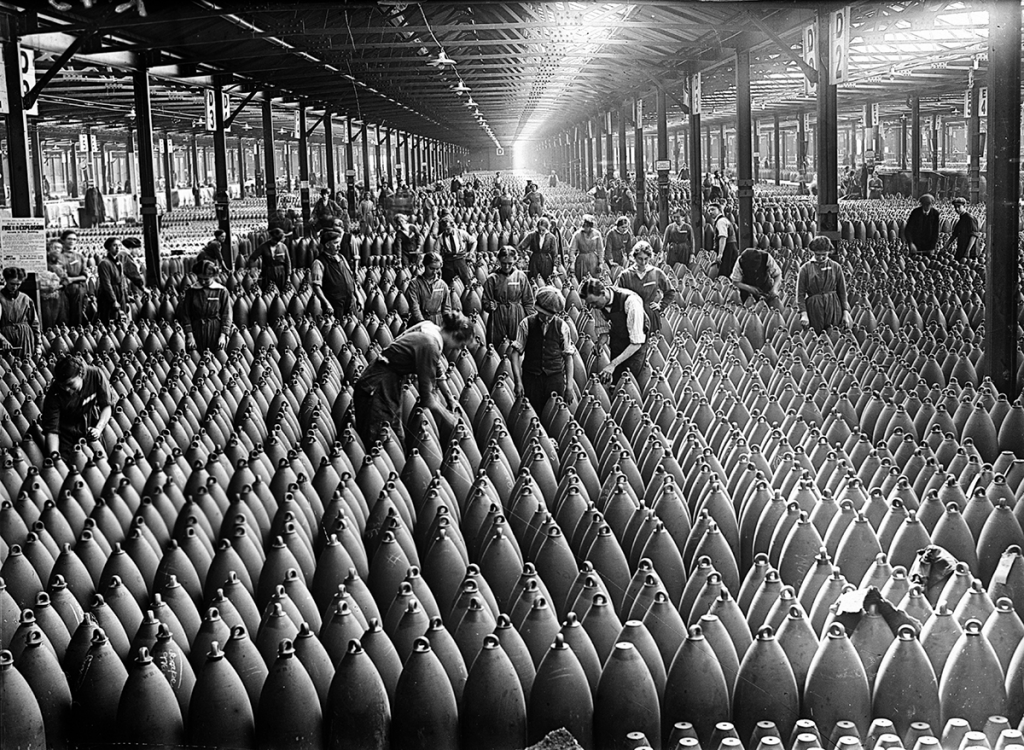
War is a Keynesian paradise. If you are not attacked, if there are no large -scale victims and destruction, then everything, it would seem, is in order: business activity is growing due to the demand presented by the most reliable consumer - the state. This was shown in March 1943. Economist Wesley Claire Mitchell, one of the pioneers in the study of business cycles, director of research on NBER in 1920–1945. And the head of the American Economic Association. At the expense of the state certificate, the ideal of full employment is achieved, all possible resources are involved, salaries and raw materials are growing, and production growth is limited only by the physical capabilities of equipment and workers. And all this due to the fact that the state’s demand for military deliveries provides private companies with prosperity - Mitchell honestly and almost online describes the benefits that the American economy received from the Second World War.
But being not only an attentive researcher of the business situation, but also by the institutionalist, Mitchell also saw the price of military success. It is high even if you do not have to pay with lives and destruction for a military-economic rise. This fee is a value shift, a reduction of national goals and preferences. In peacetime, people are engaged in their happiness, including through the growth of personal and family welfare and satisfying their needs. In wartime, all individual-family desires are inferior to the first place in the hierarchy of values to the tasks of achieving victory and maintaining the country's independence. This value becomes more important than individual life and its quality, allows you to endure any deprivation that are intolerant in peacetime. Such a change in values deeply transforms the whole economy.
During the war, the economy may remain market. But the mobilization of resources for military purposes is always carried out by the state and national planning bodies. Scattered market forces that pursue their goals are not the most suitable mechanism when the united will of the enemy, threatening national survival, must be opposed to the same unified will. A new criterion appears in the assessment of any goods and services - whether they help to win a military victory. The military scale of values does not replace the world of peacetime, but as if complements it, Mitchell notes, but always, when these scales give contradictory grades, the military “hits” a peaceful one, like an older map - the youngest. The price function is changing: they no longer regulate the balance of demand and supply, but rather become part of the directives: how much and what should be made and where to ship, what should be the costs (they are also determined not by the market, but by the state organizing warfare). Even in market economies, military planning itself is made not in monetary units, but in real terms: you need guns and tanks, and the money is reduced to the role of frankly official.
The demand created by the state for the goods and services necessary for the war is a new sphere of final consumption for a previously non -literary country, writes a year later, in 1944, a student of Mitchell Simon Kuznets. It does not apply to it that governing the interaction of market forces. In wartime, the structure of consumption of GNP changes dramatically. According to the Kuznets then, in 1942, 33.4% of the American GNP went to the war, and in the first half of 1943-45.4%. This is a striking change: in 1939–1940. Only 1.8-3% of GNP took for military purposes.
What is the total price? Until now, the most expensive for the United States was the Second World War - it cost almost $ 3 trillion (in 2002 dollars), or $ 20.4 thousand per capita. All other wars were an order of magnitude cheaper (except for the Civil War of 1861–1865, in relation to GDP cost about the same).
These calculations take into account only the short -term effects of wars. But many effects, even financial ones, are long -term. Modern wars do not last long, but financial consequences from them are visible for decades, Ryan Edwards from City University of New York shows . From 1/3 to 1/2 of the budget expenditures for the war are not made during hostilities, but then, when it is necessary to support veterans and their family. These expenses are not too high if you look at them within one year, but on the horizon 40-50 years after the war, they are very significant. So, according to the forecast of Edwards (2012), in 2020, almost 50 years after the war in Vietnam (1964–1972), the US budget will spend almost $ 30 billion on veterans of that war. These values are due to the fact that the Americans are trying to compensate their veterans by income that they have lost throughout their lives due to wounds and miserable.
But this is the price of the war for the budget. For individual people, it is much higher. And it would be wrong to calculate her income or compensation to families for the nurse lost in the war that were lost by veterans. The price of someone’s injury or death is the money that he (or his relatives) would pay to avoid an unfavorable script. This is how the “statistical value of life” is calculated, and it is gradually growing - from $ 1.2–2 million for the war of the 19th century (in modern dollars) to $ 8–9 million for the last wars. (For the USSR -Russia, this indicator was not calculated in the historical aspect.) Being in this way the price of wounds and deaths in the Second World War for the United States is $ 0.8–2.2 trillion - this is about 20-50% of the volume of direct budget expenses for the war. Obviously, for the USSR, a similar calculation would show a gigantic in relation to direct state expenses.
Can this knowledge affect the decision of politicians whether to enter into one or another war? Alas, it is hardly: after all, 30 years after the war, when the budget expenses for the support of veterans will decrease only half compared to the first post -war years, the authorities will no longer be the politicians who decided to start the war. On the other hand, in the authoritarian and democratic regimes, politicians are forced to pretend to be the price of war - both in money and in physical losses. After all, if it turns out to be too high, many modern wars (not related to the struggle to maintain independence) will become unacceptable for residents, notes the Yale economist William Nordhouse in the work of the war in Iraq .
Politicians are very often mistaken in assessing the cost of war. The Ministry of Finance in the government of Abraham Lincoln believed that the war would cost the North $ 240 million (7% of the GDP of that time). In fact, the war cost 13.3 times more. In 1966, the American Ministry of Finance estimated the cost of the Vietnam War of $ 10 billion (1.5% of the then GDP), the Pentagon thought that the war would end by June 1967. The monetary assessment turned out to be underestimated by 11-15 times (only direct costs of war are meant here). The same story happened with the war in Iraq. And this is without taking into account the costs of combating terrorist organizations, the rise in the popularity of which was facilitated by that war. The consequences of wars are generally unpredictable - therefore, it is now impossible to calculate than in the long run the conflict in the Donbass will result in.
The underestimation of the cost of war is not only the US problem, notes Nordhouse. Would Germany unleashed the first and second world wars if she could accurately calculate their price for herself before the start of wars? Would the USA start a war in Vietnam, would Japan attacked Pearl Harbor, knowing the consequences of its steps? Probably not. The vast majority of wars are the same march of recklessness, the historian Barbara Taphmen shows in the book of the same name about the First World War. Why is the cost of wars is systematically underestimated, and even by orders of magnitude? Why is humanity from time to time in assessing the most important historical events? Nordhaus rightly remarks: the big wars are events that come out of the ordinary. Based on judicial statistics, you should not build conclusions about how people allow disputes among themselves. Indeed, those 10% of disputes in which the disputers could not agree without the services of Themis reaches the courts. Most disputes between nations are also allowed without wars. Politicians and economists get used to thinking about ordinary conflicts and do not take into account that events that go far beyond the usual skirmishes and feuds are possible.
Another reason for the underestimation of the cost of wars is that, deciding to enter the war, politicians usually have one -sided, biased information prepared by the "hawks" - the war party. The fee, the pride of politicians, their reluctance to admit that circumstances can be stronger are also important. In a concentrated form, these features were manifested in the activities of the Spanish king Philip II, about which the touchman writes this way: “Not a single failure could shake his idea that he [as a ruler] is a head above everyone else.”
The most underestimation hits the most closely living peoples: they more often come into conflicts and pay more for them. One of the explanations of the frequency of fraternal conflicts was proposed in 2013 by a young researcher Akos Lada: most often culturally close peoples are being opposed to radically different political institutions. If one of these countries begins to build democracy, and in the other-the monarchy, then the elite of the second country feels a threat and begins the war so that subjects see enemies in neighbors-democrats, and not an example to follow.
All this applies to mostly old "classical" wars. But there are fewer in the last 30–40 years. But the dominant form turned out to be internal conflicts that political scientist Mary Caldor from LSE calls “ new wars ”. Caldor considers the abundance of such conflicts in different parts of the world the result of the end of the Cold War, after which conflicting groups remained “unattended” superpowers. Such conflicts are especially characteristic of countries with a weak state and a high probability of involving various ethnic and religious groups, state and private in the struggle. New forms of organized violence are not necessarily “hybrid”, but they are definitely not like the old wars that were waged “according to the rules” by regular armies, and the main goal was to control the territory. They are not similar to the old civil wars, the purpose of which was not territorial conquests, but the ideological victory of one lifestyle over another, writes Patrick Mello from the University of Dresden.
New wars are the result of the destruction of the state monopoly on organized violence. The border between the war and the world is erased, between front -line soldiers and civilians - as in the Donbass. Many non-state actors participated in the Balkan wars of the 1990s, including paramilitarian groups, various separatists, foreign mercenaries, crime, local police, etc. Such groups are drawn into economic activity: they need funding. Everything is suitable: oil, drugs, weapons, raiding, etc. - sources are very diversified. Therefore, wars are often waged not over the territory or ideological victory, but for economic reasons. Another reason for the new wars is the conflict of identities (conflicts in the territory of Yugoslavia, the USSR, in Kashmir and Eritrea).
The old wars waged states - one against others. Entry into the war was often due to a cognitive mistake. There are such wars in the modern world. But there are more and more wars that are waged by a group of people knocked out according to various signs against the same groups. There are no economic models for such wars yet. It is more difficult to conduct and stop such wars than traditional ones, and cognitive mistakes are complicated: more and more often, people make decisions about the start of the war, and completely different bonds.