
Translated material
All outside: Books of the Week
What to ask in book
Baltyus memoirs, a new look at the right, Egyptian myths, notes of the executed polar explorer, as well as a book-book about why it is worthwhile to engage in public policy in a depolitized country. As usual on Fridays, Ivan Napapenko talks about the most interesting book innovations.Fridtiof Capra, Hugus Mattea. Ecology of law. On the way to the legal system in harmony with nature and society. M.: Publishing House of the Institute of Gaidar; St. Petersburg: Faculty of Free Sciences and Arts of St. Petersburg State University, 2021. Translation from English G. Karpov. Content
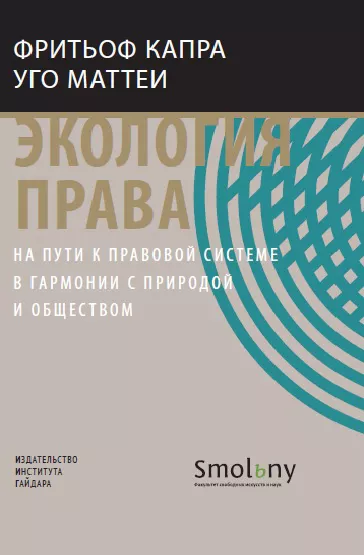 If we assume that the man -made environmental collapse is inevitable, in relation to some books you begin to experience something like premature nostalgia - as if you looked at them from the point of the end of the end and understood: how many good works that the collapse had tried to prevent, but did not take the effect! "Ecology of Law" Physics Fridtio Capra and a lawyer of Mattea belongs to such books.
Researchers beat the deuce: the mechanistic worldview of Art Nouveau is not only about the metaphor of the science “Nature as a machine”, but also about jurisprudence, which puts in the center of the laws system of a private owner and a sovereign state. Mattea and Caprah convincingly show how this duet of science and rights took shape and went hand in hand since the 16th century. In particular, as the Dutch lawyer Hugo Grotius used the Cartesian concept of rational natural laws to develop the theory of natural law - it was later that it fell into the foundation of modern legal thought. As a result, the attitude to nature as an independent object, unleashed to a person, multiplied by the success of the “dissecting” natural sciences, led to where we are.
Why are the authors Speaking in the most general form: to the need to approve the new basic metaphor in the science of “peace as a network” and place the common benefits in the center of the legal system (Common Goods). How this should look, Coprais and Mattea are told in detail. Also, the last chapter contains a sketch of examples from the news agenda, as the “revolutionary struggle” for the eco -shaped order is already going on. Alas, you can consider me a pessimist, but these examples do not inspire me so much as to drown out the aforementioned nostalgia.
“According to Grotius, the sea was a common good. <...> For the legal “person” engaged in international trade, access to this publicly available good was vital-to such an extent that the protection of the right to access it was equated with the most inalienable natural right to exist <...> with the help of these arguments, Grotius successfully defended the right of the East-India to freely move the general world ocean. In the future, he also substantiated, relying on the natural law, the company's right to appropriate private property that is not in use, equating it to things that do not belong to anyone, for the rescu nullis <...> for General and its corporate customers, this principle was especially important as a prerequisite for the possible extraction of uninitiated minerals. ”
Alexander Zamyatin. For democracy. Local policy against depolitization. M.: Publishing decisions, 2021. Content
 If you believe the annotations, this book is addressed primarily to people involved in local politics: activists, participants and organizers of communities, candidates for deputies and deputies, organizers of trade unions, etc. It is for them that they need to answer the question that drives up a difficult despondency: why engage in independent public policy in modern Russia?
But upon closer examination, the work of Alexander Zamyatin, the municipal deputy of the Zyuzino (Moscow) district and the curator of the Shanin program “Development of local communities”, serves the declared goal indirectly. Rather, this book about how it turned out in general that the question formulated a little higher drives into despondency, that is, why Russian society is depolitized and how the authorities use depolitization as a tool to preserve the status quo. To do this, the author conducts a political educational program, pronouncing a generalized levoliberal understanding of the situation. Along the way, he understands what public opinion polls serve; Why conservatism is the ideology of elites, and the theory of small deeds does not work; What can be achieved by becoming an opposition mundop (or at least participating in the meetings of the owners of housing).
Many ideas will seem familiar to those who follow the performances of Grigory Yudin * recognized in Russia by a foreign agent and “political diary” by Ilya Matveev and Ilya Budraitskis, which is not surprising: Matveev acted as the editor and co -author of the book (together with political scientist Dmitry Sereda), and Yudin is mentioned as the main source of inspiration.
“Active political position and real readiness to act depend not only on the internal beliefs and self -awareness of a person, but to a very large extent on the presence of a collective organization with which he could be solidarized. You can experience as much strong indignation about some injustice, but if the country does not have a suitable civil association, the Fund party or any other organization, then this indignation will most likely remain the property of your kitchen and will frustrate you, working for depolitization, and not at all on an “explosion”. ”
Garry Show. Egyptian myths. From the pyramids and pharaohs to Anubis and the “Books of the Dead” M.: Mann, Ivanov and Ferber, 2021. Translation from English by M. Sukhotina. Content
 With the myths of Ancient Egypt (and not only with them) there is a difficulty: it is difficult to just take and read them in translation into Russian. Not only because their authors are still in time from us even further than, say, the writers of senior Edda, but also because we are dealing with fragments scattered in a huge historical expanse - from 3050 BC. e. Until the first centuries n. e. Therefore, perhaps the only reasonable option is to trust the work of interpreters and compilers. The work of the Egyptologist Garry Show in this regard is an excellent public option.
The author does without a detailed analysis of the evolution of deities and their diverse cults and concentrates on the characters of the gods themselves. The book is divided into three sections - about the device of the pantheon, about the structure of the world and about the afterlife. Reading is applied with inserts that help understand how the Egyptians perceived the world around them. The disadvantages, as always, the continuation of the pluses: with its simplicity, the composition of the show can scare away those who are used to the greater academician.
“In the“ Book of the Dead ”there are spells that guarantee that in Duat you will not have to eat stool, drink urine and be inverted. These magic formulas will provide you with bread and other foods that the gods live. Favorite dishes of Duat inhabitants - bread from a white half -ba or Guba bread and beer from red barley from a khapy from a habit of cleansing; It is supposed to eat them in the canopy of the Hathor tree. The retinue of the solar god, floating now in the daytime, then in the night boats, also gives out the deceased bread and beer, and in case of extreme need, daily portions of beer and bread provide seven cows and a heavenly bull. ”
Baltyus. Memories. M.: Libra_FR, 2021. Translation from French A. Voinov
 We say the obvious: in the news agenda, Baltus appears as an artist, whose picture “Dreaming Teresa” in 2017 demanded to remove from the metro (“Romanticization of sexualization of a child”) on the wake of #Metoo, and an exhibition of polaries in Essen in 2014 was completely canceled (“Evidence of pedophilian addictions”). Even during the life of the author (1908-2001), his work was put on the cover of Lolita, which Baltyus was upset. So, the obvious is that in the memoirs of the French master there is absolutely nothing scandalous and voluptuous.
What is there? The picture is quiet, but inwardly intense wilting. These are boring memoirs, dictated in the last years of life, from the inside of the “great disaster of old age”, when Baltyus no longer could not work with models (hence the notorious polaroids), but also to write. In them - thoughts about loved ones (in the range from Rilke to Fellini), subtle remarks - for example, about the color of the gases that killed people in the 20th century, and the quirks of light, didactic considerations about artistic skill, and leitmotives - about cats and wife Setsuko (and in general these are not girls, but “angels”).
“I often felt that I was falling out of the sphere of interests, classes of contemporaries, who were abstract, conceptual. God could not create the world ugly, unreadable, we got an endless field of splendor, which should be cultivated by painting. Why create something ugly if there are such wealth? "
Sergey Bezborodov. On the edge of the world. M.: White Crow, 2020
 They reprinted a good book, about which Gorky spoke thoroughly , however, it is not a sin to remind. The White Raven Publishing House, together with the Gulag Museum of History, started a series of books that disappeared because of the Stalinist repressions, and “on the edge of the world” became the first of them. The series has not yet received a sequel.
The writer, journalist, employee of Detgiz Sergey Bezborodov (1903-1937) was in love with the Arctic. As a meteorologist, he overwest at the polar observatory on the land of Franz Joseph, in the northern settlement of the world. The construction of the Soviet Arctic myth was in full swing: in parallel with this winter, the famous salvation of the Chelyuskins took place, which unusually turned into a symbol of the impending planetary victory of communism. Bezborodov wrote a book about his polar experience, she published a few months before his shooting. The circulation was immediately destroyed - a few copies survived.
“On the edge of the world” is a fictional report characteristic of its time, from which colorful descriptions of heavy life can be gleaned. There is a lot of strong friendship, the fight against the elements, there is even a search for an internal enemy. With all respect for the difficult fate of the text, I note that the Sorokinsky story “Geologists” conveys the style of such works in an exhaustive way.
“Rare -Zubov looked confusedly at Naumich, then again at the sky, at the fog crawling to us.
“Trouble, Platon Naumich,” he said quietly.
Naumich carefully hid the Ramsnikovsky late forecast into his pocket, leisurely fastened the fur coat on all the buttons, thoroughly pulled on the fur mittens, straightened his hat with both hands, as if he was going to run somewhere or to fight, and finally calmly, quietly said: said:
- hit the alarm. All outside. "