
Translated material
Ceramic affairs master
Ceramic affairs master
The Polish artist and designer Marek Cecula works most often with industrial materials - porcelain, stainless steel, chrome. And, thanks to them and his ideas, he brought the concept of “pussar” to a qualitatively new level of perception.
Marek himself speaks about his work as follows:
“My artwork has no typical homogeneity in the subject. I experiment with many physical and conceptual ideas of ceramic objects and explore their meanings in modern culture. I am seduced by the role of the “game” of ceramics in our lives and the aesthetic values that it carries. I am an observer, an anthropologist who constantly discovers how we form relations with these objects and their functions.
Embodying my ideas in three dimensions, I try to involve the viewer in the same process of a concentrated imagination leading through the landscape of an imaginary place through which I myself went through the work of creativity.
In my work, art and design have always coexisted. It is within this application that the
The most interesting and creative aspects of both.
Surprise is our greatest inspiration. "
The playful nature of creativity in the process of handmade leads us to innovative and unexpected results.
These unique projects bear their own separate features, while offering solutions impossible in industrial mass production.
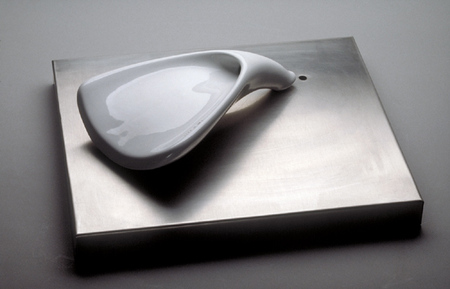
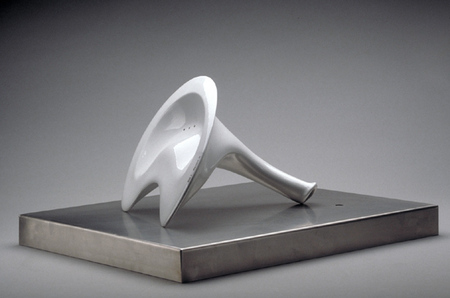
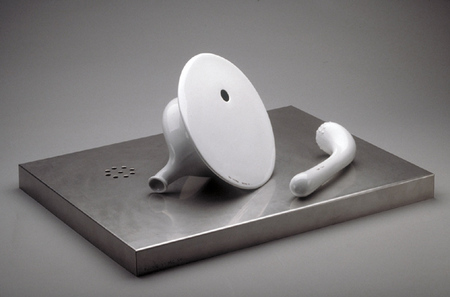
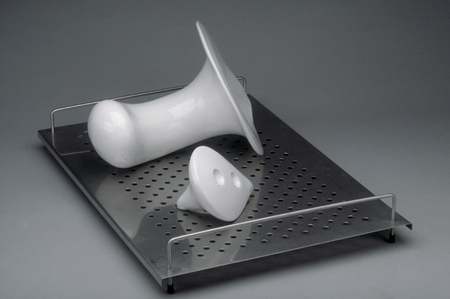
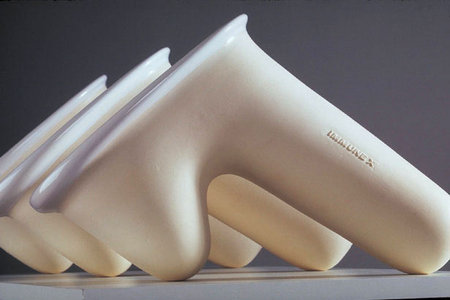
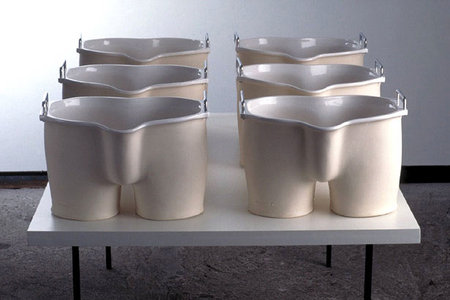
“Collections of works from the series“ Scatology ”,“ Hygiene ”and“ Erotic ”, which I produced on the European Ceramic Work Centerin Hertegenbosch, the Netherlands, were born from my recognition of unique aesthetic aspects of ordinary daily objects. It seems to me that objects such as toilets have a special place in our lives, because of their close relations with our anatomy.
They are created to serve for the body with hygienic paths, to free us from the substances that the body produces.
White glossy porcelain material conveys a contradiction: this is a beautiful smooth shape and surface, and dirty, undesirable by -products of our organisms.
My observations led me to creative improvisation for “hygienic sorting pornography,“ exploring the area where our habits and manners are very personal and intimate. My work reveals many associations caused by the utilitarian world of toilets, laboratories and hospitals.
But the forms are not at all useful: they are sensual abstractions of pussuars, medical instruments, or possibly parts of the body. They carry a certain erotic accusation. They suggest images of a male and female body, holes, and sex
The use of high glossy glaze with the purity of white porcelain and soft smooth outlines against sharp corners causes a tactile desire to touch objects. "
Scatology
Erotic
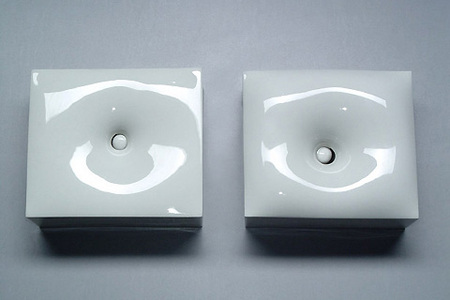
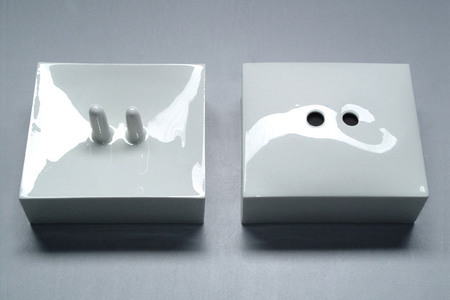
HYGIENE
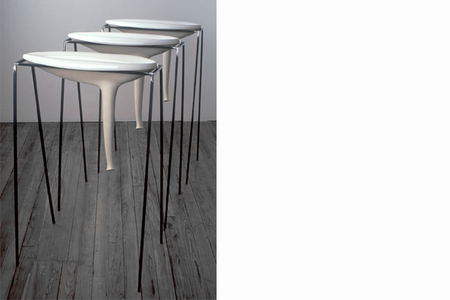
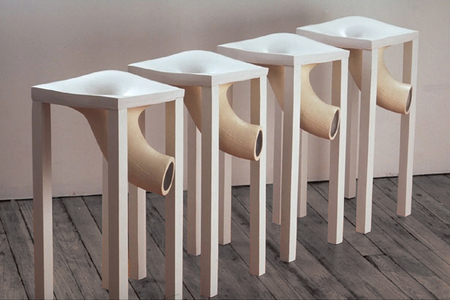
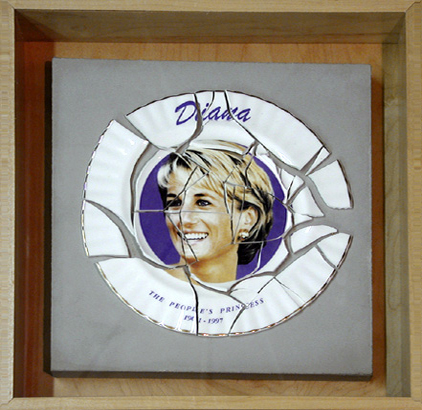
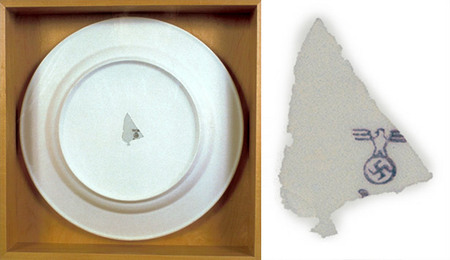
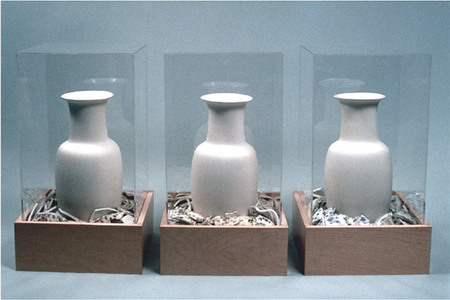
"Violations"
“The strategy of the process of creating this work was to reduce typical labor -intensive ceramic processes and emphasize the strong conceptual content that exists inside the objects themselves.
Objects appeared in a series from perfect various sources.
Some were found, donated, purchased or received from anywhere else.
Several of these objects were created when using destructive methods used in ready -made ceramic parts.
“Violations” as an idea and expression is shown through things that became documents representing their own history. Promotion of brands of manufacturers and brands of consumers as evidence of their cultural, social and political standards. ”
But this series is undeniably the most amazing of all.
Porcelain Carpet
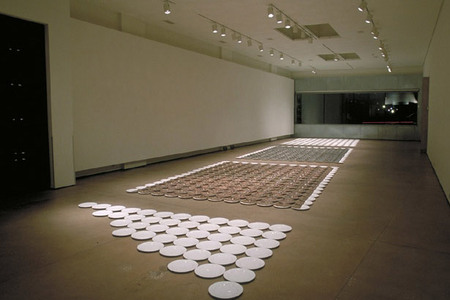
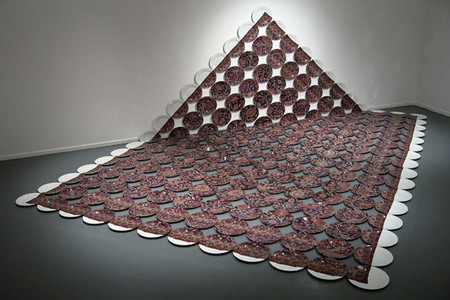
“Porcelain carpet.
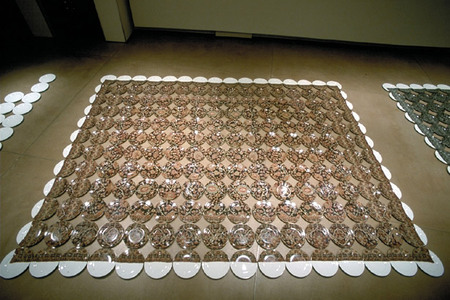
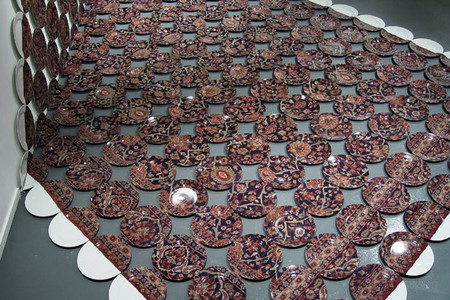
The installation consisting of 576 decorated plates of dining porcelain, divided into three groups of 192 plates into each: full-color, black and white and just white plates.
These three stages represent the ceramic process of image reproduction, in the material, in the location and in the project.
The plates are installed directly on the semii form three dense rectangular surfaces.
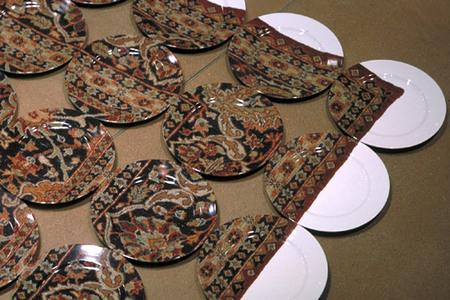
The surfaces of the plates are covered with the ornament of the classic North Indian carpets.
The original carpet was photographed and the photo was copied to the computer, with the help of which the drawing was transferred to a map representing 192 plates.
The final digital material was transferred to production and put on plates.
Decorative ornament covers round surfaces of plates in sequential directions.
The “carpet” occupies the majority of the closed area of the room in which he demoned, leaving only small passages for the audience.
There are many common components in the manufacture of carpets and ceramics. And handmade and mechanically produced objects, and both require skills and skills, contribute to our understanding of aesthetics and usefulness.
Their surfaces are decorative and utilitarian at the same time, as well as both are the cultural importance of decorative decoration. The general features and contrasts of these noble objects of the interior, their oriental origin and traditional status make them a powerful and appropriate subject for research on contemporary art. ”
The official website of the designer is here .