
Translated material
War with corpses
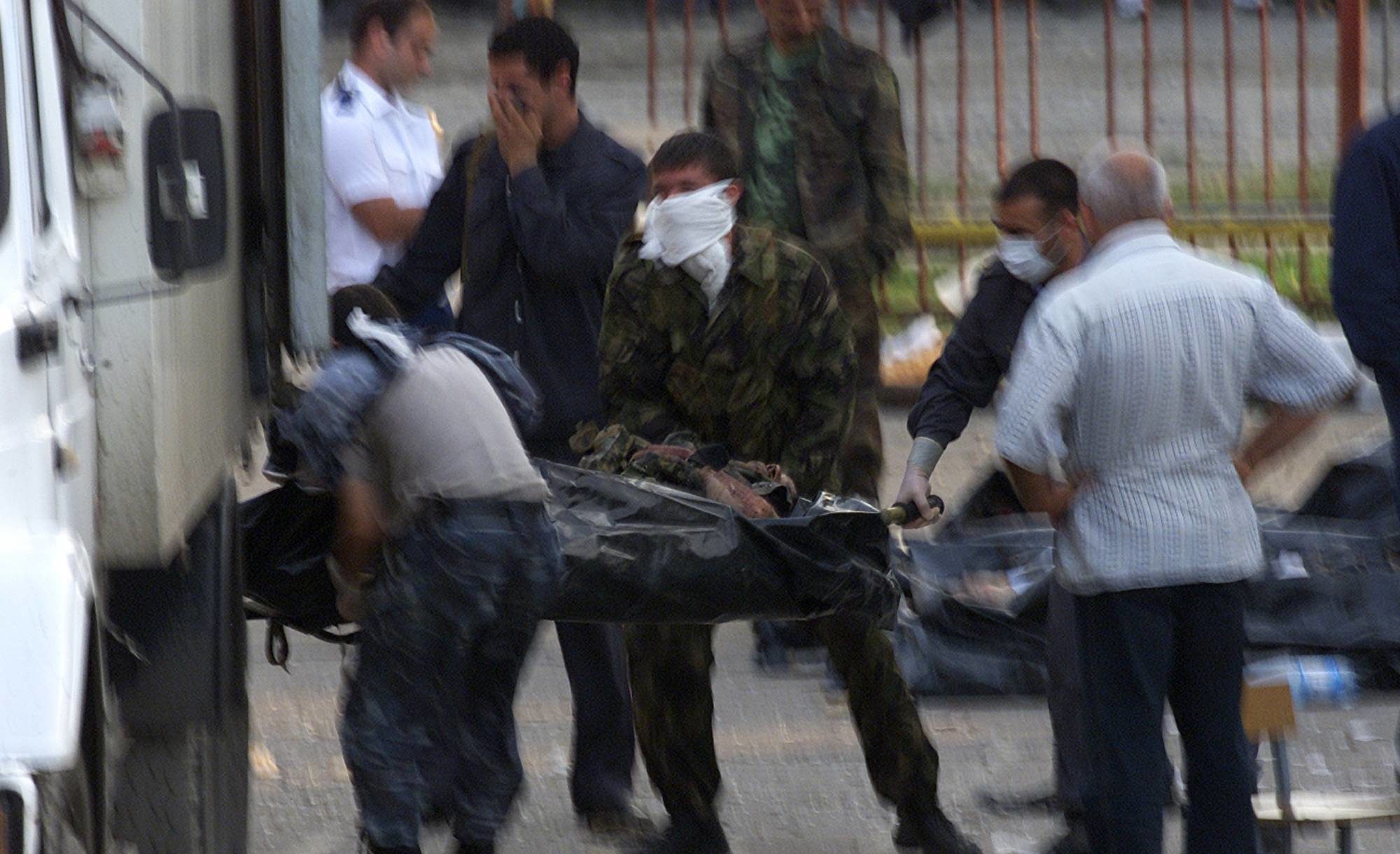
Often, a report on the “elimination” of terrorists is followed by a long story of the attempts of relatives of the dead to return their bodies. Close to such people cannot do this for years - the law prohibits. The inability to say goodbye to loved ones, ignorance, where they rested and where you can remember them - pain that is not allowed to muffle. Why this happens, says Gleb hunger in the material for "such cases"
For the first time in the Crimea
In May, the employees of the Crimean FSB came with a search at the Nabi House Rakhimov and Sokhiba Burkhanova in the village of Testament Simferopol district. Rakhimov was not at home - he was at work. After the search, his wife was taken to the department. After that, another search became known - in the village of Dubka.
Over the past six years, Crimean Muslims have become a frequent goal of persecution by the state. More than a hundred Crimean Tatars are taking place in the case of the Hizb Ut-Tahrir organization prohibited in Russia. In Russia and Uzbekistan, it is recognized as terrorist, in a number of Muslim countries it is also prohibited, and it is not known about any perfect terrorist attack with its participation. In Ukraine, Hizb Ut-Tahrir acted legally, but was under the supervision of the SBU. After 2014, many employees of the Ukrainian special services moved to the FSB of Russia and used their developments against the organization. Subsequently, several dozen criminal cases were instituted against the participants of the Hizb Ut-Tahrir. From year to year, the Memorial human rights center recognizes them political prisoners.
Some of the defendants in this case have already been sentenced to long terms on terrorist articles, some are waiting for a sentence in the pre-trial detention center of Crimea and Rostov-on-Don, where these cases are listened. Now in the Southern District Military Court there are 14 cases related to the activities of Hizb Ut-Tahrir in Crimea. About 40 people expect a sentence.
On August 17 this year, five more were detained. From an unfinished house in the village of Dubki, where the FSB officers came with a search, they carried the body of a man. Nabi Rakhimov was killed during the detention. Later, in the evening, the FSB will report on the “liquidation of an action movie from an international terrorist organization” and will say that he resisted. His wife will be sent to the center of temporary maintenance of foreign citizens, and two children - to the orphanage.
 Employees of the Crimean Office of the FSB liquidated a member of international terrorist organizations, which had armed resistance during the detention of a photo: a picture with a video/UFSB of Russia in the Republic of Crimea and the city of Sevastopol/TASS
According to the neighbors, Nabi was a hot -tempered man, but for a long time he did not keep insults and did not differ in radical glances. He fought for freedom with legal methods - he sought the realization of his rights in the courts. In 2010, in Uzbekistan, he was accused of trying to overthrow the constitutional system of the state, storage and disseminate documents containing ideas of religious extremism, separatism and fundamentalism and the threat of national security and public order and in the participation and leadership of religious, extremist, separatist and other prohibited organizations. This was due to his alleged participation in Hizb Ut-Tahrir. After that, he left the country. For what reason they came to him in this August is still unknown.
Rakhimov was detained several times in Russia and kept in crowded chambers. After that, he filed a lawsuit in the ECHR. The Strasbourg Court saw a number of violations of the Convention on Human Rights, banned its expulsion and in 2014 ordered Russia to pay him compensation for 17 thousand euros. In 2015, he received payment. In the same year, the family moved from the Moscow Region to Crimea.
Unlike her wife, Sohib was not able to legalize her stay in Russia. In 2018, she was refused refugee status. Saved her from expulsion immediately after the murder of her husband, the European Court: in Uzbekistan, she was in danger, and the ECHR banned the deportation. They refused to give her husband to her husband, first referring to the forensic medical examination, and then to the "law on burial and funeral business."
According to him, the bodies of people killed as a result of the suppression of a terrorist action are not issued. The place of their burial is not reported. They are buried either in special cemeteries, where in the graves instead of names are serial numbers, or cremate. Mothers and fathers, children and friends will never be able to come to where their relatives are buried.
Now the lawyers of Sokhiba Burkhanova are fighting for the return of her husband’s body and want to bury him with dignity. Sohiba herself for the third month has been in the center of temporary detention in Krasnodar. Children temporarily live with familiar family.
“This is a gross violation of the presumption of innocence. There was no evidence of terrorist activity by Nabi Rakhimov - only words. The law refers to the murder during the attack, but the evidence that Rakhimov at that moment committed any criminal actions was also provided. It turns out that his whole life is one continuous terrorist attack. I think the body is not given out due to traces of violent death, ”says Sohiba lawyer Eden Semedlyaev.
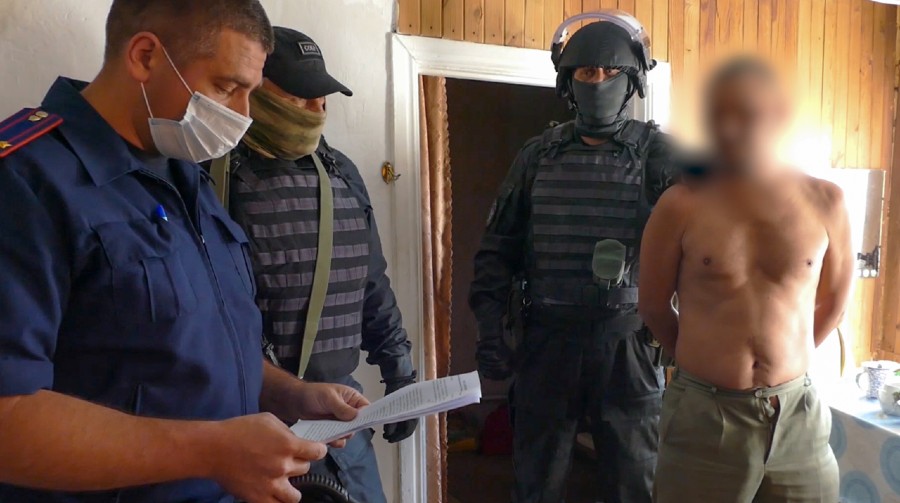 Employees of a special quick response detachment (SOBR) during the detention of a participant in the Hizb Ut-Tairer terrorist organization. Employees of the FSB of the Russian Federation and the collection in Penza, Ufa and Chelyabinsk detained four leaders and 11 active participants in the terrorist organization photo: a picture with a video/press service of the Main Directorate of the Ministry of Internal Affairs of Russia in the Chelyabinsk Region/TASS
Referring to the words of his client, Semedlyaev says that law enforcement officers are actively looking for her children. She believes that in this way they want to blackmail her so that she does not achieve the rehabilitation of her husband and the normal investigation of his murder.
“For many years, the state was not interested in how my children live, what they are dressed and what they eat. And suddenly they needed them, ”her lawyer quotes her.
Under one comb
The amendment, due to which the bodies of people accused of terrorism stopped returning their relatives, were accepted in December 2002, two months after the Dubrovka terrorist attack. Legislators decided that the refusal to issue terrorist bodies to relatives will help to avoid a cult around the burial place. So, in Russia they refused to give the bodies of militants who seized the theater on Dubrovka, a school in Beslan and those who attacked Nalchik in 2005. In the first two cases, the bodies were buried in an unknown place, in the third - cremated.
In many other countries, there is no ban on issuing bodies of terrorists. In the USA they are openly buried in cemeteries. In recent years, two exceptions are known-the leaders of al-Qaeda and ISIS (both organizations are recognized as terrorist in the Russian Federation): Osam Ben Laden and Abu Bakra Al Baghdadi was buried in the open sea. The American government claimed that they buried them in compliance with all Muslim traditions. More often problems arise at the international level. So, in India there were problems with the funeral of terrorists who participated in the attack on Mumbai in 2008. Pakistan, whose citizens they were and on the territory of which their relatives lived, refused to accept their bodies. Algeria refused to take the body of Muhammad measures that arranged a massacre in France in 2012. As a result, it was cremated, and the ashes were handed over to relatives.
In Israel, five years ago, terrorists were forbidden to bury their relatives at the place of residence. The decision on the place of burial is now made by the police. This happened after the funeral of the resident of East Jerusalem Alla Abu Jamal, who grew into the anti -Israeli manifestation of several hundred people.
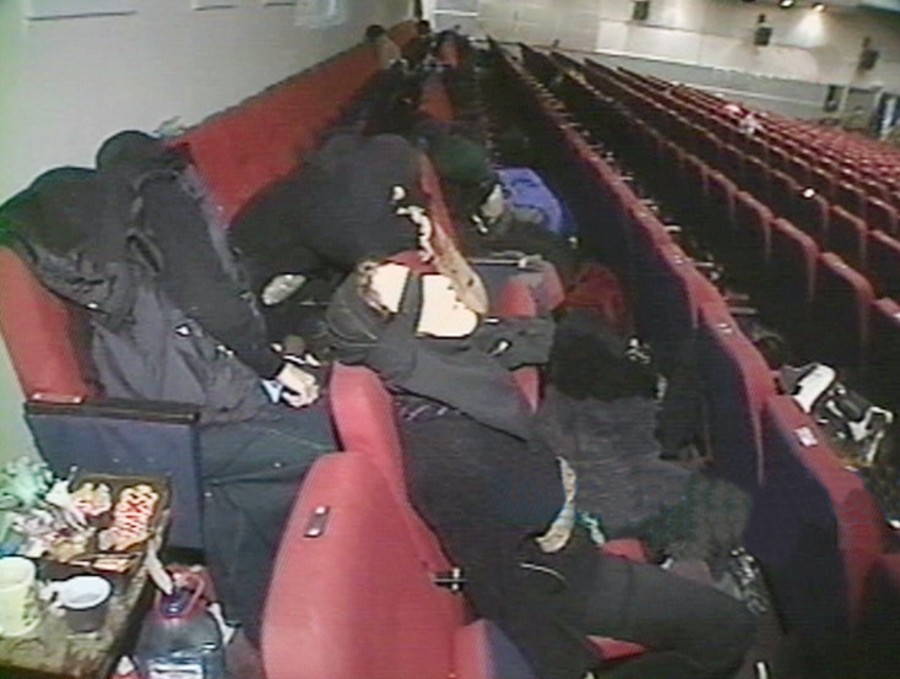 Russia, Moscow. October 26. Terrorist with belts filled with explosives. They were killed during the operation to release hostages in the Palace of Culture of the Moscow Bearing GPP photo: the Central Department Store of the FSB of the Russian Federation/TASS
In 2007, the Constitutional Court of the Russian Federation confirmed the legality of the ban. According to the court, the issuance of bodies of people killed during the attack of the attack is “capable of pose a threat to public order and social calm, rights and legitimate interests of other persons, their security, including leading to inciting hatred, provoking vandalism’s acts, violent actions, mass riots and clashes, which can lead to new victims, and the place of regulatory parties to participants Terrorist acts can become places of cult worship of individual extremist persons, they will be used as a means of promoting the ideology of terrorism and involving in terrorist activity. ” The Constitutional Court indicates that the burial should be committed in accordance with customs and traditions, and the decision to refuse to issue the body depends on the evidence received during the investigation in the criminal case and confirming the participation of the person in the attack.
Judges Gadis Gadzhiev and Anatoly Kononov then expressed a special opinion, calling this amendment to the amoral law. Gadzhiev argued that the burial should be made with the participation of relatives in compliance with customs and traditions and humanitarian rules for respect for the dead.
Read also Forgotten unemployment, poverty, disability, depression - what happens with victims of terrorist attacks after many years
“The contested norms prohibiting the issuance of the bodies of the dead and establishing anonymity of their burial are absolutely immoral, reflecting the most wild, barbaric and low representations of the past,” said Judge Kononov.
Then the relatives of the dead appealed to the European Court. The first decisions on this issue were made in 2013 in the Mashadov and others against Russia. The wife of the murdered president of the unrecognized Ichkeria Aslan Maskhadov and her children turned to the ECHR with a request to recognize the refusal to issue the body illegal. The court found that Russia should not automatically refuse to issue the body of Maskhadov to relatives.
At the same time, the case was listened to, in which the relatives of the dead during the attack on Nalchik in October 2005 militants were asked to recognize the bodies of relatives to them unlawful. Russia not only refused to return the bodies of 95 killed, but also cremated them. According to Muslim canons, this cannot be done: in Islam it is customary to bury a person in the ground, and as soon as possible.
The court agreed with the applicants and recognized this measure by a violation. According to the court, the violation of Russia consisted in "the absence of an individual approach to proceedings."
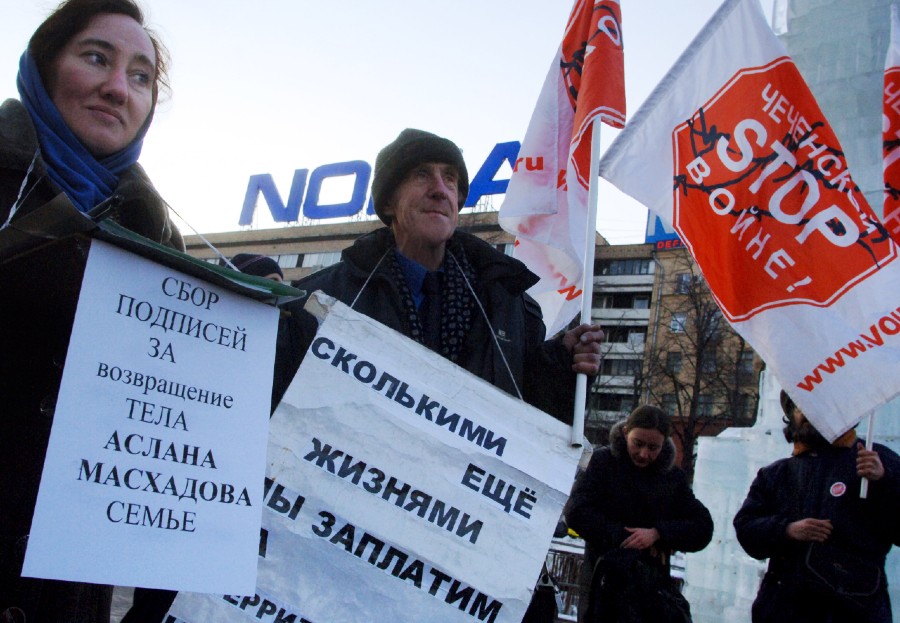 Moscow, 2006. Picket of the Committee of Anti -Wenced Actions and the Anti -Wencan Club against the War in Chechnya and in support of the issuance of Aslan Maskhadov’s body to relatives photo: Alexander Sverkin/TASS
“The European Court believes that a violation is the same approach to everyone. For them, a violation is not a refusal to return the body, but the lack of individual proceedings on each issue. They do not consider the inability to say goodbye to their relative of the form of suffering. The dead are already dead, but what are the living? " - The lawyer of the “Legal Initiative” Rustam Matsov is outraged.
In his opinion, in this situation, work at the national level needs, because there are no prospects in the ECHR. The court decisions are built from the consensus of European countries on certain issues. The European consensus on the issue of refusal to issue bodies is that relatives do not suffer, says Matsov.
Nothing changes
The last thing to refuse to issue a body in the practice of Matsev is the case of Madina Bapinaeva. Anti -terrorism operations took away the lives of two of her children, and left the third disabled.
In January 2005, the Russian special services conducted a special operation to destroy Jamaat Yarmuk, an underground terrorist organization operating in Kabardino-Balkaria in those years. Seven people were killed - three men and four women. The special services then claimed that they lured them out of the forest, but how the militants were in an apartment with weapons were not explained. The siege lasted almost two days. There was an iron door in the apartment, she was immediately brewed so that no one would get out. This was later a characteristic feature of all such operations in Kabardino-Balkaria.
As a result of the assault, the fourth floor, on which the dead were hidden, was completely destroyed by grenade launcher. The women were promised to let go, but later they said that they were shooting off. Among them was the pregnant daughter of Bapinaeva Olesya Trunova. She was 18 years old.
“Olesya went out onto the balcony and said:“ If you don’t open the doors now, I will jump. ” Her sniper at that moment shot. I have not had any terrorist, there was always a home girl. I knitted all my life, and from the age of 15 I worked in a cafe, baked the most delicious huts. We had to go to the preservation, but she was killed, ”Madina Bapinaeva cannot restrain her tears.
The woman recalls that she was ready to go and bring Olesya out of the hand, but she was not allowed. Instead, the security forces arrived at her home and during the searches, her semi -year -old daughter was trimmed with automatically. The girl was not assisted for a long time, she had a stroke. For life, she remained disabled.
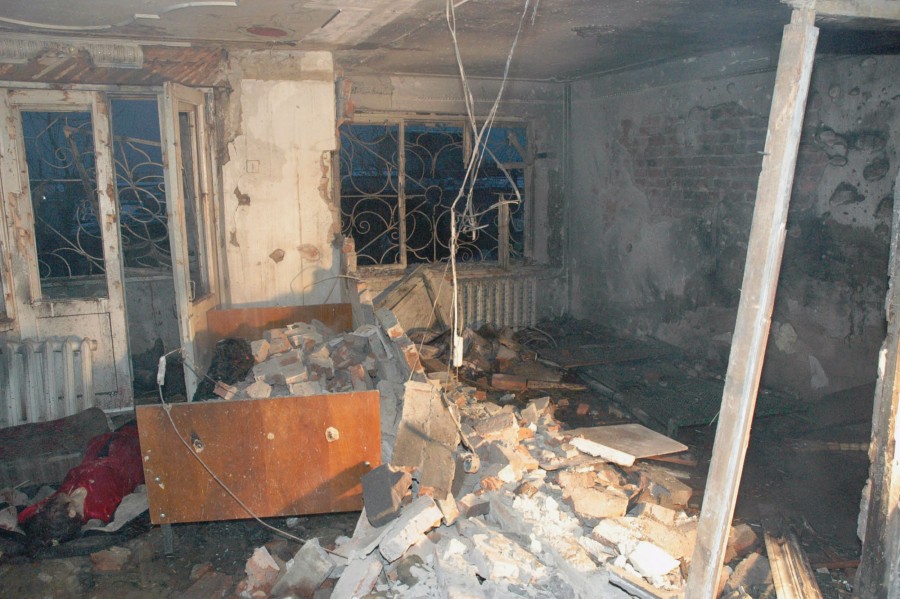 Kabardino-Balkaria. Nalchik. January 27, 2005. The destroyed apartment in which the militants of the photo were hidden: Kantemir Davydov/TASS
In those years in Kabardino-Balkaria, such operations occurred more than once. The mothers of the dead often went to the prosecutor's office, demanded answers, talked with reporters. Meanwhile, the eldest son of Bapinaeva Radik got angry and joined the remnants of Jamaat. At least, the security forces who shot him in one of Nalchik’s courtyards, in the refusal to present documents in 2007, explained.
They told his mother that if they had not killed him, he would have killed them.
Madina does not believe in this. She believes that her son was killed in order to take revenge on her because she went out after the death of her daughter. The investigation on the fact of his death was not carried out.
“Radik was a disabled person of the first group, he had epilepsy. He lived on severe prescription drugs. What terrorism? What is armed resistance? He was registered with a psychiatrist. The nurse often came to check it, he did not have the opportunity to disappear for a long time, ”Madina recalls.
It was possible to bury the killed daughter immediately, and the body of her son was never returned to her. She turned to all state authorities and everywhere received a refusal. According to her, unknown people came to her and offered to tell for 5 thousand dollars where the son was buried. She refused.
The Russian court did not make any decision on radical Bapinaev. What kind of pilgrims can build a cult around the grave of a man with disabilities, who was killed due to a refusal to present documents, is unknown. In a statement in the ECHR, Madina wrote that she still does not know whether her son is buried at all.
Refusal of struggle
Lawyer Marina Dubrovina, who has been working in the North Caucasus for many years, believes that the law on counteracting terrorist activities unleashes hands on law enforcement officers.
“They try to talk more often about illegal armed groups than about terrorist organizations. Therefore, they say that a person joined this formation and took an oath to the head of the Imrat of the Caucasus (prohibited in the territory of the Russian Federation). This person (Doku Umarova. - Approx. TD ) has long been killed. Any sensitive person, reading this, will understand that these are invented things, ”says Dubrovina.
According to her, a lot depends on the investigation authorities. If the Ministry of Internal Affairs is engaged in the case, then there is a chance of returning the body. Cases of terrorism are the investigation of the FSB. The Ministry of Internal Affairs can only deal with cases of illegal armed groups. The defendants in such cases do not fall under the law on terrorist activity.
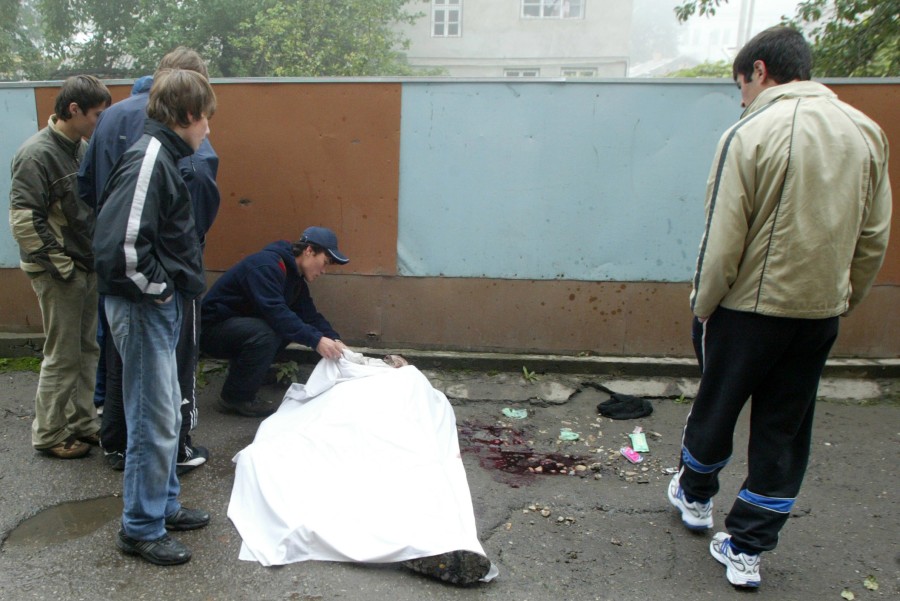 The body of the murdered militant on Nalchik Street, after an attack on the city in October 2005 photo: Eduard Kornenko/Reuters/Pixstream
A similar story occurred in Dagestan, when in 2016 in the Shamilsky district the Gasanguseynov brothers-Polishi were shot down during a joint special operation of the Ministry of Internal Affairs and the FSB. At night, the security forces accidentally shot 19-year-old Hasanguseyn and 17-year-old Nabi. They tried to report on the elimination of militants and refused to give out the bodies that were at that time in the regional department of the Ministry of Internal Affairs. They were planned to be taken to Makhachkala for examination. This meant that they would not be returned at all, because the “militants” were not returned. Then the inhabitants of the neighboring villages themselves opened the gate and took the bodies. The police could not interfere. This case was the first in Dagestan, when after a special operation a case was initiated about the murder of her victims. Five years later, this case has not yet been investigated.
Read also Terrorists are not born
According to Dubrovina, the bodies are returned in rare cases. This often applies to situations when the security forces “overdid” - they swept the innocent. Then the body is returned and buried, but without unnecessary noise. To get the corpse of a relative, people need to abandon further struggle.
This happened to the brother of the resident of Ingushetia Sultan Aliyev - Ibrahim. On June 8, 2018, Ibrahim Aliyev was detained in his own house. Relatives for three days could not get any information about his whereabouts. On the fourth day, they were summoned to a meeting with the ex-head of the Republic of Yunus-Bek Evkurov and an unnamed General of the FSB. At the meeting, they were informed that during the interrogation Ibrahim grabbed the scissors and with a cry "Allahu Akbar!" He rushed at one of the employees, after which he was shot.
"You are a smart person, general, how are you not ashamed?" I asked him. He silently held out his hand and said goodbye to me. For what?! He did not hold weapons in his hands, did not kill anyone, he was not a terrorist. He worked as a tractor driver all his life. The youngest son was not six, and after his death, another son was born. Еще и второго брата посадили в то же время, сочинили дело о терроризме. А ему 23 всего было!» — вспоминает Султан Алиев.
Тело брата отказались возвращать, несмотря на то что еще в 2011 году Юнус-Бек Евкуров решил отказаться от этой практики в Ингушетии. Тогда он мотивировал это попыткой не озлоблять оставшихся.
Султан ходил по всем инстанциям, встречался с высокопоставленными чиновниками и силовиками, везде получал отказ. Ему передавали, чтоб он не жаловался, не раздавал интервью, угрожали. Султан писал даже Путину.
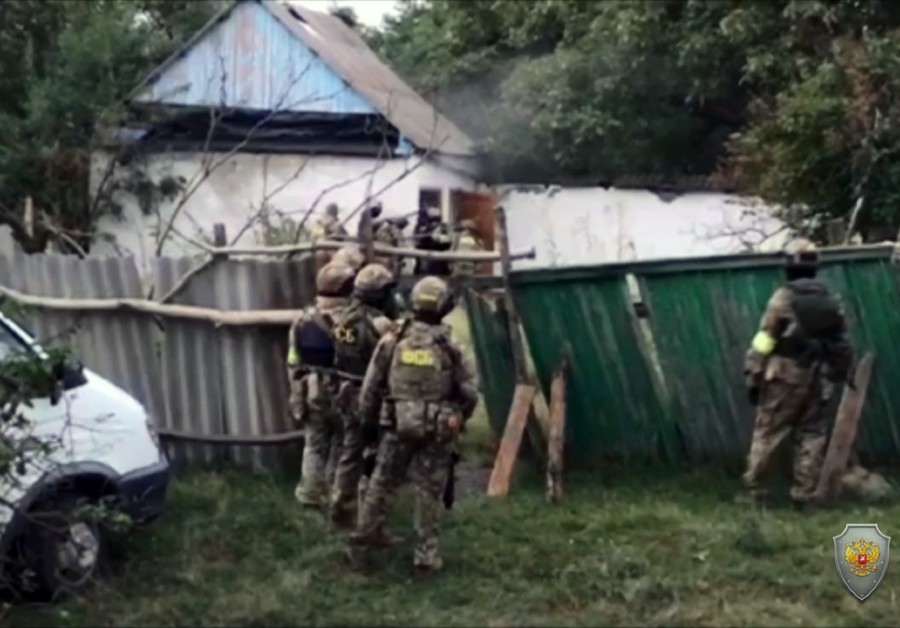 Republic of Ingushetia. Сотрудники ФСБ России во время ликвидации вооруженного бандита, планировавшего террористический акт, в ходе контртеррористической операции в станице Вознесенское Малгобекского района Фото: Пресс-служба ФСБ РФ по Ингушетии/РИА Новости
Спустя месяц силовики, по словам Алиевых, неофициально предложили им сделку: тело Ибрагима отдают, но похороны проходят тайно и в присутствии охраны. They agreed. Похороны прошли после захода солнца, несмотря на то что в исламской традиции это запрещено. В течение нескольких следующих недель место погребения Ибрагима Алиева охранялось, и никто из тех, кто хотел туда попасть, не смог этого сделать. Эту информацию «Таким делам» подтвердил Виталий Зубенко, адвокат младшего брата погибшего Ибрагима — Башира Алиева. Последнего судят по обвинению в подготовке теракта во время ЧМ-2018. Он называет дело сфабрикованным, а в суде заявляет о давлении и подбросе гранаты, которую изначально подбросили его брату.
«Когда мы его хоронили, вокруг стояла охрана. Когда его обмывали в морге по нашим обычаям, было семь человек охраны. Снимать что-либо вообще запретили. “Скажите спасибо, что вам труп отдают”. На теле живого места не было, они явно его пытали. You will not prove anything. Никакой справедливости нет», — вздыхает Султан Алиев.
* * *
Адвокат Башира Алиева Виталий Зубенко в разговоре с корреспондентом «Таких дел» отметил, что собирается доказывать полную невиновность своего подзащитного и планирует предоставить суду доказательства смерти Ибрагима Алиева в ходе пыток в отделении ФСБ.
Спустя 14 лет ЕСПЧ вынес по делу Мадины Бапинаевой прецедентное решение, аналогичное решениям по предыдущим делам о невозвращении тел. Сейчас она ждет, когда решение переведут на русский язык и надеется, что ей покажут могилу сына и дадут его перезахоронить. Никакой компенсации морального ущерба суд в Страсбурге назначать ей не стал.
Сохиба Бурханова сейчас ждет встречи с детьми и надеется нормально проститься с мужем и уехать в безопасное место. Суд и в апелляции отказался выдать тело ее мужа Наби.
правозащита терроризм юридическая помощь