
Translated material
"50": Hurricane Miles
We continue the trip of fifty albums that have changed music. We have already listened to Lou Read's album “Transformer” , which transformed the poetry of pop music, and the “Copy of the Trin mask” of the captain of the beef , which was called the only work of art in the world of modern music. Today we suggest you delve into the details of the creation and sound of the main jazz album, from which it is worth starting your study of this wayward genre.
“The strongest feeling that I experienced in my life-dressed, of course, is when, back in 1944, I first heard Diz and Birds played together in St. Louis, in the state of Missouri”-this is how Miles Davis, the author of two of the three most popular albums in the history of jazz music, begins. Hearing how Dizzy Diz’s trumpeter Gillespi and Charlie Poultry Parker play, Miles persuaded his parents to let him go to New York. He said to his father, a respected dentist, that he was going to study at a prestigious music school, but in fact Davis went to the very heart of jazz music: fifty-second street in New York-to meet his heroes. Miles never finished college, but he became a constant trumpeter in the parker orchestra. In the smoked rooms of small night clubs, Miles Davis received his real education. His teacher, a bird, was not only a brilliant musician and gurus of a saxophone, but also a malicious egocentric, and a “dangerous drug addict”. When he played, the audience just knocked out the spirit from the body, they seemed to absorb every note with hairs on the body. But when he stopped playing, he turned into a type, from which at any moment it was possible to expect a setup. It often happened that, having played his first solo, Charlie left the stage to miss a glass or two to pass around the bar or prick somewhere around the corner, and the poor green Miles had to puff: his parties on the pipe could last more than an hour (the standard solo of the tool lasts only a couple of minutes). Sometimes Parker did not even return to the stage.
At that time, at the end of the forty, the hottest and most advanced form of jazz was Bibop. Most often, biboers fulfilled the same musical standards that served as a background for salting drummers, saxophonists and trumpeters. Initially, Bibop was considered “music for musicians” - they primarily competed in the skill of owning the instrument and the speed of the game, not really taking care of the accessibility of such music to the widespread masses. For the bad game of the musician, they could not only drive off the stage, but also break the first number - and his colleagues and listeners could do so. At that time, Dizzy Gillespi, with whom Miles became a lot of friends, set the bar of the game on the pipe. He not only taught him how to play on the pipe, but also showed that the black in the Society of White could feel not only confident, but also completely free. Despite the fact that Miles came from a wealthy family - his father earned very well, and his mother never knew how to cook and wore fur coats with diamonds - he had to face the rigid manifestations of racism all his life. In the state of Illinois, from which Miles was a native, Belogi was forbidden even to speak with whites on the street. Even the latest white poverty could spit, insult, and even beat a completely wealthy black without special consequences. Dizzy showed Davis that New York is another place. Miles with admiration recalled how Dizzie could show the white ladies his tongue, right and left, he released jokes against the whites - he was not afraid of anything and nobody. For Miles, the racial question remained extremely painful until the end of his life.
 The quitchot by Theodor Glagolev is created from recycled materials with concern about this world burned to the hell. 60% processed organic cotton, 40% redesigned polyester buy for 3850 rubles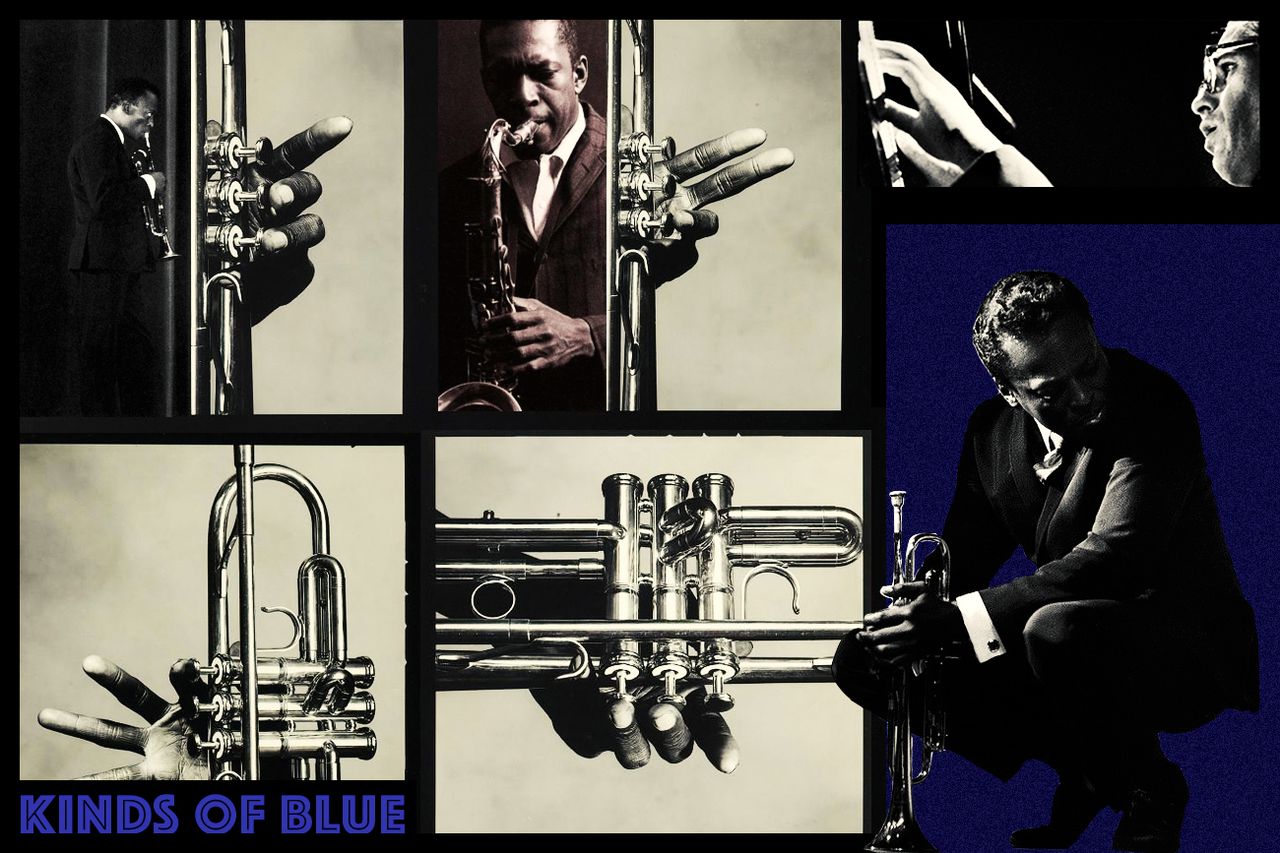
In the conditions of daily concerts and the best teachers of his time, Miles quickly evolved and soon became a star. Of course, he remained in the shadow of Parker and Gillespi, but over time he stopped listening to them unquestioningly and tried to find his own path in music. The first time did not work out very much, because besides musical skill, Miles adopted from Charlie Parker and addiction to heroin. In the early fifties, he devoted less time and effort to music, more and more - extracting drugs for drugs in any affordable ways, including earnings for a rake and pimp. When his friends began to die from white powder one by one, and he himself began serious problems with the police, Miles went to the house of his parents and applied extremely strong -willed nipple technique from the needle - a cold turkey method. This is when you close in the room, you are worried about the breakdown, then - the most severe depression, and then you go out of a changed person. He managed to quit heroin, but he did not get rid of the addiction to other drugs until the end of his life, although he tried many times.
In the mid -fifties, a new direction appeared in Jazz - Hard Bop - and the Miles, who had tied for a while with drugs, was happy to plunge into it. Charlie Parker was the star of the main jazz club of that time - Birdland. He simply came and improvised under the old and all painful motives, not particularly bothering over the composition and development of new melodies. And such musicians as Charles Mingus, Art Blaika, Cennonbol Educerly, and then Miles himself began to seriously think where to move on in the musical and commercial sense. They began to develop new topics, recorded parties on paper, rehearsed and thought out in advance the composition of the musical work. A strong influence on them was exerted by the rhythm-n-blinom-the merger of the blues and the gospel, which little by little began to conquer the hearts of the general public and firmly settled in the souls of the musicians themselves. During this period, Miles Davis recorded five reference areas of albums with simple and memorable names: “Walkin '”, “Cookin'”, “Relaxin”, “Workin” and “Steamin”. But what is even more important for our history, at that time Miles agreed with a saxophonist named John Coltrain.
Koltrain, like Miles, came to jazz, hearing Charlie Parker:
At the end of the forties, Coltrane also managed to get into the group to Parker and study the game on the saxophone with the best (at least from the point of view of technology) of the saxophonist of that time. There, Koltrain first met Davis. Both Davis and Koltrain subsequently became outstanding composers - unlike their common teacher - and both picked up a narcotic disease in a jazz circle. Miles and Train were never particularly close, but when in the middle of the fifties Davis began to assemble a super team for new achievements, the first to whom he called to the saxophone turned out to be Coltrain. At the end of the fifties, Jazz again began to undergo changes, and the flagship of these changes was the team, which was headed by Miles Davis and in which Koltrain polished his talent, so that he would then move the jazz in the new direction.
In February 1959, a place for the pianist was freed in the Miles group. He went to an unusual move for himself: he called a white musician named Bill Evans, with whom he had an extremely fruitful and sincere friendship. Evans could call Miles in the middle of the night and start playing his new parties on the piano, while he, having froze, listened to them, never intervened in Bill’s game and appreciated him as a composer. The rest of the team participants, however, were at first enraged: what does this white do here? But when it came to music, and not about everyday life, Miles did not bother the skin. True, when once the musicians discussed how and what to play, and the word tried to insert Evans, Miles toughly cut it off with the words:
“Hey, we don’t need white opinions here.”So, in 1959, the super -sustainer gathered: Julian “Cennonbol” Edderly and John Coltrain on saxophons, Paul Charters at the double bass, Jimmy Cobb on the drums, Bill Evans for the piano and, of course, Miles Davis at the head of a powerful pole - on the pipe. One March days, the musicians came to the Presbyterian church on the thirtieth street in New York, which by that time had turned from the church into a recording studio, and took up the recording of music. No one was going to record a masterpiece and certainly no one assumed that the album would be not just a “another excellent plate of Miles Davis”, but will become the best and influential album in the history of jazz.
When many years later, Miles was asked how he managed to record this masterpiece, he replied: “The whole thing is how Bill Evans belonged to the piano.” Instead of virtuoso and feverishly peeling on the keys and giving a breathtaking solo, as was customary at that time with jazzmen, Bill played slowly and forced the listener to wait and guess where the melody would go further. The second reason why the album came out so outstanding, according to Miles, is John Coltrain. During the record, Davis did not tell the musicians how and what to play - just how to play. Instead of clearly marked notes, he handed out his small melodic sketches to the musicians and asked them to improvise, and in some cases these were notes with words. Coltrane for each composition Davis issued five to six options for notes at once and granted complete freedom.
On the album, musicians often play the same verse in many ways, which no one did in jazz before them. While the costs were repeated and repeated, the listener could plunge into the melody. There were no such repetitions in Bibep. As one of the main influences on the album, Davis calls the music of Maurice Rael, into which Bill Evans fell in love. In order to better understand what repetitions are we talking about and where the legs of the modal jazz are growing, listen to Ravel’s famous composition “Bolero”, and then compare with the Davisov “All Blues”.
If you ask any jazz musician or expert in jazz, with which album it is worth starting his acquaintance with jazz, they will most likely answer: with Kind of Blue, Miles Davis. After this album, each of the musicians successfully developed a solo career, especially John Coltrain, Bill Evans and Kennbol Edderley. At that time, Miles gathered completely motley musicians and miraculously made it so that they would not overlap each other, but only complement and work for the good of the whole. Any other leader of Jazz-Bend of that time would say: how can you put on a saxophone at the same time “talking to heaven” Edterley and gloomy, like thunderstorms, Koltrain’s introvert? How can a white pianist Evans, playing at expensive parties, can play along with a bunch of black jazzmen who played his life in semi -basement rooms all their lives? But Davis managed to lead everyone to the common denominator. As another outstanding jazzman, whom Davis made a superstar, Harbie Hankok, remarked: “We are connected by one thread - Miles. When you fall into his hands, you change forever. But you are not just changing, as if you are finally becoming yourself. ” Miles's character was extremely difficult, many literally howled from him, and he was strict with the musicians. But when - and if - he gained confidence in the musician, he accepted everything and forgave everything. One of the musicians who worked with Davis tells how once at a big concert he played completely wrong notes - and even stopped playing, clutching his head. But Davis, instead of spreading it, simply changed the move of the composition and began to play so that the error turned into a find - and after the concert and did not say a word. But in his life, he could clean the physiognomy for his eyes, closed in his direction or for a disrespect replica.
On the back of the “Kind of Blue” record, a brief description of the album written by Bill Evans is printed. In it, he compares a jazz improvisation with the art of calligraphy. You can train as much as you like, but in the end in front of you - only one sheet of the finest parchment and only one attempt. You cannot correct the line, you can not erase anything. You have to be here and now and give out music on the first attempt. Jazz musicians can rehearse the game by notes (which there were practically no Kind of Blue in the case), but at the right time everything comes down to improvisation. The musician cannot be sure that he will not get away, because specifically he has never heard this music and never played. But it is precisely errors and retreats that jazz make so alive. For example, at the first composition of the SO What album, the drummer Jimmy Cobb at the time of the solo Miles on the pipe starts too much on the plate, almost drown out the first notes of Miles. From a technical point of view, this is a gross mistake. But no one remade anything, and this “wrong” introduction became a reference to the whole jazz. All the melodies that we hear on the album are recorded from the first, the maximum of the second time. No critical mistakes, no misunderstanding, everything and everything in their places. By the way, the introduction to “so what” itself was a pure improvisation - the musicians seem to not know that they will now play and keep the listener in the unknown.
Each of the musicians who worked on the album was a master of his instrument and could give out extremely complex and rich gamms. Almost everyone went through the hardening of the Bibop, in which it was a matter of honor to show off a stunning technique. But the concept of this album was to play only what is here and now appropriate - a real Zen. The album makes an extremely strong impression because we hear and understand: everyone could show off much more, but everyone is restrained - hence the extraordinary beauty of music. When the album came out and the musicians played it in clubs, John Coltrane had the most problems with restraining himself. On the plate of Solo Trad, it was limited by a given timing, but on the live John could tighten the solo for fifteen minutes. The musicians complained about him, and when Miles asked him why he was playing for so long, he began to explain that he was literally bursting: so much in his soul, he would like to say so much - that he simply does not know how to stop.
"Well, you just pull out this thing from your mouth - and that's it"- Miles answered him. After the album recording, John Coltrain began an extremely successful solo career, thoroughly updated and changed jazz, and after his death he was canonized by the African Orthodox Church under the name of St. John William Coltrain.
The main part of the concerts in support of the album took place in the legendary Birdland club, the main symbol of which was the aforementioned Parker, who died in 1955. When one day, in the break between the compositions, Miles went out onto the porch to smoke, a young and zealous cop was rolled up to him. He told Miles that he could not stand here, to which Miles replied that he was working in the club and just went out to smoke. The cop insisted that Davis had no place for the club, and when he refused to leave, he rushed at him with a club. Miles dodged this attack, but at the back he was attacked by a drunken detective not in his duties and broke his head. Miles in a white jacket sprayed with blood was taken to the hospital, and the detective was thrown into the neighboring gateway and were going to wipe the powder, but did not, because he still took out a police certificate. The cops got Miles until the end of his life: no one could believe that a franchial black man rides on his own, and not to the stolen yellow “Ferrari”.
Explaining the origins of his creative approach, in his autobiography, Miles wrote: “... a year after my birth in St. Louis, a terrible destructive hurricane passed. It seems to me that I remember something about him, something vague sits and lurks at the very bottom of my memory. Maybe this is sometimes evil and irritable from this: that hurricane left on me the seal of his aggressive creative power. He introduced me to the impulses of the air element. You know, to play on the pipe, you need to be able to control strong air flows. I believe in mysterious and supernatural, and what is more mysterious and supernatural than a hurricane in the world? ”
In 1970, Miles Davis once again changed the course of jazz music and eventually became the most influential jazzman of the twentieth century.