
Translated material
Mabushka
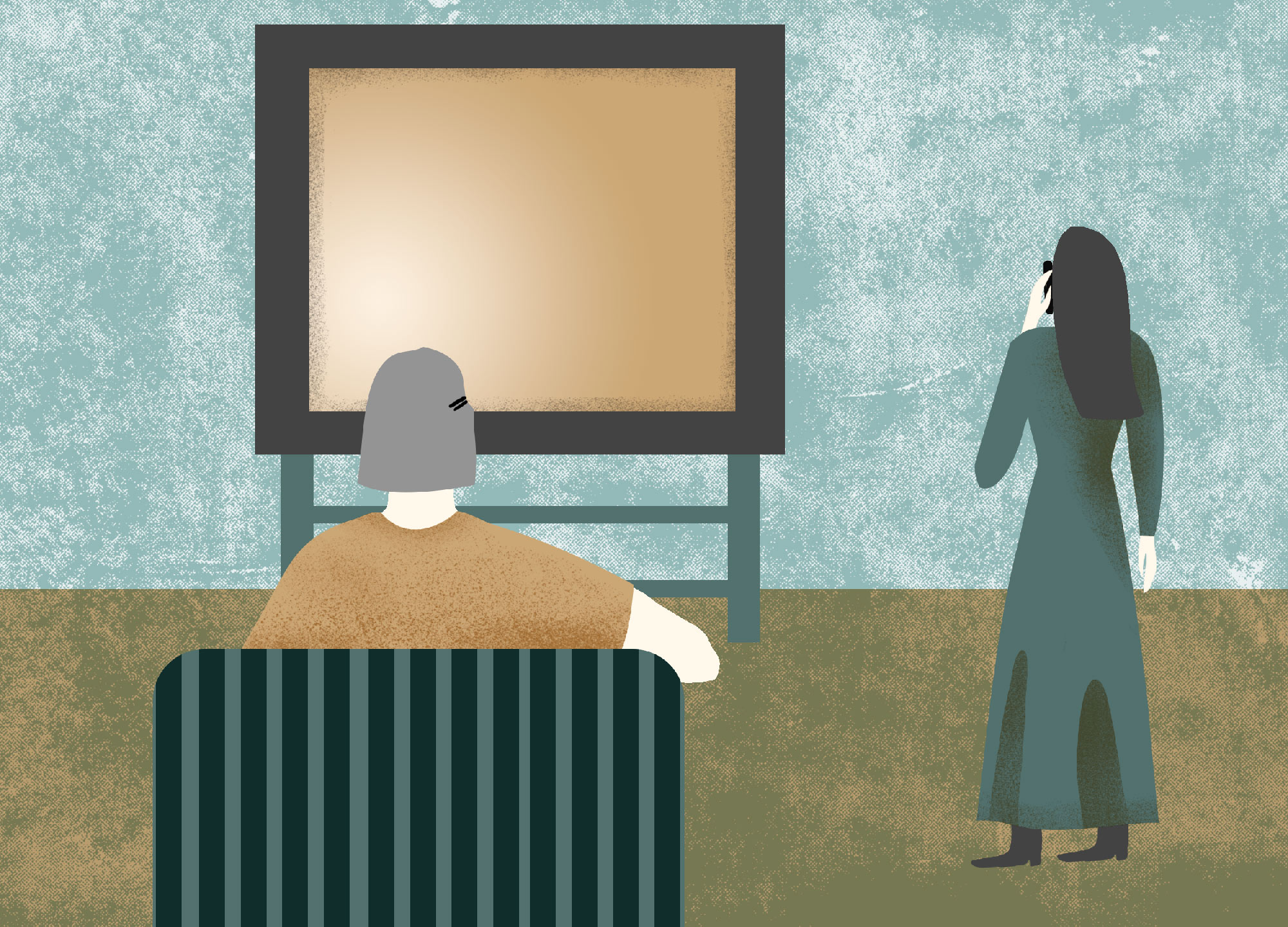
When the helplessness of his beloved grandmother causes not only compassion, but also irritation, it becomes very shame
We help the Foundation for the fight against the orbi stroke help“Well, where are you? We are waiting for you all day! "
This grandmother indignantly calls me from the cottage. I left an hour ago and said that I would come back two days later. It seems that you can laugh and forget. But I am no longer funny. Grandmother, my beloved grandmother, who has always been so sane and adequate, suddenly began to “be alien”.
It seems that she understands everything, logically builds phrases and sentences, remembers all the varieties of lilies that grow in her country house, but then suddenly confuses dates and events, places and people. Or she sits in a chair and watches TV, and then suddenly pulls off her T -shirt, simply because it seemed to her that the room was hot. It seems like this is such a trifle - but it becomes terrible. I do not restrain myself and shout: "Grandma, do you understand what you are doing?!" She must understand! This is my grandmother! I cannot see her so helpless. I am even ashamed to admit to myself, but her state increasingly causes me irritation.
Grandmother was born in 1941. The seventh child is in the family, her father went to the front before her birth and did not return. The neighbors told her mother: "Throw her, where at such a time with a baby, she still will not survive." She survived. And then, in the 41st, and then, when she remained a young widow with two children in her arms, and when her breast cancer was found, and when her heart began to junk. She survived, not paying attention to where it hurts. “If nothing hurts, then you are already dead,” she said often.
Grandmother dragged the whole family all her life, and now they drag her. Ten steps from the bed to the toilet that helps her overcome the nurse, occupy almost a minute. She has no strength to keep her back or tighten her leg - she is tired. Tired of dragging. Now let them drag her.
Three months ago, my grandmother had a stroke. Before that, I saw a stroke only from afar - never in a hospital ward, never in the next room. Therefore, I ask a specialist in the orbi hotline to explain to me what a person is experiencing after a stroke in order to better understand his grandmother, who does not want to fight.
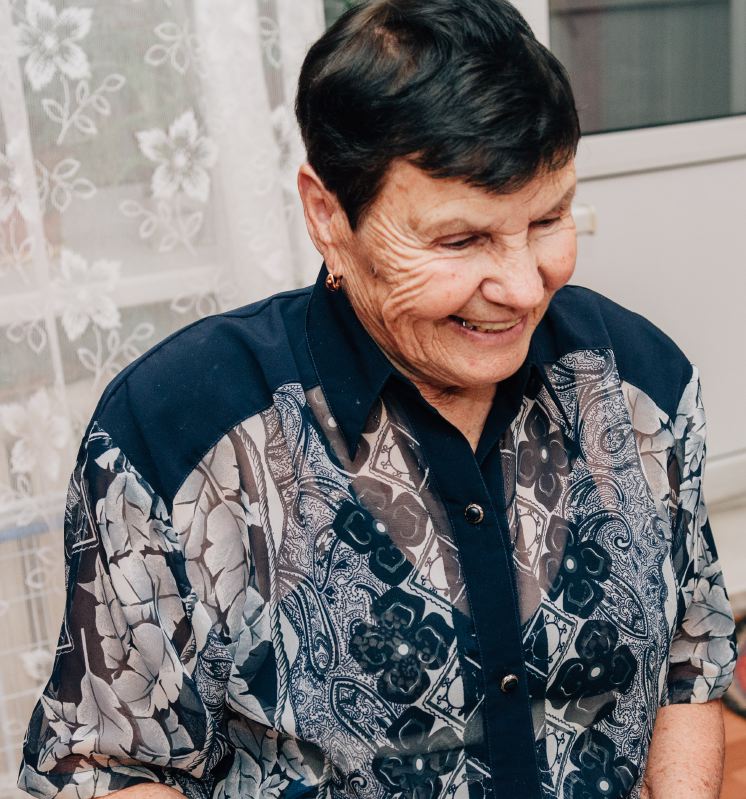 Galina Pavlovna photo: Sofia Avdokhina
“ When misfortune suddenly happens to a person, and a stroke always occurs suddenly, it passes through a whole range of different feelings. The first is the fear of death. Then they replace each other with relief, awareness of what happened (not always), disappointment associated with the fact that life will never be the same. And further than a person covers despair. But, fortunately, these feelings are finite. A person is able to survive despair, go to another state - the adoption of the disease and its consequences - and begin a new life. ”
My mother and I also went through different stages of acceptance of what happened: at first there was a shock, then fear, then the relief that my grandmother was alive, and the confidence that a month or two will pass, and everything will be as before. Moreover, the doctors said that if the grandmother is engaged, he could walk. Of course, she will be engaged! This is my grandmother, who never lowering her hands!
“ When the confidence that everything will be as before is literally crashed about reality, about the new“ capabilities ”of the patient, relatives also overtakes disappointment and despair from the realization that this is forever.”
Forever ... I watch how my grandmother takes her “lazy person” with a healthy hand - so she calls the left hand, which, like the whole half of her body, turned out to be paralyzed - and raises it. He holds above his head, and then throws it. I want to cry.
Grandma is talking well and clearly - thank God, the bloom of his face slept in the very first days after the stroke. She can sit or lie down. Standing is not yet. Walking - even more so. It can tighten your hand or leg a little, if you ask a lot, it will not show the initiative itself. She watches her favorite TV shows, talks on the phone and reads. Apart from the fact that half of her body does not move, then, we can say, it is the same as before.
But no, it is impossible so to speak. I carefully try to explain to the hotline specialist that sometimes my grandmother is “alms”.
A hotline specialist calmly explains: “ When a person who has survived a stroke has suffered some kind of brain section, this can manifest itself in anything. Therefore, relatives should be prepared for such eccentricities, although this is not the fault of the person himself, and, therefore, irritation is pointless. Although in the family people, of course, are annoyed, since the acceptance of a person to others, not the same as before, is difficult. And this is normal. It is worth repeating all the time to ourselves that, although the loved one has changed, we are able to improve him and our life next to him. There is one condition: to do everything with love, as with a child: to gently point out "misses", help train memory, speech, attention. "
After a stroke, the grandmother really began to resemble the child. After resuscitation, she cried sobbing, accusing her mother of abandoning her. In those days, the most difficult was to leave her in the ward one at night - as if you were leaving a helpless child who is terribly scary. I left, trying not to turn around, so as not to see these children's eyes surrounded by deep wrinkles.
Then I really began to experience irritation more and more often. And anger. Anger that she fails me like that. My grandmother, who was always the strongest. Who raised me, and in childhood I proudly called her “Mabushka” (“mother” and “grandmother”). And now my “Mabushka”, refusing to walk and engage in, complaining and crying, puts a cross on himself. I am angry at first on her, and then on myself - for my callousness and insensibility.
“ Taking changes that occur with a person after a stroke is not easy, sometimes very bitter. Acceptance is not inaction. When loved ones take the consequences of the disease, this enables the sick person not to feel guilty to the fact that he became a burden for his own. And this is very important for its rehabilitation. Yes, it is not easy to inspire daily hard workings, but love and care work miracles. ”
When I hear the last phrase, I first gets sick. It is scary to admit, but there are times when you stop believing both love and care, and even more so in miracles.
“ It is worth remembering that it is easy to care for the patients to get to“ emotional burnout ”. It is important to notice its signs in time, for example, often arising irritation next to a close sick person, and try to make up for your resource: to relax or do your favorite thing that you enjoy , ”explains a hotline specialist, as if reading my thoughts.
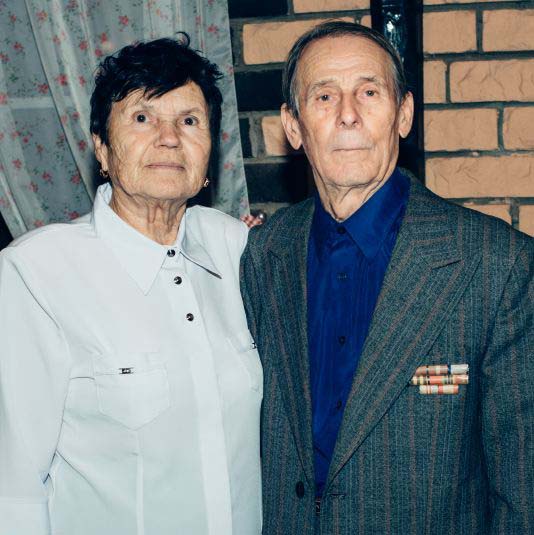 Galina Pavlovna photo: Sofia Avdokhina
I enjoy the texts. When a stroke happened to my grandmother, I wrote a big post on Facebook - it was a cry of the soul, it is like leaning into a window and yelling about the injustice of this world. I decided to "yell" into the virtual window. I did not need empathy, words of support or tips. I just needed to drop everything that accumulated inside.
Support is needed later. When you understand that you cannot accept the irreversible changes that have occurred with a person close to you. You cannot accept the feelings that you experience: fear, irritation, anger, and after them - guilt and shame.
It is difficult to talk about this with friends or relatives. It is somehow not accepted and ugly to say that it is difficult for you, that you can’t cope, that you are experiencing emotions that are the most embarrassing. But you need to say. And better not with friends, but with specialists who support, give advice and explain that there is nothing shameful in your feelings, and you can cope with them. The main thing is love and care. And not only in relation to the patient, but also to himself.
Orbi's hotline staff are always ready to listen and support relatives of those who survived the stroke. They will talk not only about how to care for the sick, but also support psychologically.
The hot line works thanks to our donations with you. Its employees need to be prepared and taught, you need to pay for their work, pay for telephone lines and equipment. The “need help” fund collects funds for this. Please subscribe to a monthly donation, even a small line, so that the hot line can exist, and we all had where to turn for help.
The material uses links to publications of social networks Instagram and Facebook, as well as their names are mentioned. These web resources belong to Meta Platforms Inc. - It is recognized in Russia as an extremist organization and is prohibited.
The material uses links to publications of social networks Instagram and Facebook, as well as their names are mentioned. These web resources belong to Meta Platforms Inc. - It is recognized in Russia as an extremist organization and is prohibited.