
Translated material
How to become a medium
In his column, the director of the aesthetics section, Nastya Travkina, talks about a meeting with the legendary photographer Sebastoo Salgado and demonstrates that it can allow you to dive under the wall of a glass and wander a little through the fields of collective consciousness.
The most impressive event of the past week was for me a meeting with the photographer-documentary Sebastoo Salgado. It was his compatriots that he did not at all Sebastio, as I called him in an interview, written, unfortunately, not for “Butenka”. And not even Sebastian, as written on Wikipedia. It is Sebastiano, an emphasis on the "I". However, I am not at all ashamed of distorting his name. He himself makes his way through multicultural jungle, cutting the interweaving of English and Russian languages to a machete of common sense, decisively and also not without sacrifice. The worst of all was in his speech Kamchatka, on which he was, examining the Russian lands untouched by civilization. So my conscience is clear.
Salgado is one of the most famous documentary photographers in the world, who sells a huge number of his works. Recently, someone bought his photo card for $ 100,000. Have you ever thought about what such a lot of money can pay for? This is not a fee for paper and an imprint on it, you understand. For me, our meeting finally placed everything in places.
He told me that in the photograph there is no sense in itself, even if you like to take pictures. However, if you have something to say, it can become your tool and the language in which you carry your message. He did not utter the word - “medium” - but it immediately came to my mind, because David Lynch , speaking of creativity, has always called a specific selected way of materializing ideas medium. Both of them insist on the same thing: do not be deceived by the chemical process of the appearance of the image on paper or screen. Do not even be deceived by the beauty of the picture. Indeed, the beauty of the image, pleasantness to the eye is a technical, mathematically accurate parameter. The ratio of additional and contrasting colors, the geometry of the compliance of objects, the composition of the frame - all this is a science that can be mastered in small things. But this is only a pillowcase, and without a pillow of the idea in it it will still be harshly.
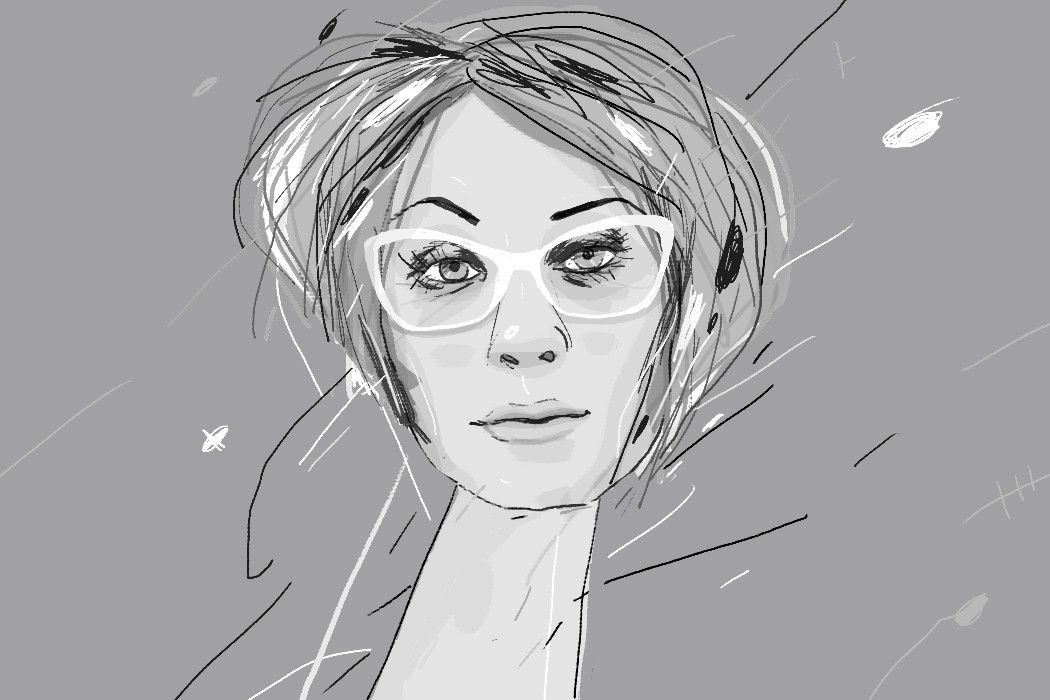
Medium is a good word. I also like the word “guide”, because it can be used in relation to the object through which something is broadcast from the world of abstraction into the world of specific matter, and in relation to the one who can spend the viewer along this difficult path by the hand. And if everything is quite clear with the form: now I have a medium - a word, for example (although visual arts seem more spiritual to me), then with content - not quite. Both concepts, the medium and conductor, as if imply the auxiliary function of the artist who drags on himself (or through himself, who is designed) a message from some separate source from himself.
Salgado says that the photograph will make sense if the photographer studies a whole bouquet of the humanities and finds out what humanity thinks about, how it is functioning and developing, how people live at different points in the globe. When a person becomes not only to receive this information, but also to connect its points among himself, a picture of the world will begin to literally be weaned in his mind - that is, he will be able to say: “Oh! I realized what is happening here! ” This understanding will not be able to leave a person indifferent, and he will want to not only be an observer of this process of creating a canvas of life - but also insert his thread there, and possibly change the weaving of the pattern. Then the one who decided that the photograph as a medium is very suitable for him, makes it a way of saying.
David Lynch says that art is a medium for consciousness, which is more than a specific personality of the artist. I really do not want to say "unconscious", although it is it. It’s just that this term today has some split personality. One concept of the unconscious belongs to the Freudian system, and all jokes about bananas and umbrellas is just from there. Unfortunately, most people, due to the excessive replication of the named after Sigmund Freud and the small spread of post-Fraidian and nefordic ideas among the masses, think that the unconscious is exceptionally crowded out vicious desires, and giggled with thoughts about this. But there is another concept of the unconscious, which appeared from the presentation of Karl Gustav Jung. He meant by this something like a collective consciousness that makes people as the same, so together to reacting: prophetic dreams, intuition and foreboding, spontaneous revolutions, a sense of commonality, love, mythological power of death and a deep faith in eternal life - all this is a collective unconscious.
So, Lynch says just about him. Imagine that you are in the spring garden where apple trees bloom, birds are sung and the midday sun shines - and at the same time they are covered with a giant glass. Something bluish-green is visible through the faceted walls, something is heard-either a whistle, or a squeak. But in general, it is incomprehensible. But you can consider your fingers on your feet-it is very exciting, someone can even get a doctoral degree for this. A glass is a consciousness of an individual. Meditation, which is so propagated by the linche, allows you to dive under the wall of the glass and wander a little through the fields of collective consciousness, breathe direct supply of fresh air from the world of ideas. Having returned to the glass, you should put the sleeves and work out in this Eden, putting your new special sense of life in the object that you work on.
Both of these approaches offer to collect cream from the most affordable high spheres - and share with the neighbor. This is a very correct mood. And I really see no reason to do anything with a different goal. For example, I am indignant from the idea of “self -expression”. Yes, who needs you, honestly! Everyone does not care about your unique feelings and experiences. And there is nothing unfair in this. If you stopped peering into yourself in a supermicroscope that makes you so huge and important, you would understand that more than one hundred billion people have managed to live on earth (as mathematicians say, but for me, a lot of word is important). All of them, each, considered themselves - and believe - special. Everyone especially loved, especially wanted, was the happiest and most talented, most underestimated, the most terrible scoundrel, the most abandoned lover, the most busy and most lazy person in the world. And now people live on the planet, each of whom separately in most cases is a terribly boring phenomenon: ants with pride, ambitions, the desire to breed, eat, be sad, cry, wear glasses, dye the enemy, take revenge, take their microscopic victories.
The exception is those who themselves have become mediums of the world of ideas. There are very few such people, but you will recognize them if you see. I call it awareness - and it can be seen, to be attentive. This turned out to be Salgado for me. I sat opposite him, and, as he said, taught me more than the very meaning of his words (in his words in general there is nothing revolutionary, many wise worlds said something similar). In seventy -two years, his face skin looks so dense, smooth, filled with a layer of radiant energy of life. Its intonations are similar to the stumbling singing of shamans around the fire: not otherwise because he spends a lot of time in wild tribes who own knowledge of the body much better than the specialists of our verbal culture. Lynch also says, as an old Indian-spell selling powder from fleas, ticks and mice of a poetic song that hides the magic code.
I would like to believe that I managed to share today what Sebastoo Salgado shared with me a few days ago, and to become a medium in this wisdom for you. The worst thing for a person is to never become a guide. Or by the conductor.
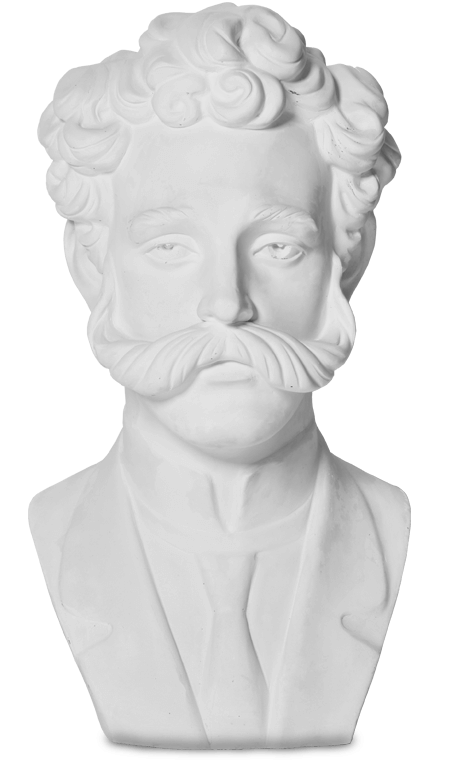 The stone bust of Theodore Glagolev is blinded by the strong paragraphs of the sculptor Sergei Yaloza and was brought to perfection by the tender hands of Natalia Basyuk for 10,000 rubles