Date
Author
Никита Камитдинов

Preserved copy
Translated material
In a tent against Babylon

At first, in the Black Sea reserve, they wanted to build a road, then-a huge physical and health complex, which the environmental NPOs called Dmitry Medvedev. Dozens of activists fought with builders and officials against the cut and destruction of the reserve, even more - they left signatures in defense of the Utrish. The reserve seems to have managed to defend, but no one knows when it again becomes one of the main hot spots on the map of the environmental conflicts of Russia. As no one knows the name of the person who, from the very beginning of the confrontation, to this day carries a watch in Utrish and will first meet the builders if they try to break there again. The correspondent of the Samizdat “Batenka, you are a transformer” found Viktor Creatin to tell his story, in which there is everything: from the crisis of faith to the conflict of a small person with the state.
On one of the February days of 2009, a strong wind was blowing on the Navagir pass, located on the territory of the reserve, a strong wind blew. On the wet snow around the fire, very close to the recently embroidered frozen canvas of the future road, there were four young guys. The other day it got colder to the minus -twenty -twenty unusual coast for the Black Sea coast. In the evening, their new acquaintance was supposed to join young people - a stocky peasant of about fifty. The guys were waiting for the first of all not his, but the tent promised by him, in which they could warm up and dry their clothes.
The owner of the tent appeared on the pass in the region of five o’clock in the evening, but the wet and chilled four decided to go to the city, promising to come tomorrow. There was nothing left for the one who brought the tent but to spend the night on the winddow - in the tent that he had just brought.
The next day, when the younger comrades returned, he went down to the lagons, another two tents. When he came back, they all moved the camp together to the place sheltered from the wind, equipping a new, more reliable parking lot - to stay here for a long time.
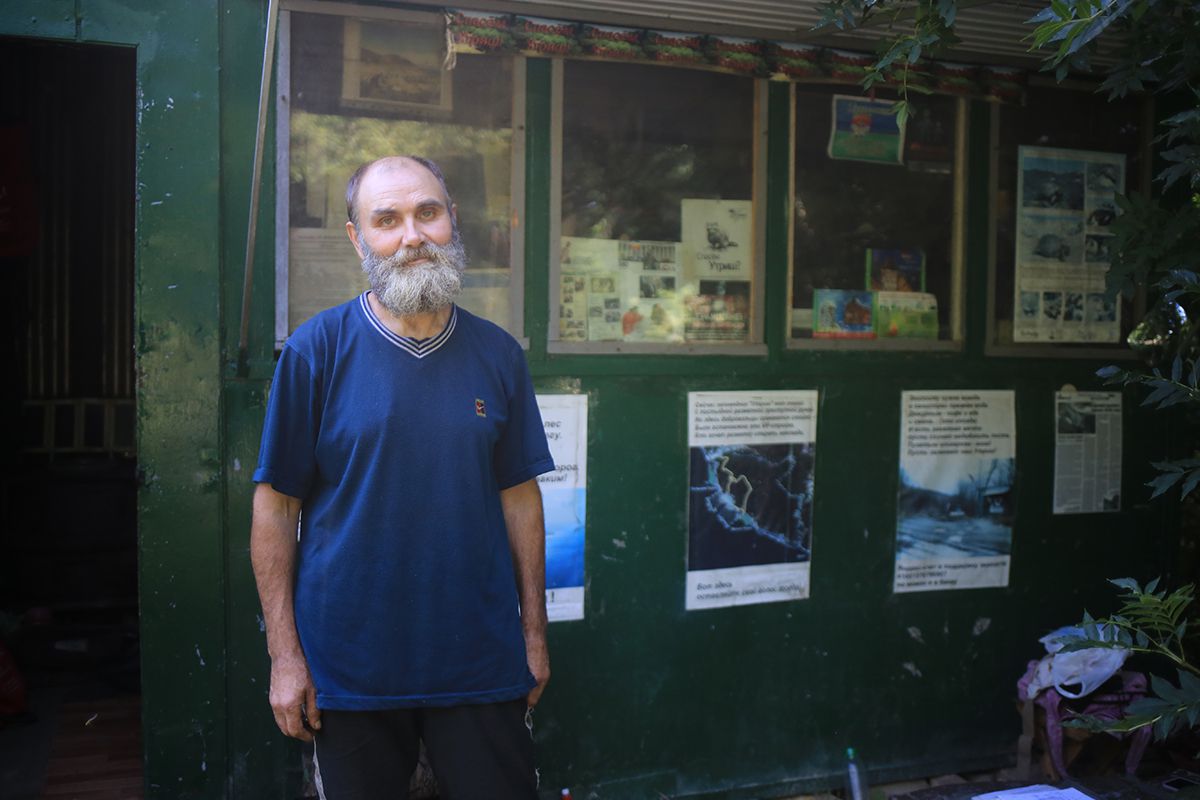
The one who brought the tents and whom the company of young people had been waiting for so long was called Viktor Creatine. At the turn of the seventies and eighties, while the creator served in the army, he studied military meteorology. According to Victor, it was the military field experience that was useful to him in defense of the Utrish-one of the main hot spots on the map of the environmental conflicts of Russia. Since the four tents brought by Creing on February 2009, the main watch in his life began.
"God must be preserved by God"
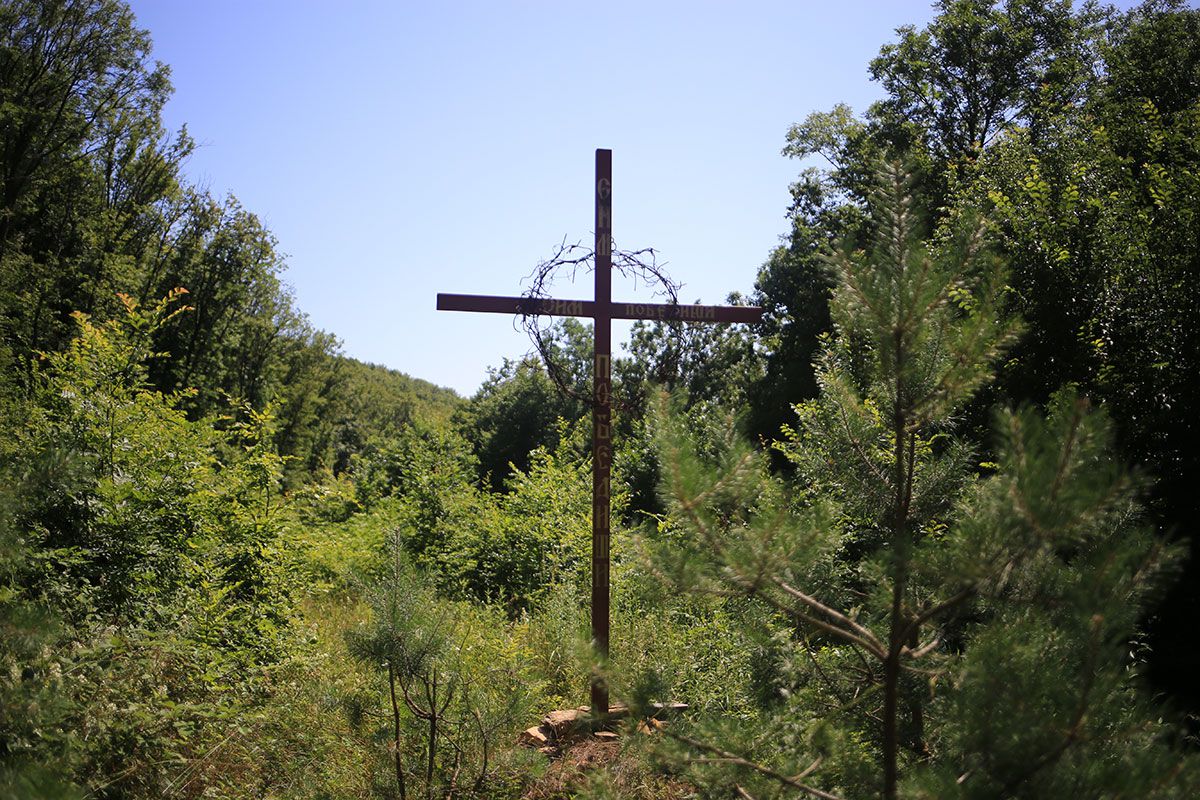
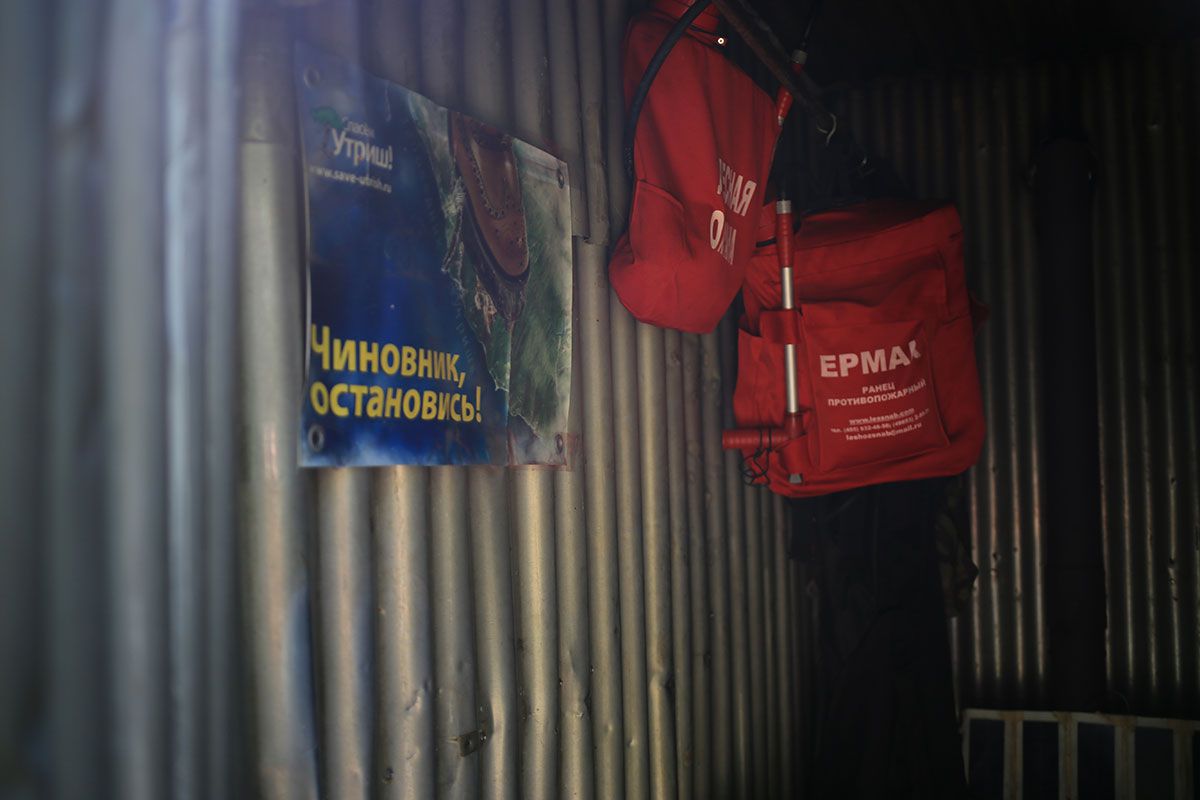
If we go to the ecopost of Creatin up from the coast, then the first sign that you are already close will be information shields with telephone numbers that you should call if a fire is detected or illegal cutting down. After walking along the path, blackberry thickets thickets, twenty minutes later you go to a large charming cross - above human growth, erected here in November 2009. It stands at the very beginning of an overgrowing track leading to the coast.
Creatin recalls that the cross was put together: the Orthodox, and the Muslims, and the Krishnas, and the Jews: “Here [the place] found the unity, the understanding that first of all it is necessary to preserve the earth, and then decide how to praise God on this earth. [It does not matter] who is more right and who is wrong. The main thing is that God must be preserved first of all, and then [will] be solved by human issues, our faith or unbelief. ”
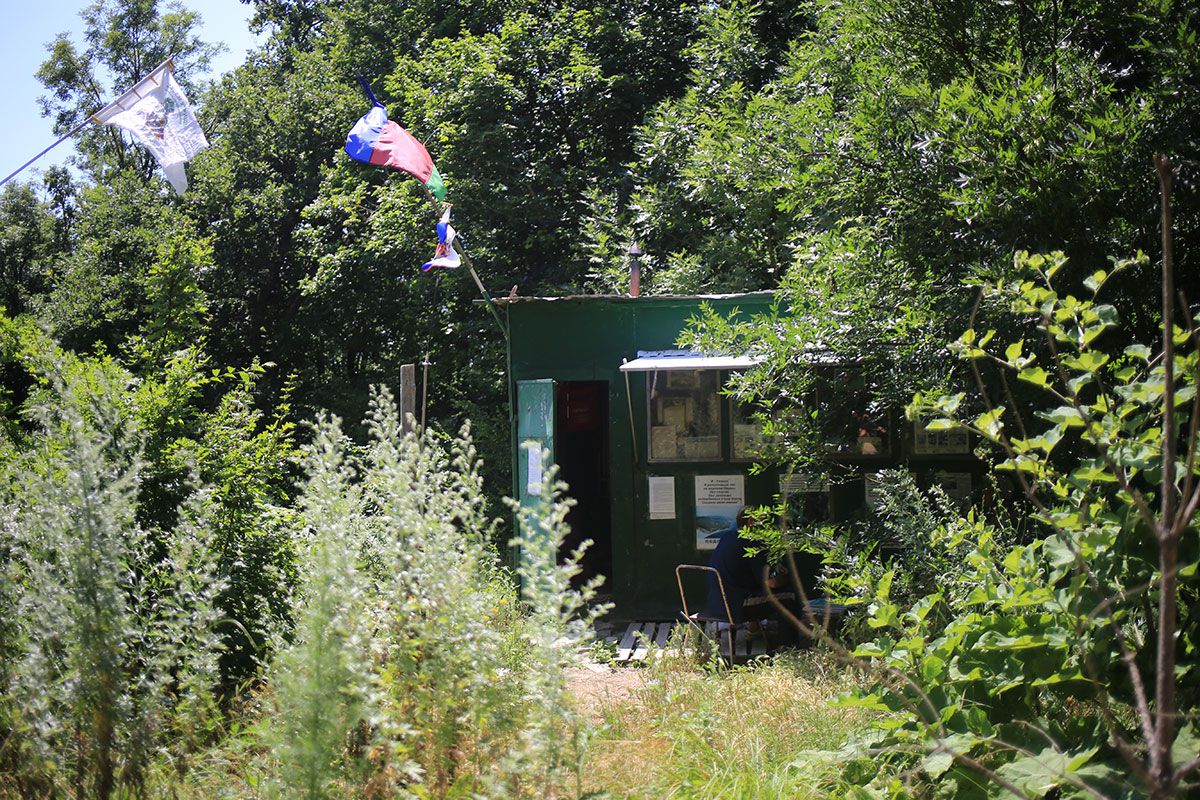
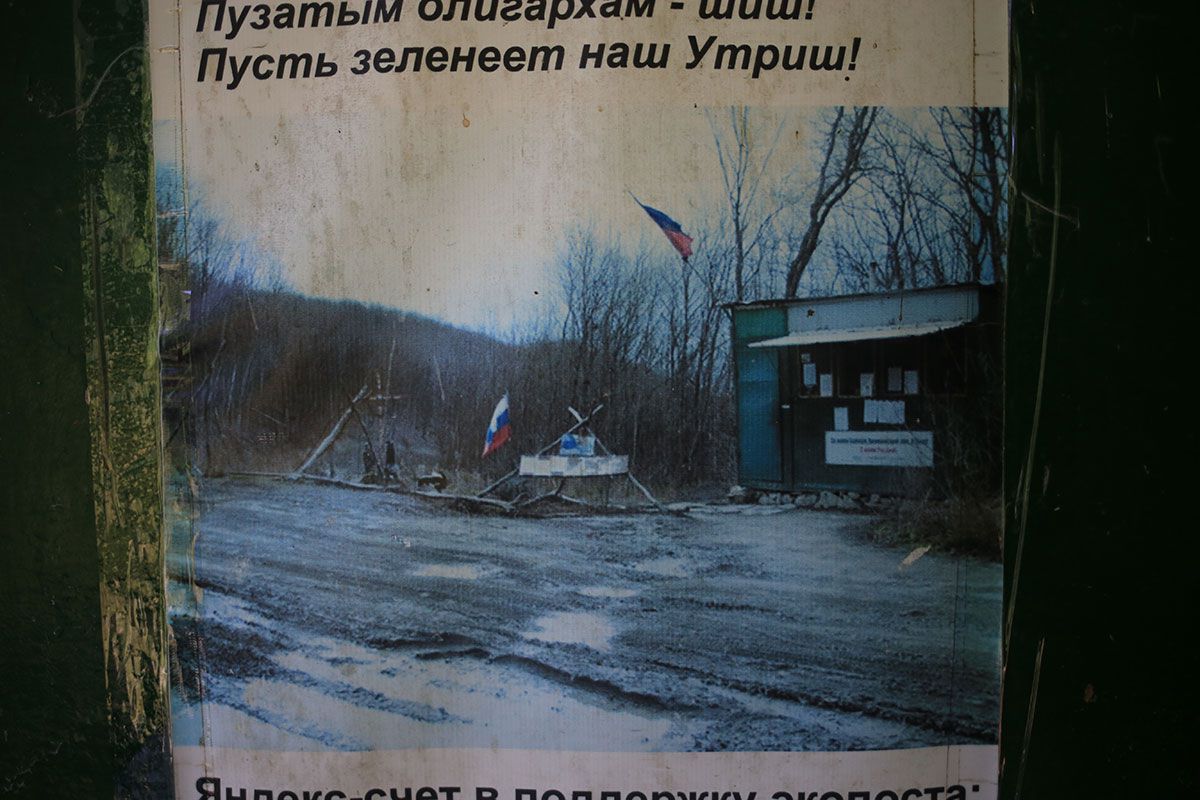
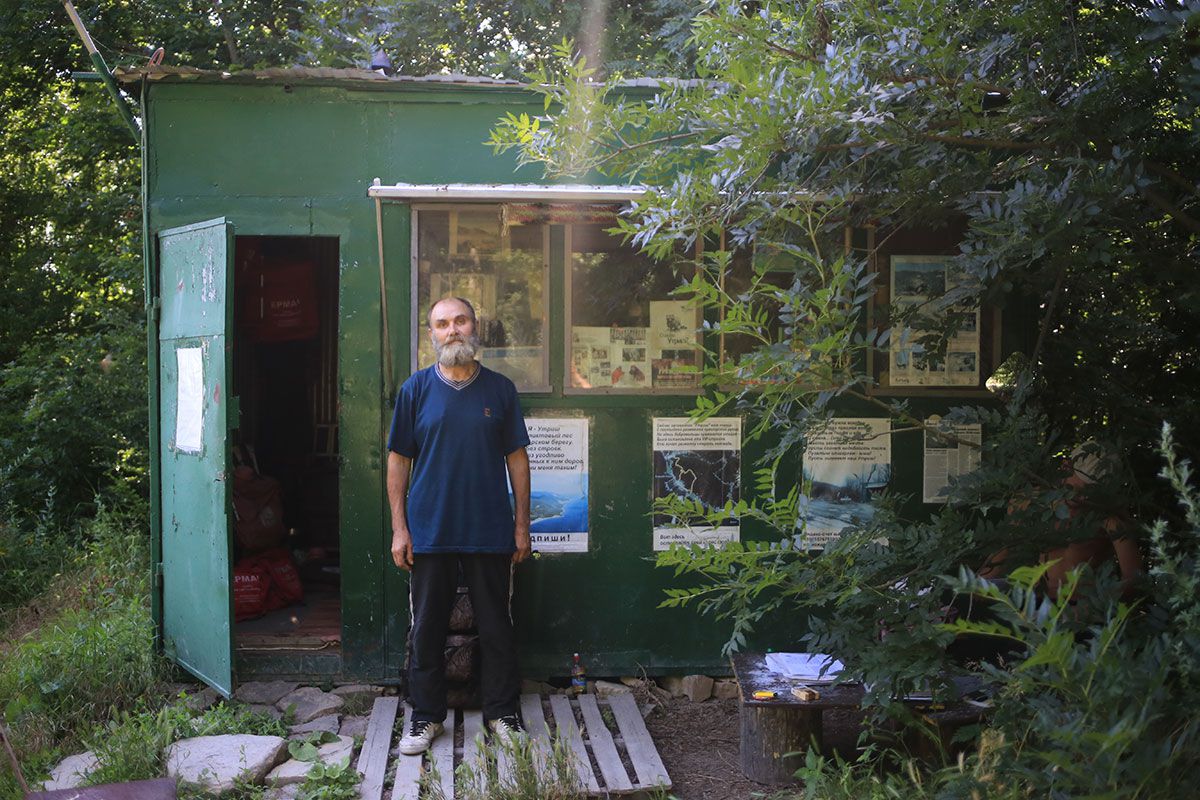
A few meters from the cross is a house of one and a half human height - not the same four tents. Most of all, in its current guise, the eco -pust resembles a double construction hut. Right behind the front door is a bourgeois, on the left - fire raots, on the right - the door to the only room. Inside is a bunk bed, a table littered with books, a small closet and a window on the entire wall opposite the bed. Outside, the window is forced by campaign materials, so sunlight barely breaks into the house. Ecopost in defense of Utrish became this winter 2010 - the whole previous year its inhabitants cost tents.
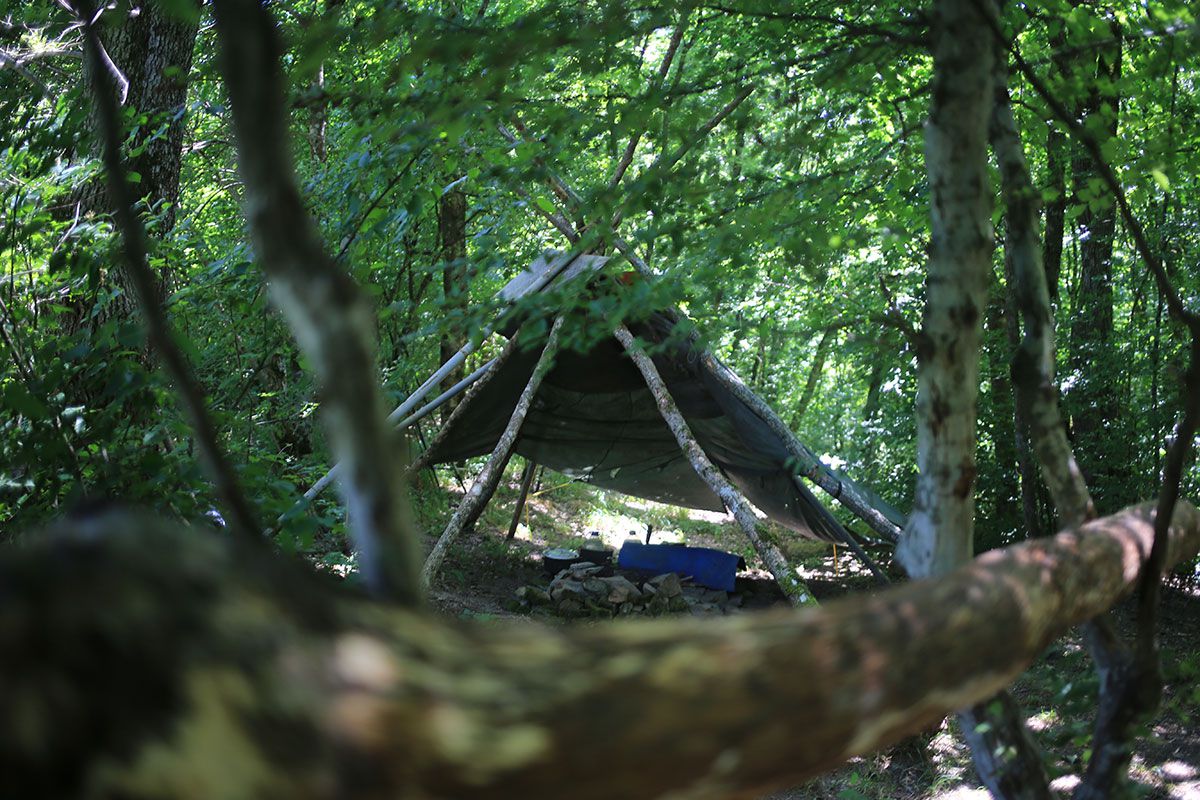
Those same tents and a hearth under a homemade tent stand in the forest behind the house, covered with foliage. Creator lives here almost all year from the very founding of the eco -opost. Sometimes he leaves for several days, and then others remain here. For some time now, ecopost has never remained empty.
Babylon comes
In December 2008, the construction equipment of the local company Glavpromstroy appeared on the Navagir pass to start laying the route to the coast. The road was supposed to connect the city of Sukko, located twelve kilometers from Anapa down the coast of the Black Sea, with the lagons of the reserve. The process of laying the road was accompanied by a cut of rare types of trees - pistachios and juniper.
Shortly before that, tourists resting on the lagons noticed on the coast of surveyors, and incidents with cutting forests for construction needs were more and more often. Therefore, the organizers and active participants of the Internet community “Save Utrish”, who advocated preserving the territory of the reserve in its original form, seriously feared that it was the lagons-the most delicious part of the reserve planned to build up. What exactly will be built, no one knew.
Builders and foresters claimed that the road was being built in order to prevent possible fires, but no one believed them. The logic of the construction of the "fire" road looked contradictory: why cut down some valuable specimens of trees in order to preserve others from a hypothetical fire? Moreover, by that time, there was already one road on the territory of the reserve, connecting Sukko with the village of Maly Utrish - it also passed through the Navagir pass.
The situation with the development of exaggeration, in addition to ecologists and ordinary caring citizens, was monitored by representatives of the non -profit organization Ecological Watch in the North Caucasus. They soon learned that the presidential management was set out to build a physical education complex, which was allegedly intended for President Dmitry Medvedev, right on the coast.
It is obvious that in this situation, in addition to irreparable damage to the relict forest, dikara tourists, traditionally resting on the Lagunes of Utrish, would have expelled for good. Under the pressure of circumstances, the sluggish community of Utrish lovers took shape in the protest movement “Save the Utrish” and moved from the Internet to real life. Experienced comrades from the "Ecological Watch in the North Caucasus" helped to save the exaggeration from development from the development.
Subsequently, the then manager of the Presidential Affairs Vladimir Kozhin on the air of Echo of Moscow denied plans for the construction of a residence for the president in the reserve.
Also in January 2009, the “Ecological Watch in the North Caucasus”, referring to the lease, said that the customer of the route was the non -profit Foundation “Dar”. According to this agreement, in the summer of 2008, the Department of Forestry of the Krasnodar Territory leased a land of one hundred and twenty hectares of land, covering the territory adjacent to the lagons, for forty,000,000 rubles a year. The road to the coast, with which activists in the winter of 2008/09 fought, “Glavpromstroy” paved it in this territory.
In the list of campaigns “Ecological Watch for the North Caucasus”-“For compliance with environmental requirements in preparation for the 2014 Olympics”, “In defense of the Delta of the Kuban and the Azovye” and others. Activists of the Ecological Watch in the North Caucasus are often detained for organizing protests. In 2014, I got into the list of NPOs that perform the functions of a foreign agent.
Collision
In December 2008 and January 2009, activists left the pass without supervision several times, letting the builders move closer to the coast-they now do not repeat such mistakes.
The active period of the struggle against Glavpromstroy lasted a little over a month and was accompanied by constant skirmishes and visits of the Ministry of Internal Affairs for the Navagir pass.
Chronicle of the confrontation
On December 8, 2008, activists sent out letters with information about the illegal actions of the builders to numerous responsible authorities-only the Office of the Rosprirodnadzor in the Krasnodar Territory and the Azov-Black Sea Environmental Prosecutor’s Office quickly reacted, organizing an audit on the same day. On December 9, the police joined the checks. Representatives of all three instances came to the Navagir pass for several days.
On December 8-9, representatives of the regional authorities arrived at the place of construction only at dusk and did not force Grader for work. In the afternoon, on December 10, the work was suspended by the police investigation in time, but after three days - continued again. On December 17, the police started a criminal case, and two days later they sealed the equipment and saws of builders.
A few days later, the prosecutor's office recognized the construction illegal, and Glavpromstroy began to take the sealed equipment. The company received permission under the following pretext: "A certain bearded young man with a backpack in a camouflage broke the glass of excavators and cut the fuel hoses." The “watchmen” considered what happened for the staging, invented by the leadership of the Glavpromstroy in order to prevent the subsequent removal of construction equipment. At the same time, the situation in Navagir became less tense, the activists were almost not afraid of repeated violations soon.
However, on December 30, eyewitnesses again reported to the environmental shift that the work on laying the road continued, and the deforestation was significantly approaching the coast. “The time for the next attack on the Utrish was chosen very suitable: for the New Year holidays, when all the processes in the country are freezing, they want everything to be cut down and the road to be brought to the sea,” they interpreted the received information in the environmental shift and announced the beginning of the radical protest campaign.
The New Year holidays were also held by several defenders of the Utrish on Navagira, preventing Glavpromstroy employees from working. Like other activists, Viktor Creatine did not plan to stay that winter on Utrish, but the situation did not leave another choice: “Because neither the police, nor officials of any level could not realize the decisions of the bailiffs.”
The Ecological Watch in the North Caucasus reported on the stop of the construction of the road on January 13, 2009. For a day earlier, activists once again had to stand in front of the equipment and call the police. Employees of the Ministry of Internal Affairs who came to the call told the activists that the decision to stop the work was made. Later, the representative of Rosprirodnadzor already handed the Glavpromstroy employees the idea of the inadmissibility of the resumption of work, and the next day the employees of the Ministry of Internal Affairs protected the equipment with a red ribbon. The total length of the road, abandoned by the Glavpromstroy, amounted to 3.8 kilometers. There was about a kilometer to the sea.
VIP Dachi
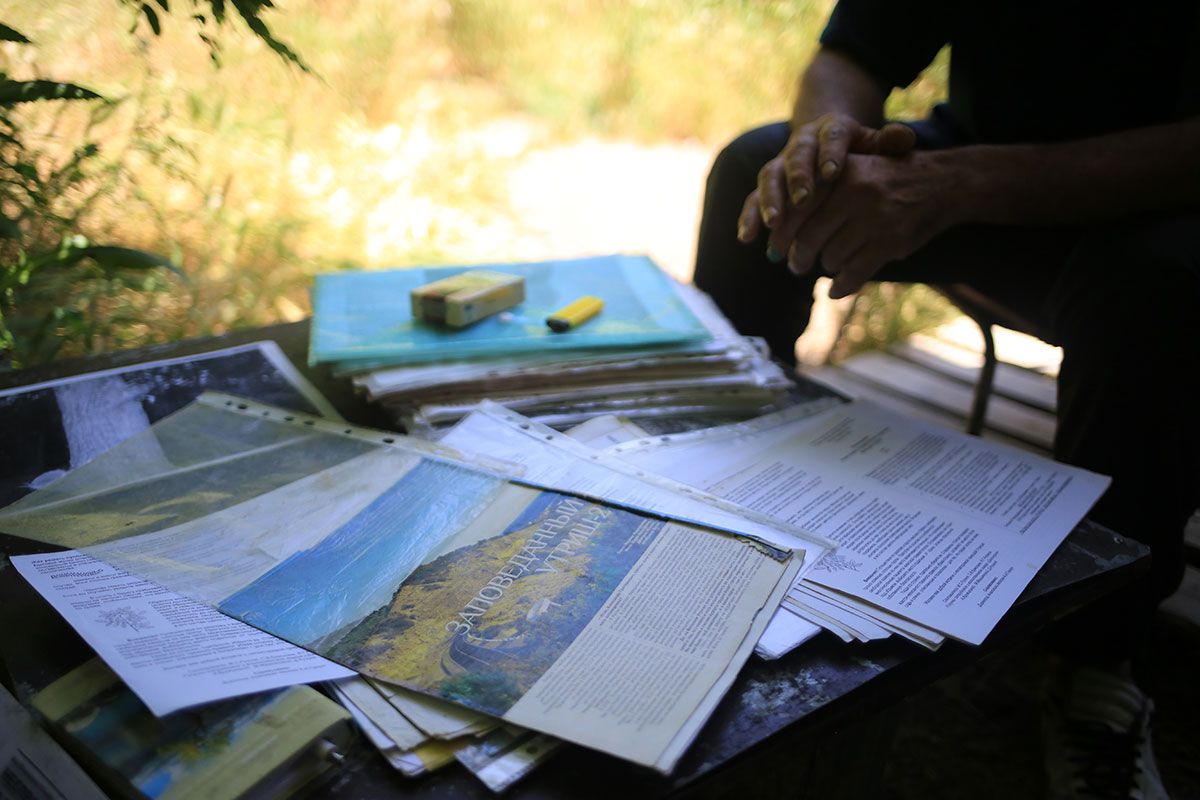
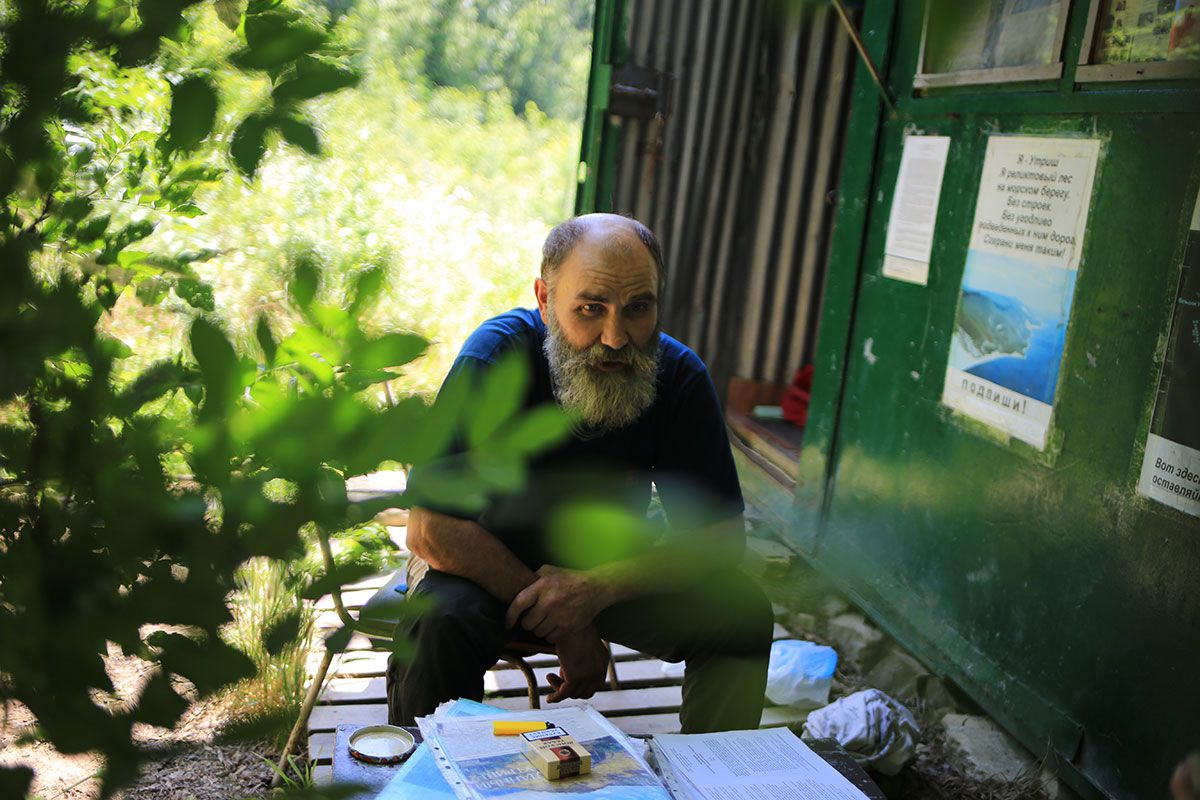
Viktor Creatine does not like to speak on camera and prefers to show articles, photographs and documents instead of telling about the events that occurred here on their own. He really has a lot of documentation: there are appeals to officials of the highest status, answers of various instances to the requests of activists, campaign materials, poems by Eco -Postom guests and clippings from newspapers and magazines. All materials are carelessly pierced by folders in a chaotic order, some of them managed to fade. Due to moisture and temperature difference, the collected protest is quickly becoming unusable.
But the creator answers some questions confidently and with pleasure. Especially if they are about nature and its patterns. What would have happened if the road would still have appeared here? “Well, firstly, this highway would interrupt all the natural migrations of animals-this time. It would lead to a change in water distribution, it would very seriously violate it. The development of the coast would mean that animals, birds and insects would have to look for other habitats. Moreover, there were also the plans of very large landscape changes: the creation of golf-fields, volleyball and basketball venues ... I'm not talking about five-story buildings, stadiums, security buildings, conference rooms. One VIP Dachi, have you seen her? This is a very serious structure. Four floors, about one hundred and fifty meters. Which reserve can we talk about then? "
The sketch design of the physical education and recreation complex was published in early 2010 by activists of the Ecological Watch in the North Caucasus. On the title sheet of the document containing illustrations of future objects of the residence, places for signatures of responsible persons are highlighted - among them are the names of the now former head of UDP Kozhin and the then director of the Federal Security Service of Yevgeny Murov. According to the project, a two-story main house, the building of the fitness center with outdoor sports grounds, a five-story building for security and staff, a guest house, a three-story VIP-living room, two helicopters, a command post, a household unit and a fuel and lubricants, darling, a Russian bath, a Russian bathhouse and a Russian bath and a Russian bath and a Russian bath and a command post should have appeared on the project. Summer kitchen, pier for yachts, yacht club, a portopunct, rotunda, two waves, esclanade and a liquid oil gas warehouse. In addition to the road route, they were going to stretch the gas pipeline on the coast. And this is all in the territory that was planned to be recognized as reserved in the same 2010-such a decree was signed by Prime Minister Viktor Chernomyrdin in 2001.
The Soviet leadership planned to establish a reserve at Utrish in the thirties. Because of the war and post-war devastation, the idea was constantly put off, and then completely forgot. They remembered it after the fall of the Soviet Union thanks to the activity of ecologists who raised a question before the authorities.
In January 2009, in the wake of public attention to the problem of Utrish, the then Minister of Natural Resources and Ecology, Yuri Trutnev, announced the need to quickly resolve the issue of reserving land under the protected areas - a specially protected natural territory on Utrish. A question hung over the authorities, activists, former and potential developers: what will the borders of the reserve look like?
On the territory of the reserve, the entire natural complex is under protection, in the reserve there are certain species of plants, animals and geological objects. Any economic activity is prohibited in reserves, and lands are removed from any form of use.
In September 2010, the then Prime Minister Vladimir Putin signed an order to establish the state natural reserve “Utrish”. It would seem that civil society has achieved its goal and was able to convince the state of the need to protect nature. But the performances of the activists continued: according to Putin’s order, a controversial area for which the struggle in the winter of 2008/09 was not entered into the reserve.
Despite the appearance of victory in a local confrontation with the Glavpromstroim, the activists realized that this was a temporary lull, and only constant monitoring of the territory would not allow new felling and construction.
Horizontal post
“When a certain shift arrives, we are all equal. We do not have a hierarchy, ”the creator says. On the movement site and in a printed form at the eco -sex, a charter of movement with a minimum number of rules for activists remaining on duty is stored . The “dry law” acts at the ecoposta, exceptions are made only on large holidays and in strong bad weather. Drugs are completely prohibited - at any time it may be necessary to communicate with employees of the Ministry of Internal Affairs, and prohibited substances at the post will only create new problems. But in the rules it is directly stated that the initiative is welcome - "there is always a matter."
Ecopost exists thanks to the donations of vacationers and those who are not indifferent to the future fate of the Utrish. In the community “we will save the Utrish” and on the site of the same name regularly published posts with calls to transfer funds to “Yandex.Money”, and reporting with all expenses is carried out. “The needs at the present time: food, clothing, payment of mobile communications, means of communication,” the site section says “How to Support Ecopost”.
In the summer of 2017, Viktor Creatin did not really have a working phone for several weeks, and coordinate the activities of assistants living on the lagons, he had through the acquaintances passing by the eco. The total length of the country road, which begins in the vicinity of Sukko, and the foot of the path connecting the lagoon with the eco -pole, is about twelve kilometers. It’s really three hours to walk this way on foot, but in some sections of the route you might think that the trail ends if you go for the first time.
"Well, did you feel like a cattle?"
According to Creatin, in the hot July season, forty to fifty people rest on the lagons, one way or another involved in the restraint of order in the reserve. At dawn, they go out to clean the coast - they are almost invisible to ordinary tourists. Another task of voluntary assistants is to give recommendations to the newly arrived and those who "begin to behave inappropriately." Иными словами, замеченным в рубке леса или тем, кто мусорит.
Раньше отдыхающие внимательнее прислушивались к таким советам, говорит Созданин. Он предполагает, что на это повлияла перемена контингента экотуристов. «Может быть, нет такой убедительности, осведомлённости, что ли, в этих вопросах. Это и от личных качеств очень зависит». Главным личным качеством, позволяющим добиваться соблюдения лесных правил, Созданин считает доброжелательность при общении с нарушителями.
Чаще всего туристам приходится объяснять, что сухие деревья рубить нельзя. Во-первых, активисты уверены, что высохший можжевельник может ожить через несколько лет. Во-вторых, мёртвые деревья прикрывают живые от напора шквальных штормовых ветров — слабая корневая система и рыхлый грунт не способствуют стойкости ценных видов. Если нужен костёр, отлично подойдёт валежник, которого предостаточно в лесу. Можно и вовсе обходиться без костра: раньше для приготовления пищи использовали бензиновые примусы, теперь — газовые горелки.
«Настоящую любовь к самому Утришу не заменишь никаким шкурным интересом, — размеренно проговаривает активист. — Много раз замечались такие вещи, когда идут парень с девушкой, парень бросает какую-то упаковку, девушка делает ему замечание: „Ну что, почувствовал себя скотиной?“ Молодой человек рядом с такой девушкой как-то подтягивается и наконец понимает. И в городе не очень хорошо бросать, а здесь тем более. Такого рода воспитательные моменты происходят достаточно часто».
Одинокий и верующий
“What can I say? Личная жизнь у меня, как у многих, не сложилась, а наоборот, поломалась, по результатам перестройки. Безработица, отсутствие взаимопонимания… Мы утратили духовную связь с женой, расстались, и я ушёл». У Виктора Созданина остались двое сыновей и внуки. Иногда потомки посещают экопост, иногда Созданин сам навещает их, каждый раз ненадолго. У молодых нет времени для отдыха на природе: учёба, работа, городская жизнь. Раньше, когда дети были маленькими, на природу выезжали всей семьёй. В этом году ни дети, ни внуки ещё не навещали Созданина. «Может быть, позже. Внуки уже готовятся к поступлению. Повзрослели тоже, врастают в жизнь новую, изменившуюся».
Созданин родом из Самарской области и в молодости часто отдыхал на территории нынешнего Жигулёвского заповедника. Он говорит, что тогда и научился уважать природу: «Во всяком случае, я всю жизнь прожил среди таких людей, где бы я ни находился: в школе, институте, на заводах».
Ещё совсем юным Созданин подрабатывал на заводах в летние каникулы. «Тогда можно было работать с четырнадцати лет. Кто-то из друзей устраивался в четырнадцать, и я по его пропуску ходил. Тогда такие вещи были возможны». С одиннадцати лет он помогал старшей сестре, работавшей в местном ботаническом саду. Уже после школы работал на подшипниковом заводе, поступил в медицинский институт на педиатрию, ушёл в армию, работал на авиационном заводе слесарем-сборщиком летательных аппаратов, пока его не закрыли. Дальше работа в многочисленных частных строительных конторах — «где-то год, где-то несколько месяцев, я уже не помню» — и служба контролёром на рыночной парковке.
В армии он научился главному навыку, спасающему его сейчас, на эковахте — выживать в походных условиях, «когда минимум продуктов, максимум нагрузки» и нужно быть скрытным. «Скрытность — это же и сохранение естественного природного ландшафта, естественного состояния окружающей среды. Вот вам экологические навыки от военно-полевого опыта. Оказывается, что это разные части одного целого».
«Жить в меру своих возможностей и сил»
В начале нулевых Созданин пришёл к православию: начал читать святые писания, ходить в храм, участвовать в службах. «Это, не знаю уже, к счастью или сожалению, массовый путь возвращения в православное христианство тех, кто долгое время жил вне его. Очень многие так пришли, вернулись, нашли себя, круг общения, те настоящие ценности, которые позволяют выжить духовно и нравственно в наше время. Это оказалось и убедительным, и результативным прежде всего».
Путь к религии начался по возвращению из армии в семидесятые-восьмидесятые годы — тогда к Созданину в руки попали материалы Рериховского движения. Ему было любопытно, чем рериховцы так влияют на людей, Созданин стал вникать, но изучение литературы, предписывающей среди прочего физические упражнения, религиозного чувства не вызвали.
Когда в Самаре появились кришнаитские храмы, Созданин и к ним отнёсся с интересом. Говорит, что хотел понять их, ведь опереться было больше не на что.
Православие в сознание Виктора Созданина просачивалось постепенно. Например, через стихи. Активист всегда увлекался поэзией, сам пишет стихи и сыплет малоизвестными фамилиями поэтов-земляков. Серьёзнее всего на Созданина повлиял «Андрей Рублёв» Тарковского: пытаясь разобраться в отдельных процитированных притчах, Созданин прочитал Евангелие, но сначала воспринял его скорее как художественное произведение. Желание молиться, обращаться к святым и «жить так в меру своих возможностей и сил» пришли позже.
«Сейчас, когда я уже имею опору в христианстве, для меня вопрос выбора отпал. Потому что российское православное христианство я понимаю и чувствую. И знаю и вижу, что оно естественно для человека вообще. Оно естественней, чем какие-либо архисложные навороты учений и совершенно заумных философствований».
Так сложилось исторически
Созданин винит в бедах Утриша российское экологическое законодательство: «В общем и целом экологическое законодательство сильно изменилось, коммерциализировалось. Очень многие вопросы отдаются в руки землепользователям, в первую очередь тем, кто эксплуатирует лес и воду как ресурсы — они становятся некими промышленными предприятиями». В гневной тираде активист отсылает к работам учёного-эколога Алексея Яблокова.
Экологу и общественному деятелю Алексею Яблокову принадлежит авторство термина « деэкологизация », что означает деградацию в отношении государственных властей к проблемам, связанным с охраной природы. По его словам, деэкологизация в России началась в 1995 году, в её основе — «идеология привлечения инвестиций за счёт снижения природоохранных требований, снятие ограничений в использовании природных ресурсов, а по существу — жадность и скоробогатство». Яблоков утверждал, что «лавинообразно» процесс деэкологизации пошёл с приходом к власти Владимира Путина: «Чуть ли не первым его указом стал указ о ликвидации Госкомэкологии. В том же мае 2000-го МВД принимает решение о ликвидации экологической милиции, Министерство просвещения — решение об изъятии курса экологии из числа обязательных, Генпрокуратура начинает проверку всех экологических организаций».
В 2013 году в интервью журналу «Экология и право» в числе самых антиэкологичных решений властей Яблоков называл изменения в Лесном, Водном и Градостроительном кодексах, уничтожение Государственной экологической экспертизы, а также принятие закона об иностранных агентах.
По мнению активиста, одной из причин изменения отношений руководства страны с природой в девяностые годы стало открытие границ и получение возможности отдыхать за рубежом. Советским властям «приходилось поневоле поддерживать то, что у нас есть, а сейчас в силу открытости границ стало возможно не заботиться о собственной территории, взять билет и полететь в Египет или на Майорку». Созданин с сожалением констатирует, что вопрос сохранности природы интересует людей меньше, чем экономические проблемы или политика. «Куда от этого уйдёшь? Так сложилось исторически», — сетует он. В сложившейся ситуации, рассуждает Созданин, единственный выход — в ненасильственном гражданском сопротивлении, в том, чтобы «просто брать и делать то, что видится нужным».
Саженцы на дороге
Нежеланная и покинутая дорога зарастает медленно, но уверенно. На лунном ландшафте опустевшей земли активисты делали большие лунки и в них высаживали саженцы и семена деревьев. Рассказывая о восстановлении растительности, Созданин особенно благодарит биологов, помогавших с посадками, но сам процесс описывает так, что кажется, будто проще ничего нет, и справиться может каждый: «Берёшь кочку травы из леса и пересаживаешь её на дорогу. Кочка небольшая, чтобы и тот ландшафт реальный горный не страдал, и здесь была возможность. Потому что там, где трава проросла, она начинает собственными семенами рассеивать и собственными корневищами удерживать плодородный слой, который ветром, и талыми, и дождевыми ливневыми водами приносится. Он удерживается, минимальный плодородный слой, на нём уже задерживаются мох, лишайник, какие-то травы пионерные. Потом, когда это вырастает сантиметров до десяти, начинают цепляться кустарники: та же акация сорная, те же самые алыча, кизил, что-то вот такое. И уже это восстановление шло естественным образом, то есть мы ему только помогали, ускоряли процесс, давали зацепиться жизни за совершенно безжизненный минеральный слой…»
- Good afternoon. А до Малого Утриша далеко?
— Пятнадцать километров.
— Отсюдова?
— Отсюда, с этой точки, пятнадцать километров.
- Thank you. А до Сукко сколько?
- Eight.
— Блин, мы только треть проехали. А у вас бензин есть?
— Нет, это экологический противопожарный пост, а не технический.
— А там посты будут ещё?
- No.
Квадроцикл, прервавший рассуждения Созданина, с рёвом уносится в сторону Малого Утриша. Такие визиты случаются здесь постоянно. Экопост стоит на бывшей насыпной площадке, на которой в самый экстремальный период стояла техника «Главпромстроя». Прямо перед домом, в десяти метрах от входной двери, проходит действующая дорога — она соединяет Сукко с Малым Утришем. Дорога узкая, без асфальта, пестрит ухабами, но востребованная, поэтому Созданин невольно стал выполнять и функцию навигатора. Но не всегда те, кто заезжал на экопост, оказывались дружелюбными.
Стихийный выплеск
Несколько лет назад к экопосту со стороны Сукко подъехала полная машина с агрессивно настроенными людьми. Не выходя из автомобиля, они прокричали в адрес Созданина угрозы и уехали в сторону Малого Утриша. Спустя несколько часов они вернулись, но увидели уже десятерых активистов, кто-то был с видеокамерой. Незнакомцы так и не вышли из автомобиля, развернулись и уехали.
В 2009–2010 годах на экопост часто приходили с претензиями самые разные люди. Кто-то считал, что активисты — за застройку, но не хотят, чтобы строил именно «Главпромстрой», а значит, защищают интересы другой компании. «Вас просто купили», — говорили в лицо Созданину незнакомцы.
Созданин сам не знает, кто это был, и какие были мотивы у незваных гостей, их позиция часто менялась по итогам общения с активистом. «Кто-то потом подходил и говорил: „А правильно вы сделали! А всё-таки вы молодцы! А мы вот не думали, не знали!“»
В последние годы возле экопоста сравнительно тихо. Из проезжающей машины высовывается человек и радушно здоровается с Созданиным. «К любой боли человек привыкает, здесь случилось то же самое, наверное. Люди, конечно, поддерживают: всё-таки вы молодцы, держитесь-держитесь-держитесь. Пока это состояние равновесия устраивает всех. Я не знаю, что будет, если здесь реально возобновится строительство дороги. Какие-то последующие события не только на Утрише, а в государственном и мировом масштабе, они тоже по-своему людей взвинчивают, приводят в состояние отчаяния. И человек отчаявшийся может быть готов на самые непредсказуемые поступки. Когда эта неуправляемая стихийная волна начнёт выплёскиваться, это будет просто опасно для Утриша и людей».
Epilogue
Ранним утром в июне 2017 года по широкому галечному пляжу первой лагуны шли двое туристов — парень и девушка за ним — на расстоянии пятнадцати метров друг от друга. На плечах они несли восьмидесятилитровые рюкзаки. Услышав оклик девушки, парень скинул рюкзак на камни и лёг на спину. Дойдя до него, то же самое сделала девушка.
Скоро вблизи пары послышались шаги. Парень открыл глаза и увидел над собой загорелого мужчину лет тридцати-сорока с мешками под ясными голубыми глазами. Мужчина попросил сигарету и рассказал, что ночка выдалась весёлой — с друзьями они пили спирт, разведённый сгущёнкой, а теперь готовят пиццу. Он указал на шатёр, который выстроил самостоятельно, — внутри шатра сидели ещё четверо.
Мужчина представился и позвал молодых людей на чай, но они отказались, потому что хотели найти хорошее место для жилья. Имя мужчины они тут же забыли.
Встретившись с ним через неделю, молодые люди узнали, что мужчину зовут Вадим, а на Утриш он приехал в мае. Разжигая костёр с помощью кусочка поролона, Вадим рассказал им, что привык проводить лето на природе уже давно, и показал грядки с фасолью, которые посадил сам. В лесах родного Поволжья Вадим находил заброшенные дома и оставался там зимой в минус тридцать. Он знает, как самостоятельно соорудить тёплое жилье — «примерно как иглу» — и собирается прожить зиму 2017/18 на Утрише.
В следующий раз молодые люди увидели Вадима, когда подходили к началу крутой тропки, ведущей в лес и соединяющей лагуны с Сукко. Единственной точкой по пути, служившей им ориентиром по дороге в Сукко, был экопост, о котором рассказали старожилы Утриша. Они надеялись, что не свернут с тропы, хотя их предупреждали, что в некоторых местах она сильно заросла.
Встретив их, улыбающийся Вадим показал на длинную, узкую и ржавую трубу, которая лежала перед самым началом тропы, и предположил, что она ему пригодится. Молодые люди спросили, где он её взял и как дотащил (парень попробовал поднять её, но у него не получилось). Вадим рассказал, что нашёл её, когда собирал мусор на побережье, принести трубу на лагуну ему помогли другие отдыхающие.
— Вадим, а ты знаешь Виктора с экопоста?
— Конечно, а вы к нему?
- Yes.
— Передайте ему, что у меня телефон не работает, и что у меня всё нормально.
- Fine. А ты тоже работаешь на экопосту?
— А ты думаешь, я просто так тут мусор собираю?
Тогда молодые люди подумали, что Вадим собирает мусор за деньги. Или за еду и спирт. Они попрощались с Вадимом и пошли по тропе в лес.
Фото: Анастасия Чугунова