
Translated material
New Russian prose: August
Anton Ponizovsky, Ksenia Buke, Julia Yakovleva
Despite the fact that summer is usually a lull time for serious prose (and Russian prose does not like to be not serious), the current one turned out to be quite rich in new books. In the first review after the July vacation - the next retro -detective of Julia Yakovleva, who claims to be a great novel, Anton Ponizovsky’s short romance about the nature of madness and a too lyrical attempt by political satire from Ksenia Buhmshi. 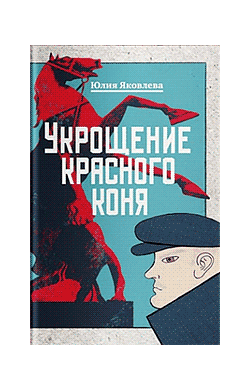 Julia Yakovleva. The taming of the red horse. M.: Exmo, 2017
The second book of the series “Store forever. The criminal retro Julia Yakovleva ”continues to talk about the adventures of the investigator of the threat of Vasily Zaitsev in Leningrad in the 1930s. And somewhat puzzles the reader, who was waiting for the continuation of the Leningrad detective with a slight flaler of art criticism that chisel the soul in different ways.
Most likely, the shortcomings of the “taming ...” , or at least a clear mismatch with reader expectations, owe the marathon distance that the writer was prepared for. Obviously, the investigator Zaitsev appeared to stay with the reader for years. It is obvious that, therefore, so as not to be like Daria Dontsova, from the first pages of informing how many children, dogs and money have her next hero, Julia Yakovleva raises a veil of secrets over the hares with a turtle speed, promising to turn it into a separate storyline. Finally, it is not obvious, but it is possible that the elusive villain from the first book, of which in the second Zaitsev recalls not that every day, claims the role of Soviet Moriarty. And all this in total draws such a sweeping perspective that the reader mobilized by the first book relaxes with chagrin: there will be no sharp turns.
“Suddenly the hunter runs out” was well balanced on the verge of the novel of the genre and “big”, successfully used the atmosphere of the dark Soviet times as a natural nuar and the plot of two gradually intersecting intrigues weaved. The “taming of the red horse” is no longer at all noir, and the detective is such that as the investigation it becomes so important, from which the rider named the pearl and the star of the Leningrad hippodrome - the horse nicknamed gingerbread suddenly died on the races. That is, Zaitsev stubbornly investigates this particular case, but the reader’s attention is constantly scattered, and the sight is lost.
The educational pathos of Yakovleva, who last time managed to unobtrusively show the oppressive atmosphere of the thirties, this time, like a peppy trotter, burst forward to the plot (and yes, to resist the horse metaphors, speaking of this book, is very difficult). The social phenomenon of the “former”, collectivization, the political polonial and Tukhachevsky’s political and the education of future Soviet marshals in cavalry courses unfold before the reader as the head of an informal history textbook, while the investigation is weaving, stumbling about household details and plot branches. An attentive reader risks exposing the offender long before the denouement, and then he will only have to observe the same main line - the attitude of Zaitsev with a random new partner, who, frankly, is undeservedly a lot of space.
To decide that the genre uncertainty of “taming” is a sign of literary innovation, alas, it does not work: the author is still clearly depended between the retro-detective and a popular historical novel, and this desire to be wider than the genre did not benefit the book. Whatever direction the series moves on, I want to wish him a more straight and clear road. The story that strives excessively branches, as the gardeners say, slightly “pinch” to the bush and do not stick out. For writing ambitions, this may be offensive advice, but the reader will become much happier.
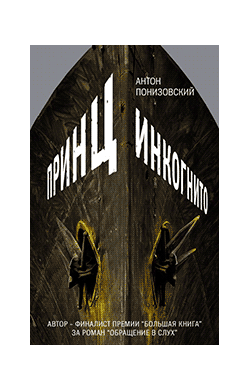 Anton Ponizovsky. Prince Incognito. M.: Editorial Elena Shubina, 2017
But from the author of “appeal aloud”, they are generally hardly waiting for the second novel. The previous one, published in 2013, seemed an ambitious journalistic experiment: a fascinating verbatim assembled in the hospital and in the market, and a somewhat exhausted artistic part-Dostoevsky-Trip, stuck in the Swiss resort and discussing the Russian people.
The new novel by Ponizovsky almost does not resemble “appeal”, except for the newly two -part structure and a responsible approach to authenticity: this time, in order to study the materiel, the author worked as a orderly in a psychiatric clinic. And the plot is such. In a provincial psychiatric hospital, a proud and indispensable nurse Jivan, who could already become a chief doctor, served if life allowed him to get a higher education. In the inconsistent Jivan, arson begins. More precisely, someone clearly wants to burn the clinic or scare the staff, leaving plows on different surfaces. The pouring must be calculated and caught, but it is not so simple in the institution inhabited, according to Jivan, “myizrabs” - from drunken alcoholics with a tendency to suicide to talkative schizophrenics who think of themselves academicians. In parallel, a psychiatric-detective line, as if an adventurous-historical plot, is unfolding, but in fact-saturated with flowers, sounds and smells, delightful nonsense of someone from the heroes of the “real” part of the novel. It is based on the journey of the royal sailors on the battleship "Tsesarevich" to Spain, where the coronation of the Spanish prince, who had been hiding from the enemy order, is about to take place.

Prince Incognito is difficult not to compare with last year's novel by Anna Kozlova “F20” . Here, too, in the end, the main thing is the question of the border of normality and madness, although solved in a different style. The nonsense nonsense is the world, the parallel conditionally normal, the matrix, to which anyone can freely or involuntarily connect, and so it remains there. One thing is disappointing: with all the baroque of the “crazy” part, Panizovsky surprisingly quickly turns his story as soon as the intrigue with the arsonist reveals, and as if it reduces its essence to the maxim of “baby’s baby, we are all a little horse”. At the same time, in the final, the reader has so much space for interpretation that it would not be a pity to share this option with the author. That rare case when a hundred pages would not have prevented the text at all.
 Ksenia Buke. Frame. M.: Editorial Elena Shubina, 2017
Ksenia Buhmshi, a fresh novel of Ksenia, is a hybrid of a political satire, the severity of which the publisher greatly exaggerates, and a lyrical experience on many issues at once; The text is even written in a column, because it gravitates more to the poem. True, you do not have to count on Gogol power.
The action takes place in an uncertainly near future: the memory of white ribbons is still fresh, but the country already has a normalization management that stuck to compatriots in their heads to normalizing chips; Functional, polite and cheap in production police; And the “positive” is a soothing hallucination that launches every evening in the brain of any citizen to stabilize his psyche and loyalty to the authorities. On the day of the coronation of the king, thousands of curious citizens flock to islands where the ceremony will happen. For safety reasons, all of them, of course, must go through the control frame. Ten people on the frame are “squealing”, and they are carefully escorted in the cell of the monastery, where they have to sit for a day until the event of state importance ends. Among the victims of the frame is the mother of one and a half dozen adopted children; entrepreneur of southern origin; Absolutely normal person; a former developer of normalizing chips fanning from his business; a woman who dreams of giving birth to a child from the king; repeatedly broken opposition journalist; Frenchman socializing children with Down syndrome; a woman who knows how to talk with dogs; inventive toastmaster; A tramp, predicting the future. Each of them ended up on islands for their own reason, everyone is the keeper of a serious psychological trauma, resentment or painful guilt, each, of course, tells his story to the conclusion comrades.
It is logical to assume that in this kind of chamber drama the locomotive of the plot will be a group dynamics: inevitable conflicts, emotional swings and the disclosure of terrible secrets. But by and large, nothing of the kind happens to the heroes. When the stock of strange stories ends, and the sluggish interaction with each other and with the protection is exhausted by the poor repertoire of small nit -picking, the action moves to the area of meaningful dreams. And then he was completely a pipe. If we recall the previous book of Ksenia Buhmshi, “Freedom Plant”, which inventively displayed the genre of the production novel to the maximum level of abstraction, provoking the reflection of the post -Soviet reader, then the “frame”, on the contrary, in itself very reflective and therefore unproductive reading. The lyrical meditation on the topic “The system flew in front of your eyes, and you remained the same as you” can be read as a manifesto of meaninglessness and mercilessness of any mental relationship with the state. But even if the author meant this notorious thought, then the text coincides with her in the mood so that the question “why did I read” remains the most persistent after reading.